Home For The Holidays?
Children's sermon
Illustration
Preaching
Sermon
Worship
Object:
(Originally published November 27, 2005)
With this week's Thanksgiving holiday in the U.S. (and the following day's shopping orgy), we start another headlong rush into a busy Christmas season. Though some find this to be an extraordinarily stressful time, many others take comfort in familiar rituals and routines. And because anxiety is such a strong undercurrent in today's psychic landscape, the urge to engage in traditional activities that reaffirm our roots and provide a respite from the cares of the world is understandable. In the lead article of this week's installment of The Immediate Word, team member George Murphy explores the lectionary texts for the First Sunday in Advent and discusses how their perspective on the promise of Christ's return suggests a very different approach to counteracting our fears and celebrating the season. The installment also includes responses and commentary from other team members, as well as illustrations, worship resources, and a children's sermon.
Home For The Holidays?
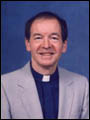
by George Murphy
The church begins its preparation for the coming of Christ on this First Sunday in Advent, but preparations for the Christmas celebration in the world at large have already started. Even with all the security and financial concerns connected with air travel today, a lot of people are hoping to get home for the holidays. In part that may be a desire to get back to where we grew up, to share traditional holiday customs with family and old friends.
But the urge to go home again is also a desire to get away from the troubles and uncertainties we find ourselves in -- people suffering from the effects of tornadoes and hurricanes, the bad news of a war that is fast losing public support, the threat of a flu pandemic, and the likelihood that our home heating bills will be out of sight this winter. We want to go back to a place where things will be good again.
The Jews who had been in exile in Babylon for decades felt that way when they found that they were going to be able to go back home to Jerusalem. The promise of return and hopes for the new life that awaited them are spelled out in the second part of the book of Isaiah (chapters 40-55). But when they got back to Judea they looked around and saw that it wasn't anything like the wonderful place their grandparents had told them about. The city was in ruins and they were just a little group surrounded by enemies and still ruled by a foreign power. Chapters 56-66 of the book, "Third Isaiah," come from that context, so our first lesson, Isaiah 64:1-9, should be seen as part of the response to that disappointment. It's a cry to God to do something about the situation of those returned exiles.
(The conclusion of critical biblical scholars that chapters 40-66 weren't written by the prophet Isaiah around 700 B.C. but in settings of exile and return is important for understanding the situations of the writers of those chapters and their immediate audiences, and thus for understanding the texts themselves. A congregation needs to be told about this, but don't refer to "Second Isaiah" or "Third Isaiah" without explanation if you don't want to confuse people.)
In some ways the challenge that faces us in the Advent season of 2005 is similar to the one that confronted those exiles. We hope for some definitive divine work, even if we don't expect God literally to "tear open the heavens and come down." In a time of rapid technological and social change, many Christians feel like exiles in their own land. When is God going to do something?
One purpose of the Advent season is to call our attention to the hope and promise of Christ's Second Coming. But for most people, especially after we get past this first Sunday of the season with its eschatological texts, the focus will be on his first coming and on getting ready to celebrate his birth on Christmas. But then we're faced with the same kind of question that the returned exiles in Jerusalem had to deal with. Okay, the promise has been fulfilled. The Savior has been born; there was the song about peace on earth, and so on. Bluntly, so what? We still have all those problems that I mentioned in the first paragraph.
As if to force us to face that reality, the Gospel for this First Sunday in Advent, Mark 13:24-37, doesn't point us to a baby lying in a manger; it's about the climax of the disturbances that will take place as history nears its end and the world seems to be coming apart. There is hope for believers in the promise that Christ will come again, but it would be misleading just to focus on the verses the lectionary gives us and ignore verses 5-23 that speak of the trials that must come first. If we take that kind of thing seriously (even if not literally), can going home for the holidays, and even attending the Christmas Eve service in the church where we grew up, be any more than a temporary escape from the woes of the world?
Now, of course, there are inappropriate kinds of fear and anxiety. Scientists have just announced the discovery of a so-called "fear gene". Further study of this may lead to ways of treating problems such as generalized anxiety and post-traumatic stress syndrome. But we're not going to get a drug or genetic therapy that will keep us from ever being afraid, nor should we want to. Hurricanes, war, terrorism, avian flu, and rising prices are realities and some fear in the face of them is realistic. We need more than a quick chemical fix or a brief Christmas vacation to change the world.
So how can we preach on these texts? Isaiah 64 expresses not only a longing for God to act but recognition of the sins of the community. Mark 13 stresses the need to be alert and watch. These are traditional themes of the Advent season, but they aren't the kinds of things that people who are preparing for Christmas are usually looking for.
Perhaps one of the things that could be emphasized is the time scale on which we should consider these matters. Four or five hundred years elapsed between the writing of our First Lesson and the birth of Jesus. If we see that birth as a response to the cries of the exile community, it was a response that didn't come during the lifetimes of members of that community. And the "delay of the parousia," the fact that the Second Coming spoken of in the gospel hasn't happened yet, should be seen in light of what we know now about the cosmological time scale. If world history extended over only a few thousand years, as people used to think, then two thousand is a considerable delay. But since we know today that the First Coming of Christ didn't take place until something like fourteen billion years after the beginning of the universe, two thousand years hardly seems like any delay at all.
But how should we expect God to act? God did not, in fact, answer the cries of the exile community by tearing open the heavens in a way that would make the divine presence and activity obvious to everyone. And if God's supreme revelation and saving action did take place in the birth of an ordinary-looking baby who would die on a cross, we shouldn't be surprised if God's action in general has that kind of hidden character. In fact, it isn't just a matter of being hidden but often of looking like exactly the opposite of what we expect God to be.
Mark, chapter 13, of which our gospel reading is the conclusion, points toward the future -- God's final future, the ultimate end of history. But it's significant that this chapter (and the parallel material in Matthew and Luke) doesn't come at the end of the gospel, after the resurrection. It is placed instead in a transitional position, between the end of Jesus' public ministry and the beginning of the passion narrative. Some of the old lectionaries actually included it as part of the reading of the passion (cf. Roy Harrisville, The Miracle of Mark [Augsburg, 1967], pp. 16-17).
On the one hand, the sufferings of the world depicted in chapter 13, which the disciples will have to endure, are shared by Christ: They are part of the "messianic woes," the "birth pangs" which accompany the coming into being of God's new creation. On the other hand, the exhortation for disciples to be faithful through these tribulations which will come upon the world is consistent with Jesus' earlier call for them to take up the cross and follow him (Mark 8:34).
This calls our attention to the fundamental purpose of the coming of Christ -- the salvation of the world through his death and resurrection. It will be a surprise to many congregations to hear a sermon that centers on the passion during the Advent season, but it can be done in a way that prepares for the celebration of Christmas. In one of the Anglo-Saxon Advent Lyrics the poet appeals to Jerusalem:
Now look around you, across the wide world
And above you, at oceans and the great hanging
Arch of the sky -- and see how Heaven's
King comes to you, longing for His death ...
(Burton Raffel, Poems from the Old English [University of Nebraska, 1964], p. 67)
It is precisely the fact that the passion is that of heaven's king that removes the tribulations spoken of in Mark 13, and the uncertainties and dangers that we face today, from the realm of meaningless destruction and death. God did not miraculously rescue Jesus from suffering and death but made those things the means of the world's salvation. The connection which Mark makes between the world's eschatological tribulation and the passion of Christ suggests that in the same way God will not simply prevent disasters from coming upon the world (or "rapture" us out of them) but will use them as means to make that salvation effective in the world.
Finally, what of that hope to come home for the holidays? Getting back to the hometown and gathering with family and friends is fine and nobody should be discouraged from doing it. Realize, however, that the difficulties of the world will still be here when you return. But there is a more fundamental sense in which we can come home, back to where we belong. It is in gathering with sisters and brothers in the faith around Word and Sacrament, gathering where Christ comes to us in the power of the Spirit, that we are given the courage and energy to deal with the woes of the world and even to be instruments through which God confronts those woes.
In fact, you'll probably have a number of people who will come home in that way at Christmas. Like all pastors, I often take a dim view of the "Christmas and Easter Christians" who show up in church only for those festivals. But they really are there, and some of them have come home for more than just some superficial holiday emotions. Maybe the texts for this First Sunday in Advent can also help to prepare preachers to give those occasional churchgoers something substantive when they show up on Christmas Eve, something that fulfills the need that brings them there. And perhaps they'll realize that the church has something to offer them on a regular basis.
Team Responses
Carlos Wilton responds: "Keep awake," warns Jesus (Mark 13:35). As if we had any trouble staying spiritually awake this time of year! Christmas is coming, after all. Christmas -- our culture's favorite celebration, that time when even the public square is filled with reminders of faith (despite the occasional grumbling about creche displays on public property). How could we nod off to sleep when Christmas is coming, anyway?
Yet if we truly hear what this week's Gospel Lesson is saying to us it would be hard to nod off into a contented slumber, for this text is a text of fear. Its dark portents and ominous warnings cause us to look up from the twinkling lights of the Main Street Christmas displays and perceive instead the bright stars overhead, remembering the dread words "and the stars will be falling from heaven, and the powers in the heavens will be shaken" (Mark 13:25). Our cosmology comfortingly reminds us, of course, that stars could not possibly "fall" from heaven, but no matter. The cultural archetype is still with us. As George reminds us, the newspapers are filled these days with more than enough grim warnings to cause cold fear to congeal in the pit of the stomach. And now there may even be such a thing as a "fear gene"! Imagine that. It seems we are fearful people through and through, right down to our DNA.
Fear is part of the Christmas message. Now, that's not something the purveyors of Santa ornaments and homey little Christmas villages are eager for us to think about, but it's part of the holiday all the same. "Fear not," say the angels to the shepherds, quaking on their hillside near Bethlehem. If the birth of the Messiah were all sweetness and light, then why this grim warning?
It does make sense. If this child to be born is truly the Messiah -- and if the world is truly sinful and corrupt enough that a Messiah is needed -- then it stands to reason: The one whom God's sending into the world to make things right is also going to shake things up.
Now, of course, we preachers have got to realize this may sound like a problematic thing to say -- especially to people who may have felt demoralized in their younger years by an image of God as harshly judgmental (and at times perhaps even terrifying). Some of our people may be quite pleased to declare they've grown beyond such a restrictive image of God. "Our God," such individuals confidently claim, "is a God of love and peace, of empowerment and affirmation."
Well, God is all these things, to be sure -- but we really should think twice, even three times, before discarding the biblical understanding of God as righteous judge. Do we really want to live in a world where there is no final judgment, no ultimate accounting for deeds of good or evil?
Very clearly, Jesus teaches otherwise. Yet even as he speaks here in Mark about the last things, he presents his teachings in such a way that they come across not as bad news, but as good. Keep awake, he says: for the one who is coming is not our destroyer, but our Master. He will come with signs of power, and those who are sitting up waiting for him will rejoice.
Chris Ewing responds: There are few things more frustrating, in trying or changing times, than a patient and enigmatic God. As George has well noted, the cosmological scale upon which God's purposes are worked out can leave those of us with non-cosmological life spans feeling painfully unanswered. The yearning to go "back to a place where things will be good again" can become incredibly potent, driving some into the false consolation of addictions while spurring others to reach forward with visionary acts of courage. The gift of Advent is that it acknowledges the intense pain of such times and legitimizes the yearning for a savior.
The challenge of the season is that it looks for no deus ex machina, but explores the hidden and often counterintuitive work of God, not simply in the midst of and in spite of our problems, but often through and by means of them. I am reminded of the survivor of a debilitating bout of depression who confessed to having searched everywhere for God ... except in the depression itself -- yet this is where the Holy and Healing One was eventually found. Even the Son of God whose coming we celebrate did not avoid or conquer the difficult realities of his day, but profoundly submitted to them, saving us not from the agony but through the middle of it. If such a message preached at Christmas risks driving many comfort-seekers away, it might draw many more who know too well the ephemerality of this world's comforts and need to know that their sufferings are not wasted, but can have meaning.
We of course pass here between a Scylla of suggesting that suffering is in itself edifying or at least should not be avoided -- an outlook that once led ministers to counsel women to stay with abusive husbands -- and a Charybdis of rejecting suffering altogether (the eddy in which our culture is currently caught). The gospel can be a help in piloting between these dangers, for we find Christ both healing and releasing people from suffering, and accepting (and calling his followers to accept) suffering in the service of God's reign.
It is this focus on God's reign that is distinctive for Christians. It is not only the cosmological time frame across which God works that dwarfs us; it is also the magnitude of divine intentions. In Advent we are called to remember that God works out holy purposes on a scale far beyond our personal or national hopes. We are perennially tempted to assess the meaning of God's apparent action or inaction within the framework of our own concerns, as if one could make sense of Michaelangelo's The Last Judgment by peering at an inch-square section of it through a photographer's slide magnifier. The apocalyptic language of Mark 13 jolts us back to an awareness that God's canvas is much larger than ours. Finite human experience is a poor position from which to judge what God is up to in any given moment. A more productive exercise is to draw our personal and collective lives into alignment with what we know of the nature of God's reign, and trust that somehow all that is beyond our control will also eventually be knit in.
This trust is what allows us to accept suffering and frustration without crippling fear. We know that Jesus has walked this way ahead of us, will eventually bring his work to fruition, and remains with us in the meantime to sustain and equip. As Paul reminded his congregation in Corinth, "You are not lacking in any spiritual gift as you wait for the revealing of our Lord Jesus Christ" (1 Corinthians 1:7). You have what you need to be faithful -- including the conviction that "God is faithful" (v. 9).
God is faithful. This assurance frees us to live courageously and redemptively "in the fellowship of [Jesus]" (v. 9), holding up the fragments of our lives and times to the larger picture in which they take on shape and meaning.
Stephen McCutchan responds: Excellent work, George. Here are some reflections on the lectionary readings other than the gospel lesson:
Isaiah 64:1-9
Yet, O Lord, thou art our Father; we are the clay, thou art our potter, we are the work of thy hands. (v. 8)
Advent holds together that tension between a faith that believes God is present to us and a world that raises questions about the absence of God. As you correctly point out, George, this passage from Isaiah can guide us in how to cry out to God when our experience seems devoid of the blessings and shalom that we yearn for. For many people, faith is based on what others say about the presence of God, while in our own experience God seems more like an abstract idea. For Israel, as well, upon their return from exile, the faith stories of God's visit on Mount Sinai, when the mountain quaked in God's presence (v. 3), seemed to be but a distant story from the past. Like us, they yearned for a clear sign of God's voice to again be heard among the people. "Oh that you would tear open the heavens and come down ..." The assumption for many believers is that God's absence in their lives is a sign of their own lack of faith (v. 7). While not diminishing the reality of human sinfulness, Isaiah takes the bold action of reminding God that we are what God has made us to be: "We are all the work of your hands." Especially when our context is difficult, it is important to be reminded that our hope lies not in our faithfulness, but in God's faithfulness. Advent doesn't speak of the coming of God as a response to our goodness. Advent dares to hope that God will remember that we are all God's people. Advent dares to rest its hope on the goodness of God that can transform our lives and redeem us from our darkness. If God is the potter and we are the clay, then God can shape and reshape us until God's love is pleased with the result.
Psalm 80
Let your face shine, that we may be saved. (v. 19b)
Psalm 80 is a community lament that ends in waiting for God's response. It begins with a plea using the image of God as a shepherd and Israel as a flock (v. 1). While it clearly came after Israel had fallen as a nation (v. 12), it used the early names of the tribes of Benjamin and Ephraim and Manasseh, who were Rachel's last son and the sons of Rachel's first son, Joseph (v. 2). In despair as a nation, they cried out to God for help (vv. 2-4). They reminded God of Israel's suffering (v. 5) and how they had become a mockery to surrounding nations (v. 6). The psalmist rehearsed God's involvement with this people using the image of a vine. It was God who had brought them out of Egypt (v. 8) and planted them in a new land (v. 9). Their history included both the expansion of the nation under David (vv. 10-11) and the breakup (v. 12) and defeat of the nation (v. 13). God had been present in the good times and the bad. It was on the basis of that memory of this relationship that the Psalmist laid claim to God's saving power (vv. 14-16). Verse 17 can well be seen as a prayer for a Messiah but also as a prayer that Israel, collectively, might be restored as a witness to what God intended for humanity. If restored, they vowed to again be faithful (v. 18). The final plea was for restoration (v. 19), and then there is only waiting. In the face of despair, it is the memory of God's faithfulness that sustains us while we await God's response. Advent is not a time to escape the troubles of the times but a time to recall God's faithfulness and to await expectantly God's response to our pleas.
1 Corinthians 1:3-9
I give thanks ... because of the grace of God that has been given you in Christ Jesus. (v. 4)
The church at Corinth was hardly a paragon of virtue, as Paul makes clear in this letter. There was immorality, selfishness, greed, fighting, and so forth. Yet Paul gave thanks for the grace of God in their lives. How do we discern grace in a community filled with the normal human foibles? Paul said that the people of Corinth were not lacking in any spiritual gift needed for the revealing of our Lord Jesus Christ. Can we affirm that for our churches as well? Do we discern God's grace as we recognize surprising signs of the presence of Christ among us? Are those signs discerned because we have first seen them manifested in Jesus' life and now discover them breaking out in our community? It is because we are tempted to greed that a communal decision of generosity touches our soul. It is because we are prone to bickering that an experience of the healing power of love among us is so powerful. When someone offends us in the church, we are given the opportunity to reveal Christ through our forgiveness. Advent is a time of watchfulness for the small signs of God's grace peeking through the ordinary lives of people whom God has gathered together in worship.
Related Illustrations
The mills of God grind slow, but they grind exceeding fine.
-- Scottish saying
***
The spiritual master assigned many disciplines and practices to his disciple, and the student asked, "How do these practices help me attain enlightenment?"
"You cannot attain enlightenment," replied the master, "any more than you can cause the sun to rise."
"Then what is the purpose of all these things you tell me to do?"
"To make sure that you are not asleep when the sun begins to rise."
***
I have a sin of fear, that when I have spun
My last thread, I shall perish on the shore;
Swear by Thyself, that at my death Thy Son
Shall shine as he shines now, and heretofore;
And, having done that, Thou hast done,
I fear no more.
-- John Donne
***
One of the most persistent -- and most easily controlled -- sources of fear in our lives is the television set. Novelist Barbara Kingsolver describes how, on the day after the shootings at Columbine High School, she was in her daughter's school, leading a writing workshop for teachers. Her family doesn't own a television, by choice. (She had heard about the shootings on the radio, and from the newspaper.) Barbara discovered the teachers -- who had spent much of the previous evening watching video news footage of the massacre -- were beside themselves with fear.
"I didn't share the visceral sense of doom," she reflects, "that surely came from seeing a live-camera feed of bloody children just like ours racing from a school so very much like this one. I remarked that while the TV coverage might make us feel endangered, the real probability of our own kids getting shot at school today had been lower than the odds of their being bitten by a rattlesnake while waiting for the bus. And more to the point, the chance of such horrors happening here was hardly greater than it had been two days before, when we weren't remotely worried about it.... It was such a small thing to offer -- merely another angle on the truth -- but I was amazed to see that it helped, as these thoughtful teachers breathed deeply, looked around at the quiet campus, and reclaimed the relative kindness of their lives. Anyone inclined toward chemical sedatives might first consider, seriously, turning off the TV." ["The One-Eyed Monster, and Why I Don't Let Him In," in Small Wonder: Essays (HarperCollins, 2002), pp. 139-141]
***
In that famous line from Herman Melville's Moby Dick, the first mate Starbuck declares he will have no man in his boat who is not afraid of a whale. Starbuck knows the occupant of a whaleboat who loses his sense of fear -- his healthy respect for the whale -- is nothing but a danger to himself and his crewmates.
***
The refusal to face the reality of fear is more dangerous than fear itself. So I suggest that you take your fears one by one and have it out with them. The light being clear, you may find them smaller than you thought. And some of them, under cross-examination, may disappear.
-- Robert McCracken, "What To Do With Our Fears?" in Questions People Ask (SCM, 1952), p. 126
***
One of the most persistently (and inexplicably) popular programs on television is a show called The Fear Factor. The Fear Factor is based on a simple premise: that people will do almost anything for money and for five minutes of fame. That "anything" apparently includes swimming with alligators ... being covered with swarming bees ... lying down in a coffin filled with 3,000 scorpions ... and eating a pizza covered with worms. (These challenges are all described in gleeful detail on the show's website.)
Citizens of the Roman Empire used to hoof it on down to the Coliseum for similar entertainment. There they would watch fellow human beings engage in deadly combat and face ravenous wild beasts. We citizens of the American Empire don't even need to leave our Lazy-Boys, it seems, to watch the face of another grow pale with terror. A mere click of the remote is all it takes, and the Coliseum is delivered to our living rooms.
The driving force behind The Fear Factor is clearly visible in its name. Every one of the so-called "stunts" dreamed up by the show's producers is meant to induce fear. The question every contestant is led to ask is: "Can I take it? Can I postpone my fear long enough to bring home the cash?"
Actually, that's not the only show on TV that packages and dispenses fear for mass consumption. As we all well know, there's no shortage of fearsome events on the evening news: car crashes, house fires, armed robberies ... all our worst nightmares, wrapped up in about twenty minutes (not counting commercials).
***
If one were pressed to come up with one phrase that best expresses the gospel, one could hardly do better than "Do not be afraid." The gospel is the banishment of fear, not in the sense of some temporal announcement that things are not as bleak as they seem or that tomorrow is a new day, but the revealing of the secret that all that is rests upon the deep eternal peace of God. In the words of Julian of Norwich's famous declaration of confident hope: "All shall be well, and all shall be well, and all manner of things shall be well."
-- Thomas Long, "What is the Gospel?" article in the journal of the Academy of Homiletics, 2005
***
"Do not be afraid" is the most frequent command in the Bible, which seems wholly appropriate in an era when terrorists could strike at any moment. We have a thousand fears: mammograms and prostate tests, our children's future as well as their present, retirement funds, job security, crime.
We fear not getting the job we want or the lover we desire, and if we have them we fear their loss. In the face of such everyday fear, Jesus points to a lily, or a sparrow, and calmly says, Trust. Seek first the kingdom of heaven.
Trust does not eliminate the bad things that may happen, whatever sparked our fear in the first place. Trust simply finds a new outlet for anxiety and a new grounding for confidence: God. Let God worry about the worrisome details of life, most of which are out of my control anyway. "Do not be anxious about anything, but in everything, by prayer and petition, with thanksgiving, present your requests to God," Paul wrote. "And the peace of God, which transcends all understanding, will guard your hearts and your minds in Christ Jesus" (Philippians 4:6-7).
-- Philip Yancey, adapted from Rumors of Another World (Zondervan, 2003)
***
Too many of us are not living our dreams because we are living our fears.
-- Les Brown
Worship Resources
by Julia Strope
HYMN / CAROL SUGGESTIONS
"Come, Thou Long-Expected Jesus"
"O Come, O Come, Emmanuel"
"Let All Mortal Flesh Keep Silence"
"People, Look East"
"The Desert Shall Rejoice"
"Watchman, Tell Us Of The Night"
(consider singing this antiphonally -- travelers and watchmen)
"Only To Be What God Wants Me To Be" (only to be clay in the potters' hands ...)
(this old hymn might work as a congregational response to the Word of Grace)
"Born In The Night, Mary's Child" (stanza 4)
("hope of the world" functions well as a congregational response to the Word of Grace)
"Born In The Night, Mary's Child" (stanza 2)
("clear shining light" might work as a doxological statement and prayer)
"Angels We Have Heard On High" (refrain)
(works as a doxology)
CALL TO WORSHIP
(includes lighting the first candle in the Advent Wreath)
Leader: I'm glad we're here together this Sunday after Thanksgiving Day. God is already at home here and this place serves as sanctuary from our troubles.
People: We are thankful people, aware that God is with us when we are strangers and when we are at home.
Leader: This is the first Sunday of a new church year -- Advent 1.
People: We remember the longing of the ancient Hebrew people for a Messiah. Prophet Isaiah raises his voice to the heavens and implores God to come down! The images the prophet uses are vivid: A young woman shall have a son ... his name will be "Counselor ... Prince of Peace!"
Leader: And animal predators will stop preying on one another! They will enjoy rest and food together without being afraid.
People: Like last Advent, let's light a candle in the evergreen wreath to signify our appreciation for the scriptures and the light they shine into our living.
(Someone lights the first purple candle.)
THANKSGIVING PRAYER (leader or unison)
God of the past --
Like people of generations before us, we long for tangible and visible indicators that you are among us. We feel like clay and trust you to be an artful and effective potter. Thank you for your continuous stretching and smoothing us till we are beautiful and useful for your Reign. With our bodies and our minds, we honor you this hour. Participate with us in music, conversation, listening, and silence. Amen.
CALL TO CONFESSION (leader)
Advent makes time for us to notice what is going on in the world and in our own psyches. Week by week we let go of dehydrated expectations and prepare for birthing new possibilities. Pray with me, and then continue your own conversation with God.
CONFESSION (unison)
God of the present time --
Our world seems to be coming apart; we are surprised at our cynicism, our lack of compassion, and our participation in "flexible truth." Renew our spirits as we make time to enjoy the symbols around us. Nourish us so no part of us is withered. Inspire us to hope again for a world where goodness and truth, neighborliness and hospitality are apparent. Amen.
WORD OF GRACE (leader)
Thank God, we know the whole Bible story of prophets and poets, of Jesus and disciples, of surviving exile and arriving home. We can begin again and learn new things about the Christ and about our priorities. God, the Holy One, miraculously greets us repeatedly, willing to be birthed again in us! Hallelujah!
A CONTEMPORARY AFFIRMATION (responsive)
Left side: The year is ending and beginning again.
Right side: We open ourselves to the miracle of Holy Light banishing our darkness.
Left side: We tell the ancient story of people hoping to be rescued from the chaos around them.
Right side: We experience that ancient story becoming our present story as our minds explore how God comes to us.
Left side: God comes in human form, as a baby, so we might learn to grow in wisdom, compassion, and justice.
Right side: God came in Jesus of Nazareth, born to Mary in a village in Palestine.
Left side: God meets us day by day, in every season of our lives, creating order out of chaos, drawing energy from malaise, and inspiring us to make our hearts and bodies home for the Holy.
Right side: God invites us to re-establish ourselves to be at home with the Christ Spirit, especially when we are surrounded by the barkers of the marketplace, afraid and lonely.
Both sides: We are ready to birth new attitudes and a new future for us and for this world.
Leader: Let it be so!
OFFERTORY STATEMENT (leader)
When times are good and when times are bad, we have something to offer God and to one another. Our time and skills enrich our life together; our money pays the bills and provides for people who do not have adequate necessities to sustain life. Children, youth, and adults, share as you can.
DOXOLOGY
Gloria in excelsis deo!
THANKSGIVING PRAYER (leader)
God of our calendars --
Thank you for Advent and for the story we tell over and over again. Thank you for the emotions that spill over us as we sit among the images of creation and light. Use our minds, our hands, and our resources to spread your kingdom to the darkest and hungriest, driest and dullest parts of the planet. Amen.
INTERCESSORY PRAYERS (leader or readers)
God of Exiles --
Like the prophet and the psalmist, we long for you to intervene in human affairs! War and rumors of war croak horrible death throughout this global village. The world isn't getting more kind. The hungry aren't diminishing in number. The terrorists aren't being reformed. Medical and herbal remedies aren't eradicating malaria, AIDS, and influenza viruses. Abundance and benevolence aren't reducing poverty. Tear open the human will till weapons become information and equipment to engender collaboration among tribes. Rend human privilege till children and adults everywhere have adequate nutrition. Erase human arrogance till everyone lives in harmony with the earth and its creatures.
God of Miracles --
From birth to death, we thank you for your dependable presence. Give us strength for each day's tasks. Help us manage insistent pain. When the environment is not to our liking, inspire us to create goodness. When our losses push us into sadness and despair, open us to the tenderness of those around us. Whatever our age, gestate in us till hope and shalom are born again.
Energy of the Cosmos --
We tell ourselves that beginning times and end times are in your purview. We understand that mid-wifing and birthing, sowing and harvesting, light and dark are part of our souls' development. We want to grow in spiritual awareness till we feel secure in your love, till we feel at home with holiness, and till we reach out to share your magnanimous gifts with others. Enliven the world through us. Amen.
BENEDICTION / CHARGE (leader)
May bright skies encourage you to be happy and generous;
May angel voices whisper ways you can touch others with hope and justice.
May shepherd curiosity impel you to notice Divinity at home among humanity.
May Magi determination guide you to journey compassionately at work, at home, at school, and at play, making each moment a holiday!
Children's Sermon
Time for Jesus
Based on Mark 13:24-37
Object: a calendar, a watch, a pillow, and some walking shoes
Good morning, boys and girls. Today we are going to talk about time. How many of you can tell time? (let them answer) If I asked you how long a second was, what would you say? (let someone volunteer to tell you how long a second is) Five seconds would be about this long. (count out 1,001, 1,002, and so on) Do you know how many seconds are in a minute? (let them answer) It takes sixty seconds to make a minute and sixty minutes to make an hour and 24 hours to make a day. That's a lot of counting, don't you think? (let them answer)
Everyone wants to know when Jesus is coming back to be a part of our lives on earth. This is Advent and we are preparing ourselves for the coming of Jesus. Do you know where he was born the first time? (let them answer) That's right, Bethlehem. But we don't know where or when he is coming the second time. The Bible tells us to be ready because Jesus is coming back a second time. You don't want to miss his Second Coming do you? (let them answer)
I brought along a calendar that has special days marked. This calendar tells me when Christmas and my birthday is. Here is the Fourth of July, but there are no days marked for when Jesus is going to come. I have a watch with all of the hours. There are numbers from one to twelve and when the watch hands move around twice we have a full day. But no one can tell me what time Jesus is going to come.
I don't want to miss Jesus, so every night I sit up and try to stay awake. In case I fall asleep, I have my pillow right here, but I can keep a watch on the door. I brought some good shoes so I will be ready to follow Jesus as soon as he comes. Do you think I am prepared for Jesus? (let them answer) Someone must know when Jesus is coming. I asked the police chief and the mayor of our town and he said he didn't know when Jesus was coming. I called some very smart teachers and preachers and asked them when Jesus was coming and not one of them knew. Who would you ask? (let them answer)
One person told me to read my Bible. I read it and it said, "But about that day or hour no one knows, neither the angels in heaven, not the Son, but only the Father."
I guess I can put away my calendar, my watch, my pillow, and shoes because no one knows when Jesus is coming back except Father God. Only when God is ready to send Jesus back will Jesus be coming. I should not stand around waiting; instead, I should share his word with all the world. I should bring happiness, joy, peace, and sharing to you. Don't worry about when he is coming, just be ready. Amen.
* * * * * * * * * * * * *
The Immediate Word, November 27, 2005, issue.
Copyright 2005 by CSS Publishing Company, Inc., Lima, Ohio.
All rights reserved. Subscribers to The Immediate Word service may print and use this material as it was intended in sermons and in worship and classroom settings only. No additional permission is required from the publisher for such use by subscribers only. Inquiries should be addressed to permissions@csspub.com or to Permissions, CSS Publishing Company, Inc., 517 South Main Street, Lima, Ohio 45802.
With this week's Thanksgiving holiday in the U.S. (and the following day's shopping orgy), we start another headlong rush into a busy Christmas season. Though some find this to be an extraordinarily stressful time, many others take comfort in familiar rituals and routines. And because anxiety is such a strong undercurrent in today's psychic landscape, the urge to engage in traditional activities that reaffirm our roots and provide a respite from the cares of the world is understandable. In the lead article of this week's installment of The Immediate Word, team member George Murphy explores the lectionary texts for the First Sunday in Advent and discusses how their perspective on the promise of Christ's return suggests a very different approach to counteracting our fears and celebrating the season. The installment also includes responses and commentary from other team members, as well as illustrations, worship resources, and a children's sermon.
Home For The Holidays?
by George Murphy
The church begins its preparation for the coming of Christ on this First Sunday in Advent, but preparations for the Christmas celebration in the world at large have already started. Even with all the security and financial concerns connected with air travel today, a lot of people are hoping to get home for the holidays. In part that may be a desire to get back to where we grew up, to share traditional holiday customs with family and old friends.
But the urge to go home again is also a desire to get away from the troubles and uncertainties we find ourselves in -- people suffering from the effects of tornadoes and hurricanes, the bad news of a war that is fast losing public support, the threat of a flu pandemic, and the likelihood that our home heating bills will be out of sight this winter. We want to go back to a place where things will be good again.
The Jews who had been in exile in Babylon for decades felt that way when they found that they were going to be able to go back home to Jerusalem. The promise of return and hopes for the new life that awaited them are spelled out in the second part of the book of Isaiah (chapters 40-55). But when they got back to Judea they looked around and saw that it wasn't anything like the wonderful place their grandparents had told them about. The city was in ruins and they were just a little group surrounded by enemies and still ruled by a foreign power. Chapters 56-66 of the book, "Third Isaiah," come from that context, so our first lesson, Isaiah 64:1-9, should be seen as part of the response to that disappointment. It's a cry to God to do something about the situation of those returned exiles.
(The conclusion of critical biblical scholars that chapters 40-66 weren't written by the prophet Isaiah around 700 B.C. but in settings of exile and return is important for understanding the situations of the writers of those chapters and their immediate audiences, and thus for understanding the texts themselves. A congregation needs to be told about this, but don't refer to "Second Isaiah" or "Third Isaiah" without explanation if you don't want to confuse people.)
In some ways the challenge that faces us in the Advent season of 2005 is similar to the one that confronted those exiles. We hope for some definitive divine work, even if we don't expect God literally to "tear open the heavens and come down." In a time of rapid technological and social change, many Christians feel like exiles in their own land. When is God going to do something?
One purpose of the Advent season is to call our attention to the hope and promise of Christ's Second Coming. But for most people, especially after we get past this first Sunday of the season with its eschatological texts, the focus will be on his first coming and on getting ready to celebrate his birth on Christmas. But then we're faced with the same kind of question that the returned exiles in Jerusalem had to deal with. Okay, the promise has been fulfilled. The Savior has been born; there was the song about peace on earth, and so on. Bluntly, so what? We still have all those problems that I mentioned in the first paragraph.
As if to force us to face that reality, the Gospel for this First Sunday in Advent, Mark 13:24-37, doesn't point us to a baby lying in a manger; it's about the climax of the disturbances that will take place as history nears its end and the world seems to be coming apart. There is hope for believers in the promise that Christ will come again, but it would be misleading just to focus on the verses the lectionary gives us and ignore verses 5-23 that speak of the trials that must come first. If we take that kind of thing seriously (even if not literally), can going home for the holidays, and even attending the Christmas Eve service in the church where we grew up, be any more than a temporary escape from the woes of the world?
Now, of course, there are inappropriate kinds of fear and anxiety. Scientists have just announced the discovery of a so-called "fear gene". Further study of this may lead to ways of treating problems such as generalized anxiety and post-traumatic stress syndrome. But we're not going to get a drug or genetic therapy that will keep us from ever being afraid, nor should we want to. Hurricanes, war, terrorism, avian flu, and rising prices are realities and some fear in the face of them is realistic. We need more than a quick chemical fix or a brief Christmas vacation to change the world.
So how can we preach on these texts? Isaiah 64 expresses not only a longing for God to act but recognition of the sins of the community. Mark 13 stresses the need to be alert and watch. These are traditional themes of the Advent season, but they aren't the kinds of things that people who are preparing for Christmas are usually looking for.
Perhaps one of the things that could be emphasized is the time scale on which we should consider these matters. Four or five hundred years elapsed between the writing of our First Lesson and the birth of Jesus. If we see that birth as a response to the cries of the exile community, it was a response that didn't come during the lifetimes of members of that community. And the "delay of the parousia," the fact that the Second Coming spoken of in the gospel hasn't happened yet, should be seen in light of what we know now about the cosmological time scale. If world history extended over only a few thousand years, as people used to think, then two thousand is a considerable delay. But since we know today that the First Coming of Christ didn't take place until something like fourteen billion years after the beginning of the universe, two thousand years hardly seems like any delay at all.
But how should we expect God to act? God did not, in fact, answer the cries of the exile community by tearing open the heavens in a way that would make the divine presence and activity obvious to everyone. And if God's supreme revelation and saving action did take place in the birth of an ordinary-looking baby who would die on a cross, we shouldn't be surprised if God's action in general has that kind of hidden character. In fact, it isn't just a matter of being hidden but often of looking like exactly the opposite of what we expect God to be.
Mark, chapter 13, of which our gospel reading is the conclusion, points toward the future -- God's final future, the ultimate end of history. But it's significant that this chapter (and the parallel material in Matthew and Luke) doesn't come at the end of the gospel, after the resurrection. It is placed instead in a transitional position, between the end of Jesus' public ministry and the beginning of the passion narrative. Some of the old lectionaries actually included it as part of the reading of the passion (cf. Roy Harrisville, The Miracle of Mark [Augsburg, 1967], pp. 16-17).
On the one hand, the sufferings of the world depicted in chapter 13, which the disciples will have to endure, are shared by Christ: They are part of the "messianic woes," the "birth pangs" which accompany the coming into being of God's new creation. On the other hand, the exhortation for disciples to be faithful through these tribulations which will come upon the world is consistent with Jesus' earlier call for them to take up the cross and follow him (Mark 8:34).
This calls our attention to the fundamental purpose of the coming of Christ -- the salvation of the world through his death and resurrection. It will be a surprise to many congregations to hear a sermon that centers on the passion during the Advent season, but it can be done in a way that prepares for the celebration of Christmas. In one of the Anglo-Saxon Advent Lyrics the poet appeals to Jerusalem:
Now look around you, across the wide world
And above you, at oceans and the great hanging
Arch of the sky -- and see how Heaven's
King comes to you, longing for His death ...
(Burton Raffel, Poems from the Old English [University of Nebraska, 1964], p. 67)
It is precisely the fact that the passion is that of heaven's king that removes the tribulations spoken of in Mark 13, and the uncertainties and dangers that we face today, from the realm of meaningless destruction and death. God did not miraculously rescue Jesus from suffering and death but made those things the means of the world's salvation. The connection which Mark makes between the world's eschatological tribulation and the passion of Christ suggests that in the same way God will not simply prevent disasters from coming upon the world (or "rapture" us out of them) but will use them as means to make that salvation effective in the world.
Finally, what of that hope to come home for the holidays? Getting back to the hometown and gathering with family and friends is fine and nobody should be discouraged from doing it. Realize, however, that the difficulties of the world will still be here when you return. But there is a more fundamental sense in which we can come home, back to where we belong. It is in gathering with sisters and brothers in the faith around Word and Sacrament, gathering where Christ comes to us in the power of the Spirit, that we are given the courage and energy to deal with the woes of the world and even to be instruments through which God confronts those woes.
In fact, you'll probably have a number of people who will come home in that way at Christmas. Like all pastors, I often take a dim view of the "Christmas and Easter Christians" who show up in church only for those festivals. But they really are there, and some of them have come home for more than just some superficial holiday emotions. Maybe the texts for this First Sunday in Advent can also help to prepare preachers to give those occasional churchgoers something substantive when they show up on Christmas Eve, something that fulfills the need that brings them there. And perhaps they'll realize that the church has something to offer them on a regular basis.
Team Responses
Carlos Wilton responds: "Keep awake," warns Jesus (Mark 13:35). As if we had any trouble staying spiritually awake this time of year! Christmas is coming, after all. Christmas -- our culture's favorite celebration, that time when even the public square is filled with reminders of faith (despite the occasional grumbling about creche displays on public property). How could we nod off to sleep when Christmas is coming, anyway?
Yet if we truly hear what this week's Gospel Lesson is saying to us it would be hard to nod off into a contented slumber, for this text is a text of fear. Its dark portents and ominous warnings cause us to look up from the twinkling lights of the Main Street Christmas displays and perceive instead the bright stars overhead, remembering the dread words "and the stars will be falling from heaven, and the powers in the heavens will be shaken" (Mark 13:25). Our cosmology comfortingly reminds us, of course, that stars could not possibly "fall" from heaven, but no matter. The cultural archetype is still with us. As George reminds us, the newspapers are filled these days with more than enough grim warnings to cause cold fear to congeal in the pit of the stomach. And now there may even be such a thing as a "fear gene"! Imagine that. It seems we are fearful people through and through, right down to our DNA.
Fear is part of the Christmas message. Now, that's not something the purveyors of Santa ornaments and homey little Christmas villages are eager for us to think about, but it's part of the holiday all the same. "Fear not," say the angels to the shepherds, quaking on their hillside near Bethlehem. If the birth of the Messiah were all sweetness and light, then why this grim warning?
It does make sense. If this child to be born is truly the Messiah -- and if the world is truly sinful and corrupt enough that a Messiah is needed -- then it stands to reason: The one whom God's sending into the world to make things right is also going to shake things up.
Now, of course, we preachers have got to realize this may sound like a problematic thing to say -- especially to people who may have felt demoralized in their younger years by an image of God as harshly judgmental (and at times perhaps even terrifying). Some of our people may be quite pleased to declare they've grown beyond such a restrictive image of God. "Our God," such individuals confidently claim, "is a God of love and peace, of empowerment and affirmation."
Well, God is all these things, to be sure -- but we really should think twice, even three times, before discarding the biblical understanding of God as righteous judge. Do we really want to live in a world where there is no final judgment, no ultimate accounting for deeds of good or evil?
Very clearly, Jesus teaches otherwise. Yet even as he speaks here in Mark about the last things, he presents his teachings in such a way that they come across not as bad news, but as good. Keep awake, he says: for the one who is coming is not our destroyer, but our Master. He will come with signs of power, and those who are sitting up waiting for him will rejoice.
Chris Ewing responds: There are few things more frustrating, in trying or changing times, than a patient and enigmatic God. As George has well noted, the cosmological scale upon which God's purposes are worked out can leave those of us with non-cosmological life spans feeling painfully unanswered. The yearning to go "back to a place where things will be good again" can become incredibly potent, driving some into the false consolation of addictions while spurring others to reach forward with visionary acts of courage. The gift of Advent is that it acknowledges the intense pain of such times and legitimizes the yearning for a savior.
The challenge of the season is that it looks for no deus ex machina, but explores the hidden and often counterintuitive work of God, not simply in the midst of and in spite of our problems, but often through and by means of them. I am reminded of the survivor of a debilitating bout of depression who confessed to having searched everywhere for God ... except in the depression itself -- yet this is where the Holy and Healing One was eventually found. Even the Son of God whose coming we celebrate did not avoid or conquer the difficult realities of his day, but profoundly submitted to them, saving us not from the agony but through the middle of it. If such a message preached at Christmas risks driving many comfort-seekers away, it might draw many more who know too well the ephemerality of this world's comforts and need to know that their sufferings are not wasted, but can have meaning.
We of course pass here between a Scylla of suggesting that suffering is in itself edifying or at least should not be avoided -- an outlook that once led ministers to counsel women to stay with abusive husbands -- and a Charybdis of rejecting suffering altogether (the eddy in which our culture is currently caught). The gospel can be a help in piloting between these dangers, for we find Christ both healing and releasing people from suffering, and accepting (and calling his followers to accept) suffering in the service of God's reign.
It is this focus on God's reign that is distinctive for Christians. It is not only the cosmological time frame across which God works that dwarfs us; it is also the magnitude of divine intentions. In Advent we are called to remember that God works out holy purposes on a scale far beyond our personal or national hopes. We are perennially tempted to assess the meaning of God's apparent action or inaction within the framework of our own concerns, as if one could make sense of Michaelangelo's The Last Judgment by peering at an inch-square section of it through a photographer's slide magnifier. The apocalyptic language of Mark 13 jolts us back to an awareness that God's canvas is much larger than ours. Finite human experience is a poor position from which to judge what God is up to in any given moment. A more productive exercise is to draw our personal and collective lives into alignment with what we know of the nature of God's reign, and trust that somehow all that is beyond our control will also eventually be knit in.
This trust is what allows us to accept suffering and frustration without crippling fear. We know that Jesus has walked this way ahead of us, will eventually bring his work to fruition, and remains with us in the meantime to sustain and equip. As Paul reminded his congregation in Corinth, "You are not lacking in any spiritual gift as you wait for the revealing of our Lord Jesus Christ" (1 Corinthians 1:7). You have what you need to be faithful -- including the conviction that "God is faithful" (v. 9).
God is faithful. This assurance frees us to live courageously and redemptively "in the fellowship of [Jesus]" (v. 9), holding up the fragments of our lives and times to the larger picture in which they take on shape and meaning.
Stephen McCutchan responds: Excellent work, George. Here are some reflections on the lectionary readings other than the gospel lesson:
Isaiah 64:1-9
Yet, O Lord, thou art our Father; we are the clay, thou art our potter, we are the work of thy hands. (v. 8)
Advent holds together that tension between a faith that believes God is present to us and a world that raises questions about the absence of God. As you correctly point out, George, this passage from Isaiah can guide us in how to cry out to God when our experience seems devoid of the blessings and shalom that we yearn for. For many people, faith is based on what others say about the presence of God, while in our own experience God seems more like an abstract idea. For Israel, as well, upon their return from exile, the faith stories of God's visit on Mount Sinai, when the mountain quaked in God's presence (v. 3), seemed to be but a distant story from the past. Like us, they yearned for a clear sign of God's voice to again be heard among the people. "Oh that you would tear open the heavens and come down ..." The assumption for many believers is that God's absence in their lives is a sign of their own lack of faith (v. 7). While not diminishing the reality of human sinfulness, Isaiah takes the bold action of reminding God that we are what God has made us to be: "We are all the work of your hands." Especially when our context is difficult, it is important to be reminded that our hope lies not in our faithfulness, but in God's faithfulness. Advent doesn't speak of the coming of God as a response to our goodness. Advent dares to hope that God will remember that we are all God's people. Advent dares to rest its hope on the goodness of God that can transform our lives and redeem us from our darkness. If God is the potter and we are the clay, then God can shape and reshape us until God's love is pleased with the result.
Psalm 80
Let your face shine, that we may be saved. (v. 19b)
Psalm 80 is a community lament that ends in waiting for God's response. It begins with a plea using the image of God as a shepherd and Israel as a flock (v. 1). While it clearly came after Israel had fallen as a nation (v. 12), it used the early names of the tribes of Benjamin and Ephraim and Manasseh, who were Rachel's last son and the sons of Rachel's first son, Joseph (v. 2). In despair as a nation, they cried out to God for help (vv. 2-4). They reminded God of Israel's suffering (v. 5) and how they had become a mockery to surrounding nations (v. 6). The psalmist rehearsed God's involvement with this people using the image of a vine. It was God who had brought them out of Egypt (v. 8) and planted them in a new land (v. 9). Their history included both the expansion of the nation under David (vv. 10-11) and the breakup (v. 12) and defeat of the nation (v. 13). God had been present in the good times and the bad. It was on the basis of that memory of this relationship that the Psalmist laid claim to God's saving power (vv. 14-16). Verse 17 can well be seen as a prayer for a Messiah but also as a prayer that Israel, collectively, might be restored as a witness to what God intended for humanity. If restored, they vowed to again be faithful (v. 18). The final plea was for restoration (v. 19), and then there is only waiting. In the face of despair, it is the memory of God's faithfulness that sustains us while we await God's response. Advent is not a time to escape the troubles of the times but a time to recall God's faithfulness and to await expectantly God's response to our pleas.
1 Corinthians 1:3-9
I give thanks ... because of the grace of God that has been given you in Christ Jesus. (v. 4)
The church at Corinth was hardly a paragon of virtue, as Paul makes clear in this letter. There was immorality, selfishness, greed, fighting, and so forth. Yet Paul gave thanks for the grace of God in their lives. How do we discern grace in a community filled with the normal human foibles? Paul said that the people of Corinth were not lacking in any spiritual gift needed for the revealing of our Lord Jesus Christ. Can we affirm that for our churches as well? Do we discern God's grace as we recognize surprising signs of the presence of Christ among us? Are those signs discerned because we have first seen them manifested in Jesus' life and now discover them breaking out in our community? It is because we are tempted to greed that a communal decision of generosity touches our soul. It is because we are prone to bickering that an experience of the healing power of love among us is so powerful. When someone offends us in the church, we are given the opportunity to reveal Christ through our forgiveness. Advent is a time of watchfulness for the small signs of God's grace peeking through the ordinary lives of people whom God has gathered together in worship.
Related Illustrations
The mills of God grind slow, but they grind exceeding fine.
-- Scottish saying
***
The spiritual master assigned many disciplines and practices to his disciple, and the student asked, "How do these practices help me attain enlightenment?"
"You cannot attain enlightenment," replied the master, "any more than you can cause the sun to rise."
"Then what is the purpose of all these things you tell me to do?"
"To make sure that you are not asleep when the sun begins to rise."
***
I have a sin of fear, that when I have spun
My last thread, I shall perish on the shore;
Swear by Thyself, that at my death Thy Son
Shall shine as he shines now, and heretofore;
And, having done that, Thou hast done,
I fear no more.
-- John Donne
***
One of the most persistent -- and most easily controlled -- sources of fear in our lives is the television set. Novelist Barbara Kingsolver describes how, on the day after the shootings at Columbine High School, she was in her daughter's school, leading a writing workshop for teachers. Her family doesn't own a television, by choice. (She had heard about the shootings on the radio, and from the newspaper.) Barbara discovered the teachers -- who had spent much of the previous evening watching video news footage of the massacre -- were beside themselves with fear.
"I didn't share the visceral sense of doom," she reflects, "that surely came from seeing a live-camera feed of bloody children just like ours racing from a school so very much like this one. I remarked that while the TV coverage might make us feel endangered, the real probability of our own kids getting shot at school today had been lower than the odds of their being bitten by a rattlesnake while waiting for the bus. And more to the point, the chance of such horrors happening here was hardly greater than it had been two days before, when we weren't remotely worried about it.... It was such a small thing to offer -- merely another angle on the truth -- but I was amazed to see that it helped, as these thoughtful teachers breathed deeply, looked around at the quiet campus, and reclaimed the relative kindness of their lives. Anyone inclined toward chemical sedatives might first consider, seriously, turning off the TV." ["The One-Eyed Monster, and Why I Don't Let Him In," in Small Wonder: Essays (HarperCollins, 2002), pp. 139-141]
***
In that famous line from Herman Melville's Moby Dick, the first mate Starbuck declares he will have no man in his boat who is not afraid of a whale. Starbuck knows the occupant of a whaleboat who loses his sense of fear -- his healthy respect for the whale -- is nothing but a danger to himself and his crewmates.
***
The refusal to face the reality of fear is more dangerous than fear itself. So I suggest that you take your fears one by one and have it out with them. The light being clear, you may find them smaller than you thought. And some of them, under cross-examination, may disappear.
-- Robert McCracken, "What To Do With Our Fears?" in Questions People Ask (SCM, 1952), p. 126
***
One of the most persistently (and inexplicably) popular programs on television is a show called The Fear Factor. The Fear Factor is based on a simple premise: that people will do almost anything for money and for five minutes of fame. That "anything" apparently includes swimming with alligators ... being covered with swarming bees ... lying down in a coffin filled with 3,000 scorpions ... and eating a pizza covered with worms. (These challenges are all described in gleeful detail on the show's website.)
Citizens of the Roman Empire used to hoof it on down to the Coliseum for similar entertainment. There they would watch fellow human beings engage in deadly combat and face ravenous wild beasts. We citizens of the American Empire don't even need to leave our Lazy-Boys, it seems, to watch the face of another grow pale with terror. A mere click of the remote is all it takes, and the Coliseum is delivered to our living rooms.
The driving force behind The Fear Factor is clearly visible in its name. Every one of the so-called "stunts" dreamed up by the show's producers is meant to induce fear. The question every contestant is led to ask is: "Can I take it? Can I postpone my fear long enough to bring home the cash?"
Actually, that's not the only show on TV that packages and dispenses fear for mass consumption. As we all well know, there's no shortage of fearsome events on the evening news: car crashes, house fires, armed robberies ... all our worst nightmares, wrapped up in about twenty minutes (not counting commercials).
***
If one were pressed to come up with one phrase that best expresses the gospel, one could hardly do better than "Do not be afraid." The gospel is the banishment of fear, not in the sense of some temporal announcement that things are not as bleak as they seem or that tomorrow is a new day, but the revealing of the secret that all that is rests upon the deep eternal peace of God. In the words of Julian of Norwich's famous declaration of confident hope: "All shall be well, and all shall be well, and all manner of things shall be well."
-- Thomas Long, "What is the Gospel?" article in the journal of the Academy of Homiletics, 2005
***
"Do not be afraid" is the most frequent command in the Bible, which seems wholly appropriate in an era when terrorists could strike at any moment. We have a thousand fears: mammograms and prostate tests, our children's future as well as their present, retirement funds, job security, crime.
We fear not getting the job we want or the lover we desire, and if we have them we fear their loss. In the face of such everyday fear, Jesus points to a lily, or a sparrow, and calmly says, Trust. Seek first the kingdom of heaven.
Trust does not eliminate the bad things that may happen, whatever sparked our fear in the first place. Trust simply finds a new outlet for anxiety and a new grounding for confidence: God. Let God worry about the worrisome details of life, most of which are out of my control anyway. "Do not be anxious about anything, but in everything, by prayer and petition, with thanksgiving, present your requests to God," Paul wrote. "And the peace of God, which transcends all understanding, will guard your hearts and your minds in Christ Jesus" (Philippians 4:6-7).
-- Philip Yancey, adapted from Rumors of Another World (Zondervan, 2003)
***
Too many of us are not living our dreams because we are living our fears.
-- Les Brown
Worship Resources
by Julia Strope
HYMN / CAROL SUGGESTIONS
"Come, Thou Long-Expected Jesus"
"O Come, O Come, Emmanuel"
"Let All Mortal Flesh Keep Silence"
"People, Look East"
"The Desert Shall Rejoice"
"Watchman, Tell Us Of The Night"
(consider singing this antiphonally -- travelers and watchmen)
"Only To Be What God Wants Me To Be" (only to be clay in the potters' hands ...)
(this old hymn might work as a congregational response to the Word of Grace)
"Born In The Night, Mary's Child" (stanza 4)
("hope of the world" functions well as a congregational response to the Word of Grace)
"Born In The Night, Mary's Child" (stanza 2)
("clear shining light" might work as a doxological statement and prayer)
"Angels We Have Heard On High" (refrain)
(works as a doxology)
CALL TO WORSHIP
(includes lighting the first candle in the Advent Wreath)
Leader: I'm glad we're here together this Sunday after Thanksgiving Day. God is already at home here and this place serves as sanctuary from our troubles.
People: We are thankful people, aware that God is with us when we are strangers and when we are at home.
Leader: This is the first Sunday of a new church year -- Advent 1.
People: We remember the longing of the ancient Hebrew people for a Messiah. Prophet Isaiah raises his voice to the heavens and implores God to come down! The images the prophet uses are vivid: A young woman shall have a son ... his name will be "Counselor ... Prince of Peace!"
Leader: And animal predators will stop preying on one another! They will enjoy rest and food together without being afraid.
People: Like last Advent, let's light a candle in the evergreen wreath to signify our appreciation for the scriptures and the light they shine into our living.
(Someone lights the first purple candle.)
THANKSGIVING PRAYER (leader or unison)
God of the past --
Like people of generations before us, we long for tangible and visible indicators that you are among us. We feel like clay and trust you to be an artful and effective potter. Thank you for your continuous stretching and smoothing us till we are beautiful and useful for your Reign. With our bodies and our minds, we honor you this hour. Participate with us in music, conversation, listening, and silence. Amen.
CALL TO CONFESSION (leader)
Advent makes time for us to notice what is going on in the world and in our own psyches. Week by week we let go of dehydrated expectations and prepare for birthing new possibilities. Pray with me, and then continue your own conversation with God.
CONFESSION (unison)
God of the present time --
Our world seems to be coming apart; we are surprised at our cynicism, our lack of compassion, and our participation in "flexible truth." Renew our spirits as we make time to enjoy the symbols around us. Nourish us so no part of us is withered. Inspire us to hope again for a world where goodness and truth, neighborliness and hospitality are apparent. Amen.
WORD OF GRACE (leader)
Thank God, we know the whole Bible story of prophets and poets, of Jesus and disciples, of surviving exile and arriving home. We can begin again and learn new things about the Christ and about our priorities. God, the Holy One, miraculously greets us repeatedly, willing to be birthed again in us! Hallelujah!
A CONTEMPORARY AFFIRMATION (responsive)
Left side: The year is ending and beginning again.
Right side: We open ourselves to the miracle of Holy Light banishing our darkness.
Left side: We tell the ancient story of people hoping to be rescued from the chaos around them.
Right side: We experience that ancient story becoming our present story as our minds explore how God comes to us.
Left side: God comes in human form, as a baby, so we might learn to grow in wisdom, compassion, and justice.
Right side: God came in Jesus of Nazareth, born to Mary in a village in Palestine.
Left side: God meets us day by day, in every season of our lives, creating order out of chaos, drawing energy from malaise, and inspiring us to make our hearts and bodies home for the Holy.
Right side: God invites us to re-establish ourselves to be at home with the Christ Spirit, especially when we are surrounded by the barkers of the marketplace, afraid and lonely.
Both sides: We are ready to birth new attitudes and a new future for us and for this world.
Leader: Let it be so!
OFFERTORY STATEMENT (leader)
When times are good and when times are bad, we have something to offer God and to one another. Our time and skills enrich our life together; our money pays the bills and provides for people who do not have adequate necessities to sustain life. Children, youth, and adults, share as you can.
DOXOLOGY
Gloria in excelsis deo!
THANKSGIVING PRAYER (leader)
God of our calendars --
Thank you for Advent and for the story we tell over and over again. Thank you for the emotions that spill over us as we sit among the images of creation and light. Use our minds, our hands, and our resources to spread your kingdom to the darkest and hungriest, driest and dullest parts of the planet. Amen.
INTERCESSORY PRAYERS (leader or readers)
God of Exiles --
Like the prophet and the psalmist, we long for you to intervene in human affairs! War and rumors of war croak horrible death throughout this global village. The world isn't getting more kind. The hungry aren't diminishing in number. The terrorists aren't being reformed. Medical and herbal remedies aren't eradicating malaria, AIDS, and influenza viruses. Abundance and benevolence aren't reducing poverty. Tear open the human will till weapons become information and equipment to engender collaboration among tribes. Rend human privilege till children and adults everywhere have adequate nutrition. Erase human arrogance till everyone lives in harmony with the earth and its creatures.
God of Miracles --
From birth to death, we thank you for your dependable presence. Give us strength for each day's tasks. Help us manage insistent pain. When the environment is not to our liking, inspire us to create goodness. When our losses push us into sadness and despair, open us to the tenderness of those around us. Whatever our age, gestate in us till hope and shalom are born again.
Energy of the Cosmos --
We tell ourselves that beginning times and end times are in your purview. We understand that mid-wifing and birthing, sowing and harvesting, light and dark are part of our souls' development. We want to grow in spiritual awareness till we feel secure in your love, till we feel at home with holiness, and till we reach out to share your magnanimous gifts with others. Enliven the world through us. Amen.
BENEDICTION / CHARGE (leader)
May bright skies encourage you to be happy and generous;
May angel voices whisper ways you can touch others with hope and justice.
May shepherd curiosity impel you to notice Divinity at home among humanity.
May Magi determination guide you to journey compassionately at work, at home, at school, and at play, making each moment a holiday!
Children's Sermon
Time for Jesus
Based on Mark 13:24-37
Object: a calendar, a watch, a pillow, and some walking shoes
Good morning, boys and girls. Today we are going to talk about time. How many of you can tell time? (let them answer) If I asked you how long a second was, what would you say? (let someone volunteer to tell you how long a second is) Five seconds would be about this long. (count out 1,001, 1,002, and so on) Do you know how many seconds are in a minute? (let them answer) It takes sixty seconds to make a minute and sixty minutes to make an hour and 24 hours to make a day. That's a lot of counting, don't you think? (let them answer)
Everyone wants to know when Jesus is coming back to be a part of our lives on earth. This is Advent and we are preparing ourselves for the coming of Jesus. Do you know where he was born the first time? (let them answer) That's right, Bethlehem. But we don't know where or when he is coming the second time. The Bible tells us to be ready because Jesus is coming back a second time. You don't want to miss his Second Coming do you? (let them answer)
I brought along a calendar that has special days marked. This calendar tells me when Christmas and my birthday is. Here is the Fourth of July, but there are no days marked for when Jesus is going to come. I have a watch with all of the hours. There are numbers from one to twelve and when the watch hands move around twice we have a full day. But no one can tell me what time Jesus is going to come.
I don't want to miss Jesus, so every night I sit up and try to stay awake. In case I fall asleep, I have my pillow right here, but I can keep a watch on the door. I brought some good shoes so I will be ready to follow Jesus as soon as he comes. Do you think I am prepared for Jesus? (let them answer) Someone must know when Jesus is coming. I asked the police chief and the mayor of our town and he said he didn't know when Jesus was coming. I called some very smart teachers and preachers and asked them when Jesus was coming and not one of them knew. Who would you ask? (let them answer)
One person told me to read my Bible. I read it and it said, "But about that day or hour no one knows, neither the angels in heaven, not the Son, but only the Father."
I guess I can put away my calendar, my watch, my pillow, and shoes because no one knows when Jesus is coming back except Father God. Only when God is ready to send Jesus back will Jesus be coming. I should not stand around waiting; instead, I should share his word with all the world. I should bring happiness, joy, peace, and sharing to you. Don't worry about when he is coming, just be ready. Amen.
* * * * * * * * * * * * *
The Immediate Word, November 27, 2005, issue.
Copyright 2005 by CSS Publishing Company, Inc., Lima, Ohio.
All rights reserved. Subscribers to The Immediate Word service may print and use this material as it was intended in sermons and in worship and classroom settings only. No additional permission is required from the publisher for such use by subscribers only. Inquiries should be addressed to permissions@csspub.com or to Permissions, CSS Publishing Company, Inc., 517 South Main Street, Lima, Ohio 45802.