Looking To The Heart
Sermon
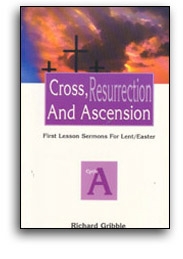
Cross, Resurrection, And Ascension
First Lesson Sermons For Lent/Easter
Once upon a time in a far-off land there lived a wise but old king. This monarch was very much beloved by his people, but alas he had no children, no heir to the throne. Because he did not want his kingdom to fall into the wrong hands after his death, the king decided to choose his own successor before he died. He had lived a long life and had done much reflection. He thought he knew what had gotten him to where he was and more importantly what would get his kingdom where it needed to be in the future. Therefore, he made a public decree that any person who thought himself qualified to be king should come to the capital city for an interview. The king's decree was promulgated throughout the land.

In a small village in that land, one young man heard about the decree and thought that he had the qualifications necessary to be king. He had good intelligence, was courageous, and understood the government. Unfortunately, the young man came from a poor family. He did not have the resources of money, clothes, and food to make the trip to the capital city. He was small of stature and was not impressive to those who saw him. Although he had many good qualities, the young man did not look like or possess the assets of one who wanted to be leader of the people. He decided that he should not make the trip; people would only laugh and jeer if he asked for an interview. His friends, however, encouraged him to set out telling him that all he needed would be provided on the trip. Therefore, he set out with some hesitation for the capital city to have his interview with the king. Along the way he was amazed to find that his friends were correct; all was provided for him. He was able to find lodging and a good hot meal each night in the village where he would stop. One family gave him a little money for those unexpected out-of-pocket expenses. Another family seeing his shabby clothes gave him a brand new suit for his audience with the king.
After several days' journey the young man reached a bridge which crossed over a mighty river which guarded the capital city on one side. As he was preparing to cross, a tired-looking old beggar man came up to him. "Please," said the old man, "may I have the extra food that you have? I live in the forest where food is at times hard to find. And, if possible can I have that fine new jacket you have? It is quite cold in the forest, and as you can see I have nothing to wear." The young man thought to himself, "I have come all this way and now this old man asks something of me." After he had thought about it for a few more minutes, however, he decided that the old man needed the things more than he did. Thus, he gave the old man his food and changed clothes with him, seeing that he needed more than just a coat. Nevertheless, not to be deterred from his quest, the young man crossed the bridge and entered the capital city.
When he reached the palace he was told that the king was away and could not see him until tomorrow. Thus, the young man waited outside the palace all night for his opportunity to be interviewed by the king. The next day, the young man was ushered into the palace by one of the guards. They passed down a long and beautiful hallway. The doors ahead of them opened unto the king's throne room; he was holding court. When the young man looked up, he was perplexed and somewhat confused. There on the throne was the same old man he had met on the bridge the previous day. The young man was angry and bewildered: "Why did you trick me?" asked the young man. "Why did you tell me you needed my food and clothes?" The king answered in a soft voice, "My son, I had heard from my royal officials that you were coming. You see, I do all of my interviews in the field. There is only one qualification for this job, to love and respect others; outside appearances mean nothing to me. I have judged your heart and you, my son, have passed the test. You will be the next king!"
The story of the boy who would became king illustrates many of the ideas which challenge us in our reading today. We hear how Samuel was sent to anoint a new king but he did not want the task; he feared Saul. With a little coaxing and advice from God, however, the prophet continued the mission as it was given to him. Samuel was quite impressed with Eliab, Jesse's eldest son. From what we can tell he looked like one who should be king; he was tall of stature, like Saul, manly, and courageous. Eliab's outer appearance was very impressive and it caused Samuel to conclude that he must be God's anointed. God, however, had a very different idea and taught Samuel a great lesson: "Do not look on his appearance or on the height of his stature, because I have rejected him; for the Lord does not see as mortals see; they look on the outward appearance, but the Lord looks on the heart" (1 Samuel 16:7). Jesse's seven eldest sons were paraded before Samuel, but none of them was selected by God. David, the youngest, was not even considered by Jesse; he did not look the part. He is described as ruddy, handsome, and with beautiful eyes. David was youthful, a boy in many ways, but God was able to see into his heart. God could see the potential which existed in David; the Lord could perceive the great leader that he would become.
In our lives we spend a lot of time and effort to improve our outward appearance. We run, lift weights, participate in aerobics, and many other physical activities to appear trim and fit. We are very conscious of our diet, watch calories and cholesterol, and eat those things which will keep us healthy. We groom our hair and wear clean and neat clothes to make ourselves attractive. Most of us spend a good number of years obtaining an education which will prepare us for excellence in the working world and impress others with our credentials. In short, we want our outside appearance to be the best it can be and our resumé to be attractive and complete. Contemporary society almost demands that we conform to this set of rules. If we choose another option or refuse to participate, the world will not choose us; we will be left behind. It is important to take care of ourselves and to make the most of our physical and intellectual abilities; a lesser effort would waste the gifts we have been given by God.
An important question, however, must be asked: how much effort do we put into the preparation, beautification, and strengthening of our spiritual self, our heart and soul, the place where God looks and judges? How often do we make a conscious effort to improve our spiritual life as we do so readily with our physical and intellectual appearance? If we fail to exercise, always eat poorly, refuse to challenge our minds, then most assuredly our outward appearance will not be attractive to those who see us. If we cannot find time for prayer, refuse to aid our fellow Christians in need, and forget our obligations as baptized people and thus members of God's family, then our spiritual appearance, the condition of our soul, will not be attractive to God, who, as Samuel was told, looks into the heart.
When we look at other people what do we see? Are we attracted by the three-piece suit, the designer dress, or the Gucci shoes or handbag? Do we see people for what they can bring us or how they can help us move up the ladder of society or business? What criteria do we use to select those with whom we will associate, those for whom we will vote, those who will gain our loyalty? Do we see only what is on the outside or can we look, as God suggests, into the heart?
All of us, if we are honest, spend a lot of time on outward appearances; we make judgments based on what we see and hear. God, however, tells us, as He told Samuel, that what is truly important is what is present in the heart. God reads the words of our heart and listens to the song of our soul. The Lord knows that the outside will change day to day and in the end pass away, but the heart is more permanent in its inaudible but nevertheless active voice.
It is certainly a wonderful reality for us that God sees the desire of our heart. The best Christian makes many mistakes, errors of life which are experienced on the outside. But since God created us and knows us, the desire of our heart is also known. God can see through the transitory elements of our life and grants forgiveness when we falter and fail to keep our Christian commitment. We must be willing to forgive others as God forgives us; we must look into the heart and not be fooled by the mutable outside appearance.
Lent is our time to take a new approach, to look beyond the obvious which outside appearances give and seek God's presence in the hearts of others. The king knew the heart of the young man; he experienced the desire of his soul during their encounter on the bridge where he conducted his interviews. Outside appearances did not fool the king; he knew where to look and he found his successor in the heart of the rags, poverty, youth, yet genuine goodness of the boy. Let us look into our heart and change as necessary to achieve a heart oriented toward God. Then let us turn our attention to others, look beyond what we see and hear, and concentrate on what God experiences in others. The task of the Christian life is always great; our response is awaited.
In a small village in that land, one young man heard about the decree and thought that he had the qualifications necessary to be king. He had good intelligence, was courageous, and understood the government. Unfortunately, the young man came from a poor family. He did not have the resources of money, clothes, and food to make the trip to the capital city. He was small of stature and was not impressive to those who saw him. Although he had many good qualities, the young man did not look like or possess the assets of one who wanted to be leader of the people. He decided that he should not make the trip; people would only laugh and jeer if he asked for an interview. His friends, however, encouraged him to set out telling him that all he needed would be provided on the trip. Therefore, he set out with some hesitation for the capital city to have his interview with the king. Along the way he was amazed to find that his friends were correct; all was provided for him. He was able to find lodging and a good hot meal each night in the village where he would stop. One family gave him a little money for those unexpected out-of-pocket expenses. Another family seeing his shabby clothes gave him a brand new suit for his audience with the king.
After several days' journey the young man reached a bridge which crossed over a mighty river which guarded the capital city on one side. As he was preparing to cross, a tired-looking old beggar man came up to him. "Please," said the old man, "may I have the extra food that you have? I live in the forest where food is at times hard to find. And, if possible can I have that fine new jacket you have? It is quite cold in the forest, and as you can see I have nothing to wear." The young man thought to himself, "I have come all this way and now this old man asks something of me." After he had thought about it for a few more minutes, however, he decided that the old man needed the things more than he did. Thus, he gave the old man his food and changed clothes with him, seeing that he needed more than just a coat. Nevertheless, not to be deterred from his quest, the young man crossed the bridge and entered the capital city.
When he reached the palace he was told that the king was away and could not see him until tomorrow. Thus, the young man waited outside the palace all night for his opportunity to be interviewed by the king. The next day, the young man was ushered into the palace by one of the guards. They passed down a long and beautiful hallway. The doors ahead of them opened unto the king's throne room; he was holding court. When the young man looked up, he was perplexed and somewhat confused. There on the throne was the same old man he had met on the bridge the previous day. The young man was angry and bewildered: "Why did you trick me?" asked the young man. "Why did you tell me you needed my food and clothes?" The king answered in a soft voice, "My son, I had heard from my royal officials that you were coming. You see, I do all of my interviews in the field. There is only one qualification for this job, to love and respect others; outside appearances mean nothing to me. I have judged your heart and you, my son, have passed the test. You will be the next king!"
The story of the boy who would became king illustrates many of the ideas which challenge us in our reading today. We hear how Samuel was sent to anoint a new king but he did not want the task; he feared Saul. With a little coaxing and advice from God, however, the prophet continued the mission as it was given to him. Samuel was quite impressed with Eliab, Jesse's eldest son. From what we can tell he looked like one who should be king; he was tall of stature, like Saul, manly, and courageous. Eliab's outer appearance was very impressive and it caused Samuel to conclude that he must be God's anointed. God, however, had a very different idea and taught Samuel a great lesson: "Do not look on his appearance or on the height of his stature, because I have rejected him; for the Lord does not see as mortals see; they look on the outward appearance, but the Lord looks on the heart" (1 Samuel 16:7). Jesse's seven eldest sons were paraded before Samuel, but none of them was selected by God. David, the youngest, was not even considered by Jesse; he did not look the part. He is described as ruddy, handsome, and with beautiful eyes. David was youthful, a boy in many ways, but God was able to see into his heart. God could see the potential which existed in David; the Lord could perceive the great leader that he would become.
In our lives we spend a lot of time and effort to improve our outward appearance. We run, lift weights, participate in aerobics, and many other physical activities to appear trim and fit. We are very conscious of our diet, watch calories and cholesterol, and eat those things which will keep us healthy. We groom our hair and wear clean and neat clothes to make ourselves attractive. Most of us spend a good number of years obtaining an education which will prepare us for excellence in the working world and impress others with our credentials. In short, we want our outside appearance to be the best it can be and our resumé to be attractive and complete. Contemporary society almost demands that we conform to this set of rules. If we choose another option or refuse to participate, the world will not choose us; we will be left behind. It is important to take care of ourselves and to make the most of our physical and intellectual abilities; a lesser effort would waste the gifts we have been given by God.
An important question, however, must be asked: how much effort do we put into the preparation, beautification, and strengthening of our spiritual self, our heart and soul, the place where God looks and judges? How often do we make a conscious effort to improve our spiritual life as we do so readily with our physical and intellectual appearance? If we fail to exercise, always eat poorly, refuse to challenge our minds, then most assuredly our outward appearance will not be attractive to those who see us. If we cannot find time for prayer, refuse to aid our fellow Christians in need, and forget our obligations as baptized people and thus members of God's family, then our spiritual appearance, the condition of our soul, will not be attractive to God, who, as Samuel was told, looks into the heart.
When we look at other people what do we see? Are we attracted by the three-piece suit, the designer dress, or the Gucci shoes or handbag? Do we see people for what they can bring us or how they can help us move up the ladder of society or business? What criteria do we use to select those with whom we will associate, those for whom we will vote, those who will gain our loyalty? Do we see only what is on the outside or can we look, as God suggests, into the heart?
All of us, if we are honest, spend a lot of time on outward appearances; we make judgments based on what we see and hear. God, however, tells us, as He told Samuel, that what is truly important is what is present in the heart. God reads the words of our heart and listens to the song of our soul. The Lord knows that the outside will change day to day and in the end pass away, but the heart is more permanent in its inaudible but nevertheless active voice.
It is certainly a wonderful reality for us that God sees the desire of our heart. The best Christian makes many mistakes, errors of life which are experienced on the outside. But since God created us and knows us, the desire of our heart is also known. God can see through the transitory elements of our life and grants forgiveness when we falter and fail to keep our Christian commitment. We must be willing to forgive others as God forgives us; we must look into the heart and not be fooled by the mutable outside appearance.
Lent is our time to take a new approach, to look beyond the obvious which outside appearances give and seek God's presence in the hearts of others. The king knew the heart of the young man; he experienced the desire of his soul during their encounter on the bridge where he conducted his interviews. Outside appearances did not fool the king; he knew where to look and he found his successor in the heart of the rags, poverty, youth, yet genuine goodness of the boy. Let us look into our heart and change as necessary to achieve a heart oriented toward God. Then let us turn our attention to others, look beyond what we see and hear, and concentrate on what God experiences in others. The task of the Christian life is always great; our response is awaited.