
Warming Up The Message And The Messenger
Preaching
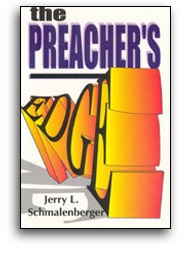
The Preacher's Edge
Homer K. Buerlein writes: "Many a sermon is given a magnificent aura by the infectious nature of the preacher and a skillful delivery. But what bothers me are those dutifully researched and composed sermons that are totally devoid of a pleasingly persuasive and appealing presentation."1
If you're really serious about doing the best possible delivery of your sermon, you will make the effort to practice it out loud before delivery. Here are some suggestions that may prove helpful in getting the most out of that warm-up session.

Go into the worship space where you will be delivering the sermon and spend a time of prayer before the altar presenting this message to God and asking for God's spirit's guidance. Pray yourself full and think of the work you've done on your sermon as a gift you're now offering up to God.
Be certain that you practice reading the gospel upon which the sermon is going to be based as well as practicing the sermon. Reading scripture can be very effective communication if simple principles of lecture recital and oral interpretation of literature are practiced. To be even more effective, memorize the gospel and communicate it to your congregation without reading it.
With no one in the room, try to duplicate the preaching situation as best you can. If you preach from a pulpit, use that pulpit and if you use a public address system, turn it on just as it will be when the congregation is in attendance.
Put yourself under the same time, articulation and audience reaction pressure as if the congregation were all seated there watching you warm up yourself and the sermon. This is important. You'll not get nearly the benefit out of the warm-up if you cheat in that empty sanctuary. Go all the way through the message without stopping just as if it were the real thing.
In order to give your sermon energy and allow the feeling portion to be felt, overact with your voice projection and your energy and gestures. Eventually, when you give the sermon in front of your congregation, the natural stage fright will compensate enough to calm this down. But for now, let your arms flail and make many wild gestures.
It is possible to exercise the gesture impulse, and to cultivate the gesture habit. The theoretical foundation for such belief is the James-Lang theory of emotions, which has been fully and finally demonstrated. The theory is that a feeling can be accentuated by the physical expression of that particular feeling. In other words, we are afraid because we run, angry because we strike.2
Paul Brees writes advice to preachers who have difficulty getting their hands and arms to gesture:
In walking through a graveyard at midnight, alone, just as you are in the middle of a collection of ghostly, white tombstones, start to run. Trot slowly at first, then increase your speed - and you will find yourself thoroughly frightened and probably running at top speed before you get out.
If we took this theory to the pulpit, we will have the basis for the gesture habit. Force yourself in a warm-up session to exaggerate your gestures. Swing your arms and shake your fists. The impulse to gesture will respond to exercise. Next time you deliver the sermon it should be natural to make gestures at the appropriate place.3
Use your voice to its fullest capacity, projecting it out across the room or into the microphone as if you had the most important thing in the world to convey to these people and wanted to be sure that they heard it and knew that you believed it strongly.
I like to imagine the congregation is in their place and that I know where certain members will be seated. I look at them and imagine their reaction and move my eye contact from one part of the sanctuary to another, remembering whom I will be addressing.
If you must take a manuscript into the pulpit (and I do not recommend it), use that manuscript the first time through, go through the sermon again with a very scanty outline, and then try with God's help to do it without any notes at all!
Because we are an educated clergy and carry with us a certain distinction and sophistication, I do believe most of our preaching errs on the side of being bland and delivered with very little enthusiasm. So I recommend the above warming-up the sermon in order to realize the full possibility of our oratory technique and break out of the often dull lecture style that we develop.
Because it's rather frightening to stand in front of a congregation no matter how many times we've done it, we can always count on that holding us back somewhat in expressing our emotion and excitement about this good gospel. That's why I strongly recommend we take the step of "overacting" from the pulpit in this warm-up session.
I believe the same is true with the use of a manuscript when we're by ourselves and not under the pressure of many faces upturned to hear what we have to say. We think we can keep our eyes away from the manuscript enough to have good eye contact with the congregation and also allow enough spontaneity at the time we deliver the sermon. However, that old fear gnaws away at our bellies and for security we rapidly retreat to reading the manuscript. Not in every case, but in many, that will cause us to be less than enthusiastic and rarely have eye contact with those to whom we preach, and a rather monotone or holy tone delivery sets in (some call this the stained glass voice).
We will probably become our best at preaching when we have learned to develop a two-track mind as we deliver the sermon. The great preachers I know all describe the ability to have one portion of their mind be thinking about what words they will say to convey this gospel, and another track of their mind thinking and observing what adjustments need to be made because of the way the sermon is being received (or not being received) by the congregation. A warm-up session can help us develop these two tracks mentally as we deliver the sermon without the pressure of the congregation being there.
Back at Wittenberg College years ago my debate teacher, G. Vernon Kelley, would have us all deliver our speech at the same time in the same room in very loud voices. It was called roar practice. He would even walk around the room and question us right in our face, eye-to-eye, as we were trying to concentrate on giving our speech. His theory was that we had to develop these two tracks: one that focused on content and delivery, the other which focused on how the speech was being accepted and the necessary adjustments we needed to make while we were speaking. I have taken that technique into my homiletics courses. It has shocked the students and other faculty in the vicinity, but I do believe it begins to develop the two-track preacher and gives us an edge in communicating the Gospel effectively.
1. Homer K. Buerlein, How to Preach More Powerful Sermons (Philadelphia: Westminster Press, 1986), p. 1.
2. Paul R. Brees and G. Vernon Kelley, Modern Speaking (Fairborn, OH: The Miami Valley Publishing Co., 1953), pp. 139-140.
3. Ibid.
If you're really serious about doing the best possible delivery of your sermon, you will make the effort to practice it out loud before delivery. Here are some suggestions that may prove helpful in getting the most out of that warm-up session.
Go into the worship space where you will be delivering the sermon and spend a time of prayer before the altar presenting this message to God and asking for God's spirit's guidance. Pray yourself full and think of the work you've done on your sermon as a gift you're now offering up to God.
Be certain that you practice reading the gospel upon which the sermon is going to be based as well as practicing the sermon. Reading scripture can be very effective communication if simple principles of lecture recital and oral interpretation of literature are practiced. To be even more effective, memorize the gospel and communicate it to your congregation without reading it.
With no one in the room, try to duplicate the preaching situation as best you can. If you preach from a pulpit, use that pulpit and if you use a public address system, turn it on just as it will be when the congregation is in attendance.
Put yourself under the same time, articulation and audience reaction pressure as if the congregation were all seated there watching you warm up yourself and the sermon. This is important. You'll not get nearly the benefit out of the warm-up if you cheat in that empty sanctuary. Go all the way through the message without stopping just as if it were the real thing.
In order to give your sermon energy and allow the feeling portion to be felt, overact with your voice projection and your energy and gestures. Eventually, when you give the sermon in front of your congregation, the natural stage fright will compensate enough to calm this down. But for now, let your arms flail and make many wild gestures.
It is possible to exercise the gesture impulse, and to cultivate the gesture habit. The theoretical foundation for such belief is the James-Lang theory of emotions, which has been fully and finally demonstrated. The theory is that a feeling can be accentuated by the physical expression of that particular feeling. In other words, we are afraid because we run, angry because we strike.2
Paul Brees writes advice to preachers who have difficulty getting their hands and arms to gesture:
In walking through a graveyard at midnight, alone, just as you are in the middle of a collection of ghostly, white tombstones, start to run. Trot slowly at first, then increase your speed - and you will find yourself thoroughly frightened and probably running at top speed before you get out.
If we took this theory to the pulpit, we will have the basis for the gesture habit. Force yourself in a warm-up session to exaggerate your gestures. Swing your arms and shake your fists. The impulse to gesture will respond to exercise. Next time you deliver the sermon it should be natural to make gestures at the appropriate place.3
Use your voice to its fullest capacity, projecting it out across the room or into the microphone as if you had the most important thing in the world to convey to these people and wanted to be sure that they heard it and knew that you believed it strongly.
I like to imagine the congregation is in their place and that I know where certain members will be seated. I look at them and imagine their reaction and move my eye contact from one part of the sanctuary to another, remembering whom I will be addressing.
If you must take a manuscript into the pulpit (and I do not recommend it), use that manuscript the first time through, go through the sermon again with a very scanty outline, and then try with God's help to do it without any notes at all!
Because we are an educated clergy and carry with us a certain distinction and sophistication, I do believe most of our preaching errs on the side of being bland and delivered with very little enthusiasm. So I recommend the above warming-up the sermon in order to realize the full possibility of our oratory technique and break out of the often dull lecture style that we develop.
Because it's rather frightening to stand in front of a congregation no matter how many times we've done it, we can always count on that holding us back somewhat in expressing our emotion and excitement about this good gospel. That's why I strongly recommend we take the step of "overacting" from the pulpit in this warm-up session.
I believe the same is true with the use of a manuscript when we're by ourselves and not under the pressure of many faces upturned to hear what we have to say. We think we can keep our eyes away from the manuscript enough to have good eye contact with the congregation and also allow enough spontaneity at the time we deliver the sermon. However, that old fear gnaws away at our bellies and for security we rapidly retreat to reading the manuscript. Not in every case, but in many, that will cause us to be less than enthusiastic and rarely have eye contact with those to whom we preach, and a rather monotone or holy tone delivery sets in (some call this the stained glass voice).
We will probably become our best at preaching when we have learned to develop a two-track mind as we deliver the sermon. The great preachers I know all describe the ability to have one portion of their mind be thinking about what words they will say to convey this gospel, and another track of their mind thinking and observing what adjustments need to be made because of the way the sermon is being received (or not being received) by the congregation. A warm-up session can help us develop these two tracks mentally as we deliver the sermon without the pressure of the congregation being there.
Back at Wittenberg College years ago my debate teacher, G. Vernon Kelley, would have us all deliver our speech at the same time in the same room in very loud voices. It was called roar practice. He would even walk around the room and question us right in our face, eye-to-eye, as we were trying to concentrate on giving our speech. His theory was that we had to develop these two tracks: one that focused on content and delivery, the other which focused on how the speech was being accepted and the necessary adjustments we needed to make while we were speaking. I have taken that technique into my homiletics courses. It has shocked the students and other faculty in the vicinity, but I do believe it begins to develop the two-track preacher and gives us an edge in communicating the Gospel effectively.
1. Homer K. Buerlein, How to Preach More Powerful Sermons (Philadelphia: Westminster Press, 1986), p. 1.
2. Paul R. Brees and G. Vernon Kelley, Modern Speaking (Fairborn, OH: The Miami Valley Publishing Co., 1953), pp. 139-140.
3. Ibid.

