

Lent 3
Preaching
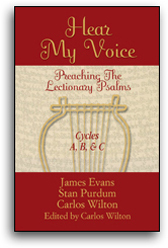
Hear My Voice
Preaching The Lectionary Psalms for Cycles A, B, C
This psalm has two distinct parts. Verses 1-7a serve as a call to worship, extolling the greatness of God. Verses 7b-11 comprise a stern warning about allowing one's spirituality to become stale and matter-of-fact -- in the language of the psalm, "hardening of the heart." In an earlier version of the lectionary, this chapter was treated as though it were two separate psalms, with the first section used as the stand-alone response for Christ the King Sunday. The second portion, but with verses 6-7a added, was the psalter for one of the Sundays after Pentecost.

The Revised Common Lectionary, however, has brought the two parts back together, as the psalm always has: so it behooves the preacher to consider expounding the psalm in its entirety. For example, how can the call to worship be heard when the heart refuses to listen? In this regard, read the exposition on this psalm that the author of Hebrews gives (3:7--4:13), paying special attention to 4:2.
Another way to address the tension between the two parts is to remember the custom of Ash Wednesday, when the cross of ashes is inscribed on the forehead with the words, "Receive the token of the Holy Cross, the sign of his victory and of your defeat."
Still another way to treat the whole psalm is to view the first section as the joyful procession into the presence of God for worship, with the second section as the divine word addressed to the kneeling congregation. In other words, liturgy and sermon.
Other preaching possibilities include:
1. Verse 6 calls for kneeling before our Maker. A diplomat once said that a man kneels only before his God and the woman he loves. The first is an act of worship and the second may be, but in both cases, the posture evidences a trust that the one before whom we kneel will not misuse our position. Thus, a sermon on trust.
2. Verse 10, with its reference to the wilderness generation, which God "loathed" for forty years, provides an opportunity to address the topic of giving up on people too soon. What factors need to be present to enable us to stay in troubled relationships? When are we justified in excluding any members from the family circle? This would not be an easy sermon to write, but it could be a helpful one to many on a very personal level.
-- S. P.
The Revised Common Lectionary, however, has brought the two parts back together, as the psalm always has: so it behooves the preacher to consider expounding the psalm in its entirety. For example, how can the call to worship be heard when the heart refuses to listen? In this regard, read the exposition on this psalm that the author of Hebrews gives (3:7--4:13), paying special attention to 4:2.
Another way to address the tension between the two parts is to remember the custom of Ash Wednesday, when the cross of ashes is inscribed on the forehead with the words, "Receive the token of the Holy Cross, the sign of his victory and of your defeat."
Still another way to treat the whole psalm is to view the first section as the joyful procession into the presence of God for worship, with the second section as the divine word addressed to the kneeling congregation. In other words, liturgy and sermon.
Other preaching possibilities include:
1. Verse 6 calls for kneeling before our Maker. A diplomat once said that a man kneels only before his God and the woman he loves. The first is an act of worship and the second may be, but in both cases, the posture evidences a trust that the one before whom we kneel will not misuse our position. Thus, a sermon on trust.
2. Verse 10, with its reference to the wilderness generation, which God "loathed" for forty years, provides an opportunity to address the topic of giving up on people too soon. What factors need to be present to enable us to stay in troubled relationships? When are we justified in excluding any members from the family circle? This would not be an easy sermon to write, but it could be a helpful one to many on a very personal level.
-- S. P.

