How Many Roads To Heaven?
Preaching
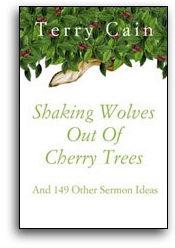
Shaking Wolves Out Of Cherry Trees
And 149 Other Sermon Ideas
Purpose Statement: Do we have to be a Christian or a certain kind of Christian to "get to heaven"?
We've all heard someone (perhaps even ourselves) say, "We're all going to the same place; we're just taking different roads." A church member could legitimately ask the question, "Which is the true way?" Is it Christianity as opposed to other faiths, or a particular brand of Christianity? Or do all roads lead to heaven? Most of us end up with some form of religious belief, having probably arrived there by one of three ways.

a. Raised Christian. Most people are what they are because they were born into a family that raised them with those beliefs. We don't often change, and when we do, it tends to be from one set of beliefs to another that is very similar. We are conditioned little by little as we grow up. It is sort of like a vaccination or inoculation -- little doses at a time. This method leaves little dramatic impact and it is easy to drift into the complacency of a dry routine. We tend not to struggle with our doctrines and are not likely to work out our faith with fear and trembling. In a sense we gradually become a Christian as we mature.
b. Converted to Christianity. They say converts are the most enthusiastic and loyal. The newly converted are usually charged up with excitement. It is on this avenue that we find the born-again experience. This doesn't mean the born-again experience doesn't happen to the person who is raised a Christian. Many mainline Christians would understand that being born again can and should happen over and over again because we believe that backsliding can happen.
c. Christian by comparison-shopping. Some arrive at their faith persuasion by looking at all of the options available, and after careful consideration, choose the best. As Christian pastors we believe that the teachings of Jesus stand head and shoulders above all other religious beliefs, both in terms of ethical and moral principles, and in the revelation of God's will.
This message must deal with passages such as: John 14:6, Matthew 7:13-14, and 21:28-31. Someone will say when you take a load of corn to the mill, the miller will not ask which road you took to get there. However, which road we choose does make a difference. It may be too roundabout and take too long, be rutted and dangerous causing you to lose some of the load, or confusing enough to get you lost.
We've all heard someone (perhaps even ourselves) say, "We're all going to the same place; we're just taking different roads." A church member could legitimately ask the question, "Which is the true way?" Is it Christianity as opposed to other faiths, or a particular brand of Christianity? Or do all roads lead to heaven? Most of us end up with some form of religious belief, having probably arrived there by one of three ways.
a. Raised Christian. Most people are what they are because they were born into a family that raised them with those beliefs. We don't often change, and when we do, it tends to be from one set of beliefs to another that is very similar. We are conditioned little by little as we grow up. It is sort of like a vaccination or inoculation -- little doses at a time. This method leaves little dramatic impact and it is easy to drift into the complacency of a dry routine. We tend not to struggle with our doctrines and are not likely to work out our faith with fear and trembling. In a sense we gradually become a Christian as we mature.
b. Converted to Christianity. They say converts are the most enthusiastic and loyal. The newly converted are usually charged up with excitement. It is on this avenue that we find the born-again experience. This doesn't mean the born-again experience doesn't happen to the person who is raised a Christian. Many mainline Christians would understand that being born again can and should happen over and over again because we believe that backsliding can happen.
c. Christian by comparison-shopping. Some arrive at their faith persuasion by looking at all of the options available, and after careful consideration, choose the best. As Christian pastors we believe that the teachings of Jesus stand head and shoulders above all other religious beliefs, both in terms of ethical and moral principles, and in the revelation of God's will.
This message must deal with passages such as: John 14:6, Matthew 7:13-14, and 21:28-31. Someone will say when you take a load of corn to the mill, the miller will not ask which road you took to get there. However, which road we choose does make a difference. It may be too roundabout and take too long, be rutted and dangerous causing you to lose some of the load, or confusing enough to get you lost.