
Greed: Putting Things In Their Proper Perspective
Sermon
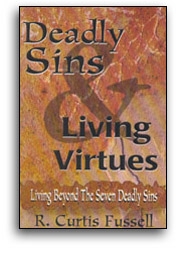
Deadly Sins and Living Virtues
Living Beyond the Seven Deadly Sins
Object:
Mr. Jones had a job that gave him a comfortable income. He enjoyed fishing and motorhome camping. Every year or so he would buy a new combination fish and ski boat, not some little dinghy, but a really nice, fancy boat. Every couple of years Mr. Jones would buy a new motorhome camper. It was obvious that several other men in the neighborhood envied Mr. Jones and tried to keep up with his new toys. They too would buy and sell boats and campers. It was obvious that keeping up with Mr. Jones was a priority in their lives. It's sad though, because such a priority means that you end up thinking that who you are, your value as a person, is determined by how much you have.

Lee Atwater, a political strategist under President Bush, died from a brain tumor at the age of 41 in 1991.1 Reflecting on his life just before his death, he said, "The '80s were about acquiring -- acquiring wealth, power, prestige. I know. I acquired more wealth, power, and prestige than most people ever dream of. But you can acquire all you want and still feel empty. What power I wouldn't trade for a little more time with my family."
I wonder what Mr. Atwater would say about a recent bumper sticker that said: "The one who dies with the most toys wins." My guess is he would say, "It's all wrong. It's a terrible lie."
Greed. Greed is never satisfied with "that's enough." No, greed says more is always better, because you can never have enough. Greed sees life not as a gift from God, but as a race to acquire, to get more, to have a bigger house, a bigger bank account, a fancier car, a bigger career position. Greed means we have to accumulate as much as we can, have more exciting vacations, more luxurious clothing. But with greed, as Mr. Atwater learned, "You can acquire all you want and still feel empty."
But greed is not just a matter of accumulating things. Greed is also a matter of people being bored with their lives. Nowadays people seem to think everything is so boring, so many people are dissatisfied with life. People sit in front of their television sets, flicking through all the channels with their remote controls, trying to find something that will entertain them because they are bored. In response to all this boredom, people try to fill up their lives with more and more: more exciting vacations, more expensive cars with all the extras, bigger homes. Like an additive drug, it takes more and more to get the same feeling of euphoria and security. More and more, bigger and bigger is needed.
I suppose it is true that everyone suffers from some form of greed. It is found not only among the rich, but also among the poor. In both groups you can hear it said, "If I only had 10,000 more dollars, everything would be alright."
Derrick Coleman, at the time a member of the New Jersey Nets basketball team, was offered seventy million dollars over nine years; that is, about 8 million dollars a year. Can you imagine? Of course it is money paid to keep us entertained, to keep us from being bored. His agent though responded by saying, "We really appreciate the offer, but we want to go after some really big money."2
In the face of that goal of going after "some really big money," the apostle Paul says, the love of money is the root of much evil. Now Paul didn't say money is the root of much evil, he said the love of money is the root of all evil. What he meant was that the love, or the consuming desire for money creates evil people. Why? Paul may have been reflecting on Jesus' comment that you can't serve money and God. In his letter to Timothy, Paul said that those who wanted more and more money didn't stay long in the church. In Paul's experience, he saw that the love for money created people who would do almost anything to have more and more, and let no one stand in their way, not friends, not family, not even God.
Of course, the craving for money is encouraged, supported, and promoted everywhere. Interestingly, it is illegal to be addicted to marijuana, cocaine, heroin, and other drugs. But addiction to television, shopping malls, outlet stores and the lottery is considered acceptable behavior as well as encouraged.3 For a number of years the M.B.A. students at Duke University were asked to write out their personal life plans. The question posed to them was, "What do you want to be when you grow up?" With very few exceptions, they wanted three things: money, power, and things -- and very big things, like vacation homes, expensive European cars, yachts, and airplanes. Their primary concern was the growth of their financial portfolios. Their personal goals in life very seldom included family, intellectual development, spiritual growth, or social responsibility.4
Our craving for things and more things is not like other cravings in the world. For instance, if you have a craving for food you can join a club like "Weight Watchers" that will help you to stop eating. If you have an alcohol craving, you can join an "AA" club to beat the habit. But have you ever heard of a club to stop your craving for money? No! Because there's not one. Instead, there's just the opposite kind of clubs, ones which help you gain more by buying in bulk, but none to overcome compulsive buying. There aren't even any books to help you overcome the compulsion to have more, such as, How to Stop Your Craving for Money.
Greed promises us a full and happy life. How many times have you heard it said, "If I only had more, life would be better." But as Mr. Atwater said, "You can acquire all you want and still feel empty." Think of a hand glove. By itself the glove is limp and lifeless; it can't pick up anything. But slide your hand into it and it acquires the power to do all kinds of things. Money is like a glove which by itself is neither good nor bad, but put it into the hands of a person and it becomes a personality. Money in somebody's hand can create a grasping hand or a giving hand.5
Perhaps you've noticed that greed starts early in life. It seems a child is taught that he or she never has enough toys, and that some other child has more or better toys. That's what our children learn when we buy them toys for every occasion. Early in life we learn to say, "I want that," and "That's mine!" Early in life we are taught that having things will make us happier. But will it?
Having possessions is not the problem. We all need possessions. Jesus said, "Your heavenly Father knows that you need all these things," such as food, shelter, and clothing. But greed is having our needs met and yet never being satisfied. So you have people who have incurred enormous credit card debts because they have come to believe that in order to be happy you have to buy. As the bumper sticker says, they are "born to shop." They have to have, and yet they never have enough.
The miser represents another kind of greed. The miser is eager to have by saving. Have you ever known someone who could never throw anything away? I have some familiarity with this one firsthand; just come and see my basement. Perhaps you know someone who saves everything: aluminum foil from packages, newspapers, odds and ends of all kinds. Why are these things saved? Not because he or she is environmentally aware about overflowing landfills, but because he or she is worried about not having enough. For the miser greed means our possessions possess us.
Another kind of greed is seen in the gambler. This kind of greed lives off the idea that you can get rich quick. The lottery is funded by this idea. It promises us riches, and all it takes is a few dollars. You only have to hear about a few people winning big, and you can get hooked into thinking, "I could be the next winner." All those millions of dollars just sitting there for you to win. You think of all you could have with all those millions -- greed.
Every day we are bombarded with the idea that there are only two goals in life: one, to be successful; and two, to feel good. And the way to be a success and feel good is to have more and more. But is having more and more really good?
Perhaps the ancient Greeks had it right. They minted their money in heavy iron disks, rather than silver coins, to remind people that wealth is a burden. At the beginning of this century the average American had 72 wants and thought that 18 of them were essential. At the end of this century, the average American has 496 wants and thinks that 96 of them are essential for happiness.6 That's a sixfold increase. To satisfy this craving for more, we have in this country twice as many shopping centers as we do high schools. People complain if taxes are raised to educate our children for the well-being of the future, but if a new shopping center is constructed no one complains; quite the contrary, it's welcomed as another opportunity to have greater access to more and more things. What has happened here? We have bought into the myth that as long as I have a chance to get more, life is better.
An elderly couple owned a picturesque 75-acre island in British Columbia. They needed to sell it and move to the city. It was a gorgeous island with the natural beauty of large trees, meadows, deep coves. This island would be ideal for yachts and multi-million dollar homes situated on hillsides with panoramic vistas. In fact, this couple was offered thirteen million dollars by a developer for the island. But can you believe it, they said no. They were not holding out for some really big money like Derrick Coleman. No, what they were holding out for was to make the island into a natural preserve. They asked the Canadian government what it would pay for the island. The government said it would pay three million dollars. That meant a loss of ten million dollars. But this couple wanted to leave behind something for everyone to enjoy; they wanted to leave a heritage. As it happened, the Canadian government didn't have the money to buy the island, but this couple persisted and found a group to buy it for three million dollars, preserving its natural beauty as an undeveloped public park.
What would you have done in their place? Would you have gone for the thirteen million dollars, land development and luxury homes, or settled for three million dollars and a nature park? An interesting question, isn't it? Indeed, imagine what you could do with ten million extra dollars. But could you live without it and live on only three million dollars? (Everyone is supposed to shake heads "Yes.") Indeed, everyone could say, "Hey, sure, I could live on three million dollars." Could you live on one million dollars, if it meant you could leave a heritage to your children and others? How about half a million, or 100,000 or even 20,000 dollars? Could you live on that if you could leave behind a heritage to your children and others? "What do you mean? Of course I could. I do it everyday." My question here, then, is this: is making and having money everything?
People tend to see life as two ways of living. "Having" is one way of living. This way of living means you have a job, a career in order to have things. Such a life is without a doubt important and necessary. "Having" is a way of accomplishing something in the world which is visible and tangible in things. On the other hand, there's the spiritual way of life. Here you pray for meaning in life through values that are tangible in terms of loving others, helping others to have food, shelter, and work. But you don't really have anything to show for this spiritual level. At the spiritual level you don't have things as such. And yet, if you ask the average person, it is matters of the heart that are the most valuable things in the world.
When a house catches fire, what is it above all that people will risk their lives to save from the flames? Their good china? No. Their Hummel collection? No. A family heirloom such as a great-grandmother's clock? Well maybe. But what people really seek to save in a house fire are the family pictures of the children, parents, grandparents -- those things of the heart.
Jesus didn't divide the world into two ways of life, into a material and spiritual realm. Jesus said the way we think about having things impacts who we are, and what we do with our lives affects the very meaning of our lives.7 Jesus gets at this by saying, "Where your treasure is, there your heart will be also" (Luke 12:34).
Jesus accepted and counted among his followers people who had many possessions, that is, wealthy people. Lazarus, the one whom Jesus brought back to life, was one of his wealthy friends, and so was Zacchaeus. Jesus accepted their hospitality and friendship. But Jesus was critical of anyone who thought the value of life could be measured by how much he or she had. He told a parable about a man who built more and more barns to hold his wealth, warning us to be rich to God. The question every day is this: "Will I strive to value my life on what I have, or will I strive to value my life on who I am as one who belongs to God?"
A family had a teenage son who had an accident while snow skiing. Apparently he had lost control on the slope and hit his head on a boulder, causing severe brain damage. He was in a coma for about three months. One day while traveling with his father to the hospital to visit his son, his father said, "You spend your life working to advance your career, to make a decent salary, to do the kinds of things that will make your life secure; and then suddenly you're reminded that the most important thing in life are the people in your life." Here was someone who was in effect saying, "It's matters of the heart; it's your relationship with other people that is most valuable and meaningful in life, and not how much you have."
How then do you overcome greed? One thing to do is to reflect on some of the biblical passages dealing with greed. Think about what Jesus said when he declared that, "Wherever your treasure is, there your heart will be also." Elsewhere Jesus said, "Give to anyone who asks you, and if anyone takes what belongs to you, do not demand it back" (Luke 6:30). And again Jesus said, "Do not be anxious about your life, what you will eat, or drink, or your clothing. Life is more than food or clothing. Your heavenly Father knows your needs" (Matthew 6:25). Reflecting on passages like these can help us put into perspective that while God intends for us to work and to enjoy the things of life, enough is enough.
Erma Bombeck, the columnist who delighted us with her humorous outlook on life, battled cancer. At one point in her writing career, Erma wrote a book about children with cancer, I Want to Grow Hair, I Want to Grow Up, I Want to Go to Boise. Erma found strength and encouragement in the comments and insights of those children.
She said that one little voice that constantly echoed in her mind and heart was that of eight-year-old Christina. Christina had cancer of the nervous system. On her eighth birthday she was asked what she wanted for her birthday. Christina thought for a long time; finally, she said, "I don't know. I have two sticker books and a Cabbage Patch doll. I have everything!"8 For young Christina, in the face of losing everything, she said, enough is enough.
Another helpful thing to do to combat greed is to develop a contrary attitude toward having more and more. I remember getting a phone call: "How would like to double your income in the next year and become financially independent in five years?" I replied by saying, "I'm sorry, that really wouldn't interest me." The response on the other end of the phone was dead silence. Why? Because you are supposed to be greedy and jump at any opportunity to have more and more. I wasn't interested for a very basic reason. Whatever the plan was for this get-rich-quick scheme, I knew I would have to change my lifestyle and commitments, maybe even my job and where I live. I knew also I would have to give my body and soul to the company making this offer. And that just wasn't me. I simply couldn't see my life defined in terms of this once-in-a-lifetime deal.9
Another contrary attitude is to be more generous in giving your money to various causes. We are taught from childhood how to make, how to save, and then how to spend money. But Jesus taught us how to give money. Making, saving, and spending money appeal to our greed. Yet knowing how to give balances the greed to make, to save, and to spend. It is by learning to give that we are spiritually nurtured.10
My office is full of books. I need books and I have a substantial investment in these books. One day a woman came to me and asked if she could borrow one of my books to do a Sunday school lesson. I said, "Yes, of course, and feel free to underline any important sentences and make notes in the margins. Make use of the book to get at the subject, although I wouldn't want any pages cut out of it." She then replied, "Are you serious? I was always taught not to write in books. I can't imagine writing in someone else's book." I responded, "Well, the way I look at it, this is my book, I own it, it doesn't own me. If I can only get it to help me by marking in it, then I do that, and I'm giving you permission to use this book as I do. Write in it all you want to, if it's helpful. Your marks in fact may help me to see something in it I've overlooked!" It is the same way with money or anything else we have. It is for our use. We possess it; don't let it possess us.
Finally, it helps to remember that you can't take it with you. As the apostle Paul says, we are born into the world with nothing, and when we die, we take nothing with us. Paul however does say that there is something we do take with us: the good things we have done in the name of Jesus Christ. As Jesus said, "Seek the kingdom of God and his righteousness." It is not in satisfying your craving to have more and more that you have abundant life. No, it is in serving God and loving others as you love yourself that abundant life is gained and lived.
Children's Message
(Show the children an advertisement for toys and ask if there are any toys they see that they would like to have.) Do you have a lot of toys at home? Why do you need another toy? (The children will give various answers.) Well, let me ask you a question. Would you rather have a toy that can break or leak or run down, or would you rather have a friend who, with a little special care, can play with you, stick with you, and have fun with you for a long time? I would rather have a friend, wouldn't you? Having friends to share your toys with is really the best fun. We are now in church, not to play with toys, but to learn how Jesus is our friend, and how we can be a friend to others. It's so good to have friends and to be a friend. It really is the best thing.
__________
1. Lee Atwater, "Lee Atwater's Last Campaign" in Life (February 1991).
2. Quoted by Todd Jones, tape #4.
3. Thomas H. Naylor, William H. Willimon, Magdalena R. Naylor, The Search for Meaning (Abingdon Press: Nashville, TN, 1994), p. 74.
4. Ibid., p. 10.
5. Herb Miller, Money Isn't Everything: What Jesus Said About the Spiritual Power of Money (Discipleship Resources: Nashville, TN, 1994), p. 6.
6. Ibid., p. 5.
7. Ibid., p. 2.
8. In Other Words ..., edited by Raymond McHenry (Houston, TX), Vol. 5, Sept/Oct. 1995, Issue 5, p. 3; drawn from Reader's Digest, April 1993, pp. 96-98.
9. Adapted from Tom Eisenman, Temptations Men Face (InterVarsity Press: Downers Grove, IL, 1990), p. 155.
10. See Eisenman, ibid., p. 155f.
Lee Atwater, a political strategist under President Bush, died from a brain tumor at the age of 41 in 1991.1 Reflecting on his life just before his death, he said, "The '80s were about acquiring -- acquiring wealth, power, prestige. I know. I acquired more wealth, power, and prestige than most people ever dream of. But you can acquire all you want and still feel empty. What power I wouldn't trade for a little more time with my family."
I wonder what Mr. Atwater would say about a recent bumper sticker that said: "The one who dies with the most toys wins." My guess is he would say, "It's all wrong. It's a terrible lie."
Greed. Greed is never satisfied with "that's enough." No, greed says more is always better, because you can never have enough. Greed sees life not as a gift from God, but as a race to acquire, to get more, to have a bigger house, a bigger bank account, a fancier car, a bigger career position. Greed means we have to accumulate as much as we can, have more exciting vacations, more luxurious clothing. But with greed, as Mr. Atwater learned, "You can acquire all you want and still feel empty."
But greed is not just a matter of accumulating things. Greed is also a matter of people being bored with their lives. Nowadays people seem to think everything is so boring, so many people are dissatisfied with life. People sit in front of their television sets, flicking through all the channels with their remote controls, trying to find something that will entertain them because they are bored. In response to all this boredom, people try to fill up their lives with more and more: more exciting vacations, more expensive cars with all the extras, bigger homes. Like an additive drug, it takes more and more to get the same feeling of euphoria and security. More and more, bigger and bigger is needed.
I suppose it is true that everyone suffers from some form of greed. It is found not only among the rich, but also among the poor. In both groups you can hear it said, "If I only had 10,000 more dollars, everything would be alright."
Derrick Coleman, at the time a member of the New Jersey Nets basketball team, was offered seventy million dollars over nine years; that is, about 8 million dollars a year. Can you imagine? Of course it is money paid to keep us entertained, to keep us from being bored. His agent though responded by saying, "We really appreciate the offer, but we want to go after some really big money."2
In the face of that goal of going after "some really big money," the apostle Paul says, the love of money is the root of much evil. Now Paul didn't say money is the root of much evil, he said the love of money is the root of all evil. What he meant was that the love, or the consuming desire for money creates evil people. Why? Paul may have been reflecting on Jesus' comment that you can't serve money and God. In his letter to Timothy, Paul said that those who wanted more and more money didn't stay long in the church. In Paul's experience, he saw that the love for money created people who would do almost anything to have more and more, and let no one stand in their way, not friends, not family, not even God.
Of course, the craving for money is encouraged, supported, and promoted everywhere. Interestingly, it is illegal to be addicted to marijuana, cocaine, heroin, and other drugs. But addiction to television, shopping malls, outlet stores and the lottery is considered acceptable behavior as well as encouraged.3 For a number of years the M.B.A. students at Duke University were asked to write out their personal life plans. The question posed to them was, "What do you want to be when you grow up?" With very few exceptions, they wanted three things: money, power, and things -- and very big things, like vacation homes, expensive European cars, yachts, and airplanes. Their primary concern was the growth of their financial portfolios. Their personal goals in life very seldom included family, intellectual development, spiritual growth, or social responsibility.4
Our craving for things and more things is not like other cravings in the world. For instance, if you have a craving for food you can join a club like "Weight Watchers" that will help you to stop eating. If you have an alcohol craving, you can join an "AA" club to beat the habit. But have you ever heard of a club to stop your craving for money? No! Because there's not one. Instead, there's just the opposite kind of clubs, ones which help you gain more by buying in bulk, but none to overcome compulsive buying. There aren't even any books to help you overcome the compulsion to have more, such as, How to Stop Your Craving for Money.
Greed promises us a full and happy life. How many times have you heard it said, "If I only had more, life would be better." But as Mr. Atwater said, "You can acquire all you want and still feel empty." Think of a hand glove. By itself the glove is limp and lifeless; it can't pick up anything. But slide your hand into it and it acquires the power to do all kinds of things. Money is like a glove which by itself is neither good nor bad, but put it into the hands of a person and it becomes a personality. Money in somebody's hand can create a grasping hand or a giving hand.5
Perhaps you've noticed that greed starts early in life. It seems a child is taught that he or she never has enough toys, and that some other child has more or better toys. That's what our children learn when we buy them toys for every occasion. Early in life we learn to say, "I want that," and "That's mine!" Early in life we are taught that having things will make us happier. But will it?
Having possessions is not the problem. We all need possessions. Jesus said, "Your heavenly Father knows that you need all these things," such as food, shelter, and clothing. But greed is having our needs met and yet never being satisfied. So you have people who have incurred enormous credit card debts because they have come to believe that in order to be happy you have to buy. As the bumper sticker says, they are "born to shop." They have to have, and yet they never have enough.
The miser represents another kind of greed. The miser is eager to have by saving. Have you ever known someone who could never throw anything away? I have some familiarity with this one firsthand; just come and see my basement. Perhaps you know someone who saves everything: aluminum foil from packages, newspapers, odds and ends of all kinds. Why are these things saved? Not because he or she is environmentally aware about overflowing landfills, but because he or she is worried about not having enough. For the miser greed means our possessions possess us.
Another kind of greed is seen in the gambler. This kind of greed lives off the idea that you can get rich quick. The lottery is funded by this idea. It promises us riches, and all it takes is a few dollars. You only have to hear about a few people winning big, and you can get hooked into thinking, "I could be the next winner." All those millions of dollars just sitting there for you to win. You think of all you could have with all those millions -- greed.
Every day we are bombarded with the idea that there are only two goals in life: one, to be successful; and two, to feel good. And the way to be a success and feel good is to have more and more. But is having more and more really good?
Perhaps the ancient Greeks had it right. They minted their money in heavy iron disks, rather than silver coins, to remind people that wealth is a burden. At the beginning of this century the average American had 72 wants and thought that 18 of them were essential. At the end of this century, the average American has 496 wants and thinks that 96 of them are essential for happiness.6 That's a sixfold increase. To satisfy this craving for more, we have in this country twice as many shopping centers as we do high schools. People complain if taxes are raised to educate our children for the well-being of the future, but if a new shopping center is constructed no one complains; quite the contrary, it's welcomed as another opportunity to have greater access to more and more things. What has happened here? We have bought into the myth that as long as I have a chance to get more, life is better.
An elderly couple owned a picturesque 75-acre island in British Columbia. They needed to sell it and move to the city. It was a gorgeous island with the natural beauty of large trees, meadows, deep coves. This island would be ideal for yachts and multi-million dollar homes situated on hillsides with panoramic vistas. In fact, this couple was offered thirteen million dollars by a developer for the island. But can you believe it, they said no. They were not holding out for some really big money like Derrick Coleman. No, what they were holding out for was to make the island into a natural preserve. They asked the Canadian government what it would pay for the island. The government said it would pay three million dollars. That meant a loss of ten million dollars. But this couple wanted to leave behind something for everyone to enjoy; they wanted to leave a heritage. As it happened, the Canadian government didn't have the money to buy the island, but this couple persisted and found a group to buy it for three million dollars, preserving its natural beauty as an undeveloped public park.
What would you have done in their place? Would you have gone for the thirteen million dollars, land development and luxury homes, or settled for three million dollars and a nature park? An interesting question, isn't it? Indeed, imagine what you could do with ten million extra dollars. But could you live without it and live on only three million dollars? (Everyone is supposed to shake heads "Yes.") Indeed, everyone could say, "Hey, sure, I could live on three million dollars." Could you live on one million dollars, if it meant you could leave a heritage to your children and others? How about half a million, or 100,000 or even 20,000 dollars? Could you live on that if you could leave behind a heritage to your children and others? "What do you mean? Of course I could. I do it everyday." My question here, then, is this: is making and having money everything?
People tend to see life as two ways of living. "Having" is one way of living. This way of living means you have a job, a career in order to have things. Such a life is without a doubt important and necessary. "Having" is a way of accomplishing something in the world which is visible and tangible in things. On the other hand, there's the spiritual way of life. Here you pray for meaning in life through values that are tangible in terms of loving others, helping others to have food, shelter, and work. But you don't really have anything to show for this spiritual level. At the spiritual level you don't have things as such. And yet, if you ask the average person, it is matters of the heart that are the most valuable things in the world.
When a house catches fire, what is it above all that people will risk their lives to save from the flames? Their good china? No. Their Hummel collection? No. A family heirloom such as a great-grandmother's clock? Well maybe. But what people really seek to save in a house fire are the family pictures of the children, parents, grandparents -- those things of the heart.
Jesus didn't divide the world into two ways of life, into a material and spiritual realm. Jesus said the way we think about having things impacts who we are, and what we do with our lives affects the very meaning of our lives.7 Jesus gets at this by saying, "Where your treasure is, there your heart will be also" (Luke 12:34).
Jesus accepted and counted among his followers people who had many possessions, that is, wealthy people. Lazarus, the one whom Jesus brought back to life, was one of his wealthy friends, and so was Zacchaeus. Jesus accepted their hospitality and friendship. But Jesus was critical of anyone who thought the value of life could be measured by how much he or she had. He told a parable about a man who built more and more barns to hold his wealth, warning us to be rich to God. The question every day is this: "Will I strive to value my life on what I have, or will I strive to value my life on who I am as one who belongs to God?"
A family had a teenage son who had an accident while snow skiing. Apparently he had lost control on the slope and hit his head on a boulder, causing severe brain damage. He was in a coma for about three months. One day while traveling with his father to the hospital to visit his son, his father said, "You spend your life working to advance your career, to make a decent salary, to do the kinds of things that will make your life secure; and then suddenly you're reminded that the most important thing in life are the people in your life." Here was someone who was in effect saying, "It's matters of the heart; it's your relationship with other people that is most valuable and meaningful in life, and not how much you have."
How then do you overcome greed? One thing to do is to reflect on some of the biblical passages dealing with greed. Think about what Jesus said when he declared that, "Wherever your treasure is, there your heart will be also." Elsewhere Jesus said, "Give to anyone who asks you, and if anyone takes what belongs to you, do not demand it back" (Luke 6:30). And again Jesus said, "Do not be anxious about your life, what you will eat, or drink, or your clothing. Life is more than food or clothing. Your heavenly Father knows your needs" (Matthew 6:25). Reflecting on passages like these can help us put into perspective that while God intends for us to work and to enjoy the things of life, enough is enough.
Erma Bombeck, the columnist who delighted us with her humorous outlook on life, battled cancer. At one point in her writing career, Erma wrote a book about children with cancer, I Want to Grow Hair, I Want to Grow Up, I Want to Go to Boise. Erma found strength and encouragement in the comments and insights of those children.
She said that one little voice that constantly echoed in her mind and heart was that of eight-year-old Christina. Christina had cancer of the nervous system. On her eighth birthday she was asked what she wanted for her birthday. Christina thought for a long time; finally, she said, "I don't know. I have two sticker books and a Cabbage Patch doll. I have everything!"8 For young Christina, in the face of losing everything, she said, enough is enough.
Another helpful thing to do to combat greed is to develop a contrary attitude toward having more and more. I remember getting a phone call: "How would like to double your income in the next year and become financially independent in five years?" I replied by saying, "I'm sorry, that really wouldn't interest me." The response on the other end of the phone was dead silence. Why? Because you are supposed to be greedy and jump at any opportunity to have more and more. I wasn't interested for a very basic reason. Whatever the plan was for this get-rich-quick scheme, I knew I would have to change my lifestyle and commitments, maybe even my job and where I live. I knew also I would have to give my body and soul to the company making this offer. And that just wasn't me. I simply couldn't see my life defined in terms of this once-in-a-lifetime deal.9
Another contrary attitude is to be more generous in giving your money to various causes. We are taught from childhood how to make, how to save, and then how to spend money. But Jesus taught us how to give money. Making, saving, and spending money appeal to our greed. Yet knowing how to give balances the greed to make, to save, and to spend. It is by learning to give that we are spiritually nurtured.10
My office is full of books. I need books and I have a substantial investment in these books. One day a woman came to me and asked if she could borrow one of my books to do a Sunday school lesson. I said, "Yes, of course, and feel free to underline any important sentences and make notes in the margins. Make use of the book to get at the subject, although I wouldn't want any pages cut out of it." She then replied, "Are you serious? I was always taught not to write in books. I can't imagine writing in someone else's book." I responded, "Well, the way I look at it, this is my book, I own it, it doesn't own me. If I can only get it to help me by marking in it, then I do that, and I'm giving you permission to use this book as I do. Write in it all you want to, if it's helpful. Your marks in fact may help me to see something in it I've overlooked!" It is the same way with money or anything else we have. It is for our use. We possess it; don't let it possess us.
Finally, it helps to remember that you can't take it with you. As the apostle Paul says, we are born into the world with nothing, and when we die, we take nothing with us. Paul however does say that there is something we do take with us: the good things we have done in the name of Jesus Christ. As Jesus said, "Seek the kingdom of God and his righteousness." It is not in satisfying your craving to have more and more that you have abundant life. No, it is in serving God and loving others as you love yourself that abundant life is gained and lived.
Children's Message
(Show the children an advertisement for toys and ask if there are any toys they see that they would like to have.) Do you have a lot of toys at home? Why do you need another toy? (The children will give various answers.) Well, let me ask you a question. Would you rather have a toy that can break or leak or run down, or would you rather have a friend who, with a little special care, can play with you, stick with you, and have fun with you for a long time? I would rather have a friend, wouldn't you? Having friends to share your toys with is really the best fun. We are now in church, not to play with toys, but to learn how Jesus is our friend, and how we can be a friend to others. It's so good to have friends and to be a friend. It really is the best thing.
__________
1. Lee Atwater, "Lee Atwater's Last Campaign" in Life (February 1991).
2. Quoted by Todd Jones, tape #4.
3. Thomas H. Naylor, William H. Willimon, Magdalena R. Naylor, The Search for Meaning (Abingdon Press: Nashville, TN, 1994), p. 74.
4. Ibid., p. 10.
5. Herb Miller, Money Isn't Everything: What Jesus Said About the Spiritual Power of Money (Discipleship Resources: Nashville, TN, 1994), p. 6.
6. Ibid., p. 5.
7. Ibid., p. 2.
8. In Other Words ..., edited by Raymond McHenry (Houston, TX), Vol. 5, Sept/Oct. 1995, Issue 5, p. 3; drawn from Reader's Digest, April 1993, pp. 96-98.
9. Adapted from Tom Eisenman, Temptations Men Face (InterVarsity Press: Downers Grove, IL, 1990), p. 155.
10. See Eisenman, ibid., p. 155f.

