Truth Or Consequences
Sermon
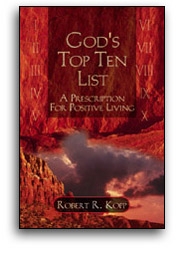
God's Top Ten List
A Prescription For Positive Living
Mother Teresa and the Princess of Wales were larger than life and continue to evoke sympathy, curiosity, and affection.
They were different in many ways -- age, portfolio, and the celibacy thing.
But there were some striking similarities -- indescribable personal magnetism, a charismatic and contagious zest for living, sparkling eyes, genuine humility, and uncommon compassion.
And now they share something even more important -- eternal life. The women who were larger than life transcended life and went home at God's call.

Before her tragic death and dramatic funeral, I never thought too much about the Princess of Wales. I've always considered the royal family to be a silly anachronism -- not much more than a tourist attraction. I've always thought their unshared wealth is obscene. I've always thought the adulation afforded to them breaks at least two of God's Ten Commandments. But I always felt a little sorry for Diana. She seemed so out of place among the other wax figures in the museum. She was so real.
Mother Teresa remains a model of servanthood for me. She's one of my heroes. I'll never forget when a westerner said to her, "I wouldn't do what you do for a million dollars." She responded, "Neither would I." She tirelessly prayed and worked to protect, preserve, and promote life from womb to tomb. She didn't pass through slums. She got on her knees and labored in them. One of her aides told a friend many years ago as he arranged transportation for the soon-to-be saint, "No matter what she says, tell the driver not to stop. She'll ask to stop and help everybody that she sees in distress along the way and you'll never get to your meeting."
Except for Jesus, I don't know anyone who enfleshed so much love (agaph). She said:
At the end of life we will not be judged by how many diplomas we have received, how much money we have made, how many great things we have done.
We will be judged by "I was hungry and you gave me food to eat. I was naked and you clothed me. I was homeless and you took me in."
Hungry not only for bread -- but hungry for love. Naked not only for clothing -- but naked of human dignity and respect. Homeless not only for want of a room of bricks -- but homeless because of rejection.
This is Christ in distressing disguise ...
The work we do is only our love for Jesus in action.
She was so real.
Much has been written, said, and speculated about these two women. Dying within days of each other, the world remains obsessed with comparisons and contrasts. There continues to be the previously predicted assumptions and judgments.
The princess was scandalized by the tabloids before her death.
Parts of the church -- way left of center elements in the mainline denominations -- were particularly and occasionally cruelly critical of Mother Teresa's radical advocacy of the sanctity of all human life.
Well, I'm not going to get into any of that kind of stuff now or later. I'm always ashamed of the conversations and commentaries and coffee table gossiping about who was more compassionate or who will stand the test of time or who accomplished more or who was better or who deserved more media attention in and after life and all the rest. I'm not going to get into those kinds of speculations because I'm not so sure about my assumptions. I know what happens to people who assume too much.
I do know one thing. God loved them equally. God lived, died, rose, and reigns in Jesus for them equally. I know that.
I know God loves the world -- everybody. I know God doesn't play favorites. I know God loves everybody equally.
So I've got to be very careful when I talk about somebody else. I don't want to say anything bad or false about them because I may upset their Father.
I thought a lot about telling the truth and silencing unsubstantiated speculations on September 6, 1997, as I listened to Earl Spencer's eulogy for his sister, the Princess of Wales. I was especially captivated and convinced by his incisive remarks on what motivates people to speak poorly of others:
I don't think she ever understood why her genuinely good intentions were sneered at by the media, why there appeared to be a permanent quest on their behalf to bring her down. It is baffling. My own, and only, explanation is that genuine goodness is threatening to those at the opposite end of the moral spectrum.
Later that day, I renewed a deal made with God about nine or ten years ago. I pledged to accentuate the positive in public and address the pejorative in private. I pledged to live within the rules of reconciliation outlined by our Lord in Matthew 18:15-17. I pledged to make the advice of Thumper's mom my own: "If you can't say somethin' nice, don't say nothin' at all." I pledged to pray and work to keep the ninth commandment: "You shall not bear false witness." And I remembered the counsel of Mother Teresa:
It is very difficult to give Jesus to the people unless we have Jesus in our hearts. We all should become the carriers of God's love ...
Let us always meet each other with a smile ... Never let anyone come to you without coming away better and happier. Everyone should see goodness in your face, in your eyes, in your smile ...
Some time ago a big group of professors from the United States came to our house in Calcutta. Before leaving, they said to me, "Tell us something that will help us, that will help us become holy." I said, "Smile at each other."
... This is the true reason for our existence -- to be the sunshine of God's love, to be the hope of eternal happiness. That's all.
God wants us to tell the truth. That's what the ninth commandment is all about. It means lying and slandering and gossiping are out. It means the truth, the whole truth, and nothing but the truth is in.
John Calvin said breaking this commandment is "evilspeaking." He wrote, "To sum up: let us not malign anyone with slanders or false charges, nor harm his substance by falsehood, in short, injure him by unbridled evilspeaking ... hateful accusation arising from evil intent and wanton desire to defame."
Or as my buddy Dr. Paul G. Watermulder told a group of Cub Scouts back on February 3, 1980, in Woodstown, New Jersey: "That means lying is out. Little lies, half-truths, and pretend stories are out. They will not make you happy, because God does not like them. No matter how much it hurts, God likes the truth best."
It's like the time a mother asked Dwight L. Moody how she could help her children to stop fibbing. Moody answered, "Start calling them lies."
This commandment is broken when we rewrite or rationalize away the Ten Commandments to fit into our less than noble moments:
1. You shall have no other gods before me unless it's a celebrity.
2. You shall not make for yourself an idol unless it's really good art.
3. You shall not make wrongful use of the Name of the Lord your God even if you're a Pitt fan in Beaver Stadium.
4. Remember the sabbath day unless the Steelers are in town.
5. Honor your father and mother as long as it pays off.
6. You shall not murder unless you're inconvenienced or really mad.
7. You shall not commit adultery unless you're really in love.
8. You shall not steal unless you work for the IRS or almost any government agency these days.
9. You shall not bear false witness unless you're in court or really don't like someone and want to ruin her or his reputation.
10. You shall not covet anything except for what you know you should have.
Again, the emphasis in this commandment is on the truth, the whole truth, and nothing but the truth.
Anything more or less than the truth breaks this commandment, usually hurts someone, and always offends our Lord. That's why Linda C. Loving, pastor of Oakland, California's First Presbyterian Church, said in Syracuse, New York, during our denom-ination's annual General Assembly meeting (June 14-20, 1997), "The church is called to be a bird's nest, not a hornet's nest; a place where people come to be fed, not stung."
You may have heard about the young woman who wrote home from college:
Dear Mom and Dad,
I decided to keep the baby. And so that it will have a proper name, Harry and I are going to get married as soon as he gets out. Harry had a little problem with "the law" and he is in right now. But when he gets out, we will get married. We feel this marriage has every chance of success because Harry has learned a lot in his seven previous marriages.
Turning the page, her parents read, "Ha! Ha! None of the above is true. But I am flunking chemistry and just thought this letter would put everything into perspective."
When I first heard that story, I thought it was funny. But now I have a son in college.
As his son was packing for his freshman year in college, H. Jackson Brown, Jr., retreated to the family room and jotted down 511 observations and words of council for his son. The result was Life's Little Instruction Book: 511 Suggestions, Observations, And Reminders On How To Live A Happy And Rewarding Life (1991). Suggestion 115 is really good: "Give yourself a year and read the Bible cover to cover." Here are some of my other favorites: "Compliment three people every day ... Have a dog ... Stop blaming others ... Eat prunes ... Lend only those books you never care to see again ... Avoid any church that has cushions on the pews."
Mr. Brown includes several entries which directly relate to our Lord's ninth commandment:
Spend less time worrying about who's right, and more time deciding what's wrong ... Keep secrets ... Remember that all news is biased ... Just to see how it feels, for the next 24 hours refrain from criticizing anybody and anything ... Don't use time or words carelessly. Neither can be retrieved ... Don't gossip.
You may have heard about the young priest who made regular visits to a young widow. It wasn't too long before rumors began to circulate throughout the parish and community about his visits. The young priest's visits to the young widow became the focus of vicious gossip.
Suddenly, the young widow died. It was discovered she had been secretly sick with cancer. Only her priest had known of her illness. That's why he had visited her so regularly.
Two women who had been especially responsible for all of the gossip went to the priest and said, "We're so sorry. Father, why didn't you tell us?"
"Because," he explained, "it was none of your business." Then he proceeded to give them a scorching lecture on pastoral confidentiality and the ninth commandment.
"Is there any way for us to make this better?" they asked.
"If you're really sorry," the priest sternly said, "take this feather pillow to the top of the hill just outside of town, cut it open, and let the feathers fly where the wind carries them. Then pick up every feather and put them all back into the pillow case and bring it back to me."
"But, Father," the women said, "that's impossible. The winds will blow the feathers all over the place."
Softly and sadly, the priest said, "Just like your words about our dearly departed sister and me."
Terrible consequences follow breaking the ninth commandment. People are hurt. A person's relationship with the Lord is strained.
I'll never forget the meeting in which I was reminded how to keep this commandment.
A fellow stood up and went on and on and on about the down sides of another person. He scorned, slandered, put down, and made up all kinds of stories to get over on the person. He tried to ruin the other person's reputation by lying about the character of the person.
Finally, an older gentleman stood up and asked, "What's that I see in your eye?"
Be careful when tempted to break this commandment! Remember the person has a Father. And before you say something bad about somebody else, stop and listen carefully. You just may hear a word from the Lord especially for you:
Do not judge, or you too will be judged. For in the same way you judge others, you will be judged, and with the measure you use, it will be measured to you.
Why do you look at the speck of sawdust in your brother's eye and pay no attention to the plank in your own eye? ... You hypocrite, first take the plank out of your own eye, and then you will see clearly to remove the speck from your brother's eye.
-- Matthew 7:1-5
Truth or consequences.
Here's how to keep the commandment:
Go out into the world in peace; have courage; hold on to what is good; return no one evil for evil; strengthen the fainthearted; support the weak, and help the suffering; honor everyone; love and serve the Lord, rejoicing in the power of the Holy Spirit. And may the grace of our Lord Jesus Christ, the love of God the Father, and the Fellowship of the Holy Spirit be with you now and forever. Amen.
They were different in many ways -- age, portfolio, and the celibacy thing.
But there were some striking similarities -- indescribable personal magnetism, a charismatic and contagious zest for living, sparkling eyes, genuine humility, and uncommon compassion.
And now they share something even more important -- eternal life. The women who were larger than life transcended life and went home at God's call.
Before her tragic death and dramatic funeral, I never thought too much about the Princess of Wales. I've always considered the royal family to be a silly anachronism -- not much more than a tourist attraction. I've always thought their unshared wealth is obscene. I've always thought the adulation afforded to them breaks at least two of God's Ten Commandments. But I always felt a little sorry for Diana. She seemed so out of place among the other wax figures in the museum. She was so real.
Mother Teresa remains a model of servanthood for me. She's one of my heroes. I'll never forget when a westerner said to her, "I wouldn't do what you do for a million dollars." She responded, "Neither would I." She tirelessly prayed and worked to protect, preserve, and promote life from womb to tomb. She didn't pass through slums. She got on her knees and labored in them. One of her aides told a friend many years ago as he arranged transportation for the soon-to-be saint, "No matter what she says, tell the driver not to stop. She'll ask to stop and help everybody that she sees in distress along the way and you'll never get to your meeting."
Except for Jesus, I don't know anyone who enfleshed so much love (agaph). She said:
At the end of life we will not be judged by how many diplomas we have received, how much money we have made, how many great things we have done.
We will be judged by "I was hungry and you gave me food to eat. I was naked and you clothed me. I was homeless and you took me in."
Hungry not only for bread -- but hungry for love. Naked not only for clothing -- but naked of human dignity and respect. Homeless not only for want of a room of bricks -- but homeless because of rejection.
This is Christ in distressing disguise ...
The work we do is only our love for Jesus in action.
She was so real.
Much has been written, said, and speculated about these two women. Dying within days of each other, the world remains obsessed with comparisons and contrasts. There continues to be the previously predicted assumptions and judgments.
The princess was scandalized by the tabloids before her death.
Parts of the church -- way left of center elements in the mainline denominations -- were particularly and occasionally cruelly critical of Mother Teresa's radical advocacy of the sanctity of all human life.
Well, I'm not going to get into any of that kind of stuff now or later. I'm always ashamed of the conversations and commentaries and coffee table gossiping about who was more compassionate or who will stand the test of time or who accomplished more or who was better or who deserved more media attention in and after life and all the rest. I'm not going to get into those kinds of speculations because I'm not so sure about my assumptions. I know what happens to people who assume too much.
I do know one thing. God loved them equally. God lived, died, rose, and reigns in Jesus for them equally. I know that.
I know God loves the world -- everybody. I know God doesn't play favorites. I know God loves everybody equally.
So I've got to be very careful when I talk about somebody else. I don't want to say anything bad or false about them because I may upset their Father.
I thought a lot about telling the truth and silencing unsubstantiated speculations on September 6, 1997, as I listened to Earl Spencer's eulogy for his sister, the Princess of Wales. I was especially captivated and convinced by his incisive remarks on what motivates people to speak poorly of others:
I don't think she ever understood why her genuinely good intentions were sneered at by the media, why there appeared to be a permanent quest on their behalf to bring her down. It is baffling. My own, and only, explanation is that genuine goodness is threatening to those at the opposite end of the moral spectrum.
Later that day, I renewed a deal made with God about nine or ten years ago. I pledged to accentuate the positive in public and address the pejorative in private. I pledged to live within the rules of reconciliation outlined by our Lord in Matthew 18:15-17. I pledged to make the advice of Thumper's mom my own: "If you can't say somethin' nice, don't say nothin' at all." I pledged to pray and work to keep the ninth commandment: "You shall not bear false witness." And I remembered the counsel of Mother Teresa:
It is very difficult to give Jesus to the people unless we have Jesus in our hearts. We all should become the carriers of God's love ...
Let us always meet each other with a smile ... Never let anyone come to you without coming away better and happier. Everyone should see goodness in your face, in your eyes, in your smile ...
Some time ago a big group of professors from the United States came to our house in Calcutta. Before leaving, they said to me, "Tell us something that will help us, that will help us become holy." I said, "Smile at each other."
... This is the true reason for our existence -- to be the sunshine of God's love, to be the hope of eternal happiness. That's all.
God wants us to tell the truth. That's what the ninth commandment is all about. It means lying and slandering and gossiping are out. It means the truth, the whole truth, and nothing but the truth is in.
John Calvin said breaking this commandment is "evilspeaking." He wrote, "To sum up: let us not malign anyone with slanders or false charges, nor harm his substance by falsehood, in short, injure him by unbridled evilspeaking ... hateful accusation arising from evil intent and wanton desire to defame."
Or as my buddy Dr. Paul G. Watermulder told a group of Cub Scouts back on February 3, 1980, in Woodstown, New Jersey: "That means lying is out. Little lies, half-truths, and pretend stories are out. They will not make you happy, because God does not like them. No matter how much it hurts, God likes the truth best."
It's like the time a mother asked Dwight L. Moody how she could help her children to stop fibbing. Moody answered, "Start calling them lies."
This commandment is broken when we rewrite or rationalize away the Ten Commandments to fit into our less than noble moments:
1. You shall have no other gods before me unless it's a celebrity.
2. You shall not make for yourself an idol unless it's really good art.
3. You shall not make wrongful use of the Name of the Lord your God even if you're a Pitt fan in Beaver Stadium.
4. Remember the sabbath day unless the Steelers are in town.
5. Honor your father and mother as long as it pays off.
6. You shall not murder unless you're inconvenienced or really mad.
7. You shall not commit adultery unless you're really in love.
8. You shall not steal unless you work for the IRS or almost any government agency these days.
9. You shall not bear false witness unless you're in court or really don't like someone and want to ruin her or his reputation.
10. You shall not covet anything except for what you know you should have.
Again, the emphasis in this commandment is on the truth, the whole truth, and nothing but the truth.
Anything more or less than the truth breaks this commandment, usually hurts someone, and always offends our Lord. That's why Linda C. Loving, pastor of Oakland, California's First Presbyterian Church, said in Syracuse, New York, during our denom-ination's annual General Assembly meeting (June 14-20, 1997), "The church is called to be a bird's nest, not a hornet's nest; a place where people come to be fed, not stung."
You may have heard about the young woman who wrote home from college:
Dear Mom and Dad,
I decided to keep the baby. And so that it will have a proper name, Harry and I are going to get married as soon as he gets out. Harry had a little problem with "the law" and he is in right now. But when he gets out, we will get married. We feel this marriage has every chance of success because Harry has learned a lot in his seven previous marriages.
Turning the page, her parents read, "Ha! Ha! None of the above is true. But I am flunking chemistry and just thought this letter would put everything into perspective."
When I first heard that story, I thought it was funny. But now I have a son in college.
As his son was packing for his freshman year in college, H. Jackson Brown, Jr., retreated to the family room and jotted down 511 observations and words of council for his son. The result was Life's Little Instruction Book: 511 Suggestions, Observations, And Reminders On How To Live A Happy And Rewarding Life (1991). Suggestion 115 is really good: "Give yourself a year and read the Bible cover to cover." Here are some of my other favorites: "Compliment three people every day ... Have a dog ... Stop blaming others ... Eat prunes ... Lend only those books you never care to see again ... Avoid any church that has cushions on the pews."
Mr. Brown includes several entries which directly relate to our Lord's ninth commandment:
Spend less time worrying about who's right, and more time deciding what's wrong ... Keep secrets ... Remember that all news is biased ... Just to see how it feels, for the next 24 hours refrain from criticizing anybody and anything ... Don't use time or words carelessly. Neither can be retrieved ... Don't gossip.
You may have heard about the young priest who made regular visits to a young widow. It wasn't too long before rumors began to circulate throughout the parish and community about his visits. The young priest's visits to the young widow became the focus of vicious gossip.
Suddenly, the young widow died. It was discovered she had been secretly sick with cancer. Only her priest had known of her illness. That's why he had visited her so regularly.
Two women who had been especially responsible for all of the gossip went to the priest and said, "We're so sorry. Father, why didn't you tell us?"
"Because," he explained, "it was none of your business." Then he proceeded to give them a scorching lecture on pastoral confidentiality and the ninth commandment.
"Is there any way for us to make this better?" they asked.
"If you're really sorry," the priest sternly said, "take this feather pillow to the top of the hill just outside of town, cut it open, and let the feathers fly where the wind carries them. Then pick up every feather and put them all back into the pillow case and bring it back to me."
"But, Father," the women said, "that's impossible. The winds will blow the feathers all over the place."
Softly and sadly, the priest said, "Just like your words about our dearly departed sister and me."
Terrible consequences follow breaking the ninth commandment. People are hurt. A person's relationship with the Lord is strained.
I'll never forget the meeting in which I was reminded how to keep this commandment.
A fellow stood up and went on and on and on about the down sides of another person. He scorned, slandered, put down, and made up all kinds of stories to get over on the person. He tried to ruin the other person's reputation by lying about the character of the person.
Finally, an older gentleman stood up and asked, "What's that I see in your eye?"
Be careful when tempted to break this commandment! Remember the person has a Father. And before you say something bad about somebody else, stop and listen carefully. You just may hear a word from the Lord especially for you:
Do not judge, or you too will be judged. For in the same way you judge others, you will be judged, and with the measure you use, it will be measured to you.
Why do you look at the speck of sawdust in your brother's eye and pay no attention to the plank in your own eye? ... You hypocrite, first take the plank out of your own eye, and then you will see clearly to remove the speck from your brother's eye.
-- Matthew 7:1-5
Truth or consequences.
Here's how to keep the commandment:
Go out into the world in peace; have courage; hold on to what is good; return no one evil for evil; strengthen the fainthearted; support the weak, and help the suffering; honor everyone; love and serve the Lord, rejoicing in the power of the Holy Spirit. And may the grace of our Lord Jesus Christ, the love of God the Father, and the Fellowship of the Holy Spirit be with you now and forever. Amen.