

The Transfiguration Of Our Lord/Last Sunday After The Epiphany
Preaching
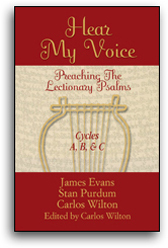
Hear My Voice
Preaching The Lectionary Psalms for Cycles A, B, C
(See The Transfiguration Of Our Lord/Last Sunday After The Epiphany, Cycle C, for an alternative approach.)

This psalm celebrates the kingship of God, and proclaims that divine kingship is related to holiness. Structurally, the psalm may be divided into three parts. Verses 1-3 proclaim the kingship of God over all the earth. Verses 4-5 announce God's justice and righteousness specifically for Israel. Verses 6-9 praise God as the one who answers those who call on God's name. Together, these three sections define a God who is holy: holy in majesty, holy in justice, holy in responsiveness.
This being Transfiguration Sunday, it is fruitful to consider why this psalm is used on this day. Surely the Transfiguration is an experience of God's holiness, and Moses, named in verse 6 as one of God's priests, performs along with Elijah a priestly function for Jesus. Also, the God who previously spoke from "the pillar of the cloud" (v. 7) also speaks in the dazzling white of the Transfiguration.
In preaching from this psalm, consider verse 8, speaking of the God who answers the people and forgives them. In the psalmist's day, it was a mark of a good king that he would respond to the petitions of those in need. Even greater is the king who graciously forgives. Our God, however, does both. Consider that many who sit in the pews today may be suffering from guilt, due to some real or imagined offense. In his book, Whatever Became of Sin?, Karl Menninger tells of a man standing on a Chicago street corner pointing to passersby and stating loudly, "GUILTY!" People hurried away from him, but one man -- turning to another -- asked, "But how did he know?"
We worship a God who stands ready to forgive the penitent. For those suffering guilt, divine forgiveness is at least a transforming experience.
-- S. P.
This psalm celebrates the kingship of God, and proclaims that divine kingship is related to holiness. Structurally, the psalm may be divided into three parts. Verses 1-3 proclaim the kingship of God over all the earth. Verses 4-5 announce God's justice and righteousness specifically for Israel. Verses 6-9 praise God as the one who answers those who call on God's name. Together, these three sections define a God who is holy: holy in majesty, holy in justice, holy in responsiveness.
This being Transfiguration Sunday, it is fruitful to consider why this psalm is used on this day. Surely the Transfiguration is an experience of God's holiness, and Moses, named in verse 6 as one of God's priests, performs along with Elijah a priestly function for Jesus. Also, the God who previously spoke from "the pillar of the cloud" (v. 7) also speaks in the dazzling white of the Transfiguration.
In preaching from this psalm, consider verse 8, speaking of the God who answers the people and forgives them. In the psalmist's day, it was a mark of a good king that he would respond to the petitions of those in need. Even greater is the king who graciously forgives. Our God, however, does both. Consider that many who sit in the pews today may be suffering from guilt, due to some real or imagined offense. In his book, Whatever Became of Sin?, Karl Menninger tells of a man standing on a Chicago street corner pointing to passersby and stating loudly, "GUILTY!" People hurried away from him, but one man -- turning to another -- asked, "But how did he know?"
We worship a God who stands ready to forgive the penitent. For those suffering guilt, divine forgiveness is at least a transforming experience.
-- S. P.

