Psalm 105:1-6, 37-45
Preaching
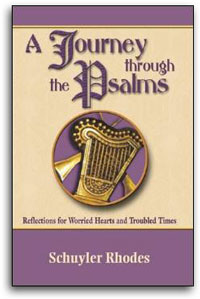
A Journey Through the Psalms: Reflections for Worried Hearts and Troubled Times
Preaching the Psalms Cycles A, B, C
Object:
Here is a psalm, like many, which leans into praise and rejoicing. We are called to sing and to tell out the wonderful works of God. It is a call, especially to those who are seeking. "Let the hearts of those who seek the Lord rejoice." "Seek the Lord, and his strength...."

It is an interesting hiccup here to notice that those who seek are called to rejoice. Usually the popular mind assumes that those who rejoice are the ones who have found and experienced the Lord. Yet, here we find an out-and-out call to go ahead and "seek the Lord." One could, without much imagination, put forth the argument here that God -- or those seeking God -- are lost a good chunk of the time.
Why would someone who hasn't found something wish to rejoice? Having spent the better part of a morning looking for keys, this writer can tell you that the seeking is not much fun at all, and that rejoicing was the furthest thing from thought or intention. Yet, even in the contemporary world, seekers seem to get a lot of attention. There are worship services oriented to "seekers." There are whole conferences teaching pastors and lay leaders how to be "seeker sensitive." What is going on with all this, anyway? What about those who have found it? Don't they deserve some attention?
The whole discussion brings to mind a T-shirt seen at a youth rally lately. It said, in crazy comic lettering, "The journey is my home." Is it possible that there is another path between those who have "found it," and those who ... have not? What if the faded, multicolored T-shirt raised the same point that this psalm subtly asserts? What if the journey is our home?
What if finding God is not a process with a finite end point but a way of being alive? What if God is so holy, so awesome, so huge, and so infinite that even if one seeks a lifetime there will only be momentary flashes of brilliance and gasps of sudden revelation?
If this is the case, and this brief missive would offer that perhaps it is, what does this do with all of our religious trappings and doctrine? If we are called to a lifetime of seeking after the holy, how do we address those who believe they have it all locked and finalized?
Perhaps the answer is as simple as the psalm suggests. Just praise the Lord and keep on seeking.
It is an interesting hiccup here to notice that those who seek are called to rejoice. Usually the popular mind assumes that those who rejoice are the ones who have found and experienced the Lord. Yet, here we find an out-and-out call to go ahead and "seek the Lord." One could, without much imagination, put forth the argument here that God -- or those seeking God -- are lost a good chunk of the time.
Why would someone who hasn't found something wish to rejoice? Having spent the better part of a morning looking for keys, this writer can tell you that the seeking is not much fun at all, and that rejoicing was the furthest thing from thought or intention. Yet, even in the contemporary world, seekers seem to get a lot of attention. There are worship services oriented to "seekers." There are whole conferences teaching pastors and lay leaders how to be "seeker sensitive." What is going on with all this, anyway? What about those who have found it? Don't they deserve some attention?
The whole discussion brings to mind a T-shirt seen at a youth rally lately. It said, in crazy comic lettering, "The journey is my home." Is it possible that there is another path between those who have "found it," and those who ... have not? What if the faded, multicolored T-shirt raised the same point that this psalm subtly asserts? What if the journey is our home?
What if finding God is not a process with a finite end point but a way of being alive? What if God is so holy, so awesome, so huge, and so infinite that even if one seeks a lifetime there will only be momentary flashes of brilliance and gasps of sudden revelation?
If this is the case, and this brief missive would offer that perhaps it is, what does this do with all of our religious trappings and doctrine? If we are called to a lifetime of seeking after the holy, how do we address those who believe they have it all locked and finalized?
Perhaps the answer is as simple as the psalm suggests. Just praise the Lord and keep on seeking.