Junk In Our Souls
Preaching
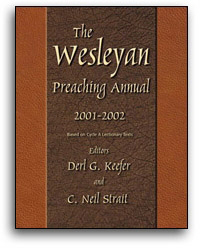
THE WESLEYAN PREACHING ANNUAL 2001--2002
Jim Cymbala, in his refreshing book, Fresh Wind, Fresh Fire, states this: "The first step in any spiritual awakening is demolition. We cannot make headway in seeking God without first tearing down the accumulated junk in our soul. Rationalizing has to cease. We have to start seeing the sinful debris we hadn't noticed before, which is what holds back the blessing of God" (Grand Rapids: Zondervan Publishing House, 1997, p. 159). Cymbala is on to something which we need to hear.

Every genuine pastor seeks spiritual health. They want to have an anointing and an openness to the Holy Spirit. What some do not realize is the cost for such anointing and openness. Cymbala spells it out - "tearing down the accumulated junk in our souls." It is a call for spiritual inventory. It is a call to check the pressures and pleasures of our life, to see how they weigh against kingdom principles.
We live in a transitional age. Nearly everything is up for grabs. The examination of the church has been both good and bad. Good in that some methods had to change, but bad in that too much got tossed out. The proverbial "throwing the baby out with the bathwater," seemed appropriate, on some occasions.
Tony Evans, in his book, The Perfect Christian, wrote:
You and I are witnessing ... the "dumbing down" of righteousness. Not only has the secular society lost its moral compass due to the erosion of any sense of absolute truth, but we Christians are rapidly descending the ladder of holiness rather than ascending the mountain of godliness to be near to and to be like our perfect God (Nashville: Word Publishing, 1998, p. xi).
What we seek is a measuring stick, a scale, a mentor who will inspire us in our soul--inventory. Dr. Carl Leth had it right when he wrote: "When we start from a Christ--focused center and bring a character shaped by God's values into the confusion of our life situations, we have what we need to help us know and do the right thing" ("Doing the Right Thing," in Mirage Image, Everett Leadingham, Editor, Kansas City: Beacon Hill Press of Kansas City, 1998, p. 109).
Jesus must be our passion, our measuring stick, our inspiration, our authority. And the Holy Spirit must be our "Comforter," or "paraclete," the one who comes along side of us and directs the soul--inventory, who empowers us to change and commitment, and who searches our hearts with intensity and conviction.
A.B. Simpson, years ago, wrote in his book, A Larger Christian Life, these words:
There is a measure of the Holy Spirit's life in every regenerate soul, but it is when every part of our being is filled with His love and possessed for His glory that we are wholly sanctified, and it is this divine fullness which excludes and keeps out the power of sin and self, even as it was the descending cloud upon the tabernacle which left no room for Moses within (Harrisburg, Pa.: Christian Publications, n.d., p. 46).
The divine fullness which the Holy Spirit gives to the surrendered heart, is the power working within us which enables us to remove the accumulated junk in our souls.
When you and I have done spiritual inventory, dealing with any junk which might have accumulated, then we are ready for effective and exciting ministry. Then we are ready for God's blessing and anointing, which we need and which we seek.
C. Neil Strait
March 3, 2002 Third Sunday In Lent
WORSHIP HELPS
CALL TO WORSHIP
Leader: We have come today
People: To seek the Lord.
Leader: He can be found.
People: Let us seek the Lord.
Leader: We will call on God
All: And He will hear.
OFFERING THOUGHT
The world calls us to invest our monies. What better investment than in God and His church.
BENEDICTION
If we obey God by keeping His commandments, love one another, and have faith, we will be His treasured possessions.
SERMON BRIEFS
Where Luther Stood - Stand We
Romans 5:1--11
Introduction
The Christian Reformation was one of the most significant periods in human history. It not only changed the face of the church, but also the course of western civilization. There were many causes for the Reformation, but perhaps the single most significant factor was the heroic stand for justification by faith on the part of Martin Luther. Although Wesleyans differ with the theology of Luther at some points - they nonetheless stand where Luther stood on certain key points which gave birth to the reformation and renewal of the church.
Luther was born in 1483, the son of a German peasant family. He decided early to pursue the study of law, but in 1505 he changed his mind and entered to study of the priesthood. He was ordained in 1507. During the early years of his ministry he became convinced that the church had drifted, theologically, from one of core teaching of salvation: that men and women are justified by faith (Romans 5:1). Slowly he began to develop his understanding and convictions.
What Luther came to see was that God's love is so great and the sacrifice of Christ so sufficient that all a person has to do to be saved is to accept the gift of salvation through faith in Christ. Luther went public with his convictions when he nailed a list of 95 theses to the door of the church in Whittenberg, Germany. His document set forth his understanding of salvation and called into question some of the practices of the Church. The rest of the story, as they say, is history.
We can stand with Luther because he stood on the authority of Scripture, even over the authority of the church of his day.
I. He stood against those who misunderstood and thus misrepresented the nature of justification.
Many, in the church of Luther's day, taught that a person's salvation came as a result of the activity of God and man - that men and women had to earn their salvation through good works and/or generous gifts. Romans 5:1--11, however, clearly declares that salvation is a gift of God apart from a person's efforts to be good: "We have been justified by faith" (Romans 5:1). It was this conviction that justification is by grace alone through faith which lay at the heart of the reformation.
II. He stood against those who misunderstood the nature of man's dilemma.
The reformers also recognized the dilemma and spoke out against the misunderstanding of many who believed that the relationship between God and man was essentially one of law, rather than grace.
III. He stood against those who misunderstood the nature of God's grace.
For the Church of the Middle Ages, grace was understood as a kind of substance which could be imparted automatically if one simply participated in certain means of grace, particularly baptism and communion. The dangerous part of that teaching is this: If the way you get God's saving grace is through the sacraments and the Church, and the sacraments were controlled by the priests and the Church - then the agent of grace and forgiveness could shift from God to man. Soon it was the priests who controlled salvation.
Conclusion
The picture of salvation that was prevalent in Luther's day was that of a man who was trapped at the bottom of a great cavern or well. And God through Christ came to save you but he came only part way. It was necessary for man, by good works and indulgences, to raise himself sufficiently so that God might then be able to save him.
But then Luther comes along and he announces the truth of the Scriptures which is this: Man is at the bottom of a well so deep that he can do nothing whatsoever to get out of it. But God does come down into that well, but he doesn't stop half way. He comes in great love all the way! And he takes hold of man and lifts him up out of that pit of sin.
John C. Bowling
The Wesleyan Movement is as relevant and necessary today as it was when John and Charles Wesley
took to the streets and open fields of England.
Encountering God
John 4:5--42
There are people who always seem to come out ahead. There are some people who win every argument, who always have an answer, who cannot be bested in a deal. You know when you start doing business with them that they are going to win regardless. Disgusting, aren't they? Have you ever met someone like that?
Do you realize that there is a sense in which that is true of God? You and I expend a lot of time and energy to deal with God and win. We try to put God at the disadvantage ... to have our own way, and somehow to have God's way too. But you can't! A real encounter with him will forever turn your loss to fortune.
Sometimes that encounter is not only quite involved, it can also be rather uncomfortable. But he never leaves us the same. We come to him with emptiness and he fills us. We come to him with fear and he soothes us. We come to him with doubt and he assures us.
That was true in Jesus' encounter with a woman from the city of Samaria. There, in that place that was despised by the Jewish religionist, the Master met the spiritual need of a thirsty heart. There in that least likely place for someone of his earthly citizenship, Jesus subtly and cleverly exposed her sin and brought her to the point of conviction and repentance. He will do the same for you.
There are several important things you should know about an encounter with God.
I. You can't avoid it.
It's like Jesus meeting with the Samaritan woman ... or Billy Graham having lunch with Madonna, or Mick Jagger meeting Mother Teresa. It just shouldn't happen. These are two people who never should have met. Jesus and the Samaritan woman had nothing in common, but they did meet. And that underscores the first lesson of this story ... you can't avoid meeting God.
I don't know if she was hiding from God, but it's positive that the woman in this encounter was hiding from someone. Going to the well is a community event, but she's alone. She is fully aware of her reputation in the town and wants to hide herself from other people.
Maybe you've tried to hide when you were in trouble. Maybe you avoided your parents. Maybe when you had something to hide, you avoided your spouse's eye. Perhaps when you felt conviction you avoided prayer or skipped out on church.
Notice that Jesus goes out of his way to force an encounter with this woman. He's traveling through Samaria, some Jews didn't. He initiates a conversation with a woman, the disciples would have avoided her. She even comments on it: Why are you asking me for a drink? We shouldn't even be talking! But they were talking ... Jesus got into her life.
You may have tried, but you cannot hide from God. You can stay away from Church, but you cannot avoid the Holy Spirit. You might hide the truth from your spouse, but God sees it. (Probably your spouse does too.) You can avoid your preachy Christian friends but you can't escape the truth. You can shut out your parents, but not God.
You can't avoid Him. God will get into your life. He will confront you. He will draw you with the cords of his love. He will invite you to a drink that will quench your thirst.
II. When you encounter Him, He will already know your deepest need.
The conversation continues. Jesus draws her into a conversation about water. And she takes the bait. She doesn't know it yet, but she's about to be reeled in by the master fisherman. And that's what Jesus will do. He will get your attention with an immediate need. He will turn your attention to your spiritual need.
Jesus continues the dialogue about water. He begins to speak of living water. She knows she needs water (everyone does), and she wants to find a good supply. "Wow," she says. "If you can give me good water, do it."
Notice two things here. One: Jesus has her attention. She's hooked. She's absolutely interested in the next thing he will say. And two: He wants to meet the least obvious need. She's talking physical, he's talking spiritual. He arouses her interest at a basic level - she wanted to save herself some work. But he wants to move her to a deeper level - spiritual need.
It's the same with you and me. You come to Christ with a basic need. You're having marital troubles. You're about to lose your house. You've just been diagnosed with an illness. You're grieving the death of a loved one. You're addicted to alcohol. You're pregnant.
But the real need is never the most obvious one. It is always spiritual. The real problem may not be your marriage, but your sexual sin or selfishness. The primary issue is not your finances, but your love of money and lack of discipline. The basic need is not your illness, but your eternal soul. It's not your addiction to a substance, it's your need for God.
Are you willing to deal with the real need that you have? Are you ready for a real encounter with God?
III. Encountering God is often painful before it is healthful.
If you're ready to get serious with God, my best advice is to hold onto your hat. It's going to jar you some. Because the next step will be confession and that is always painful.
Jesus calls the woman to a point of confession. The next step seems cruel, but it is necessary. The woman is expectant: Give me living water! She's been through so much of life's worst, she's ready for something good. Jesus tests her seriousness. Notice that he already knows about her lifestyle. Nothing about her is hidden from Jesus. Christ wants to see if she is willing to see herself honestly. He looks at her and says: "First go call your husband."
Picture her face. Those words were an arrow through her. Up to now she's been engaged in an interesting conversation, but out of left field is a comment about her personal life. Her face whitens, her eyes turn away. What will she do? What would you do?
There are moments like that in our lives. An innocent remark becomes an indictment.
Other people make casual remarks that cut you to the heart. They expose your sin, your guilt. They do it unknowingly. But God does it on purpose. He wants to see what you will do when confronted with the reality of your own sinfulness.
The Samaritan woman confessed. She could have chosen delay or denial: He's at work, or He's out of town or He's busy. But she said it, out loud. "I have no husband." At that moment all the guilt and shame came pouring out of her ... she confessed.
Will you confess your sin to God? Will you say it aloud? I'm an alcoholic. I lied. I have beaten my wife. I have been unfaithful to my spouse. I did it. It was me. I have no excuse.
It's painful. It hurts a lot. But it's necessary. There can be no forgiveness without confession. Are you ready to confess your sin to God?
IV. Encountering God will bring you to a choice about following Christ.
Sometimes people will try to change the subject when things get a little close. The woman tries to talk about religion. But Jesus forces her to make a choice.
The conversation continues in earnest now. It goes something like this:
Woman: "You're a Jew, I'm a Samaritan. If you know about real religion ... tell me."
Jesus: "It's not about being a Jew, it's about worshipping God in your heart."
Woman: "I know the Messiah will sort all that out."
Jesus: "I am he. It's not about religion ... It's about me!"
Jesus wouldn't allow her to divert attention from the real issue. Diversion is the tactic of anyone who is under conviction. We'll try to switch the topic to religion, or morality, or politics, or anything but the truth.
But it's never about religion, it's about Jesus. You can debate the Bible, but you must decide about Christ. You can be Catholic, Protestant, Pentecostal, or Presbyterian ... it comes down to Jesus. You can hide behind politics and the separation of Church and State, and the abortion issue ... but you cannot hide from this fact: You must make a personal choice about following Jesus Christ.
The Samaritan woman needed to choose. She knew who she was. She heard what Jesus said about himself. Now she had a choice to make. Either Jesus is God's son, or he is not. This is always a personal choice. You and I must choose for ourselves.
Are you ready to make a choice in your life? Are you willing to get beyond haggling over religion, and deal with Jesus? Are you ready to quit hiding behind issues and make a choice?
The choice is yours. The Old Testament leader, Joshua, assembled his family before all of Israel and declared, "If serving the Lord seems undesirable to you, then choose for yourselves this day whom you will serve ... But as for me and my household, we will serve the Lord" (Joshua 24:15).
Stan Toler
Every genuine pastor seeks spiritual health. They want to have an anointing and an openness to the Holy Spirit. What some do not realize is the cost for such anointing and openness. Cymbala spells it out - "tearing down the accumulated junk in our souls." It is a call for spiritual inventory. It is a call to check the pressures and pleasures of our life, to see how they weigh against kingdom principles.
We live in a transitional age. Nearly everything is up for grabs. The examination of the church has been both good and bad. Good in that some methods had to change, but bad in that too much got tossed out. The proverbial "throwing the baby out with the bathwater," seemed appropriate, on some occasions.
Tony Evans, in his book, The Perfect Christian, wrote:
You and I are witnessing ... the "dumbing down" of righteousness. Not only has the secular society lost its moral compass due to the erosion of any sense of absolute truth, but we Christians are rapidly descending the ladder of holiness rather than ascending the mountain of godliness to be near to and to be like our perfect God (Nashville: Word Publishing, 1998, p. xi).
What we seek is a measuring stick, a scale, a mentor who will inspire us in our soul--inventory. Dr. Carl Leth had it right when he wrote: "When we start from a Christ--focused center and bring a character shaped by God's values into the confusion of our life situations, we have what we need to help us know and do the right thing" ("Doing the Right Thing," in Mirage Image, Everett Leadingham, Editor, Kansas City: Beacon Hill Press of Kansas City, 1998, p. 109).
Jesus must be our passion, our measuring stick, our inspiration, our authority. And the Holy Spirit must be our "Comforter," or "paraclete," the one who comes along side of us and directs the soul--inventory, who empowers us to change and commitment, and who searches our hearts with intensity and conviction.
A.B. Simpson, years ago, wrote in his book, A Larger Christian Life, these words:
There is a measure of the Holy Spirit's life in every regenerate soul, but it is when every part of our being is filled with His love and possessed for His glory that we are wholly sanctified, and it is this divine fullness which excludes and keeps out the power of sin and self, even as it was the descending cloud upon the tabernacle which left no room for Moses within (Harrisburg, Pa.: Christian Publications, n.d., p. 46).
The divine fullness which the Holy Spirit gives to the surrendered heart, is the power working within us which enables us to remove the accumulated junk in our souls.
When you and I have done spiritual inventory, dealing with any junk which might have accumulated, then we are ready for effective and exciting ministry. Then we are ready for God's blessing and anointing, which we need and which we seek.
C. Neil Strait
March 3, 2002 Third Sunday In Lent
WORSHIP HELPS
CALL TO WORSHIP
Leader: We have come today
People: To seek the Lord.
Leader: He can be found.
People: Let us seek the Lord.
Leader: We will call on God
All: And He will hear.
OFFERING THOUGHT
The world calls us to invest our monies. What better investment than in God and His church.
BENEDICTION
If we obey God by keeping His commandments, love one another, and have faith, we will be His treasured possessions.
SERMON BRIEFS
Where Luther Stood - Stand We
Romans 5:1--11
Introduction
The Christian Reformation was one of the most significant periods in human history. It not only changed the face of the church, but also the course of western civilization. There were many causes for the Reformation, but perhaps the single most significant factor was the heroic stand for justification by faith on the part of Martin Luther. Although Wesleyans differ with the theology of Luther at some points - they nonetheless stand where Luther stood on certain key points which gave birth to the reformation and renewal of the church.
Luther was born in 1483, the son of a German peasant family. He decided early to pursue the study of law, but in 1505 he changed his mind and entered to study of the priesthood. He was ordained in 1507. During the early years of his ministry he became convinced that the church had drifted, theologically, from one of core teaching of salvation: that men and women are justified by faith (Romans 5:1). Slowly he began to develop his understanding and convictions.
What Luther came to see was that God's love is so great and the sacrifice of Christ so sufficient that all a person has to do to be saved is to accept the gift of salvation through faith in Christ. Luther went public with his convictions when he nailed a list of 95 theses to the door of the church in Whittenberg, Germany. His document set forth his understanding of salvation and called into question some of the practices of the Church. The rest of the story, as they say, is history.
We can stand with Luther because he stood on the authority of Scripture, even over the authority of the church of his day.
I. He stood against those who misunderstood and thus misrepresented the nature of justification.
Many, in the church of Luther's day, taught that a person's salvation came as a result of the activity of God and man - that men and women had to earn their salvation through good works and/or generous gifts. Romans 5:1--11, however, clearly declares that salvation is a gift of God apart from a person's efforts to be good: "We have been justified by faith" (Romans 5:1). It was this conviction that justification is by grace alone through faith which lay at the heart of the reformation.
II. He stood against those who misunderstood the nature of man's dilemma.
The reformers also recognized the dilemma and spoke out against the misunderstanding of many who believed that the relationship between God and man was essentially one of law, rather than grace.
III. He stood against those who misunderstood the nature of God's grace.
For the Church of the Middle Ages, grace was understood as a kind of substance which could be imparted automatically if one simply participated in certain means of grace, particularly baptism and communion. The dangerous part of that teaching is this: If the way you get God's saving grace is through the sacraments and the Church, and the sacraments were controlled by the priests and the Church - then the agent of grace and forgiveness could shift from God to man. Soon it was the priests who controlled salvation.
Conclusion
The picture of salvation that was prevalent in Luther's day was that of a man who was trapped at the bottom of a great cavern or well. And God through Christ came to save you but he came only part way. It was necessary for man, by good works and indulgences, to raise himself sufficiently so that God might then be able to save him.
But then Luther comes along and he announces the truth of the Scriptures which is this: Man is at the bottom of a well so deep that he can do nothing whatsoever to get out of it. But God does come down into that well, but he doesn't stop half way. He comes in great love all the way! And he takes hold of man and lifts him up out of that pit of sin.
John C. Bowling
The Wesleyan Movement is as relevant and necessary today as it was when John and Charles Wesley
took to the streets and open fields of England.
Encountering God
John 4:5--42
There are people who always seem to come out ahead. There are some people who win every argument, who always have an answer, who cannot be bested in a deal. You know when you start doing business with them that they are going to win regardless. Disgusting, aren't they? Have you ever met someone like that?
Do you realize that there is a sense in which that is true of God? You and I expend a lot of time and energy to deal with God and win. We try to put God at the disadvantage ... to have our own way, and somehow to have God's way too. But you can't! A real encounter with him will forever turn your loss to fortune.
Sometimes that encounter is not only quite involved, it can also be rather uncomfortable. But he never leaves us the same. We come to him with emptiness and he fills us. We come to him with fear and he soothes us. We come to him with doubt and he assures us.
That was true in Jesus' encounter with a woman from the city of Samaria. There, in that place that was despised by the Jewish religionist, the Master met the spiritual need of a thirsty heart. There in that least likely place for someone of his earthly citizenship, Jesus subtly and cleverly exposed her sin and brought her to the point of conviction and repentance. He will do the same for you.
There are several important things you should know about an encounter with God.
I. You can't avoid it.
It's like Jesus meeting with the Samaritan woman ... or Billy Graham having lunch with Madonna, or Mick Jagger meeting Mother Teresa. It just shouldn't happen. These are two people who never should have met. Jesus and the Samaritan woman had nothing in common, but they did meet. And that underscores the first lesson of this story ... you can't avoid meeting God.
I don't know if she was hiding from God, but it's positive that the woman in this encounter was hiding from someone. Going to the well is a community event, but she's alone. She is fully aware of her reputation in the town and wants to hide herself from other people.
Maybe you've tried to hide when you were in trouble. Maybe you avoided your parents. Maybe when you had something to hide, you avoided your spouse's eye. Perhaps when you felt conviction you avoided prayer or skipped out on church.
Notice that Jesus goes out of his way to force an encounter with this woman. He's traveling through Samaria, some Jews didn't. He initiates a conversation with a woman, the disciples would have avoided her. She even comments on it: Why are you asking me for a drink? We shouldn't even be talking! But they were talking ... Jesus got into her life.
You may have tried, but you cannot hide from God. You can stay away from Church, but you cannot avoid the Holy Spirit. You might hide the truth from your spouse, but God sees it. (Probably your spouse does too.) You can avoid your preachy Christian friends but you can't escape the truth. You can shut out your parents, but not God.
You can't avoid Him. God will get into your life. He will confront you. He will draw you with the cords of his love. He will invite you to a drink that will quench your thirst.
II. When you encounter Him, He will already know your deepest need.
The conversation continues. Jesus draws her into a conversation about water. And she takes the bait. She doesn't know it yet, but she's about to be reeled in by the master fisherman. And that's what Jesus will do. He will get your attention with an immediate need. He will turn your attention to your spiritual need.
Jesus continues the dialogue about water. He begins to speak of living water. She knows she needs water (everyone does), and she wants to find a good supply. "Wow," she says. "If you can give me good water, do it."
Notice two things here. One: Jesus has her attention. She's hooked. She's absolutely interested in the next thing he will say. And two: He wants to meet the least obvious need. She's talking physical, he's talking spiritual. He arouses her interest at a basic level - she wanted to save herself some work. But he wants to move her to a deeper level - spiritual need.
It's the same with you and me. You come to Christ with a basic need. You're having marital troubles. You're about to lose your house. You've just been diagnosed with an illness. You're grieving the death of a loved one. You're addicted to alcohol. You're pregnant.
But the real need is never the most obvious one. It is always spiritual. The real problem may not be your marriage, but your sexual sin or selfishness. The primary issue is not your finances, but your love of money and lack of discipline. The basic need is not your illness, but your eternal soul. It's not your addiction to a substance, it's your need for God.
Are you willing to deal with the real need that you have? Are you ready for a real encounter with God?
III. Encountering God is often painful before it is healthful.
If you're ready to get serious with God, my best advice is to hold onto your hat. It's going to jar you some. Because the next step will be confession and that is always painful.
Jesus calls the woman to a point of confession. The next step seems cruel, but it is necessary. The woman is expectant: Give me living water! She's been through so much of life's worst, she's ready for something good. Jesus tests her seriousness. Notice that he already knows about her lifestyle. Nothing about her is hidden from Jesus. Christ wants to see if she is willing to see herself honestly. He looks at her and says: "First go call your husband."
Picture her face. Those words were an arrow through her. Up to now she's been engaged in an interesting conversation, but out of left field is a comment about her personal life. Her face whitens, her eyes turn away. What will she do? What would you do?
There are moments like that in our lives. An innocent remark becomes an indictment.
Other people make casual remarks that cut you to the heart. They expose your sin, your guilt. They do it unknowingly. But God does it on purpose. He wants to see what you will do when confronted with the reality of your own sinfulness.
The Samaritan woman confessed. She could have chosen delay or denial: He's at work, or He's out of town or He's busy. But she said it, out loud. "I have no husband." At that moment all the guilt and shame came pouring out of her ... she confessed.
Will you confess your sin to God? Will you say it aloud? I'm an alcoholic. I lied. I have beaten my wife. I have been unfaithful to my spouse. I did it. It was me. I have no excuse.
It's painful. It hurts a lot. But it's necessary. There can be no forgiveness without confession. Are you ready to confess your sin to God?
IV. Encountering God will bring you to a choice about following Christ.
Sometimes people will try to change the subject when things get a little close. The woman tries to talk about religion. But Jesus forces her to make a choice.
The conversation continues in earnest now. It goes something like this:
Woman: "You're a Jew, I'm a Samaritan. If you know about real religion ... tell me."
Jesus: "It's not about being a Jew, it's about worshipping God in your heart."
Woman: "I know the Messiah will sort all that out."
Jesus: "I am he. It's not about religion ... It's about me!"
Jesus wouldn't allow her to divert attention from the real issue. Diversion is the tactic of anyone who is under conviction. We'll try to switch the topic to religion, or morality, or politics, or anything but the truth.
But it's never about religion, it's about Jesus. You can debate the Bible, but you must decide about Christ. You can be Catholic, Protestant, Pentecostal, or Presbyterian ... it comes down to Jesus. You can hide behind politics and the separation of Church and State, and the abortion issue ... but you cannot hide from this fact: You must make a personal choice about following Jesus Christ.
The Samaritan woman needed to choose. She knew who she was. She heard what Jesus said about himself. Now she had a choice to make. Either Jesus is God's son, or he is not. This is always a personal choice. You and I must choose for ourselves.
Are you ready to make a choice in your life? Are you willing to get beyond haggling over religion, and deal with Jesus? Are you ready to quit hiding behind issues and make a choice?
The choice is yours. The Old Testament leader, Joshua, assembled his family before all of Israel and declared, "If serving the Lord seems undesirable to you, then choose for yourselves this day whom you will serve ... But as for me and my household, we will serve the Lord" (Joshua 24:15).
Stan Toler