Epiphany 6 / Ordinary Time 6
Preaching
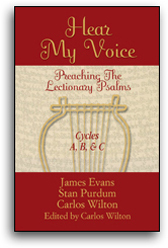
Hear My Voice
Preaching The Lectionary Psalms for Cycles A, B, C
(See Proper 20/Pentecost 18/Ordinary Time 25, Cycle B for an alternative approach.)
The writer of Psalm 1 has created a timeless image of human existence as a tree. The image of a tree allows the poet to proclaim in graphic terms the effects of having, and not having, a viable relationship with God. The tree, as a durable life form, symbolizes well the significance and importance of seeking and living a faithful life.

The good tree, according to the psalmist, is positioned by an abundant source of water. Having good soil and plenty of water, the tree thrives and grows. The psalmist points to the tree and says to us, "This tree can be a picture of your life -- rooted, productive, truly alive, beautiful."
"How can we do that?" we ask. "How can a life have all these dimensions?"
The psalmist is ready with an answer. First, there are things to avoid. People whose lives are rooted and growing don't follow the advice of the wicked, they don't take the paths sinners take and they don't associate with cynics and scoffers (vv. 1-3). These are habits and practices and relationships that take us away from good soil and good water.
For the psalmist, the path to a happy life, nurtured and blessed by God, requires only the observation of one discipline: Those whose lives are flourishing, whose lives are truly happy, are the ones who take "delight in the law of the Lord."
Translating the Hebrew word, "Torah," as law is sometimes misleading, even though it is by far the most common rendering of the word. The problem comes, however, when we use our American connotation of what "law" means to interpret what Torah means -- they are not the same. Law in our culture consists of statutes, ordinances, prohibitions, and directives. And there is certainly some of that in the Hebrew Torah. However, if we limit our understanding of Torah only to enforceable do's and don'ts, we miss the significance of what the psalmist is trying to tell us. Life does not flourish simply because the rules are kept.
The idea of Torah, while including do's and don'ts, is really about learning God's way of doing things. Law is meant for instruction rather than enforcement. No one has ever forced anyone to live a meaningful and happy life. These are things we learn.
Understanding the word, "law," this way helps to highlight the contrast the psalmist has set up between the "advice" of the wicked and the "path" of sinners as opposed to God's "teaching," God's way. It also helps to complete the image of the tree. The water and the soil that enriches life and makes it whole is not blind obedience to a set of rules. It is when we are nurtured on God's truth, and we learn God's way that true happiness and wholeness become the fruit of our faithfulness.
-- J. E.
The writer of Psalm 1 has created a timeless image of human existence as a tree. The image of a tree allows the poet to proclaim in graphic terms the effects of having, and not having, a viable relationship with God. The tree, as a durable life form, symbolizes well the significance and importance of seeking and living a faithful life.
The good tree, according to the psalmist, is positioned by an abundant source of water. Having good soil and plenty of water, the tree thrives and grows. The psalmist points to the tree and says to us, "This tree can be a picture of your life -- rooted, productive, truly alive, beautiful."
"How can we do that?" we ask. "How can a life have all these dimensions?"
The psalmist is ready with an answer. First, there are things to avoid. People whose lives are rooted and growing don't follow the advice of the wicked, they don't take the paths sinners take and they don't associate with cynics and scoffers (vv. 1-3). These are habits and practices and relationships that take us away from good soil and good water.
For the psalmist, the path to a happy life, nurtured and blessed by God, requires only the observation of one discipline: Those whose lives are flourishing, whose lives are truly happy, are the ones who take "delight in the law of the Lord."
Translating the Hebrew word, "Torah," as law is sometimes misleading, even though it is by far the most common rendering of the word. The problem comes, however, when we use our American connotation of what "law" means to interpret what Torah means -- they are not the same. Law in our culture consists of statutes, ordinances, prohibitions, and directives. And there is certainly some of that in the Hebrew Torah. However, if we limit our understanding of Torah only to enforceable do's and don'ts, we miss the significance of what the psalmist is trying to tell us. Life does not flourish simply because the rules are kept.
The idea of Torah, while including do's and don'ts, is really about learning God's way of doing things. Law is meant for instruction rather than enforcement. No one has ever forced anyone to live a meaningful and happy life. These are things we learn.
Understanding the word, "law," this way helps to highlight the contrast the psalmist has set up between the "advice" of the wicked and the "path" of sinners as opposed to God's "teaching," God's way. It also helps to complete the image of the tree. The water and the soil that enriches life and makes it whole is not blind obedience to a set of rules. It is when we are nurtured on God's truth, and we learn God's way that true happiness and wholeness become the fruit of our faithfulness.
-- J. E.