

Confession is good for the soul. It's about telling the truth
Preaching
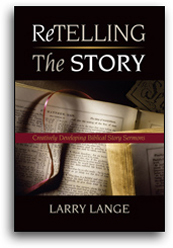
Retelling The Story
Creatively Developing Biblical Story Sermons
Object:
One of the requirements of the Doctor of Ministry process with which I never complied was developing a "Sermon Purpose Statement" before writing my sermons. We were supposed to have written this statement even before discussing the sermon texts with our preaching groups. If I had already settled on a purpose for the sermon before discussing the lessons with the group, I'm not sure that their participation in preparing the sermon would have been so profoundly helpful for me. As I have noted, several ideas, even entire lines in the sermons came directly from the members of the preaching groups! My objection to Sermon Purpose Statements went deeper than this obvious problem. It had to do with the creative processes of character and plot development described in this book. If you set a character free to live, breathe, speak, and act in and beyond the boundaries of a pericope, you'll enjoy some homiletical surprises no Sermon Purpose Statement could anticipate.

It is important, however, after your is sermon is complete, to imagine yourself as the listener/viewer (one perhaps, who has to fill out a Sermon Notes form for Confirmation!) and try to summarize the point of your sermon in one sentence. There are several reasons why coming up with a Sermon Purpose Statement after you're done writing is a good discipline. When the rhetorical effect you are trying to achieve depends upon connecting with a biblical character and not upon a clearly defined set of didactic points, listeners/viewers can get stuck in a personal connection they've made with the story that may be tangential to your purpose. Analyzing everything you fabricate and create about your characters in light of a Sermon Purpose Statement will help minimalize this kind of confusion. Every word and detail must point steadfastly in one direction. Secondly, caught up in the excitement of your creativity you might inadvertently forget or modify a salient detail in a pericope. People may notice these differences between the pericope and your story. When they do, they can be distracted by suspicions about why you're distorting the pericope and the spell of willing suspension of disbelief is broken.
Finally, these kinds of sermons do demand more of listeners/viewers. People who like to understand things through logical presentations which analyze and elucidate ideas in clear, step-by-step processes, may be frustrated and confused having to examine feelings and questions left by some stories. Once my daughter wrote a story with a strange, inscrutable ending for her middle school writing teacher whose primary teaching expertise was science. The main character in my daughter's story was a girl who had found what she believed to be a valuable gold coin in the ocean. Several people ridiculed the girl for believing the coin was real. Without telling us why, the narrator concludes the story rather abruptly by describing how the girl throws the coin back into the ocean. Up to this point, the reader feels there's enough evidence to justify the girl's pursuit of more research about the coin, so the reader is confused and perhaps even angry with the girl for tossing a potentially valuable coin back into the sea. To a scientifically-oriented teacher expecting a nice logical, realistic plot, the story seemed to be capricious nonsense and was graded likewise. Upon first reading it, I too, was angry with the girl in the story; I too, felt the ending was capricious nonsense, until I thought more about my feelings toward the girl and questioned more deeply why she'd thrown the coin away. Maybe it was that she valued her own faith in the coin, and she could not bear to have it mocked. Maybe throwing it into the sea was away of protecting what she felt was valuable. Maybe the story is a parable about faith in a cynical world, a world not inclined to help its young people explore faith, but simply to discount it, ignore it, overwhelm it with a million multimedia spectacles. Or maybe it was a story about the fearfulness of examining one's faith; maybe something or someone could prove that faith is unfounded. Maybe the story expressed both sets of thoughts and feelings at once. In order to understand any story, readers or hearers must be encouraged to linger over it a bit, reflecting upon the thoughts and feelings the story raises up in them.
Several times in the course of my studies, I've been encouraged to write a little summary of my sermon in the bulletin for folks who have trouble understanding story sermons. Richard Jensen quotes Flannery O'Connor who gives us the quintessential response to such requests: "People have a habit of saying, 'What is the theme of your story?' and they expect you to give them a statement: 'The theme of my story is the economic pressure of the machine on the middle class' -- or some such absurdity. When they have got a statement like that, they go off happy and feel it is no longer necessary to read the story."1 I have never provided such summaries. There is, however, at least one way I have found to suggest a question or a theme to listen for during my sermons. I do this during the children's message that comes right before the sermon. These suggestions can guide both children and adults as they reflect on the questions that may be raised for them as I retell a biblical story.
The best way to help those confused by story sermons is to invite people to talk about your sermons with you. This is what my preaching groups did after each parish project sermon. Sometimes we invited the whole congregation into this conversation. Your openness to discussing your sermons will go a long way to helping people accept and enjoy new forms of preaching. In larger congregations, offering opportunities to discuss your sermon immediately following the sermon is sometimes logistically problematic. Offer the opportunity anyway, even if it's later in the day, especially if you are concerned about people feeling confused, especially if you are just beginning to preach by retelling biblical stories. These sessions will be filled with hours of teachable moments for your members and for yourself. You will be surprised by what people hear. Sometimes you'll be dismayed. You'll always learn something about the scriptures, about how people experience sermons (of any kind), and about the art of preaching by telling stories. The extra effort is worth it, because, after all, they're not just stories you're telling; you're telling the truth! And the truth deserves our best.
Chapter Notes
1. Flannery O'Conner, Mystery and Manners, eds. Sally and Robert Fitzgerald (New York: Farrar, Straus, Giroux, 1969), p. 73.
It is important, however, after your is sermon is complete, to imagine yourself as the listener/viewer (one perhaps, who has to fill out a Sermon Notes form for Confirmation!) and try to summarize the point of your sermon in one sentence. There are several reasons why coming up with a Sermon Purpose Statement after you're done writing is a good discipline. When the rhetorical effect you are trying to achieve depends upon connecting with a biblical character and not upon a clearly defined set of didactic points, listeners/viewers can get stuck in a personal connection they've made with the story that may be tangential to your purpose. Analyzing everything you fabricate and create about your characters in light of a Sermon Purpose Statement will help minimalize this kind of confusion. Every word and detail must point steadfastly in one direction. Secondly, caught up in the excitement of your creativity you might inadvertently forget or modify a salient detail in a pericope. People may notice these differences between the pericope and your story. When they do, they can be distracted by suspicions about why you're distorting the pericope and the spell of willing suspension of disbelief is broken.
Finally, these kinds of sermons do demand more of listeners/viewers. People who like to understand things through logical presentations which analyze and elucidate ideas in clear, step-by-step processes, may be frustrated and confused having to examine feelings and questions left by some stories. Once my daughter wrote a story with a strange, inscrutable ending for her middle school writing teacher whose primary teaching expertise was science. The main character in my daughter's story was a girl who had found what she believed to be a valuable gold coin in the ocean. Several people ridiculed the girl for believing the coin was real. Without telling us why, the narrator concludes the story rather abruptly by describing how the girl throws the coin back into the ocean. Up to this point, the reader feels there's enough evidence to justify the girl's pursuit of more research about the coin, so the reader is confused and perhaps even angry with the girl for tossing a potentially valuable coin back into the sea. To a scientifically-oriented teacher expecting a nice logical, realistic plot, the story seemed to be capricious nonsense and was graded likewise. Upon first reading it, I too, was angry with the girl in the story; I too, felt the ending was capricious nonsense, until I thought more about my feelings toward the girl and questioned more deeply why she'd thrown the coin away. Maybe it was that she valued her own faith in the coin, and she could not bear to have it mocked. Maybe throwing it into the sea was away of protecting what she felt was valuable. Maybe the story is a parable about faith in a cynical world, a world not inclined to help its young people explore faith, but simply to discount it, ignore it, overwhelm it with a million multimedia spectacles. Or maybe it was a story about the fearfulness of examining one's faith; maybe something or someone could prove that faith is unfounded. Maybe the story expressed both sets of thoughts and feelings at once. In order to understand any story, readers or hearers must be encouraged to linger over it a bit, reflecting upon the thoughts and feelings the story raises up in them.
Several times in the course of my studies, I've been encouraged to write a little summary of my sermon in the bulletin for folks who have trouble understanding story sermons. Richard Jensen quotes Flannery O'Connor who gives us the quintessential response to such requests: "People have a habit of saying, 'What is the theme of your story?' and they expect you to give them a statement: 'The theme of my story is the economic pressure of the machine on the middle class' -- or some such absurdity. When they have got a statement like that, they go off happy and feel it is no longer necessary to read the story."1 I have never provided such summaries. There is, however, at least one way I have found to suggest a question or a theme to listen for during my sermons. I do this during the children's message that comes right before the sermon. These suggestions can guide both children and adults as they reflect on the questions that may be raised for them as I retell a biblical story.
The best way to help those confused by story sermons is to invite people to talk about your sermons with you. This is what my preaching groups did after each parish project sermon. Sometimes we invited the whole congregation into this conversation. Your openness to discussing your sermons will go a long way to helping people accept and enjoy new forms of preaching. In larger congregations, offering opportunities to discuss your sermon immediately following the sermon is sometimes logistically problematic. Offer the opportunity anyway, even if it's later in the day, especially if you are concerned about people feeling confused, especially if you are just beginning to preach by retelling biblical stories. These sessions will be filled with hours of teachable moments for your members and for yourself. You will be surprised by what people hear. Sometimes you'll be dismayed. You'll always learn something about the scriptures, about how people experience sermons (of any kind), and about the art of preaching by telling stories. The extra effort is worth it, because, after all, they're not just stories you're telling; you're telling the truth! And the truth deserves our best.
Chapter Notes
1. Flannery O'Conner, Mystery and Manners, eds. Sally and Robert Fitzgerald (New York: Farrar, Straus, Giroux, 1969), p. 73.

