
Christmas 1
Preaching
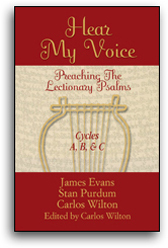
Hear My Voice
Preaching The Lectionary Psalms for Cycles A, B, C
(Occurs in all three cycles of the lectionary; see Christmas 1, Cycle A; Christmas 1, Cycle B; and Easter 5, Cycle C, for alternative approaches.)
Psalm 148 is a magnificent hymn of praise that moves with sweeping stanzas and evocative language through the orders of creation -- from angels to humans -- calling on all of creation to praise God. Not only does the psalm begin and end with a call to praise, but this call is repeated ten additional times in the body of the song. The reasons for the praise are given only at the end of each of the two sections of the psalm, when the poet has satisfied himself that -- in symbol at least -- he has left no being and no thing, whether in the heavens or on the earth, uninvited to praise.
This sort of exuberant behavior is reserved in our culture for sporting events and live entertainment. We are accustomed to seeing football fans, clothed in outlandish costumes, standing and cheering with all their might. We are also familiar with the fans of rock stars screaming at the top of their lungs as they express adulation for their heroes.
Ironically, faith traditions that feature loud music and animated actions on the part of worshipers are often derided as being part of "the faith fringe." We in the mainstream pride ourselves on doing things "decently and in order," and look upon over-excited vocal expressions of joyfulness as distractions rather than genuine elements of worship.
In other words, the call to unrestrained praise suggested by this psalm has to be toned down to a more acceptable liturgical level in order to be performed in many churches.
This is not to suggest that all congregations should immediately adopt charismatic or seeker-style worship services -- obviously, too much of even a good thing can be too much. However, there is an important lesson to be learned from this psalm, and the more reserved we are in worship the harder it is to hear.
We are called as people of faith to engage in lavish and energetic worship -- worshiping God with all we've got. Certainly there are moments when solemnity and reflection are needed. Certainly there are times when awe and reverence should be observed. Even silence has its place in worship.
Yet, as the psalm suggests, there are also times when praise -- exuberant, heartfelt praise -- is the order of the day. If we really believe what we confess about God and the work God has done in Jesus the Christ, how can we in good conscience remain silent as we apprehend the goodness and grace of God?
I have a friend who is highly regimented in his daily routine. He runs at the same time every day and eats breakfast, lunch, and dinner right on schedule. His meetings start and stop on time, and he is always early with his deadlines.
I told him once, "Bob, you need some spontaneity in your life, some free, creative time." He looked at me seriously for a moment and said, "I could schedule some of that."
We are called to praise the Lord. If necessary, let us "schedule" a time in our service, or in our lives, when we let down our guard and our reservations and praise the Lord with all we have.
-- J. E.
Psalm 148 is a magnificent hymn of praise that moves with sweeping stanzas and evocative language through the orders of creation -- from angels to humans -- calling on all of creation to praise God. Not only does the psalm begin and end with a call to praise, but this call is repeated ten additional times in the body of the song. The reasons for the praise are given only at the end of each of the two sections of the psalm, when the poet has satisfied himself that -- in symbol at least -- he has left no being and no thing, whether in the heavens or on the earth, uninvited to praise.
This sort of exuberant behavior is reserved in our culture for sporting events and live entertainment. We are accustomed to seeing football fans, clothed in outlandish costumes, standing and cheering with all their might. We are also familiar with the fans of rock stars screaming at the top of their lungs as they express adulation for their heroes.
Ironically, faith traditions that feature loud music and animated actions on the part of worshipers are often derided as being part of "the faith fringe." We in the mainstream pride ourselves on doing things "decently and in order," and look upon over-excited vocal expressions of joyfulness as distractions rather than genuine elements of worship.
In other words, the call to unrestrained praise suggested by this psalm has to be toned down to a more acceptable liturgical level in order to be performed in many churches.
This is not to suggest that all congregations should immediately adopt charismatic or seeker-style worship services -- obviously, too much of even a good thing can be too much. However, there is an important lesson to be learned from this psalm, and the more reserved we are in worship the harder it is to hear.
We are called as people of faith to engage in lavish and energetic worship -- worshiping God with all we've got. Certainly there are moments when solemnity and reflection are needed. Certainly there are times when awe and reverence should be observed. Even silence has its place in worship.
Yet, as the psalm suggests, there are also times when praise -- exuberant, heartfelt praise -- is the order of the day. If we really believe what we confess about God and the work God has done in Jesus the Christ, how can we in good conscience remain silent as we apprehend the goodness and grace of God?
I have a friend who is highly regimented in his daily routine. He runs at the same time every day and eats breakfast, lunch, and dinner right on schedule. His meetings start and stop on time, and he is always early with his deadlines.
I told him once, "Bob, you need some spontaneity in your life, some free, creative time." He looked at me seriously for a moment and said, "I could schedule some of that."
We are called to praise the Lord. If necessary, let us "schedule" a time in our service, or in our lives, when we let down our guard and our reservations and praise the Lord with all we have.
-- J. E.
