
Proper 10 / Pentecost 5 / Ordinary Time 15
Preaching
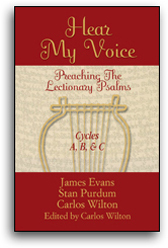
Hear My Voice
Preaching The Lectionary Psalms for Cycles A, B, C
Often, a distinction is made between the pastoral or priestly work of the church and the prophetic work. Pastoral care has to do with the care of souls, the offering of comfort in times of loss. The priestly character of pastoral work seeks to mediate the presence of God to those who are hurting.
The prophetic work of the church, however, involves challenging the faith community to act ethically, and also to speak the truth to the powerful. The prophets of the Old Testament often positioned themselves between the king and the community of faith, and challenged each to faithfully observe their various divine appointments. It is this in-between position, taken by the prophet, which has led to the claim that a prophet cannot function as pastor, and vice versa. A prophet is in the community, but not quite.
Psalm 82 demonstrates that this line of thinking may not be entirely true. The psalmist has created a poem that succeeds in comforting the afflicted, while at the same time afflicting the comfortable.
The psalmist begins by making the claim that God sits at the head of all tables. God is the King of all kings, the Ruler over all rulers. In doing this, the psalmist effectively subordinates the power of earthly kings to the dictates and expectations of God's will. If we are going to speak the truth to the powerful, it's not a bad idea to begin the conversation by putting in proper perspective just how limited the power of the powerful really is.
Once the conversation begins, however, the psalmist moves immediately to the prophetic judgment: "How long will you judge unjustly and show partiality to the wicked? Give justice to the weak and the orphan; maintain the right of the lowly and the destitute."
The judgment continues as an aside, as if God turns to the psalmist himself. "They have neither knowledge nor understanding, they walk around in darkness" (v. 5).
The purpose of the aside is twofold. First, the powerful overhear God's complaint -- but the worshiping audience also overhears. The psalmist presents the report of this council meeting in the context of the worship. Those present for prayer overhear God's condemnation and complaint, and in the aside, God speaks to his people about their leaders, telling them that the leaders are in the dark.
This amazing device has the effect of simultaneously subverting the power of the unjust leaders, while at the same time emboldening the community of faith. These words assure them that God is really on their side.
It is also in overhearing the conversation between God and the leaders that the pastoral-care feature of this psalm has its effect. It is among those who have been victimized by the powerful that God condemns their oppressors. It is in the hearing of those who are hurting that God orders the princes of the land to "rescue the weak and the needy" (v. 4).
In the real world, we know that the powerful do not always respond to God's challenge. They forget that, in spite of their great power, they will "die like mortals." In the real world, the powerful often silence the prophets and leave the weak in misery, but what this psalm accomplishes is to give a powerful reminder of whose side God is really on. Even though the wicked may prosper for a season, God will ultimately vindicate the cause of the poor and heal them with love and mercy. In that promise, they are encouraged to keep faith and have hope.
-- J. E.
The prophetic work of the church, however, involves challenging the faith community to act ethically, and also to speak the truth to the powerful. The prophets of the Old Testament often positioned themselves between the king and the community of faith, and challenged each to faithfully observe their various divine appointments. It is this in-between position, taken by the prophet, which has led to the claim that a prophet cannot function as pastor, and vice versa. A prophet is in the community, but not quite.
Psalm 82 demonstrates that this line of thinking may not be entirely true. The psalmist has created a poem that succeeds in comforting the afflicted, while at the same time afflicting the comfortable.
The psalmist begins by making the claim that God sits at the head of all tables. God is the King of all kings, the Ruler over all rulers. In doing this, the psalmist effectively subordinates the power of earthly kings to the dictates and expectations of God's will. If we are going to speak the truth to the powerful, it's not a bad idea to begin the conversation by putting in proper perspective just how limited the power of the powerful really is.
Once the conversation begins, however, the psalmist moves immediately to the prophetic judgment: "How long will you judge unjustly and show partiality to the wicked? Give justice to the weak and the orphan; maintain the right of the lowly and the destitute."
The judgment continues as an aside, as if God turns to the psalmist himself. "They have neither knowledge nor understanding, they walk around in darkness" (v. 5).
The purpose of the aside is twofold. First, the powerful overhear God's complaint -- but the worshiping audience also overhears. The psalmist presents the report of this council meeting in the context of the worship. Those present for prayer overhear God's condemnation and complaint, and in the aside, God speaks to his people about their leaders, telling them that the leaders are in the dark.
This amazing device has the effect of simultaneously subverting the power of the unjust leaders, while at the same time emboldening the community of faith. These words assure them that God is really on their side.
It is also in overhearing the conversation between God and the leaders that the pastoral-care feature of this psalm has its effect. It is among those who have been victimized by the powerful that God condemns their oppressors. It is in the hearing of those who are hurting that God orders the princes of the land to "rescue the weak and the needy" (v. 4).
In the real world, we know that the powerful do not always respond to God's challenge. They forget that, in spite of their great power, they will "die like mortals." In the real world, the powerful often silence the prophets and leave the weak in misery, but what this psalm accomplishes is to give a powerful reminder of whose side God is really on. Even though the wicked may prosper for a season, God will ultimately vindicate the cause of the poor and heal them with love and mercy. In that promise, they are encouraged to keep faith and have hope.
-- J. E.
