
A Gift For One Who Has Everything
Sermon
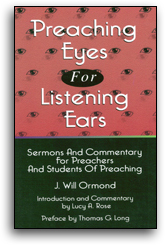
Preaching Eyes for Listening Ears
Sermons and Commentary For Preachers and Students of Preaching
This sermon was prepared for a seminary congregation at a regular chapel service at Columbia Seminary.
It can be characterized as a public wrestling with the text as the preacher expresses his own sense of discomfort with the story. He resists identification with the man "who has everything" until he finally recognizes that he and the rich young ruler have more in common than he first thought.
By applying the passage most directly to his own experience, he hopes that the hearers will see themselves in the narrative.
A scholarly commentary says that the man who comes to Jesus in this story is not named so that every reader can identify with him.
Well, I find that rather difficult to do in my case. For traditionally, by harmonizing the synoptic account of this narrative, the man is known as the rich young ruler.
I find it somewhat incongruous to lay claim to any of these titles. And as for keeping all the commandments "from my youth," well, that takes in far too long a span of time for me. Since last Wednesday, perhaps, but hardly "from my youth."
So if I must identify with someone in this story, maybe I can try identifying with Jesus. But I quickly find that doesn't work either. For one thing, as soon as the man says to Jesus, "Teacher, all these I have observed from my youth," Mark, and only Mark, writes, "And Jesus, looking at him, loved him."
And I ask, "Why?"
I must admit that I am somewhat uneasy around people who never make a mistake, who seem always to have it all together, who always say exactly the right thing at the right time all the time, and who tell only of their successes because they are not aware of any failures.
Then, too, it seems to me that Jesus could have relaxed the conditions a little in the case of this young man.
I think if I had been screening recruits I would have said to this one (even if I didn't like him very much), "Come, follow me. Join us and bring your possessions with you, especially your checkbook and your billfold full of credit cards."
For a group led by someone who has no place to lay his head, for a bunch who is sent out taking "no bread, no bag, no money for your purses," it would be nice to have some reserves they can fall back on when they are in a tight spot.
So if I don't identify with the rich young ruler very well nor with Jesus, then that leaves me with the disciples "amazed at his word" and "exceedingly astonished." For if someone who has everything misses out on the Kingdom of God, where does that leave the likes of you and me?
At first glance this young man does seem to have everything. He is eager. He is courteous. He is reverent toward Jesus. He is concerned for his own spiritual welfare. He is morally good, upright, respectable. And he has great possessions. Most of us would be hard put to say to him, "You lack one thing."
But he himself senses that something is missing. He may not be as arrogant, cocky, and self--assured as he appears at first glance. As I look at him more closely I can come a little nearer understanding why; as "Jesus looked straight at him, his heart warmed to him," as the New English Bible translates it.
For there is a chink or two in that perfectly polished armor. There is a fermenting discontent, a reaching out, a thinly disguised cry for help in his question, "What must I do to inherit eternal life?"
It is as if he is saying in puzzled bewilderment, "Here I am, Lord, with all these abilities, talents, morality, security, and power. Surely there is something I can do to focus it all together so that life becomes complete and whole. What is it, Lord?"
There is a wistful vulnerability, a subtle sense of incompleteness in his "All these I have observed from my youth." This he has done, and still it is not enough to satisfy him.
Perhaps one reason Jesus' heart warms toward him is because this young man is so near to becoming a disciple. He is on the right road. He is concerned about the right thing - eternal life. He is living up to the light that he has. But he wants to take another step, to break out of the sameness and predictability of his strictly legal morality.
So he leaves himself open to Jesus' penetrating gaze and insightful probing.
Instead of saying to him, "You have everything," Jesus says, "You lack one thing."
In response to Jesus' word, the young man's heart must leap with hope. "Only one thing! Surely I can do that, or buy that, or earn that, so that I can slip it like a keystone into the arch of my life and all will be well."
But then ominous words come from Jesus: "Go - sell all - give."
Like hammer blows on a great gong the words reverberate through the labyrinths of his soul. "Go - sell - give!"
They so overwhelm him - as they do us - that he scarcely hears the last part of Jesus' words. He is too shaken to realize that Jesus is offering a gift to one who has everything.
He misses the promise, "You will have treasure in heaven."
He misses the gracious invitation, "Come; come share companionship and life with Jesus Christ."
He passes by the open challenge to a great adventure, "Follow me."
He misses the opportunity to be one of those who discovers that the road which leads to a cross ultimately leads to resurrection and new life.
He is too shaken to grasp that even the words "sell all" are a gift. The gift of letting go, of not having to parade credentials, without carrying anymore the burden of one who has everything.
But the gift of complete trust - not in self--achievement, self--possession, or self--fulfillment, but the gift of complete trust in God.
Jesus offers this man who has everything the gift of discipleship, and discipleship means letting go of one's predictable security and following Jesus Christ on whatever road he beckons.
The rich young ruler is too proud to accept a gift, for sometimes it takes more grace to accept a gift than to give one. Because he cannot let go, he has no hands free to grasp the gift Jesus offers him.
Now at last I am beginning to see that I am nearer to the rich young ruler than I thought, and so, most likely, are you.
For I find it difficult indeed to let go all the credentials for discipleship which I have built up all these years.
I cannot do it, Lord, unless you give me the gift of letting go so that my hands are free to receive the gift of yourself.
It can be characterized as a public wrestling with the text as the preacher expresses his own sense of discomfort with the story. He resists identification with the man "who has everything" until he finally recognizes that he and the rich young ruler have more in common than he first thought.
By applying the passage most directly to his own experience, he hopes that the hearers will see themselves in the narrative.
A scholarly commentary says that the man who comes to Jesus in this story is not named so that every reader can identify with him.
Well, I find that rather difficult to do in my case. For traditionally, by harmonizing the synoptic account of this narrative, the man is known as the rich young ruler.
I find it somewhat incongruous to lay claim to any of these titles. And as for keeping all the commandments "from my youth," well, that takes in far too long a span of time for me. Since last Wednesday, perhaps, but hardly "from my youth."
So if I must identify with someone in this story, maybe I can try identifying with Jesus. But I quickly find that doesn't work either. For one thing, as soon as the man says to Jesus, "Teacher, all these I have observed from my youth," Mark, and only Mark, writes, "And Jesus, looking at him, loved him."
And I ask, "Why?"
I must admit that I am somewhat uneasy around people who never make a mistake, who seem always to have it all together, who always say exactly the right thing at the right time all the time, and who tell only of their successes because they are not aware of any failures.
Then, too, it seems to me that Jesus could have relaxed the conditions a little in the case of this young man.
I think if I had been screening recruits I would have said to this one (even if I didn't like him very much), "Come, follow me. Join us and bring your possessions with you, especially your checkbook and your billfold full of credit cards."
For a group led by someone who has no place to lay his head, for a bunch who is sent out taking "no bread, no bag, no money for your purses," it would be nice to have some reserves they can fall back on when they are in a tight spot.
So if I don't identify with the rich young ruler very well nor with Jesus, then that leaves me with the disciples "amazed at his word" and "exceedingly astonished." For if someone who has everything misses out on the Kingdom of God, where does that leave the likes of you and me?
At first glance this young man does seem to have everything. He is eager. He is courteous. He is reverent toward Jesus. He is concerned for his own spiritual welfare. He is morally good, upright, respectable. And he has great possessions. Most of us would be hard put to say to him, "You lack one thing."
But he himself senses that something is missing. He may not be as arrogant, cocky, and self--assured as he appears at first glance. As I look at him more closely I can come a little nearer understanding why; as "Jesus looked straight at him, his heart warmed to him," as the New English Bible translates it.
For there is a chink or two in that perfectly polished armor. There is a fermenting discontent, a reaching out, a thinly disguised cry for help in his question, "What must I do to inherit eternal life?"
It is as if he is saying in puzzled bewilderment, "Here I am, Lord, with all these abilities, talents, morality, security, and power. Surely there is something I can do to focus it all together so that life becomes complete and whole. What is it, Lord?"
There is a wistful vulnerability, a subtle sense of incompleteness in his "All these I have observed from my youth." This he has done, and still it is not enough to satisfy him.
Perhaps one reason Jesus' heart warms toward him is because this young man is so near to becoming a disciple. He is on the right road. He is concerned about the right thing - eternal life. He is living up to the light that he has. But he wants to take another step, to break out of the sameness and predictability of his strictly legal morality.
So he leaves himself open to Jesus' penetrating gaze and insightful probing.
Instead of saying to him, "You have everything," Jesus says, "You lack one thing."
In response to Jesus' word, the young man's heart must leap with hope. "Only one thing! Surely I can do that, or buy that, or earn that, so that I can slip it like a keystone into the arch of my life and all will be well."
But then ominous words come from Jesus: "Go - sell all - give."
Like hammer blows on a great gong the words reverberate through the labyrinths of his soul. "Go - sell - give!"
They so overwhelm him - as they do us - that he scarcely hears the last part of Jesus' words. He is too shaken to realize that Jesus is offering a gift to one who has everything.
He misses the promise, "You will have treasure in heaven."
He misses the gracious invitation, "Come; come share companionship and life with Jesus Christ."
He passes by the open challenge to a great adventure, "Follow me."
He misses the opportunity to be one of those who discovers that the road which leads to a cross ultimately leads to resurrection and new life.
He is too shaken to grasp that even the words "sell all" are a gift. The gift of letting go, of not having to parade credentials, without carrying anymore the burden of one who has everything.
But the gift of complete trust - not in self--achievement, self--possession, or self--fulfillment, but the gift of complete trust in God.
Jesus offers this man who has everything the gift of discipleship, and discipleship means letting go of one's predictable security and following Jesus Christ on whatever road he beckons.
The rich young ruler is too proud to accept a gift, for sometimes it takes more grace to accept a gift than to give one. Because he cannot let go, he has no hands free to grasp the gift Jesus offers him.
Now at last I am beginning to see that I am nearer to the rich young ruler than I thought, and so, most likely, are you.
For I find it difficult indeed to let go all the credentials for discipleship which I have built up all these years.
I cannot do it, Lord, unless you give me the gift of letting go so that my hands are free to receive the gift of yourself.
