
Oh, No; Not Again ...
Sermon
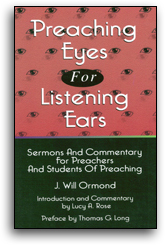
Preaching Eyes for Listening Ears
Sermons and Commentary For Preachers and Students of Preaching
This sermon is a retelling in a contemporary setting of the Parable of the Widow and the Judge. The harsh character of the Judge is exaggerated. The imaginary law clerk is made especially wimpish to highlight the arrogance of the Judge.
The Widow, as in the original parable, is the strongest character in the drama, although outwardly she appears to be the weakest.
This sermon emphasizes the biblical theme of the reversal of roles, and the triumph of faithfulness over human power.
There is a timid, tentative knock on the imposing heavy oak door. But from within there is no answer, only an ominous silence. The lowly law clerk knows that the Judge is hunched in his high--back chair, glowering over his papers, idly punching holes in the blotter on his desk with a letter opener which is as sharp as a razor.
The clerk takes a deep breath and lets it out. He knocks again, this time a little more boldly. This time the volcano behind the door rumbles and stirs, and the clerk thinks he sees a fine white ash sifting through the keyhole.
The voice roars like the sound of many waters, and the windows rattle with the swelling thereof.
"Well, Baxter, what do you want?"
The clerk has heard that tone before, and has quaked before it. But better men than he have been reduced to silence by it.
He remembers the delegation of bishops and moderators, of seminary presidents and executive secretaries, of theologians and preachers, of ethics professors and pastoral counselors. (The biblical department had sense enough not to come, because they already knew the story.)
This gaggle of ecclesiastical authority had come to see the Judge last week. They were armed with resolutions, position papers, and petitions. They spoke in well--modulated inflections supported by ample diagrams. They talked about the moral order of the universe, the ground of all being, and the sovereignty of God.
Well, that delegation did not get halfway through their supplications. The Judge snatched the resolutions from the bishop's hand and dropped them into the wastebasket. He pinned the moderator to the wall with a glance as hard and sharp and swift as two javelins of steel. He dismissed the delegation as if they were a confused herd of second--class sheep.
"Don't come to me with your God talk, and your moralisms, and your theological jargon. I am the Judge, and I dispense the law as I see fit. Now, get out!"
So the delegation scattered with their clerical collars turned frontward, and tripping over their cassocks and their academic robes.
No wonder the clerk hesitates to answer the Judge's question when he bellows, "Well, Baxter, what do you want?"
"Your honor, sir," Baxter stammers as he pushes the heavy oak door slightly ajar and slithers into the room. "Your honor, she is here again."
"Who is here again, Baxter? Speak up, man."
"Why, you know, sir. The Widow, the one who has been coming every day - sometimes twice - for the past three weeks. The one who has been trying to get you to order the Rip--Off Life Insurance Company to honor her late husband's policy."
The clerk expects another volcanic eruption which would put Vesuvius to shame. But instead the Judge puts his head down on the desk, pounds the desk lightly with his fists, and wails with a plaintive moan:
"Oh, no, not again ... not again!"
"Yes, your honor, again. I am afraid she is here again."
"Well, don't just stand there. Show her in."
Baxter opens the door and a slight woman, plainly dressed, with a wisp of gray hair falling across her cheek, enters the room. But her eyes are clear; her carriage erect; she walks with a solid step.
"Sit down, Madam; sit down. Now, tell me again, what is your problem?"
"Well, your honor, as I have told you a number of times, the Rip--Off Life Insurance Company will not honor the policy on my husband's life. They claim he did not pay the last premium before he died. But I have the cancelled check and their receipt which shows that he paid the premium two weeks before it was due."
"So you have, Madam, so you have."
The Judge reaches for a long, legal--looking paper.
"I will sign a court order immediately directing the Rip--Off Life Insurance Company to pay the policy in full. And wouldn't you like to sue them for the mental distress they have caused you?"
Baxter can hardly stifle a gasp, for he knows that the Judge is a heavy stockholder in the Rip--Off Insurance Company.
"No, I do not wish to sue. I want only what is due me."
"And that is what you shall have, Madam; that is what you shall have before this week is out," says the Judge as he gently but firmly guides her toward the door.
"That is all I ever asked for," says the Widow with dignity, "and I am glad at last to have it."
As the woman disappears down the corridor, the Judge goes back to his chambers. Before he slams the door and sinks into his high--back chair, he bellows out to Baxter, "Baxter, bring me a double Scotch, and be quick about it."
But before Baxter hurries to do the Judge's bidding, he dashes down the corridor and catches up with the Widow as she is going down the steps. Without a word he takes her arms, turns her toward him, and plants a resounding kiss on her startled lips. Before she can get her breath he is back up the steps and lost in the gloom of the corridor which leads to the heavy oak door.
For you see, the Widow has won, and Baxter knows it. She has won not by force or influence or wisdom or wealth or through powerful friends, for she has none of these. She has won by sheer persistence, by steadfastness, by holding on, by never giving up, by continuing to hope when there seems to be no ground for hope. And all this adds up to faithfulness.
What fear of God or regard for human power could not do, the Widow's persistent faithfulness finally brings about. The Judge himself admits as much.
"And the Lord said, 'Hear what the unrighteous judge says. And will not God grant justice to his chosen ones, who cry to him day and night? Will he delay long in helping them? I tell you, he will quickly grant justice to them.' "
So then, God is not like this Judge. God does not have to be pestered into being merciful or cajoled into hearing us. God never says when he sees us coming, "Oh, no; not again!"
Persistent faithfulness, then, is not a matter of winning a battle with God. It is not a test of wills between us and God to see which will blink first.
Rather we can be persistent in our faithfulness because we know that God is already patient with us and because we believe that God hears us. Therefore, we can trust God even when he seems silent; we can know that God cares for us even when he seems absent; we can count on God even when his ways baffle us.
We may not be able to figure God out by our wisdom or to lay hold on God by our strength. But we can respond to God's faithfulness with our own faithfulness, not to earn a reward, not to make God do something he does not want to do, but to open our hands to receive a gift.
Our God never says when he sees us coming, "Oh, no; not again!"
Rather God says, "Ask, and it will be given you; seek, and you will find; knock, and it will be opened to you."
In that case, our knocking need not be tentative nor timid; nor need it cease at the sound of silence.
The Widow, as in the original parable, is the strongest character in the drama, although outwardly she appears to be the weakest.
This sermon emphasizes the biblical theme of the reversal of roles, and the triumph of faithfulness over human power.
There is a timid, tentative knock on the imposing heavy oak door. But from within there is no answer, only an ominous silence. The lowly law clerk knows that the Judge is hunched in his high--back chair, glowering over his papers, idly punching holes in the blotter on his desk with a letter opener which is as sharp as a razor.
The clerk takes a deep breath and lets it out. He knocks again, this time a little more boldly. This time the volcano behind the door rumbles and stirs, and the clerk thinks he sees a fine white ash sifting through the keyhole.
The voice roars like the sound of many waters, and the windows rattle with the swelling thereof.
"Well, Baxter, what do you want?"
The clerk has heard that tone before, and has quaked before it. But better men than he have been reduced to silence by it.
He remembers the delegation of bishops and moderators, of seminary presidents and executive secretaries, of theologians and preachers, of ethics professors and pastoral counselors. (The biblical department had sense enough not to come, because they already knew the story.)
This gaggle of ecclesiastical authority had come to see the Judge last week. They were armed with resolutions, position papers, and petitions. They spoke in well--modulated inflections supported by ample diagrams. They talked about the moral order of the universe, the ground of all being, and the sovereignty of God.
Well, that delegation did not get halfway through their supplications. The Judge snatched the resolutions from the bishop's hand and dropped them into the wastebasket. He pinned the moderator to the wall with a glance as hard and sharp and swift as two javelins of steel. He dismissed the delegation as if they were a confused herd of second--class sheep.
"Don't come to me with your God talk, and your moralisms, and your theological jargon. I am the Judge, and I dispense the law as I see fit. Now, get out!"
So the delegation scattered with their clerical collars turned frontward, and tripping over their cassocks and their academic robes.
No wonder the clerk hesitates to answer the Judge's question when he bellows, "Well, Baxter, what do you want?"
"Your honor, sir," Baxter stammers as he pushes the heavy oak door slightly ajar and slithers into the room. "Your honor, she is here again."
"Who is here again, Baxter? Speak up, man."
"Why, you know, sir. The Widow, the one who has been coming every day - sometimes twice - for the past three weeks. The one who has been trying to get you to order the Rip--Off Life Insurance Company to honor her late husband's policy."
The clerk expects another volcanic eruption which would put Vesuvius to shame. But instead the Judge puts his head down on the desk, pounds the desk lightly with his fists, and wails with a plaintive moan:
"Oh, no, not again ... not again!"
"Yes, your honor, again. I am afraid she is here again."
"Well, don't just stand there. Show her in."
Baxter opens the door and a slight woman, plainly dressed, with a wisp of gray hair falling across her cheek, enters the room. But her eyes are clear; her carriage erect; she walks with a solid step.
"Sit down, Madam; sit down. Now, tell me again, what is your problem?"
"Well, your honor, as I have told you a number of times, the Rip--Off Life Insurance Company will not honor the policy on my husband's life. They claim he did not pay the last premium before he died. But I have the cancelled check and their receipt which shows that he paid the premium two weeks before it was due."
"So you have, Madam, so you have."
The Judge reaches for a long, legal--looking paper.
"I will sign a court order immediately directing the Rip--Off Life Insurance Company to pay the policy in full. And wouldn't you like to sue them for the mental distress they have caused you?"
Baxter can hardly stifle a gasp, for he knows that the Judge is a heavy stockholder in the Rip--Off Insurance Company.
"No, I do not wish to sue. I want only what is due me."
"And that is what you shall have, Madam; that is what you shall have before this week is out," says the Judge as he gently but firmly guides her toward the door.
"That is all I ever asked for," says the Widow with dignity, "and I am glad at last to have it."
As the woman disappears down the corridor, the Judge goes back to his chambers. Before he slams the door and sinks into his high--back chair, he bellows out to Baxter, "Baxter, bring me a double Scotch, and be quick about it."
But before Baxter hurries to do the Judge's bidding, he dashes down the corridor and catches up with the Widow as she is going down the steps. Without a word he takes her arms, turns her toward him, and plants a resounding kiss on her startled lips. Before she can get her breath he is back up the steps and lost in the gloom of the corridor which leads to the heavy oak door.
For you see, the Widow has won, and Baxter knows it. She has won not by force or influence or wisdom or wealth or through powerful friends, for she has none of these. She has won by sheer persistence, by steadfastness, by holding on, by never giving up, by continuing to hope when there seems to be no ground for hope. And all this adds up to faithfulness.
What fear of God or regard for human power could not do, the Widow's persistent faithfulness finally brings about. The Judge himself admits as much.
"And the Lord said, 'Hear what the unrighteous judge says. And will not God grant justice to his chosen ones, who cry to him day and night? Will he delay long in helping them? I tell you, he will quickly grant justice to them.' "
So then, God is not like this Judge. God does not have to be pestered into being merciful or cajoled into hearing us. God never says when he sees us coming, "Oh, no; not again!"
Persistent faithfulness, then, is not a matter of winning a battle with God. It is not a test of wills between us and God to see which will blink first.
Rather we can be persistent in our faithfulness because we know that God is already patient with us and because we believe that God hears us. Therefore, we can trust God even when he seems silent; we can know that God cares for us even when he seems absent; we can count on God even when his ways baffle us.
We may not be able to figure God out by our wisdom or to lay hold on God by our strength. But we can respond to God's faithfulness with our own faithfulness, not to earn a reward, not to make God do something he does not want to do, but to open our hands to receive a gift.
Our God never says when he sees us coming, "Oh, no; not again!"
Rather God says, "Ask, and it will be given you; seek, and you will find; knock, and it will be opened to you."
In that case, our knocking need not be tentative nor timid; nor need it cease at the sound of silence.
