Third Sunday Of Easter
Preaching
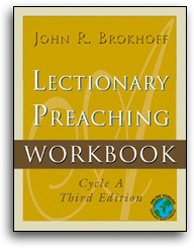
Lectionary Preaching Workbook
Cycle A, THIRD EDITION
THE LESSONS
Lesson 1: Acts 2:14a, 36--41 (C); Acts 2:14, 22--28 (RC); Acts 2:14a, 36--47 (E)

In response to Peter's Pentecost sermon, 3,000 repented and were baptized. This lesson consists of the end of Peter's Pentecost sermon. It tells of the response the hearers gave to the sermon. In the conclusion, Peter declares that God made Jesus Lord and Christ who was crucified. In response to their question what they were to do about it, he tells them to repent and be baptized in the name of Jesus. If so, they will receive forgiveness and the Holy Spirit. Three thousand responded to the first Christian sermon.
Lesson 2: 1 Peter 1:17--23 (C, E); 1 Peter 1:17--21 (RC)
From eternity God destined Jesus to die for our sins and to be raised from the dead that we may be born anew through the living Word. Peter interprets the cross in terms of the Passover. Christ was the spotless Lamb whose blood ransomed us from sin. This was God's plan from the foundation of the world. God raised him from the dead to give us confidence in him. Having been purified by the blood of the Lamb, we now love each other and are born anew through the living Word of God.
Gospel: Luke 24:13--35 (C, RC, E)
In the breaking of the bread, the risen Christ reveals himself to two followers on the way to Emmaus. As two followers of Jesus walk to Emmaus, they are joined by a Stranger who overhears their discussion of the death and resurrection of Jesus. The Stranger asks questions as though he knew nothing about the events. When they expressed their despair, Jesus began to expound the scriptures concerning himself. When they reached their destination, they insisted that the stranger have a meal with them. When he blessed and broke the bread, they knew at once that he was the risen Lord. Immediately they returned to Jerusalem to report to the disciples. The Lesson teaches us that Jesus reveals himself in Word and sacrament.
Psalm Of The Day
Psalm 116:1--4, 2--19 (C); Psalm 116 (E) - "What shall I render to the Lord for all his bounty to me?" (v. 12).
Psalm 16 (RC) - "You will show me the path of life" (v. 11).
Prayer Of The Day
"O God, by the humiliation of your Son you lifted up this fallen world, rescuing us from the hopelessness of death. Grant your faithful people a share in the joys that are eternal."
Hymn Of The Day
"Look, How He Stands!"
Theme Of The Day: Life In The Light Of The Resurrection
Gospel - Recognition of the risen Lord - Luke 24:13--35
Lesson 1 - Repentance for baptism - Acts 2:14a, 36--41
Lesson 2 - Rebirth through the living Word - 1 Peter 1:17--23
On this Third Sunday Of Easter, we consider the response to the resurrection. In the Gospel, the two followers of Jesus did not recognize the risen Christ until the breaking of bread. Three thousand people responded to Peter's sermon dealing with the cross and resurrection with repentance and baptism. In Lesson 2 we are told that because of the resurrection, the living Word, we are born anew in love and faith. Psalm 116 harmonizes with the theme of response: "What shall I render...?" The Prayer and Hymn continue with the resurrection theme.
THEOLOGICAL REFLECTIONS
Gospel: Luke 24:13--35
1. Recognizing Christ. On the road to Emmaus two men walk and talk with the risen Jesus and do not recognize him. They see him only as a visitor, another man (v. 18). Was the resurrected Christ so different in body that they did not recognize him? This could not be the case because the risen Lord showed the disciples the wound prints from the cross. Probably they did not recognize Jesus because they were not looking for him as a living person and were not expecting to see him. Their sight was limited by their sadness and unbelief. In the darkness of doubt Jesus cannot be seen. Later, recognition of Jesus came in the breaking and blessing of bread. Was it Jesus' tone of voice or what he said that opened their eyes? Even today Christ is not risen to those who doubt and seek him out.
2. Divine necessity. Jesus was driven to the cross. He asked, "Was it not necessary that the Christ should suffer these things and enter into his glory?" (v. 26). If Jesus is the Messiah, a satisfaction of God's wrath against sin, the sacrifice on the cross was necessary. This indicates that the cross was a divine project; also it means that only God could remove the offense of sin. God in Christ satisfies his own justice resulting in God's acceptance of us as forgiven children.
3. Christ in the Old Testament. Jesus interpreted the scriptures of his day (Old Testament) in a way that showed he was to suffer, die, and rise again. Is it correct to see Christ in Old Testament writings? Apparently Jesus felt the scriptures spoke of him - the promise of a Servant who would bring us back to God. This may not be approved by devotees of the historical--critical method of Bible study.
4. Empty tomb. In this passage we see that the fact of the empty tomb failed to convince the disciples of the resurrection (vv. 22--24). The women reported the empty tomb to the disciples. Some checked out the story and found it to be the case. Yet, they did not believe Jesus rose from the dead. Today we cannot base the reality of the resurrection on the fact of the empty tomb. At best it is only a matter of circumstancial evidence, a negative witness. The truth of the resurrection is beyond doubt only when the risen Lord is experienced as the two men on the way to Emmaus experienced Jesus in Word and sacrament.
Lesson 1: Acts 2:14a, 36--41
1. A model church. The apostolic church described in this Lesson serves as a model of the true church. It is a community of faith in Christ. The church is characterized by the Word (teaching) and sacraments (breaking bread and "added to their number"). Worship was a regular activity - daily attendance at temple services and "prayers." Fellowship was a part of their church - a fellowship in Christ, a fellowship of caring.
2. A blessed church. This early church experienced prosperity. She had the favor of God and humanity. It was a growing church - new members were received daily. What is the formula for a progressive church? See verse 42.
3. Faith in action. Without seeing the risen Lord, the members of the apostolic church believed in him. In this Lesson we see the community of faith in action. Faith is expressed in worship, education, fellowship, and service (sharing). If Thomas were in this church, would he not be convinced by the evidence that Christ had risen?
Lesson 2: 1 Peter 1:17--23
1. Exiles. Life on earth is a time of exile (v. 17). Christians are in the world but not of the world. Life is a pilgrimage on a one--way street with no turning back to live again. We are only sojourners, for our home is in heaven. Christians are in a passing parade on the way to heaven. We are aliens and exiles. The earth is not ours but the Lord's. Life, then, does not consist of the abundance of worldly possessions. We are as grass, here today and burned tomorrow.
2. Ransom. God cannot take sin lightly. Sin offends, grieves, and disobeys God. Since God is a righteous, holy, and just God, he cannot wink at sin as though sin does not matter. A ransom must be paid to God's justice, not to Satan. The good news is that God pays the price for us in the cross. Christ is the sacrificial lamb. It takes more than gold to satisfy God's justice. It took the precious blood of Christ to cancel our debt to God (v. 19). See Luther's explanation of the second article of the Apostles' Creed in his Small Catechism.
3. Destiny. God has a destiny for every person, even for Jesus. God had the cross in mind even before the creation of humanity. He knew of humanity's upcoming fall. He knew of the disobedience and rebellion before humanity's creation. God had a plan to restore us to fellowship before the sacrifice of Christ. It was the eternal destiny of Jesus to be the Messiah, to die, and rise again (v. 20). The question arises: If God knew in advance of humanity's sin and the horrible death necessary on the cross, why did God bother to make us? Only God can answer that.
PREACHING POSSIBILITIES
Three Lessons: Acts 2:14a, 36--41; 1 Peter 1:17--23; Luke 24:13--35
The Resurrection Event.
Need: The resurrection, without doubt, was the greatest event of history. It is the event upon which the Christian religion is based. Remove the resurrection, and Christianity becomes just another religion of the good life modeled by an unusually good man, Jesus. How then do we account for this crucial event? The Lessons for this day give us an insight into its meaning for us.
Outline: The resurrection event is -
a. A planned event: "This Jesus, delivered up according to the definite plan and foreknowledge of God ..." (v. 23) - Lesson 1.
b. An eternal event: "He was destined before the foundation of the world" (v. 20) - Lesson 2.
c. A divine event: "And beginning with Moses and all the prophets, he interpreted to them in all the scriptures the things concerning himself" (v. 27) - Gospel.
Gospel: Luke 24:13--35
1. Eye Openers. 24:12--31
Need: It is a strange tale of two men who look at Jesus but do not recognize him. The death and resurrection did not change Jesus' physical appearance except for the wound print. The physical appearance did not help these men to recognize the resurrected Jesus. This is a comfort to us, because we today must look elsewhere than the physical body to know Jesus has risen from the dead.
Outline: Getting to know the risen Lord.
a. What keeps us from seeing him:
1. Downcast - v. 17.
2. Despair - v. 21.
b. What enables us to know Jesus is alive?
1. Word - scriptures - v. 32.
2. Sacraments - Lord's supper - vv. 30, 31.
2. When Jesus Comes Into Your Life. 24:31, 35
Need: What happens when Jesus becomes a personal reality? Does anything in your life change? Anything better or different? In the case of the two men on the way to Emmaus, their lives before they met the risen Lord were filled with sadness and despair. After their visit and conversation with Jesus, they were different men. If church members are living in a state of sadness and despair, they need to confront the resurrected Christ.
Outline: When Jesus comes into your life -
a. Your eyes are open - v. 31.
b. Your heart is warmed - v. 32.
c. Your tongue tells - v. 35.
3. According To The Scriptures. 24:25--27
Need: If the disciples had known their Bibles, they would not have been surprised at the death and resurrection of Jesus. Jesus used the scriptures to show that all that happened to him was foretold. According to this text, Jesus saw himself in the scriptures and confirmed that all of the prophets had told about his death and resurrection. If Jesus is the Son of God and if the cross and empty tomb are the sole work of God, it is to be expected that God's Word would say something about it.
Outline: What the Bible says.
a. God is the author of the death and resurrection.
b. God through the prophets promised to send a Messiah.
c. God through the cross and resurrection accomplished the salvation of the world.
Lesson 1: Acts 2:14a, 36--41
1. Man's Worst And God's Best. 2:36
Need: Being human, we cannot help but do wrong. The worst we did was to kill Jesus. This meant that we killed the very Son of God, for God was in Jesus. It causes us to tremble when we think of what we deserve as punishment. But, what does God do about it? He uses our worst for our best by making Jesus Lord and Christ. This is God's consistent pattern of dealing with his children: He brings the good out of our bad.
Outline: The amazing truth -
a. The tragedy of the ages - "This Jesus whom you crucified."
b. The miracle of the ages - "God made him both Lord and Christ."
2. Your Part In Preaching. 2:37--41
Need: Preaching is a partnership of pulpit and pew. Preaching cannot accomplish any good without the hearers' participation in the event. In this pericope we have the conclusion to the first Christian sermon by Peter. The hearers respond to his sermon. It is a model for what needs to happen whenever a sermon is preached. If a sermon is ever a dud, it may be the people's fault. What the people's part is we find in the text.
Outline: Your part in the preaching of the Gospel.
a. Be convicted - "They were cut to the heart" (v. 37).
b. Repent - "Repent" (v. 38).
c. Receive the Holy Spirit - "You shall receive the gift of the Holy Spirit" (v. 38).
d. Join the church through baptism - v. 41.
Lesson 2: 1 Peter 1:17--23
1. The Cross In The Heart Of God. 1:20
Need: The cross preceded the creation of man. Before the world was created, Peter says God has the cross in mind and in his heart. Jesus' coming to die and rise again was according to an eternal destiny for Jesus. God apparently foreknew humankind would sin and would need redemption through the sacrifice of his Son. It was thus necessary for Christ to suffer. It was logical for Jesus to be raised as part of the plan. In other words, the cross did not change God's attitude toward humankind. He always loved his creation. His grace has always been directed toward us.
Outline: God has a cross in his heart.
a. A cross of grace to redeem us.
b. A cross of mercy before creation.
c. A cross that results in the glory of the resurrection.
2. Cross And Crown. 1:18--21
Need: Some churches bear the name "Cross and Crown." They are two sides of the coin of our salvation. They belong together. There can be no crown without the cross. A cross without the crown is no gospel. The price of exaltation is humility. Sacrifice is the forerunner of glory. In this passage Peter presents the cross of death and the crown of resurrection.
Outline: The cross and crown in the Christian's life.
a. The cross - vv. 18, 19. The price of our ransom.
b. Exchange of a cross for a crown - v. 21. The glory of the resurrection.
Lesson 1: Acts 2:14a, 36--41 (C); Acts 2:14, 22--28 (RC); Acts 2:14a, 36--47 (E)
In response to Peter's Pentecost sermon, 3,000 repented and were baptized. This lesson consists of the end of Peter's Pentecost sermon. It tells of the response the hearers gave to the sermon. In the conclusion, Peter declares that God made Jesus Lord and Christ who was crucified. In response to their question what they were to do about it, he tells them to repent and be baptized in the name of Jesus. If so, they will receive forgiveness and the Holy Spirit. Three thousand responded to the first Christian sermon.
Lesson 2: 1 Peter 1:17--23 (C, E); 1 Peter 1:17--21 (RC)
From eternity God destined Jesus to die for our sins and to be raised from the dead that we may be born anew through the living Word. Peter interprets the cross in terms of the Passover. Christ was the spotless Lamb whose blood ransomed us from sin. This was God's plan from the foundation of the world. God raised him from the dead to give us confidence in him. Having been purified by the blood of the Lamb, we now love each other and are born anew through the living Word of God.
Gospel: Luke 24:13--35 (C, RC, E)
In the breaking of the bread, the risen Christ reveals himself to two followers on the way to Emmaus. As two followers of Jesus walk to Emmaus, they are joined by a Stranger who overhears their discussion of the death and resurrection of Jesus. The Stranger asks questions as though he knew nothing about the events. When they expressed their despair, Jesus began to expound the scriptures concerning himself. When they reached their destination, they insisted that the stranger have a meal with them. When he blessed and broke the bread, they knew at once that he was the risen Lord. Immediately they returned to Jerusalem to report to the disciples. The Lesson teaches us that Jesus reveals himself in Word and sacrament.
Psalm Of The Day
Psalm 116:1--4, 2--19 (C); Psalm 116 (E) - "What shall I render to the Lord for all his bounty to me?" (v. 12).
Psalm 16 (RC) - "You will show me the path of life" (v. 11).
Prayer Of The Day
"O God, by the humiliation of your Son you lifted up this fallen world, rescuing us from the hopelessness of death. Grant your faithful people a share in the joys that are eternal."
Hymn Of The Day
"Look, How He Stands!"
Theme Of The Day: Life In The Light Of The Resurrection
Gospel - Recognition of the risen Lord - Luke 24:13--35
Lesson 1 - Repentance for baptism - Acts 2:14a, 36--41
Lesson 2 - Rebirth through the living Word - 1 Peter 1:17--23
On this Third Sunday Of Easter, we consider the response to the resurrection. In the Gospel, the two followers of Jesus did not recognize the risen Christ until the breaking of bread. Three thousand people responded to Peter's sermon dealing with the cross and resurrection with repentance and baptism. In Lesson 2 we are told that because of the resurrection, the living Word, we are born anew in love and faith. Psalm 116 harmonizes with the theme of response: "What shall I render...?" The Prayer and Hymn continue with the resurrection theme.
THEOLOGICAL REFLECTIONS
Gospel: Luke 24:13--35
1. Recognizing Christ. On the road to Emmaus two men walk and talk with the risen Jesus and do not recognize him. They see him only as a visitor, another man (v. 18). Was the resurrected Christ so different in body that they did not recognize him? This could not be the case because the risen Lord showed the disciples the wound prints from the cross. Probably they did not recognize Jesus because they were not looking for him as a living person and were not expecting to see him. Their sight was limited by their sadness and unbelief. In the darkness of doubt Jesus cannot be seen. Later, recognition of Jesus came in the breaking and blessing of bread. Was it Jesus' tone of voice or what he said that opened their eyes? Even today Christ is not risen to those who doubt and seek him out.
2. Divine necessity. Jesus was driven to the cross. He asked, "Was it not necessary that the Christ should suffer these things and enter into his glory?" (v. 26). If Jesus is the Messiah, a satisfaction of God's wrath against sin, the sacrifice on the cross was necessary. This indicates that the cross was a divine project; also it means that only God could remove the offense of sin. God in Christ satisfies his own justice resulting in God's acceptance of us as forgiven children.
3. Christ in the Old Testament. Jesus interpreted the scriptures of his day (Old Testament) in a way that showed he was to suffer, die, and rise again. Is it correct to see Christ in Old Testament writings? Apparently Jesus felt the scriptures spoke of him - the promise of a Servant who would bring us back to God. This may not be approved by devotees of the historical--critical method of Bible study.
4. Empty tomb. In this passage we see that the fact of the empty tomb failed to convince the disciples of the resurrection (vv. 22--24). The women reported the empty tomb to the disciples. Some checked out the story and found it to be the case. Yet, they did not believe Jesus rose from the dead. Today we cannot base the reality of the resurrection on the fact of the empty tomb. At best it is only a matter of circumstancial evidence, a negative witness. The truth of the resurrection is beyond doubt only when the risen Lord is experienced as the two men on the way to Emmaus experienced Jesus in Word and sacrament.
Lesson 1: Acts 2:14a, 36--41
1. A model church. The apostolic church described in this Lesson serves as a model of the true church. It is a community of faith in Christ. The church is characterized by the Word (teaching) and sacraments (breaking bread and "added to their number"). Worship was a regular activity - daily attendance at temple services and "prayers." Fellowship was a part of their church - a fellowship in Christ, a fellowship of caring.
2. A blessed church. This early church experienced prosperity. She had the favor of God and humanity. It was a growing church - new members were received daily. What is the formula for a progressive church? See verse 42.
3. Faith in action. Without seeing the risen Lord, the members of the apostolic church believed in him. In this Lesson we see the community of faith in action. Faith is expressed in worship, education, fellowship, and service (sharing). If Thomas were in this church, would he not be convinced by the evidence that Christ had risen?
Lesson 2: 1 Peter 1:17--23
1. Exiles. Life on earth is a time of exile (v. 17). Christians are in the world but not of the world. Life is a pilgrimage on a one--way street with no turning back to live again. We are only sojourners, for our home is in heaven. Christians are in a passing parade on the way to heaven. We are aliens and exiles. The earth is not ours but the Lord's. Life, then, does not consist of the abundance of worldly possessions. We are as grass, here today and burned tomorrow.
2. Ransom. God cannot take sin lightly. Sin offends, grieves, and disobeys God. Since God is a righteous, holy, and just God, he cannot wink at sin as though sin does not matter. A ransom must be paid to God's justice, not to Satan. The good news is that God pays the price for us in the cross. Christ is the sacrificial lamb. It takes more than gold to satisfy God's justice. It took the precious blood of Christ to cancel our debt to God (v. 19). See Luther's explanation of the second article of the Apostles' Creed in his Small Catechism.
3. Destiny. God has a destiny for every person, even for Jesus. God had the cross in mind even before the creation of humanity. He knew of humanity's upcoming fall. He knew of the disobedience and rebellion before humanity's creation. God had a plan to restore us to fellowship before the sacrifice of Christ. It was the eternal destiny of Jesus to be the Messiah, to die, and rise again (v. 20). The question arises: If God knew in advance of humanity's sin and the horrible death necessary on the cross, why did God bother to make us? Only God can answer that.
PREACHING POSSIBILITIES
Three Lessons: Acts 2:14a, 36--41; 1 Peter 1:17--23; Luke 24:13--35
The Resurrection Event.
Need: The resurrection, without doubt, was the greatest event of history. It is the event upon which the Christian religion is based. Remove the resurrection, and Christianity becomes just another religion of the good life modeled by an unusually good man, Jesus. How then do we account for this crucial event? The Lessons for this day give us an insight into its meaning for us.
Outline: The resurrection event is -
a. A planned event: "This Jesus, delivered up according to the definite plan and foreknowledge of God ..." (v. 23) - Lesson 1.
b. An eternal event: "He was destined before the foundation of the world" (v. 20) - Lesson 2.
c. A divine event: "And beginning with Moses and all the prophets, he interpreted to them in all the scriptures the things concerning himself" (v. 27) - Gospel.
Gospel: Luke 24:13--35
1. Eye Openers. 24:12--31
Need: It is a strange tale of two men who look at Jesus but do not recognize him. The death and resurrection did not change Jesus' physical appearance except for the wound print. The physical appearance did not help these men to recognize the resurrected Jesus. This is a comfort to us, because we today must look elsewhere than the physical body to know Jesus has risen from the dead.
Outline: Getting to know the risen Lord.
a. What keeps us from seeing him:
1. Downcast - v. 17.
2. Despair - v. 21.
b. What enables us to know Jesus is alive?
1. Word - scriptures - v. 32.
2. Sacraments - Lord's supper - vv. 30, 31.
2. When Jesus Comes Into Your Life. 24:31, 35
Need: What happens when Jesus becomes a personal reality? Does anything in your life change? Anything better or different? In the case of the two men on the way to Emmaus, their lives before they met the risen Lord were filled with sadness and despair. After their visit and conversation with Jesus, they were different men. If church members are living in a state of sadness and despair, they need to confront the resurrected Christ.
Outline: When Jesus comes into your life -
a. Your eyes are open - v. 31.
b. Your heart is warmed - v. 32.
c. Your tongue tells - v. 35.
3. According To The Scriptures. 24:25--27
Need: If the disciples had known their Bibles, they would not have been surprised at the death and resurrection of Jesus. Jesus used the scriptures to show that all that happened to him was foretold. According to this text, Jesus saw himself in the scriptures and confirmed that all of the prophets had told about his death and resurrection. If Jesus is the Son of God and if the cross and empty tomb are the sole work of God, it is to be expected that God's Word would say something about it.
Outline: What the Bible says.
a. God is the author of the death and resurrection.
b. God through the prophets promised to send a Messiah.
c. God through the cross and resurrection accomplished the salvation of the world.
Lesson 1: Acts 2:14a, 36--41
1. Man's Worst And God's Best. 2:36
Need: Being human, we cannot help but do wrong. The worst we did was to kill Jesus. This meant that we killed the very Son of God, for God was in Jesus. It causes us to tremble when we think of what we deserve as punishment. But, what does God do about it? He uses our worst for our best by making Jesus Lord and Christ. This is God's consistent pattern of dealing with his children: He brings the good out of our bad.
Outline: The amazing truth -
a. The tragedy of the ages - "This Jesus whom you crucified."
b. The miracle of the ages - "God made him both Lord and Christ."
2. Your Part In Preaching. 2:37--41
Need: Preaching is a partnership of pulpit and pew. Preaching cannot accomplish any good without the hearers' participation in the event. In this pericope we have the conclusion to the first Christian sermon by Peter. The hearers respond to his sermon. It is a model for what needs to happen whenever a sermon is preached. If a sermon is ever a dud, it may be the people's fault. What the people's part is we find in the text.
Outline: Your part in the preaching of the Gospel.
a. Be convicted - "They were cut to the heart" (v. 37).
b. Repent - "Repent" (v. 38).
c. Receive the Holy Spirit - "You shall receive the gift of the Holy Spirit" (v. 38).
d. Join the church through baptism - v. 41.
Lesson 2: 1 Peter 1:17--23
1. The Cross In The Heart Of God. 1:20
Need: The cross preceded the creation of man. Before the world was created, Peter says God has the cross in mind and in his heart. Jesus' coming to die and rise again was according to an eternal destiny for Jesus. God apparently foreknew humankind would sin and would need redemption through the sacrifice of his Son. It was thus necessary for Christ to suffer. It was logical for Jesus to be raised as part of the plan. In other words, the cross did not change God's attitude toward humankind. He always loved his creation. His grace has always been directed toward us.
Outline: God has a cross in his heart.
a. A cross of grace to redeem us.
b. A cross of mercy before creation.
c. A cross that results in the glory of the resurrection.
2. Cross And Crown. 1:18--21
Need: Some churches bear the name "Cross and Crown." They are two sides of the coin of our salvation. They belong together. There can be no crown without the cross. A cross without the crown is no gospel. The price of exaltation is humility. Sacrifice is the forerunner of glory. In this passage Peter presents the cross of death and the crown of resurrection.
Outline: The cross and crown in the Christian's life.
a. The cross - vv. 18, 19. The price of our ransom.
b. Exchange of a cross for a crown - v. 21. The glory of the resurrection.