Testifying to the Light
Sermon
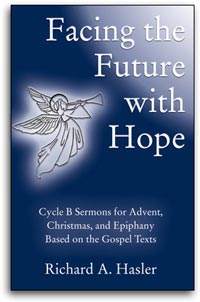
Facing the Future with Hope
Cycle B Gospel Text Sermons for Advent, Christmas, and Epiphany
Object:
Edmund Morris, in the first volume of his brilliant trilogy, The Rise of Theodore Roosevelt, poignantly writes of Theodore's first wife Alice and his devotion to her. Alice Hathaway Lee was a striking beauty and only seventeen years old when Theodore met her. In his diary he recorded: "As long as I live, I shall never forget how sweetly she looked, and how prettily she greeted me." On October 27, 1880, they were married in Brookline, Massachusetts. All that Theodore could pen in his diary after the wedding was a terse comment, "Our intense happiness is too sacred to be written." They had a brief honeymoon and then they took up formal residence in New York City while Theodore registered to study at Columbia Law School.

Roosevelt was elected to the New York Assembly in 1882. On February 13, 1884, he received a telegram with the happy news that his wife Alice had given birth to a baby girl the night before. But several hours later, he received a second telegram indicating that she was dying and his mother who lived in the same house was dying too. Alice died of Bright's disease and his mother of acute typhoid fever. The two women closest to him died within hours of each other.
Theodore drew a cross in his diary for February 14, 1884, and wrote beneath, "The light has gone out of my life."1
We all have experienced darkness too, perhaps not such a double-barreled grief at the same time as Theodore suffered, but we all have undoubtedly said similar words at one time or another. We may have lost our way and cannot find the right direction. We may be having difficulty making decisions, worried about making the wrong choice. We may have little self-esteem -- feeling we will never amount to anything. We may even be in such despair that we have become convinced that no one cares for us, not even God, if there is one. Yes, we have known darkness too.
Even the intrepid wilderness pioneer Daniel Boone had his moments. Once when he had been asked if he had ever been lost, "No," he replied slyly, "but I was bewildered once for three days."2 We probably have been bewildered more often than that in our own lifetimes.
Our gospel reading today speaks to us if we sense we are walking in darkness. The gospel of John had much to say about light in contrast to darkness. John the Baptist in this scripture passage is portrayed as one who comes to bear witness, "to testify to the light, so that all might believe through him." He is adamant that he is not the light, "but he came to testify to the light. The true light, which enlightens everyone, was coming into the world" (John 1:7-9).
Light is a prominent symbol in the Hebrew Bible as well as in the New Testament. Light was associated with God and with the Law of Moses. The Psalmist declared:
The Lord is my light and my salvation; whom shall I fear? The Lord is the stronghold of my life; of whom shall I be afraid?
-- Psalm 27:1
The psalmist also associated light with the Law. Your word is a lamp to my feet and a light to my path.
-- Psalm 119:105
The prophets also equated light with God's protection:
The sun shall no longer be your light by day, nor for brightness shall the moon give light to you by night; but the Lord will be your everlasting light, and your God will be your glory.
-- Isaiah 60:19
… when I sit in darkness, the Lord will be a light to me.
-- Micah 7:8
As we read the gospel of John it soon becomes apparent that John the Baptist is not hesitant in referring to Jesus as the light. Later, Jesus himself in one of his great "I am" sayings, makes this startling promise: "I am the light of the world. Whoever follows me will never walk in darkness but will have the light of life" (John 8:12).
These words were enunciated in the context of one of the major festivals of the Jewish people, namely the Feast of the Tabernacles. Jesus was present in Jerusalem when this annual festival took place to remember God's providence in guiding the people of Israel through the desert eventually leading them to the Promised Land. God guided his people with a pillar of cloud during the day and a pillar of fire at night (Exodus 13:21-22). These signs symbolized God's presence with them at all times.
During the festival in Jerusalem four huge candelabra were placed in the center of the Court of the Women in the Temple for all to see. When the candles were lit, the singing and dancing began. It was within such a setting that Jesus walked into the joyful celebration and announced his own identification with God's light.
We also recall from Jesus' words in the Sermon on the Mount that he called his disciples "the light of the world." It was not so much that his followers would produce their own light, but rather the light they had was a borrowed or reflected light. As they stayed close to Jesus, they had a radiance that was noticeable to others. The purpose of his disciples letting their light shine before the world was not to call attention to themselves but rather that they may see your good works "and give glory to your Father in heaven" (Matthew 5:16).
Even the smallest glimmer of light can work wonders -- if Jesus is connected to it.
The Rev. Dr. Peter Wiley tells of vivid childhood memories related to Christmas Eve services. The most vivid memory goes back to the time when he was a bearer of the Christ Candle at the age of twelve. He recalls his neo-gothic church with a long slate center aisle. He carried two lighters with him in case the candle blew out -- one in his hand and another in his pocket, just in case.
He goes on to say that one little burning wick doesn't seem like much, until you burn that one candle in an absolutely darkened space. One little candle doesn't seem like much, until you carry a candle with 2,000 eyes watching. Then, he says, that one little candle is absolutely blinding.
Reflecting on that Christmas Eve experience he contrasts that little light with what we would do if we had a dinner party. We would burn lots ands lots of candles to light up the room. Just one candle doesn't seem to be enough, but on Christmas Eve in the midst of a darkened sanctuary, we get to see the single candle and it brings light to everyone.
Peter draws to a close his recollections by saying: "A funny thing about carrying the Christ Candle is that you can't tell how much light it's bringing to everyone else. When the light is right in front of you it seems so very small. Rather pathetic, to be honest. And that single light right in front of your eyes blinds you to everything else. Does one light ever make a real difference? Sometimes it makes a difference without you even knowing it."3
Jesus, "the light of the world," continues to speak to those who struggle in darkness. He speaks to the ones who have lost their way and points them to the way. He speaks to the ones who are frustrated in their decision-making and challenges them to take up their cross and follow him. He speaks to the ones with low self-esteem and reveals to them the God who says, "This is my Son, the Beloved, with whom I am well pleased" (Matthew 3:17). Finally, he speaks to the ones who feel that no one cares for them, not even God, and he reminds them that God has been seeking them even before they had a thought about God.
Dr. John Vanarsdall once shared this story that has its setting around 1800 in New England. A child by the name of John Todd was born in Vermont. When he was only six years old both his parents died, and he was sent to live with an aunt who took exceptionally good care of him. She sacrificed and enabled him to go to college and enter one of the professions. Later in his adult life John learned that his aunt was seriously ill and that she was terrified of dying. He lived in another part of the country and could not easily get to see his aunt in her final days. Therefore, he decided to write a letter and this is what he said:
"It is now 35 years since I, a little boy of six, was left quite alone in the world. I have never forgotten that day when I made the long journey to your house in North Killingsworth. I still recall how you sent your hired man Caesar to fetch me. And I can still remember my tears and anxiety as, perched on your horse and clinging tightly to Caesar's back, I started out for my new home. As we rode along, I became more and more afraid and finally said to Caesar, 'Do you think she will go to bed before we get there?' 'Oh, no,' he said reassuringly. 'When we get out of these here woods, you will see her candle shining in the window.'
"In a short time, we did ride out into a clearing, and there, sure enough, was your candle. I still remember the sight of you waiting at the door, how you put out your arms to me and lifted me down from the horse. I remember there was a fire on your hearth, a warm supper on your stove, and after supper, you took me up to bed, heard my prayers, and then sat beside me until I dropped off to sleep.
"You undoubtedly realize why I am recalling all these things just now. Some day soon, God may send for you to take you to a new home. Do not fear that summons, and do not fear the strange journey or the messenger of death. At the end of the road you will find love and welcome. You will be safe in God's love and care. Surely God can be trusted to be as kind to you there as you were to me years ago."4
Jesus, "the light of the world," assures us that at the end there will be a "candle in the window" awaiting us as well. Amen.
__________
1. Edmund Morris, The Rise of Theodore Roosevelt (New York: Random House Trade Paperbacks, 2010), 230.
2. Philip Cousineau, The Art of Pilgrimage: The Seeker's Guide to Making Travel Sacred (Berkeley: Conari, 1998), 156.
3. Sermon preached by the Rev. Dr. Peter Wiley at First Congregational Church U.C.C., Hudson, Ohio, February 6, 2011.
4. As told by the Reverend John R. Claypool in a sermon published in the Biblical Preaching Journal (Spring, 1990, Volume 3), 23.
Roosevelt was elected to the New York Assembly in 1882. On February 13, 1884, he received a telegram with the happy news that his wife Alice had given birth to a baby girl the night before. But several hours later, he received a second telegram indicating that she was dying and his mother who lived in the same house was dying too. Alice died of Bright's disease and his mother of acute typhoid fever. The two women closest to him died within hours of each other.
Theodore drew a cross in his diary for February 14, 1884, and wrote beneath, "The light has gone out of my life."1
We all have experienced darkness too, perhaps not such a double-barreled grief at the same time as Theodore suffered, but we all have undoubtedly said similar words at one time or another. We may have lost our way and cannot find the right direction. We may be having difficulty making decisions, worried about making the wrong choice. We may have little self-esteem -- feeling we will never amount to anything. We may even be in such despair that we have become convinced that no one cares for us, not even God, if there is one. Yes, we have known darkness too.
Even the intrepid wilderness pioneer Daniel Boone had his moments. Once when he had been asked if he had ever been lost, "No," he replied slyly, "but I was bewildered once for three days."2 We probably have been bewildered more often than that in our own lifetimes.
Our gospel reading today speaks to us if we sense we are walking in darkness. The gospel of John had much to say about light in contrast to darkness. John the Baptist in this scripture passage is portrayed as one who comes to bear witness, "to testify to the light, so that all might believe through him." He is adamant that he is not the light, "but he came to testify to the light. The true light, which enlightens everyone, was coming into the world" (John 1:7-9).
Light is a prominent symbol in the Hebrew Bible as well as in the New Testament. Light was associated with God and with the Law of Moses. The Psalmist declared:
The Lord is my light and my salvation; whom shall I fear? The Lord is the stronghold of my life; of whom shall I be afraid?
-- Psalm 27:1
The psalmist also associated light with the Law. Your word is a lamp to my feet and a light to my path.
-- Psalm 119:105
The prophets also equated light with God's protection:
The sun shall no longer be your light by day, nor for brightness shall the moon give light to you by night; but the Lord will be your everlasting light, and your God will be your glory.
-- Isaiah 60:19
… when I sit in darkness, the Lord will be a light to me.
-- Micah 7:8
As we read the gospel of John it soon becomes apparent that John the Baptist is not hesitant in referring to Jesus as the light. Later, Jesus himself in one of his great "I am" sayings, makes this startling promise: "I am the light of the world. Whoever follows me will never walk in darkness but will have the light of life" (John 8:12).
These words were enunciated in the context of one of the major festivals of the Jewish people, namely the Feast of the Tabernacles. Jesus was present in Jerusalem when this annual festival took place to remember God's providence in guiding the people of Israel through the desert eventually leading them to the Promised Land. God guided his people with a pillar of cloud during the day and a pillar of fire at night (Exodus 13:21-22). These signs symbolized God's presence with them at all times.
During the festival in Jerusalem four huge candelabra were placed in the center of the Court of the Women in the Temple for all to see. When the candles were lit, the singing and dancing began. It was within such a setting that Jesus walked into the joyful celebration and announced his own identification with God's light.
We also recall from Jesus' words in the Sermon on the Mount that he called his disciples "the light of the world." It was not so much that his followers would produce their own light, but rather the light they had was a borrowed or reflected light. As they stayed close to Jesus, they had a radiance that was noticeable to others. The purpose of his disciples letting their light shine before the world was not to call attention to themselves but rather that they may see your good works "and give glory to your Father in heaven" (Matthew 5:16).
Even the smallest glimmer of light can work wonders -- if Jesus is connected to it.
The Rev. Dr. Peter Wiley tells of vivid childhood memories related to Christmas Eve services. The most vivid memory goes back to the time when he was a bearer of the Christ Candle at the age of twelve. He recalls his neo-gothic church with a long slate center aisle. He carried two lighters with him in case the candle blew out -- one in his hand and another in his pocket, just in case.
He goes on to say that one little burning wick doesn't seem like much, until you burn that one candle in an absolutely darkened space. One little candle doesn't seem like much, until you carry a candle with 2,000 eyes watching. Then, he says, that one little candle is absolutely blinding.
Reflecting on that Christmas Eve experience he contrasts that little light with what we would do if we had a dinner party. We would burn lots ands lots of candles to light up the room. Just one candle doesn't seem to be enough, but on Christmas Eve in the midst of a darkened sanctuary, we get to see the single candle and it brings light to everyone.
Peter draws to a close his recollections by saying: "A funny thing about carrying the Christ Candle is that you can't tell how much light it's bringing to everyone else. When the light is right in front of you it seems so very small. Rather pathetic, to be honest. And that single light right in front of your eyes blinds you to everything else. Does one light ever make a real difference? Sometimes it makes a difference without you even knowing it."3
Jesus, "the light of the world," continues to speak to those who struggle in darkness. He speaks to the ones who have lost their way and points them to the way. He speaks to the ones who are frustrated in their decision-making and challenges them to take up their cross and follow him. He speaks to the ones with low self-esteem and reveals to them the God who says, "This is my Son, the Beloved, with whom I am well pleased" (Matthew 3:17). Finally, he speaks to the ones who feel that no one cares for them, not even God, and he reminds them that God has been seeking them even before they had a thought about God.
Dr. John Vanarsdall once shared this story that has its setting around 1800 in New England. A child by the name of John Todd was born in Vermont. When he was only six years old both his parents died, and he was sent to live with an aunt who took exceptionally good care of him. She sacrificed and enabled him to go to college and enter one of the professions. Later in his adult life John learned that his aunt was seriously ill and that she was terrified of dying. He lived in another part of the country and could not easily get to see his aunt in her final days. Therefore, he decided to write a letter and this is what he said:
"It is now 35 years since I, a little boy of six, was left quite alone in the world. I have never forgotten that day when I made the long journey to your house in North Killingsworth. I still recall how you sent your hired man Caesar to fetch me. And I can still remember my tears and anxiety as, perched on your horse and clinging tightly to Caesar's back, I started out for my new home. As we rode along, I became more and more afraid and finally said to Caesar, 'Do you think she will go to bed before we get there?' 'Oh, no,' he said reassuringly. 'When we get out of these here woods, you will see her candle shining in the window.'
"In a short time, we did ride out into a clearing, and there, sure enough, was your candle. I still remember the sight of you waiting at the door, how you put out your arms to me and lifted me down from the horse. I remember there was a fire on your hearth, a warm supper on your stove, and after supper, you took me up to bed, heard my prayers, and then sat beside me until I dropped off to sleep.
"You undoubtedly realize why I am recalling all these things just now. Some day soon, God may send for you to take you to a new home. Do not fear that summons, and do not fear the strange journey or the messenger of death. At the end of the road you will find love and welcome. You will be safe in God's love and care. Surely God can be trusted to be as kind to you there as you were to me years ago."4
Jesus, "the light of the world," assures us that at the end there will be a "candle in the window" awaiting us as well. Amen.
__________
1. Edmund Morris, The Rise of Theodore Roosevelt (New York: Random House Trade Paperbacks, 2010), 230.
2. Philip Cousineau, The Art of Pilgrimage: The Seeker's Guide to Making Travel Sacred (Berkeley: Conari, 1998), 156.
3. Sermon preached by the Rev. Dr. Peter Wiley at First Congregational Church U.C.C., Hudson, Ohio, February 6, 2011.
4. As told by the Reverend John R. Claypool in a sermon published in the Biblical Preaching Journal (Spring, 1990, Volume 3), 23.