Shared Bread
Sermon
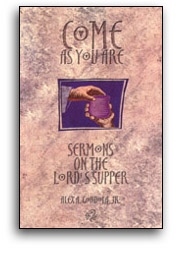
Come As You Are
Sermons On The Lord's Supper
There is an ancient legend that comes to us from Persia. It seems a wealthy nobleman once was sitting alone in his garden. Suddenly, unexpectedly, the sounds of a crowd were heard, and the nobleman was surprised to see a ragged man climbing over his garden wall. Panting and out of breath, the man threw himself at the nobleman's feet and begged for his protection. He said he was just steps ahead of an angry mob. The nobleman nodded and casually handed the man the remainder of the peach he had been eating. About then the crowd arrived. They revealed that they were chasing the man because he had killed the nobleman's only son. The brokenhearted father looked at the man and said quietly, "Go in peace." Because they had shared food together, he would not allow the murderer to be punished.

All around the world, people place a symbolic significance on the act of eating together. That's true of Ancient Persia, the Far East, and many other places. It's also true here in the United States. A shared meal is considered a sign of friendship. What is one of the first things a couple does when they start dating? This is not a trick question! They go out to dinner. And how do executives from two firms symbolize a merger? They frequently seal the deal with a meal. One of the functions of a wedding reception, with all its food and drink, is to draw the bride and groom's families together. And the solidarity of survivors after a death is symbolized by sharing a meal at the wake.
You see, there is something fundamentally human about eating together. In fact, sharing meals is one thing that separates humankind from the animals. Animals grab a hunk of meat and scamper off to gnaw on it by themselves in the darkness. Or bump and shove each other away from the feeding trough. But human beings turn eating into a social event, where it's considered an insult to "wolf" your food or eat "like a pig."
Consider the word "companionship." "Companionship" is formed from two Latin roots: cum, meaning "together," and panis, meaning "bread." For human beings, companionship means "breading together."
I'm happy to report that we have a lot of companionship, a lot of "breading together" here at our church! Consider the calendar for the month of October: October 1, coffee and donuts at the All-Board meeting; October 5, Junior Choir Ice Cream Social; October 12, Social Concerns Committee meets for supper; October 13, Women's Fellowship Program with Tea; October 16, Habitat for Humanity Luncheon; October 23, Pizza Party for the Confirmation Class and their mentors; October 30, Fall Fest (with "goodies"). And every Sunday there are two coffee hours! One of the things we seem to do best is eat!
At least all this eating and drinking has a solid precedent in Scripture. I pointed out last month that Jesus himself spent a lot of time sharing bread with others. There was the marriage feast at Cana, dinner with the Pharisees, dinners with sinners, feeding the 5,000, meals at Mary and Martha's, a fried fish breakfast at lakeside.
Jesus' stories were filled with references to food and drink: the fatted calf, a son asking his father for a fish, women grinding grain, new wine in old wineskins; so much so that his enemies (unfairly) called him a "drunkard" and a "glutton."
Shared bread has a way of breaking down barriers and bringing people together. No one understood this better than Jesus. And no meal has greater power to unite people than the Supper of Our Lord. This Sunday is Worldwide Communion Sunday. Up to two billion Christians could receive the sacrament today.
In every nation of the world, in storefront churches and jungle huts, in country chapels and city cathedrals, believers will receive the bread and wine, symbolizing the body and blood of Christ. And in some special, mystical way, they will be brought together in him.
Protestants and Catholics in Northern Ireland, divided by decades of hatred, will both be at the Lord's Table. People of different races -- black, white, red, yellow, brown -- so often suspicious of each other, today will be sharing bread and wine. The wealthy CEO, retired and living in a mansion overlooking the bay, and the welfare mother living in subsidized housing who would ordinarily never have occasion to eat together, will equally be guests at the Lord's Table. Neighbors who are no longer speaking, estranged husbands and wives, will be drawn together on a spiritual level through this sacrament.
Listen again to Paul: "The cup we use in the Lord's Supper ? when we drink from it, we are sharing in the blood of Christ. And the bread we break: when we eat it, we are sharing in the body of Christ. Because there is the one loaf of bread, all of us, though many, are one body, for we all share the same loaf" (1 Corinthians 10:16-17, TEV). Companionship from shared bread.
For this one moment at least, denominations and political affiliations don't matter. And we are no longer divided by age, sex, race, social status, or sexual preference. For this one moment, longstanding arguments might be forgotten and longstanding grudges forgiven, for we are all the guests of Jesus at his Supper. And it's never polite to reject one of your Host's valued guests!
Whether you realize it or not, when you share in the Supper of the Lord, particularly on a Worldwide Communion Sunday, you are doing something radical. You are participating in and witnessing to the New Creation in Jesus Christ. Yes, this world is still torn apart by racial, social, economic, and political divisions. Yes, sometimes you still may not like your neighbor very much, particularly that neighbor with the barking dog ...
But this Worldwide Communion Service is a rehearsal for the time when all creation shall be united under the headship of Jesus. It's a glimmering of the glory which is to come, through the grace of God. That Kingdom of peace and justice and righteousness, the "New Jerusalem," coming down from God "like a bride adorned for her husband," will arrive, in God's good time, and you and I are meant to be part of it. We testify to the possibility of that New Creation, with no more pain, no more suffering, no more tears, no more death; we join with believers around the world in sharing bread.
Take the bread and cup this morning with thanksgiving. Be grateful that Jesus has invited you to receive his feast. Welcome as your brothers and sisters not only the people in this congregation but believers everywhere on this planet. We are part of a fellowship without frontiers.
And because you have shared bread and experienced community, resolve to be about sharing bread with others. We have been fed, physically and spiritually. God calls us to share our material and spiritual blessing with others.
Near the end of the Roman Catholic mass, there are these words: "We have heard God's word and eaten the Body of Christ. Now it is time for us to leave, to do good works, to praise and bless the Lord in our daily lives."
The New Creation is coming. But the Kingdom of God is also now, whenever we share bread and housing, and time and support with others, for the sake of Christ.
All around the world, people place a symbolic significance on the act of eating together. That's true of Ancient Persia, the Far East, and many other places. It's also true here in the United States. A shared meal is considered a sign of friendship. What is one of the first things a couple does when they start dating? This is not a trick question! They go out to dinner. And how do executives from two firms symbolize a merger? They frequently seal the deal with a meal. One of the functions of a wedding reception, with all its food and drink, is to draw the bride and groom's families together. And the solidarity of survivors after a death is symbolized by sharing a meal at the wake.
You see, there is something fundamentally human about eating together. In fact, sharing meals is one thing that separates humankind from the animals. Animals grab a hunk of meat and scamper off to gnaw on it by themselves in the darkness. Or bump and shove each other away from the feeding trough. But human beings turn eating into a social event, where it's considered an insult to "wolf" your food or eat "like a pig."
Consider the word "companionship." "Companionship" is formed from two Latin roots: cum, meaning "together," and panis, meaning "bread." For human beings, companionship means "breading together."
I'm happy to report that we have a lot of companionship, a lot of "breading together" here at our church! Consider the calendar for the month of October: October 1, coffee and donuts at the All-Board meeting; October 5, Junior Choir Ice Cream Social; October 12, Social Concerns Committee meets for supper; October 13, Women's Fellowship Program with Tea; October 16, Habitat for Humanity Luncheon; October 23, Pizza Party for the Confirmation Class and their mentors; October 30, Fall Fest (with "goodies"). And every Sunday there are two coffee hours! One of the things we seem to do best is eat!
At least all this eating and drinking has a solid precedent in Scripture. I pointed out last month that Jesus himself spent a lot of time sharing bread with others. There was the marriage feast at Cana, dinner with the Pharisees, dinners with sinners, feeding the 5,000, meals at Mary and Martha's, a fried fish breakfast at lakeside.
Jesus' stories were filled with references to food and drink: the fatted calf, a son asking his father for a fish, women grinding grain, new wine in old wineskins; so much so that his enemies (unfairly) called him a "drunkard" and a "glutton."
Shared bread has a way of breaking down barriers and bringing people together. No one understood this better than Jesus. And no meal has greater power to unite people than the Supper of Our Lord. This Sunday is Worldwide Communion Sunday. Up to two billion Christians could receive the sacrament today.
In every nation of the world, in storefront churches and jungle huts, in country chapels and city cathedrals, believers will receive the bread and wine, symbolizing the body and blood of Christ. And in some special, mystical way, they will be brought together in him.
Protestants and Catholics in Northern Ireland, divided by decades of hatred, will both be at the Lord's Table. People of different races -- black, white, red, yellow, brown -- so often suspicious of each other, today will be sharing bread and wine. The wealthy CEO, retired and living in a mansion overlooking the bay, and the welfare mother living in subsidized housing who would ordinarily never have occasion to eat together, will equally be guests at the Lord's Table. Neighbors who are no longer speaking, estranged husbands and wives, will be drawn together on a spiritual level through this sacrament.
Listen again to Paul: "The cup we use in the Lord's Supper ? when we drink from it, we are sharing in the blood of Christ. And the bread we break: when we eat it, we are sharing in the body of Christ. Because there is the one loaf of bread, all of us, though many, are one body, for we all share the same loaf" (1 Corinthians 10:16-17, TEV). Companionship from shared bread.
For this one moment at least, denominations and political affiliations don't matter. And we are no longer divided by age, sex, race, social status, or sexual preference. For this one moment, longstanding arguments might be forgotten and longstanding grudges forgiven, for we are all the guests of Jesus at his Supper. And it's never polite to reject one of your Host's valued guests!
Whether you realize it or not, when you share in the Supper of the Lord, particularly on a Worldwide Communion Sunday, you are doing something radical. You are participating in and witnessing to the New Creation in Jesus Christ. Yes, this world is still torn apart by racial, social, economic, and political divisions. Yes, sometimes you still may not like your neighbor very much, particularly that neighbor with the barking dog ...
But this Worldwide Communion Service is a rehearsal for the time when all creation shall be united under the headship of Jesus. It's a glimmering of the glory which is to come, through the grace of God. That Kingdom of peace and justice and righteousness, the "New Jerusalem," coming down from God "like a bride adorned for her husband," will arrive, in God's good time, and you and I are meant to be part of it. We testify to the possibility of that New Creation, with no more pain, no more suffering, no more tears, no more death; we join with believers around the world in sharing bread.
Take the bread and cup this morning with thanksgiving. Be grateful that Jesus has invited you to receive his feast. Welcome as your brothers and sisters not only the people in this congregation but believers everywhere on this planet. We are part of a fellowship without frontiers.
And because you have shared bread and experienced community, resolve to be about sharing bread with others. We have been fed, physically and spiritually. God calls us to share our material and spiritual blessing with others.
Near the end of the Roman Catholic mass, there are these words: "We have heard God's word and eaten the Body of Christ. Now it is time for us to leave, to do good works, to praise and bless the Lord in our daily lives."
The New Creation is coming. But the Kingdom of God is also now, whenever we share bread and housing, and time and support with others, for the sake of Christ.