Proper 24
Stories
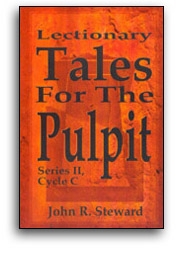
Lectionary Tales for the Pulpit
Series II, Cycle C
In 1899 four Denver journalists encountered one another in the Denver railway station. Al Stevens, Jack Tournay, John Lewis, and Hal Wilshire represented the four newspapers in town and were sent by their editors to find a good story for the Sunday paper. They were all hoping that someone important would arrive at the station or that something interesting would happen so that they could write a great story. After the last train they decided to go over to the Oxford Hotel and have a beer.

Al stated that he was going to make up a story. At first no one took him seriously but then the idea grew. As a group they talked about the idea of writing individual phony stories. Soon they realized that they would probably get caught unless they all wrote the same story about something that was rather significant. After another round of beer the idea really began to develop. A domestic story could be rather quickly checked for its truth. So it was decided that they would write an international story. They thought that China was far enough away. They would write about China.
John came up with the ultimate story. A group of American engineers was traveling through Denver on their way to China. The Chinese government was taking estimates on tearing down the Great Wall. The Chinese wanted to tear down the wall because they wanted to send a message around the world that they welcomed foreigners and foreign trade. They wanted the world to know that they were not isolationists. These American engineers would be one of the groups that would bid on the job.
At 11 p.m. the details of the story were worked out. The four men, not wanting to leave anything to chance, went to the Windsor Hotel and registered four fictitious names to the hotel registry. They told the clerk to tell anyone who wanted to know that four engineers were passing through Denver on their way to China.
The next morning all four of the Denver papers carried the story on the front page. The headline on the Times stated it very clearly: "GREAT CHINESE WALL DOOMED! PEKING SEEKS WORLD TRADE!" To the absolute surprise of the journalists, the story was not only on the front page of their papers but it was also taken very seriously around the world and especially in China.
When the Chinese heard that the Americans were coming to destroy their national symbol they became angry. There was a group of Chinese who were very worried about foreign involvement in their country. This group attacked the embassies in Peking, killing hundreds of missionaries. Two months later 12,000 troops from six different countries invaded China for the reason of protecting their own citizens. All of this bloodshed became known as the Boxer Rebellion.
Source: Paul Harvey, More of Paul Harvey's the Rest of the Story (New York City: William Morrow & Company), p. 136.
Al stated that he was going to make up a story. At first no one took him seriously but then the idea grew. As a group they talked about the idea of writing individual phony stories. Soon they realized that they would probably get caught unless they all wrote the same story about something that was rather significant. After another round of beer the idea really began to develop. A domestic story could be rather quickly checked for its truth. So it was decided that they would write an international story. They thought that China was far enough away. They would write about China.
John came up with the ultimate story. A group of American engineers was traveling through Denver on their way to China. The Chinese government was taking estimates on tearing down the Great Wall. The Chinese wanted to tear down the wall because they wanted to send a message around the world that they welcomed foreigners and foreign trade. They wanted the world to know that they were not isolationists. These American engineers would be one of the groups that would bid on the job.
At 11 p.m. the details of the story were worked out. The four men, not wanting to leave anything to chance, went to the Windsor Hotel and registered four fictitious names to the hotel registry. They told the clerk to tell anyone who wanted to know that four engineers were passing through Denver on their way to China.
The next morning all four of the Denver papers carried the story on the front page. The headline on the Times stated it very clearly: "GREAT CHINESE WALL DOOMED! PEKING SEEKS WORLD TRADE!" To the absolute surprise of the journalists, the story was not only on the front page of their papers but it was also taken very seriously around the world and especially in China.
When the Chinese heard that the Americans were coming to destroy their national symbol they became angry. There was a group of Chinese who were very worried about foreign involvement in their country. This group attacked the embassies in Peking, killing hundreds of missionaries. Two months later 12,000 troops from six different countries invaded China for the reason of protecting their own citizens. All of this bloodshed became known as the Boxer Rebellion.
Source: Paul Harvey, More of Paul Harvey's the Rest of the Story (New York City: William Morrow & Company), p. 136.