Proclaiming The Message Of God
Sermon
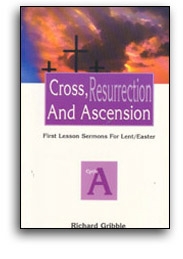
Cross, Resurrection, And Ascension
First Lesson Sermons For Lent/Easter
"When Christ calls a person, he bids that one to come and die." These words were written by Dietrich Bonhoeffer, a well-known Lutheran pastor and theologian, in a book influential to many, The Cost of Discipleship, first published in 1937. Bonhoeffer lived his Christian call to holiness without counting the cost. He did what God asked of him and he did it without qualification, reservation, or question. He did not look over his shoulder and wonder why, rather he lived what he wrote. Discipleship, if lived fully, would cost him his life.

Bonhoeffer was born in the state of Prussia in 1906. He grew up in an academic environment near the University of Berlin where his father was a professor of neurology and psychiatry. Later in his own study of theology he became interested in the historical-critical method of Adolph von Harnack and was a disciple of Swiss theologian Karl Barth who promoted the new "theology of revelation." After completing his doctorate, Bonhoeffer in 1931 spent one year at New York's Union Theological Seminary in a post-doctorate fellowship and exchange program. Returning to Germany he resumed duties which he had begun earlier as a pastor and writer.
In 1933, however, things changed for Bonhoeffer, the German people, and ultimately the world with the rise of the Nazi regime and Adolf Hitler. Bonhoeffer was one of the first and certainly the most vocal opponent of the Nazi ideology of anti-Semitism. Between 1935 and1940 Bonhoeffer headed an underground seminary for Germany's "Confessing Church" (even though it was proscribed in 1937) which led the German Protestant resistance to Hitler. He was able to continue his work as pastor and theologian in the early war years under cover as a member of the military intelligence community. Bonhoeffer believed that the root evil for many of society's problems was a lax attitude toward morality which he said was fostered by the ready distribution of "cheap grace" to members of the Church. He was an ecumenist and promoted his belief in speeches and writings.
In April 1943 Bonhoeffer's books, essays, and talks led to his arrest for insurrection. He was ordered imprisoned, but this only strengthened his beliefs. It was at this time that he wrote his most famous work, Prisoner of God: Letters and Papers from Prison. Implicated in a failed July 1944 plot to assassinate Hitler, Bonhoeffer was transferred to a concentration camp in Flossenberg, Bavaria, where on April 9, 1945, only days before the Allied liberation of the camp, he was executed. Dietrich Bonhoeffer died for the Christian beliefs which formed his life; he was a martyr who never counted the cost.
Our reading today challenges us, like the words of Dietrich Bonhoeffer, and asks, "How much are we willing to pay to follow the Lord?"
Stephen was called forth from the early Christian community, along with six other men, to serve the needs of those who were being neglected. He was called, like Dietrich Bonhoeffer, to answer God's call in his life; he never counted the cost in his response. Somehow Stephen understood that discipleship was a call to complete commitment; a half-hearted effort was not acceptable.
It did not take long for the zealous Stephen to lock horns with the Jewish authorities over the message of Jesus. Stephen was fearless in his denunciation of the Jews, whom he described as "stiff-necked people, uncircumcised in heart and ears," and "forever opposing the Holy Spirit." He claims that the people killed the prophets and recently Jesus as well. The law was given to the Jews but they failed to heed its message. Many tried to engage Stephen in debate and refute his arguments, but Luke tells us that none possessed the wisdom and spirit present in Stephen.
Luke portrays Stephen as similar to Jesus in his courage, accusation by the Jews, and eventual ignoble and painful death. Stephen is accused of uttering blasphemies and speaking against the law, and of violations of Mosaic custom, as was Jesus earlier. Although he was accused, Stephen is never convicted and thus his death at the hands of the mob could accurately be described as a lynching. Stephen realized that he would not fair any better than his master, the one he chose to serve and for whom he would die.
Few if any of us will ever be asked, like Dietrich Bonhoeffer or Stephen, to give our lives for what we believe, but all of us must make the commitment of these men (and others we have known) to secure the faith necessary to do what God asks and never count the cost. Each of us is challenged in different ways to speak out fearlessly and to refuse to accept attitudes and policies which draw us away from God. We must be the voice in the desert and the light in a sea of darkness.
The message of Christ must be applied to our personal lives and the world in which we live. We are called to speak against the injustice which is rampant in our society and threatens individuals and groups alike. We must be willing to make a stand against the forces of evil which seek to transgress Jesus' message of love. We might think ourselves only a small voice in a large crowd, but if many people band together great strength can be found and results achieved. Our call is to refuse to cooperate with corrupt or unjust practices which seek to achieve some goal at the expense or destruction of people. We must also reject compromise with the world. Dietrich Bonhoeffer and Stephen remained aloof from the forces of darkness which sought to neutralize their values and efforts; they refused to compromise their commitment to proclaim fearlessly God's message in the world.
Discipleship is not an easy road; it will be filled with many obstacles, ruts, and detours; there will be pain along the way. But, like Stephen, we can expect no better than the master we follow. Jesus suffered greatly, yet he never compromised his teachings or actions to accommodate others. We who bear the name Christian will also find suffering along the road to the Father. But if we can courageously continue on our path then the reward of eternal life will be ours.
May we be inspired to continue to walk with the Lord during this Easter season. We can live with total confidence that the hope of resurrection which we all possess is not void of content. God is always present to illumine the darkness of our world. Let us bear witness as Jesus' disciples to the power of Christ's resurrection in our lives!
Bonhoeffer was born in the state of Prussia in 1906. He grew up in an academic environment near the University of Berlin where his father was a professor of neurology and psychiatry. Later in his own study of theology he became interested in the historical-critical method of Adolph von Harnack and was a disciple of Swiss theologian Karl Barth who promoted the new "theology of revelation." After completing his doctorate, Bonhoeffer in 1931 spent one year at New York's Union Theological Seminary in a post-doctorate fellowship and exchange program. Returning to Germany he resumed duties which he had begun earlier as a pastor and writer.
In 1933, however, things changed for Bonhoeffer, the German people, and ultimately the world with the rise of the Nazi regime and Adolf Hitler. Bonhoeffer was one of the first and certainly the most vocal opponent of the Nazi ideology of anti-Semitism. Between 1935 and1940 Bonhoeffer headed an underground seminary for Germany's "Confessing Church" (even though it was proscribed in 1937) which led the German Protestant resistance to Hitler. He was able to continue his work as pastor and theologian in the early war years under cover as a member of the military intelligence community. Bonhoeffer believed that the root evil for many of society's problems was a lax attitude toward morality which he said was fostered by the ready distribution of "cheap grace" to members of the Church. He was an ecumenist and promoted his belief in speeches and writings.
In April 1943 Bonhoeffer's books, essays, and talks led to his arrest for insurrection. He was ordered imprisoned, but this only strengthened his beliefs. It was at this time that he wrote his most famous work, Prisoner of God: Letters and Papers from Prison. Implicated in a failed July 1944 plot to assassinate Hitler, Bonhoeffer was transferred to a concentration camp in Flossenberg, Bavaria, where on April 9, 1945, only days before the Allied liberation of the camp, he was executed. Dietrich Bonhoeffer died for the Christian beliefs which formed his life; he was a martyr who never counted the cost.
Our reading today challenges us, like the words of Dietrich Bonhoeffer, and asks, "How much are we willing to pay to follow the Lord?"
Stephen was called forth from the early Christian community, along with six other men, to serve the needs of those who were being neglected. He was called, like Dietrich Bonhoeffer, to answer God's call in his life; he never counted the cost in his response. Somehow Stephen understood that discipleship was a call to complete commitment; a half-hearted effort was not acceptable.
It did not take long for the zealous Stephen to lock horns with the Jewish authorities over the message of Jesus. Stephen was fearless in his denunciation of the Jews, whom he described as "stiff-necked people, uncircumcised in heart and ears," and "forever opposing the Holy Spirit." He claims that the people killed the prophets and recently Jesus as well. The law was given to the Jews but they failed to heed its message. Many tried to engage Stephen in debate and refute his arguments, but Luke tells us that none possessed the wisdom and spirit present in Stephen.
Luke portrays Stephen as similar to Jesus in his courage, accusation by the Jews, and eventual ignoble and painful death. Stephen is accused of uttering blasphemies and speaking against the law, and of violations of Mosaic custom, as was Jesus earlier. Although he was accused, Stephen is never convicted and thus his death at the hands of the mob could accurately be described as a lynching. Stephen realized that he would not fair any better than his master, the one he chose to serve and for whom he would die.
Few if any of us will ever be asked, like Dietrich Bonhoeffer or Stephen, to give our lives for what we believe, but all of us must make the commitment of these men (and others we have known) to secure the faith necessary to do what God asks and never count the cost. Each of us is challenged in different ways to speak out fearlessly and to refuse to accept attitudes and policies which draw us away from God. We must be the voice in the desert and the light in a sea of darkness.
The message of Christ must be applied to our personal lives and the world in which we live. We are called to speak against the injustice which is rampant in our society and threatens individuals and groups alike. We must be willing to make a stand against the forces of evil which seek to transgress Jesus' message of love. We might think ourselves only a small voice in a large crowd, but if many people band together great strength can be found and results achieved. Our call is to refuse to cooperate with corrupt or unjust practices which seek to achieve some goal at the expense or destruction of people. We must also reject compromise with the world. Dietrich Bonhoeffer and Stephen remained aloof from the forces of darkness which sought to neutralize their values and efforts; they refused to compromise their commitment to proclaim fearlessly God's message in the world.
Discipleship is not an easy road; it will be filled with many obstacles, ruts, and detours; there will be pain along the way. But, like Stephen, we can expect no better than the master we follow. Jesus suffered greatly, yet he never compromised his teachings or actions to accommodate others. We who bear the name Christian will also find suffering along the road to the Father. But if we can courageously continue on our path then the reward of eternal life will be ours.
May we be inspired to continue to walk with the Lord during this Easter season. We can live with total confidence that the hope of resurrection which we all possess is not void of content. God is always present to illumine the darkness of our world. Let us bear witness as Jesus' disciples to the power of Christ's resurrection in our lives!