Just You, Lord
Sermon
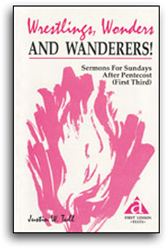
WRESTLINGS, WONDERS AND WANDERERS!
Sermons For Pentecost (First Third)
The sermon today asks the questions as to whether we are aware of God's saving acts and if we acknowledge only him as God. In short, we are asking if God truly helps us.

Several years ago, at my sister's wedding, the officiating minister told a story. It was about an Episcopal minister from Africa. The minister's eight-year-old son did not understand his father's actions just before his sermons. He asked his father: "Why do you always kneel when everyone stands to sing the hymn of preparation?" The father replied, "I kneel in prayer to ask God to help me with the sermon." The young boy quickly asked, "Then why doesn't he?"
Our text for today asks the Hebrews if they have observed God helping them. But the one who asks already knows the answer. Listen to Deuteronomy 4 beginning with verse 34:
Or has any god ever attempted to go and take a nation for himself from the midst of another nation, by trials, by signs, by wonders, and by war, by a mighty hand and an outstretched arm, and by great terrors, according to all that the Lord your God did for you in Egypt before your eyes? To you it was shown, that you might know that the Lord is God; there is no other besides him.
The action of God in Egypt was a mighty act. God's action was so powerful and so obvious, how could the Hebrews possibly deny that God had helped them? Indeed, how could the Hebrews believe in any other god but the one who had saved them? The writer of Deuteronomy is urging the Hebrews to accept the overwhelming evidence that God has indeed saved them, that there is no other god and that they owe no less than obedience to him.
But the book of Deuteronomy offers only the first act of our play. The New Testament continues God's drama. Here we also ask if any have seen God act. Here we again ask if there are any other gods. Here we ask if God deserves any less than full obedience.
The story of the New Testament does not read like the book of Deuteronomy. God does not come this time in all power. God does not save his people with a mighty hand. God comes not clothed in force but wrapped in swaddling clothes in a manger. He comes not as mighty king but as a vulnerable child.
Deuteronomy tells of plagues and earthquakes, war and a mighty hand; the gospels speak of a babe and shepherds, meekness and danger. And though Jesus does speak with strong authority, though he does demonstrate power through miracles, he does not save his people by physical force but only by the power of his words to pierce the heart.
The Deuteronomist rightly asks the Hebrews if they have observed God through mighty acts. The gospel writers ask that we look with a discerning eye to see further evidence of the mysterious ways in which God acts in human history.
Bishop Peter Storey, in an address to United Methodist preachers in Nashville, reflected on one New Testament passage: Matthew 27:40b-42a. Jesus is on the cross and the crowd taunts him: " ‘If you are the Son of God, come down from the cross.' So also the chief priests, with the scribes and elders, mocked him, saying, ‘He saved others; he cannot save himself.' " Bishop Storey pointed out the crowd's ignorance: "They did not understand that it was precisely because he was the Son of God that he was on the cross, that he saved others precisely because he would not save himself."2
The gospel gives, in fact, a new twist to the God who is seen with the mighty hand in Deuteronomy. The New Testament story does not deny that God intervenes, that God shapes history. But the New Testament warns us that we must look for more subtle signs of God's kingdom as well. God saves us not only through the mighty hand but even as he hangs with pierced hands on a cross!
Bishop Peter Storey also tells of his friend, Bishop Desmond Tutu. Bishop Tutu spoke of a new understanding of power. He said, "When the white man came to South Africa, we had the land and the white man had the Bible. They asked us to pray with them. When we opened our eyes, they had the land and we had the Bible. The problem is they never understood the terrible swap they made."3
The disciples had trouble seeing the new way of God's acting. They looked only for the mighty hand, the show of power, the obvious. They wanted a God to once again free them with physical power and might. They wanted a God to deliver them as he had delivered his people from Egypt. What they received was a discipleship of danger and worldly weakness.
I would suggest to you this morning that we may see our God act in both ways today. Some may witness God's intervening dramatically in their life or in the lives of others. They may witness God's power through a miraculous healing or a surprising victory. Some are convinced that a guardian angel has been with them and delivered them from a terrible foe. But others will experience the power of God in the midst of weakness: In failure, in sickness and even in dying. Many will know the power of God when all the signs around seem to point to defeat and abandonment.
But our questions from Deuteronomy are still so relevant: Have we seen the hand of God in our lives? Has God freed us, saved us, delivered us? And have other gods failed to free us and save us? Have we eliminated them one by one? Do we now believe that there is no other god, and that only God deserves our ultimate trust and final obedience?
John Wesley was saved as a child from a burning parsonage and always felt that God had delivered him from such a fate because he had a special purpose for him.4
Harold Kushner, who wrote When Bad Things Happen To Good People, met God intimately through the suffering of his chronically ill son. In this instance, God did not intervene and spare his child, but God did minister to both the son and the father during the prolonged illness.5
Perhaps you have experienced God in one of these ways or perhaps in many ways. The question of the Deuteronomist remains: "Have you seen the evidence that God has delivered you, saved you?" Can you say of your God, "There is no other?"
Most of us are quite aware of the many alternatives to believing in a solitary Supreme Being. Our culture offers many substitutes for God. You know them: money, power, pleasure, work, security. And many of us pay tribute to all or some of these gods. But our faith declares that they are nothing when compared to God.
Our faith declares that we are not saved by winning the lottery or the Reader's Digest Sweepstakes. Our faith reminds us that worldly power is never complete or guaranteed. We have learned that worldly power has no defense against death or meaninglessness.
Our faith understands that work gives us a sense of accomplishment but we know it does not form the total basis of our self-worth. If we believe it does, then retirement is void of any real meaning and an individual is stripped of all worth as an individual.
But of all our gods, the most seductive is the god of self. Worshiping self means that everything is measured primarily by how it affects us. The self is our god and we seek to revolve the world around us.
But the ironic thing is that we cannot keep everything revolving around us. We do not have enough mass; we don't have that kind of magnetism. We cannot save ourselves. And if we are followers of the Christ, we must not even try to save ourselves. Jesus has amply instructed us: "He who finds his life will lose it, and he who loses his life for my sake will find it (Matthew 10:39)."
Only God can provide the power to keep things in proper orbit. Only God can set the planets in motion and maintain the ongoingness of time. Only God can provide the proper direction for our lives. Only God works as the center, keeping things out of chaos, offering us new freedoms as we revolve around him.
Only God is God! That was the Deuteronomist's claim, and that is our claim as Christians. Some can see that God is God from the mighty hand. Others see the scarred hands of Christ and know of God's love and saving power.
But no matter how we come to believe in the God above all gods, there is but one appropriate response. The Hebrews rightly said it was to follow the commandments. Jesus said it was to love. Both were right. That calling of God remains our task. Will you hear our calling as we hold no other gods before him?
You shall love the Lord your God with all your heart, and with all your soul, and with all your mind… You shall love your neighbor as yourself (Matthew 22:37, 39).
So let us believe in the only God, and so let us love!
Several years ago, at my sister's wedding, the officiating minister told a story. It was about an Episcopal minister from Africa. The minister's eight-year-old son did not understand his father's actions just before his sermons. He asked his father: "Why do you always kneel when everyone stands to sing the hymn of preparation?" The father replied, "I kneel in prayer to ask God to help me with the sermon." The young boy quickly asked, "Then why doesn't he?"
Our text for today asks the Hebrews if they have observed God helping them. But the one who asks already knows the answer. Listen to Deuteronomy 4 beginning with verse 34:
Or has any god ever attempted to go and take a nation for himself from the midst of another nation, by trials, by signs, by wonders, and by war, by a mighty hand and an outstretched arm, and by great terrors, according to all that the Lord your God did for you in Egypt before your eyes? To you it was shown, that you might know that the Lord is God; there is no other besides him.
The action of God in Egypt was a mighty act. God's action was so powerful and so obvious, how could the Hebrews possibly deny that God had helped them? Indeed, how could the Hebrews believe in any other god but the one who had saved them? The writer of Deuteronomy is urging the Hebrews to accept the overwhelming evidence that God has indeed saved them, that there is no other god and that they owe no less than obedience to him.
But the book of Deuteronomy offers only the first act of our play. The New Testament continues God's drama. Here we also ask if any have seen God act. Here we again ask if there are any other gods. Here we ask if God deserves any less than full obedience.
The story of the New Testament does not read like the book of Deuteronomy. God does not come this time in all power. God does not save his people with a mighty hand. God comes not clothed in force but wrapped in swaddling clothes in a manger. He comes not as mighty king but as a vulnerable child.
Deuteronomy tells of plagues and earthquakes, war and a mighty hand; the gospels speak of a babe and shepherds, meekness and danger. And though Jesus does speak with strong authority, though he does demonstrate power through miracles, he does not save his people by physical force but only by the power of his words to pierce the heart.
The Deuteronomist rightly asks the Hebrews if they have observed God through mighty acts. The gospel writers ask that we look with a discerning eye to see further evidence of the mysterious ways in which God acts in human history.
Bishop Peter Storey, in an address to United Methodist preachers in Nashville, reflected on one New Testament passage: Matthew 27:40b-42a. Jesus is on the cross and the crowd taunts him: " ‘If you are the Son of God, come down from the cross.' So also the chief priests, with the scribes and elders, mocked him, saying, ‘He saved others; he cannot save himself.' " Bishop Storey pointed out the crowd's ignorance: "They did not understand that it was precisely because he was the Son of God that he was on the cross, that he saved others precisely because he would not save himself."2
The gospel gives, in fact, a new twist to the God who is seen with the mighty hand in Deuteronomy. The New Testament story does not deny that God intervenes, that God shapes history. But the New Testament warns us that we must look for more subtle signs of God's kingdom as well. God saves us not only through the mighty hand but even as he hangs with pierced hands on a cross!
Bishop Peter Storey also tells of his friend, Bishop Desmond Tutu. Bishop Tutu spoke of a new understanding of power. He said, "When the white man came to South Africa, we had the land and the white man had the Bible. They asked us to pray with them. When we opened our eyes, they had the land and we had the Bible. The problem is they never understood the terrible swap they made."3
The disciples had trouble seeing the new way of God's acting. They looked only for the mighty hand, the show of power, the obvious. They wanted a God to once again free them with physical power and might. They wanted a God to deliver them as he had delivered his people from Egypt. What they received was a discipleship of danger and worldly weakness.
I would suggest to you this morning that we may see our God act in both ways today. Some may witness God's intervening dramatically in their life or in the lives of others. They may witness God's power through a miraculous healing or a surprising victory. Some are convinced that a guardian angel has been with them and delivered them from a terrible foe. But others will experience the power of God in the midst of weakness: In failure, in sickness and even in dying. Many will know the power of God when all the signs around seem to point to defeat and abandonment.
But our questions from Deuteronomy are still so relevant: Have we seen the hand of God in our lives? Has God freed us, saved us, delivered us? And have other gods failed to free us and save us? Have we eliminated them one by one? Do we now believe that there is no other god, and that only God deserves our ultimate trust and final obedience?
John Wesley was saved as a child from a burning parsonage and always felt that God had delivered him from such a fate because he had a special purpose for him.4
Harold Kushner, who wrote When Bad Things Happen To Good People, met God intimately through the suffering of his chronically ill son. In this instance, God did not intervene and spare his child, but God did minister to both the son and the father during the prolonged illness.5
Perhaps you have experienced God in one of these ways or perhaps in many ways. The question of the Deuteronomist remains: "Have you seen the evidence that God has delivered you, saved you?" Can you say of your God, "There is no other?"
Most of us are quite aware of the many alternatives to believing in a solitary Supreme Being. Our culture offers many substitutes for God. You know them: money, power, pleasure, work, security. And many of us pay tribute to all or some of these gods. But our faith declares that they are nothing when compared to God.
Our faith declares that we are not saved by winning the lottery or the Reader's Digest Sweepstakes. Our faith reminds us that worldly power is never complete or guaranteed. We have learned that worldly power has no defense against death or meaninglessness.
Our faith understands that work gives us a sense of accomplishment but we know it does not form the total basis of our self-worth. If we believe it does, then retirement is void of any real meaning and an individual is stripped of all worth as an individual.
But of all our gods, the most seductive is the god of self. Worshiping self means that everything is measured primarily by how it affects us. The self is our god and we seek to revolve the world around us.
But the ironic thing is that we cannot keep everything revolving around us. We do not have enough mass; we don't have that kind of magnetism. We cannot save ourselves. And if we are followers of the Christ, we must not even try to save ourselves. Jesus has amply instructed us: "He who finds his life will lose it, and he who loses his life for my sake will find it (Matthew 10:39)."
Only God can provide the power to keep things in proper orbit. Only God can set the planets in motion and maintain the ongoingness of time. Only God can provide the proper direction for our lives. Only God works as the center, keeping things out of chaos, offering us new freedoms as we revolve around him.
Only God is God! That was the Deuteronomist's claim, and that is our claim as Christians. Some can see that God is God from the mighty hand. Others see the scarred hands of Christ and know of God's love and saving power.
But no matter how we come to believe in the God above all gods, there is but one appropriate response. The Hebrews rightly said it was to follow the commandments. Jesus said it was to love. Both were right. That calling of God remains our task. Will you hear our calling as we hold no other gods before him?
You shall love the Lord your God with all your heart, and with all your soul, and with all your mind… You shall love your neighbor as yourself (Matthew 22:37, 39).
So let us believe in the only God, and so let us love!