"I'll Be Back!"
Preaching
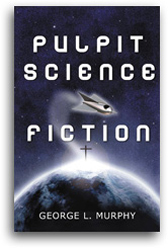
Pulpit Science Fiction
Nightfall at Lod airport, 25 miles northeast of Jerusalem. Night, and the 200-plus passengers aboard the new jumbo jet sitting all alone out in the middle of one runway may have seen the last daylight of their lives. Terrorists are in control throughout the plane and others are on guard around it -- no one knows how many. The Israeli security forces have been studying the situation all day and have decided that they have no chance of taking the plane by force without losing almost everyone on board.

The outside world has almost ceased to exist for the passengers and crew. They are allowed no communication with the tower. The passengers don't know what is going on up in the first-class cabin which the hijackers have cleared, and where many of them are gathered now with the officers and flight attendants. In the confusion and panic, no one has noticed that one of the passengers, a young man who looks as if he's probably a rabbinical student, is missing. He is up front with the terrorists, where he seems to be the center of attention.
Nobody is very clear about these hijackers -- about who they are, what they represent, or what their demands are. But one thing is clear: They're planning to blow up the plane and kill everyone aboard if they don't get what they want by dawn. The ransom has to be paid by sunrise.
But what is the ransom? Only this young man who walks with a slight limp seems to know. He sits calmly in one of the seats as the hijackers surround him, shouting demands and threats about what will happen if he can't deliver. Whatever the ransom is -- money, or release of prisoners, or military information -- he seems an unlikely person to produce it. But he is the only one who seems to have any hope that he can come through with the ransom before dawn.
The officers and flight attendants are told that the passengers will have to be ready to leave the plane immediately if the ransom is actually delivered. There can be absolutely no waiting. No explanation is given for this, but they know that they have to be ready. These terrorists don't look like the kind of people to make empty threats.
Finally the young man stands up and turns to the hostages who are standing uncertainly at the front of the cabin. "I don't know exactly when, but I'll be back. Keep the people calm, but keep them alert. Tell them I'll be back -- and tell them to stay awake!"
Then he motions to the terrorists, and even though they're the ones holding the guns and grenades, he seems to be the one in control of the situation. A few of the passengers catch a glimpse of him as he starts down the steps. Then he's gone, and the main cabin door is slammed shut. Flight attendants start to move down the aisles, explaining to passengers a few at a time that they have to be calm, that help is on the way, and that they must stay alert and be ready to leave at a moment's notice. They repeat the young man's words over and over and say, "You can trust him. Stay awake. Watch."
There are different reactions to these words. One elderly man keeps repeating to those around him, "I'm glad there's at least one person we can trust." But a few rows back a woman argues with a friend. "There's no reason to believe anyone is going to pay their ransom. Who is this guy who's supposed to save our lives? Have you seen him? This so-called ransomer is just a story these stewardesses have made up to keep us quiet. That's their job."
From the time that the outside door closed, only half an hour passes before a man looks at his watch for the tenth time, shouts, "He's never coming back!" and bolts for the door. He actually makes it almost halfway down the ladder before there's a burst of machine gun fire and then a heavy silence.
Excited talk breaks out all over the plane. "He was crazy to try that," says a man near the back. "We have to trust that that fellow is coming back to save us. He said he would."
"Doesn't look like he's helped us much so far," says his neighbor. "How long can you go on blindly trusting someone you haven't even seen? How do you know you can trust him at all?"
"You can't survive if you don't believe in anything," answers the first man angrily. "I have a friend I would literally trust with my life. If he says he'll do something, no matter how hard, I know it's as good as done. That's what I mean by trust."
"Yeah, but you don't know this guy who's supposed to be bringing the ransom. You never met him -- never saw him. All you know is what these flight attendants tell you. Is that something we can bet our lives on?"
Before the first man can answer, a woman in the row ahead of them twists around in her seat. "I'll tell you this about 'trust,' " she says bitterly. "When I got married, my husband promised, 'to be faithful to you, until death parts us.' Last month I found out he was having an affair with my best friend, and now he wants a divorce. That's how much you can trust people! I'm never going to make a fool of myself again by trusting anyone."
"That's right, and every minute we sit here trusting, there's less reason to think we'll be saved. We're just a minute closer to the end."
"No," says the man who had spoken first. "I think that every minute we wait we're closer to being saved."
It's past midnight now, and outside there are sudden shouts and challenges, an answer, and a knock on the door. Everyone watches as the door opens. They see a young man -- who is one of the terrorists. There are groans and angry cries of "I told you so" from the cynics who had secretly begun to hope that it might really be true.
The believers are quiet now, not having the heart to argue. The flight attendants start going around the cabin again, repeating the young man's message: "I don't know exactly when, but I'll be back. Stay awake." A few people nod and smile and whisper to their neighbors.
The minutes drag on. One man keeps dozing off and his wife has to shake him. "He said to stay awake," she whispers angrily. "Can't you stay awake for just a few hours?"
"Ah, it's all nonsense anyway," he mutters. "They're just trying to scare us. Why don't they at least break out the liquor so we can enjoy ourselves?"
Up in the first-class cabin a hijacker laughs at one of the flight attendants who has sat down wearily for a moment's rest. "You're a fool to think that he'll really take the risk of coming back to save you. Why are you wasting your time trying to get all these people to believe in him? Nobody risks his life to help someone else. You're all as good as dead."
"Do you want it to come to that?" she asks slowly. "Do you want to have to kill all of us -- including the children in there? You'd be on the run for the rest of your life. Maybe you're hoping he will come back so you don't have to do it. I think maybe he's coming to save you as well as us -- to save you from yourself."
"You're crazy! I don't need anyone to save me. Here's my savior," he shouts, waving his gun in her face. They glare at each other for a moment, and then he turns and walks away.
Nearly three o'clock in the morning now -- people are drowsy and restless. Suddenly, there are noises outside -- cars, people running, and shouts. Passengers look out the window and some begin to cry, "It's him!" They start standing up and looking toward the exits, but then there are bursts of gunfire and screams. "They've killed him!" a woman yells, falling hopelessly back into her seat. "No," says her husband, "it could have been someone else."
"It could have been," he repeats in a low voice.
The door opens and a terrorist from outside looks in. "Was it him?" "What happened?" "Is he coming?" they all clamor -- but there is no answer. He only looks at them coldly and slams the door again. The hijackers move about the plane, ordering people back into their seats.
Everybody is subdued as the minutes tick by. "Well," says the woman who had refused to believe in the young man's existence, "do you still believe after all this? I told you that stuff about someone coming to save us was just a story to keep us quiet. You see?"
"Yes, I still believe he'll come," says a man across the aisle.
"You do, do you? No doubts at all? Come on -- what's the point of pretending anymore?"
"Yes, I believe," he says. "But -- no, I'm not sure. He said he'd come back. But...."
"Doesn't sound like a very strong faith," she sneers. He has no answer.
There are some sporadic gunshots outside -- maybe just terrorists who are nervous. Faint traces of light begin to appear in the sky and the flight attendants make efforts to reassure those who are on the edge of panic. They try to wake others who are dozing off, reminding them of the promise: "I'll be back. Stay awake."
The sky is getting pink in the east. The hijackers are talking on their radios now, checking their ammo clips and moving to block off the exits. People have their faces against the windows, peering out desperately. The hijacker who had argued with the flight attendant is standing at the main cabin door. There is no expression on his face as he looks over the cabin. Then he pauses, as if listening.
There is another knock at the door.
Comment
This is not terribly "science-fictiony," but has more the character of a suspense story or perhaps an "action movie." Those categories aren't, however, mutually exclusive. The technological elements in the story may be enough to qualify it for this collection. The story could be placed in a futuristic setting at a spaceport on the moon but nothing would really be gained by that, and the familiarity of hijacking and hostage situations on earth, especially those involving Israel, would be lost.
This sermon was originally given before the events of September 11, 2001, and the most recent rounds of fighting in the Middle East. The terrorist attack on America gave public perceptions of hijacking an even more ominous character than they had before and has introduced an explicitly religious element. Some updating to bring in reference to the terrorist attacks on America might be attempted but this shouldn't obscure the eschatological thrust of the text.
The theological concern addressed here is that of "the delay of the parousia," the fact that the return of Christ did not happen within a few years after Easter, as some of the texts of the New Testament seem to expect. If we consider the matter on a cosmological time scale, however, and realize that 2,000 years is a very small period in comparison with something like fourteen billion years that have elapsed since the big bang, this delay is put in perspective. The text from Matthew (which is the Gospel Reading for the First Sunday In Advent in Year A in the Revised Common Lectionary) emphasizes that the time of the end is known only to the Father. It encourages not speculation about when this will be but watchfulness, "for the Son of Man is coming at an unexpected hour" (v. 44).
The outside world has almost ceased to exist for the passengers and crew. They are allowed no communication with the tower. The passengers don't know what is going on up in the first-class cabin which the hijackers have cleared, and where many of them are gathered now with the officers and flight attendants. In the confusion and panic, no one has noticed that one of the passengers, a young man who looks as if he's probably a rabbinical student, is missing. He is up front with the terrorists, where he seems to be the center of attention.
Nobody is very clear about these hijackers -- about who they are, what they represent, or what their demands are. But one thing is clear: They're planning to blow up the plane and kill everyone aboard if they don't get what they want by dawn. The ransom has to be paid by sunrise.
But what is the ransom? Only this young man who walks with a slight limp seems to know. He sits calmly in one of the seats as the hijackers surround him, shouting demands and threats about what will happen if he can't deliver. Whatever the ransom is -- money, or release of prisoners, or military information -- he seems an unlikely person to produce it. But he is the only one who seems to have any hope that he can come through with the ransom before dawn.
The officers and flight attendants are told that the passengers will have to be ready to leave the plane immediately if the ransom is actually delivered. There can be absolutely no waiting. No explanation is given for this, but they know that they have to be ready. These terrorists don't look like the kind of people to make empty threats.
Finally the young man stands up and turns to the hostages who are standing uncertainly at the front of the cabin. "I don't know exactly when, but I'll be back. Keep the people calm, but keep them alert. Tell them I'll be back -- and tell them to stay awake!"
Then he motions to the terrorists, and even though they're the ones holding the guns and grenades, he seems to be the one in control of the situation. A few of the passengers catch a glimpse of him as he starts down the steps. Then he's gone, and the main cabin door is slammed shut. Flight attendants start to move down the aisles, explaining to passengers a few at a time that they have to be calm, that help is on the way, and that they must stay alert and be ready to leave at a moment's notice. They repeat the young man's words over and over and say, "You can trust him. Stay awake. Watch."
There are different reactions to these words. One elderly man keeps repeating to those around him, "I'm glad there's at least one person we can trust." But a few rows back a woman argues with a friend. "There's no reason to believe anyone is going to pay their ransom. Who is this guy who's supposed to save our lives? Have you seen him? This so-called ransomer is just a story these stewardesses have made up to keep us quiet. That's their job."
From the time that the outside door closed, only half an hour passes before a man looks at his watch for the tenth time, shouts, "He's never coming back!" and bolts for the door. He actually makes it almost halfway down the ladder before there's a burst of machine gun fire and then a heavy silence.
Excited talk breaks out all over the plane. "He was crazy to try that," says a man near the back. "We have to trust that that fellow is coming back to save us. He said he would."
"Doesn't look like he's helped us much so far," says his neighbor. "How long can you go on blindly trusting someone you haven't even seen? How do you know you can trust him at all?"
"You can't survive if you don't believe in anything," answers the first man angrily. "I have a friend I would literally trust with my life. If he says he'll do something, no matter how hard, I know it's as good as done. That's what I mean by trust."
"Yeah, but you don't know this guy who's supposed to be bringing the ransom. You never met him -- never saw him. All you know is what these flight attendants tell you. Is that something we can bet our lives on?"
Before the first man can answer, a woman in the row ahead of them twists around in her seat. "I'll tell you this about 'trust,' " she says bitterly. "When I got married, my husband promised, 'to be faithful to you, until death parts us.' Last month I found out he was having an affair with my best friend, and now he wants a divorce. That's how much you can trust people! I'm never going to make a fool of myself again by trusting anyone."
"That's right, and every minute we sit here trusting, there's less reason to think we'll be saved. We're just a minute closer to the end."
"No," says the man who had spoken first. "I think that every minute we wait we're closer to being saved."
It's past midnight now, and outside there are sudden shouts and challenges, an answer, and a knock on the door. Everyone watches as the door opens. They see a young man -- who is one of the terrorists. There are groans and angry cries of "I told you so" from the cynics who had secretly begun to hope that it might really be true.
The believers are quiet now, not having the heart to argue. The flight attendants start going around the cabin again, repeating the young man's message: "I don't know exactly when, but I'll be back. Stay awake." A few people nod and smile and whisper to their neighbors.
The minutes drag on. One man keeps dozing off and his wife has to shake him. "He said to stay awake," she whispers angrily. "Can't you stay awake for just a few hours?"
"Ah, it's all nonsense anyway," he mutters. "They're just trying to scare us. Why don't they at least break out the liquor so we can enjoy ourselves?"
Up in the first-class cabin a hijacker laughs at one of the flight attendants who has sat down wearily for a moment's rest. "You're a fool to think that he'll really take the risk of coming back to save you. Why are you wasting your time trying to get all these people to believe in him? Nobody risks his life to help someone else. You're all as good as dead."
"Do you want it to come to that?" she asks slowly. "Do you want to have to kill all of us -- including the children in there? You'd be on the run for the rest of your life. Maybe you're hoping he will come back so you don't have to do it. I think maybe he's coming to save you as well as us -- to save you from yourself."
"You're crazy! I don't need anyone to save me. Here's my savior," he shouts, waving his gun in her face. They glare at each other for a moment, and then he turns and walks away.
Nearly three o'clock in the morning now -- people are drowsy and restless. Suddenly, there are noises outside -- cars, people running, and shouts. Passengers look out the window and some begin to cry, "It's him!" They start standing up and looking toward the exits, but then there are bursts of gunfire and screams. "They've killed him!" a woman yells, falling hopelessly back into her seat. "No," says her husband, "it could have been someone else."
"It could have been," he repeats in a low voice.
The door opens and a terrorist from outside looks in. "Was it him?" "What happened?" "Is he coming?" they all clamor -- but there is no answer. He only looks at them coldly and slams the door again. The hijackers move about the plane, ordering people back into their seats.
Everybody is subdued as the minutes tick by. "Well," says the woman who had refused to believe in the young man's existence, "do you still believe after all this? I told you that stuff about someone coming to save us was just a story to keep us quiet. You see?"
"Yes, I still believe he'll come," says a man across the aisle.
"You do, do you? No doubts at all? Come on -- what's the point of pretending anymore?"
"Yes, I believe," he says. "But -- no, I'm not sure. He said he'd come back. But...."
"Doesn't sound like a very strong faith," she sneers. He has no answer.
There are some sporadic gunshots outside -- maybe just terrorists who are nervous. Faint traces of light begin to appear in the sky and the flight attendants make efforts to reassure those who are on the edge of panic. They try to wake others who are dozing off, reminding them of the promise: "I'll be back. Stay awake."
The sky is getting pink in the east. The hijackers are talking on their radios now, checking their ammo clips and moving to block off the exits. People have their faces against the windows, peering out desperately. The hijacker who had argued with the flight attendant is standing at the main cabin door. There is no expression on his face as he looks over the cabin. Then he pauses, as if listening.
There is another knock at the door.
Comment
This is not terribly "science-fictiony," but has more the character of a suspense story or perhaps an "action movie." Those categories aren't, however, mutually exclusive. The technological elements in the story may be enough to qualify it for this collection. The story could be placed in a futuristic setting at a spaceport on the moon but nothing would really be gained by that, and the familiarity of hijacking and hostage situations on earth, especially those involving Israel, would be lost.
This sermon was originally given before the events of September 11, 2001, and the most recent rounds of fighting in the Middle East. The terrorist attack on America gave public perceptions of hijacking an even more ominous character than they had before and has introduced an explicitly religious element. Some updating to bring in reference to the terrorist attacks on America might be attempted but this shouldn't obscure the eschatological thrust of the text.
The theological concern addressed here is that of "the delay of the parousia," the fact that the return of Christ did not happen within a few years after Easter, as some of the texts of the New Testament seem to expect. If we consider the matter on a cosmological time scale, however, and realize that 2,000 years is a very small period in comparison with something like fourteen billion years that have elapsed since the big bang, this delay is put in perspective. The text from Matthew (which is the Gospel Reading for the First Sunday In Advent in Year A in the Revised Common Lectionary) emphasizes that the time of the end is known only to the Father. It encourages not speculation about when this will be but watchfulness, "for the Son of Man is coming at an unexpected hour" (v. 44).