Death In The Midst Of Birth
Preaching
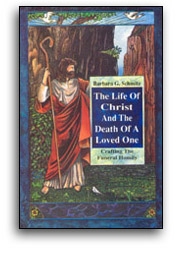
The Life Of Christ And The Death Of A Loved One
Crafting The Funeral Homily
A Funeral Homily For Christmas
Canticle: Nunc Dimittis
There is probably no more difficult a time to mourn the loss of a loved one and join in the burial prayers than this. The twelve days of Christmas are for celebration, festivity, lightheartedness, merriment; a time to celebrate birth and God's love in sending Jesus to us. But for us this year, the twelve days of Christmas mean sorrow, loss, grief, and death. In the season of birth, we are in the season of death.

I'd like to share two personal memories with you, because they both have to do with Christmas and the placing side--by--side of birth and death. I was ordained a deacon in the month of June. My first Christmas I was at the Cathedral. The Bishop was going to celebrate the Christmas Eve service, his very last, as he planned to retire seven days later at the end of that year. I remember standing there and thinking what a strange moment in time that was, the Bishop celebrating his last Christmas Eucharist. After 30 years of ordained ministry, he was on his way out; and I, at my first Christmas Eucharist as a deacon, was just beginning ordained ministry.
As I stood reflecting on that moment, I remembered what a poet/priest once wrote when her husband died suddenly at a young age. At almost precisely that same time, a relative of hers, as I remember, perhaps her niece, was giving birth to a child. The priest suggested in her poem that maybe, just maybe, these two souls passed by one another in eternity, one coming into the world, and the other going out. Perhaps, she mused, they even greeted one another.
My other memory also involves a Christmas celebration, the December after I was ordained priest, when I celebrated at my first Christmas Eucharist. I was taken up in all the
joy of celebrating Christ's birth as a newly ordained priest. But when I broke the bread and said, ''Christ our Passover is sacrificed for us,'' the reality of Christ's death broke into my consciousness. The stark naked fact of Christ's death I was suddenly holding in my hands in the form of broken bread. Christmas and death ... which one was more real? I remember feeling confused. Was it Christmas and celebration; or was it time for death and dying?
And that is where I suspect we are this morning ... caught smack in the middle between celebrating the birth of Christ and mourning the death of N. ... Which one is real for us?
I would like to suggest that both are real; our sanity depends on keeping both birth and death, celebration and grief, before us in three ways today.
First, we keep birth and death before us as we mourn the loss of our friend and loved one, N. There is probably not a more difficult time to do the work of grieving. Everyone else is celebrating and enjoying the festivities of the season; but we do not feel very merry. Well--meaning friends may try to cheer us up because they do not want us to be a damper on the holiday spirit. We don't know whether to stay home and grieve by ourselves, of go to the get--togethers we've been invited to and try to be cheerful. Christmas is not an easy time to do the work of remembering, crying, grieving, feeling sad. But I encourage you to do it anyway. Don't worry about what anybody else thinks. Take the time you need to grieve your loss.
Secondly, I can't help thinking about the mixed feelings God must have had at that very first Christmas. The Gospel of John tells us that in the beginning, the Word, Jesus, God's Son, was with God. But because we had fallen into sin, God loved the world so much that God sent Jesus to us. Think about that for a moment. Christmas, the celebration of Jesus' birth and coming into the world, was for God and Jesus, a separation, a breaking of the intimate communion and fellowship that they had shared, Father and Son, from before time.
And worse yet, the only way for Jesus and God to be restored to full fellowship would be through Jesus' death as a
human being. It is Christmas that makes Easter possible; it is Christmas that makes Easter inevitable. What I am saying is that in every birth there is a death. In every death, there is a birth. So, in some way, it is actually quite appropriate to be gathered here for the service of the burial of the dead for N. in the very season in which we celebrate birth.
Believing that death is the gateway to birth and new life is not a new idea. Many years ago, Paul wrote to the Christians in Corinth:
But someone will ask, ''How are the dead raised?'' Fool! What you sow does not come to life unless it dies ... It is sown a physical body, it is raised a spiritual body.
Our physical death is the gateway of spiritual birth. So, if we have spiritual vision today, we will be able to recognize that death contains the seeds of birth. As we say in the eucharistic prayer, ''Life is changed, not ended.'' True, we are here to mourn the end of the physical body, but also to celebrate the birth of a raised spiritual body.
Thirdly, this season of Christmas is an annual invitation to see beyond the festivities and celebrations which can so easily lose their true meaning, to see beyond to the true meaning of Christmas, which is found in Easter Day and Jesus' resurrection from the dead. In this season of birth, it is appropriate to ask ourselves if we are prepared for our own deaths. Are we in charity and love with our neighbors? Have we repented of our sins and turned to Jesus for our salvation? Are we in relationship to God? Are we living as those prepared to die? Will we die as those prepared to live eternally with Christ?
So in this season of birth now veiled by death, we are asked to do the uncomfortable:
To mourn, although almost everybody else is celebrating;
to see in death the gateway, the birth canal to new life;
to examine our own lives, and ask ourselves if we are
living as those prepared to die.
That is a lot for the twelve short days of Christmas. But when our mortal bodies have put on immortality, then we will be able to say with Paul:
Death has been swallowed up in victory. Where, O death, is your victory? Where, O death, is your sting? But thanks be to God, who gives us the victory through our Lord Jesus Christ.
Amen.
Canticle: Nunc Dimittis
There is probably no more difficult a time to mourn the loss of a loved one and join in the burial prayers than this. The twelve days of Christmas are for celebration, festivity, lightheartedness, merriment; a time to celebrate birth and God's love in sending Jesus to us. But for us this year, the twelve days of Christmas mean sorrow, loss, grief, and death. In the season of birth, we are in the season of death.
I'd like to share two personal memories with you, because they both have to do with Christmas and the placing side--by--side of birth and death. I was ordained a deacon in the month of June. My first Christmas I was at the Cathedral. The Bishop was going to celebrate the Christmas Eve service, his very last, as he planned to retire seven days later at the end of that year. I remember standing there and thinking what a strange moment in time that was, the Bishop celebrating his last Christmas Eucharist. After 30 years of ordained ministry, he was on his way out; and I, at my first Christmas Eucharist as a deacon, was just beginning ordained ministry.
As I stood reflecting on that moment, I remembered what a poet/priest once wrote when her husband died suddenly at a young age. At almost precisely that same time, a relative of hers, as I remember, perhaps her niece, was giving birth to a child. The priest suggested in her poem that maybe, just maybe, these two souls passed by one another in eternity, one coming into the world, and the other going out. Perhaps, she mused, they even greeted one another.
My other memory also involves a Christmas celebration, the December after I was ordained priest, when I celebrated at my first Christmas Eucharist. I was taken up in all the
joy of celebrating Christ's birth as a newly ordained priest. But when I broke the bread and said, ''Christ our Passover is sacrificed for us,'' the reality of Christ's death broke into my consciousness. The stark naked fact of Christ's death I was suddenly holding in my hands in the form of broken bread. Christmas and death ... which one was more real? I remember feeling confused. Was it Christmas and celebration; or was it time for death and dying?
And that is where I suspect we are this morning ... caught smack in the middle between celebrating the birth of Christ and mourning the death of N. ... Which one is real for us?
I would like to suggest that both are real; our sanity depends on keeping both birth and death, celebration and grief, before us in three ways today.
First, we keep birth and death before us as we mourn the loss of our friend and loved one, N. There is probably not a more difficult time to do the work of grieving. Everyone else is celebrating and enjoying the festivities of the season; but we do not feel very merry. Well--meaning friends may try to cheer us up because they do not want us to be a damper on the holiday spirit. We don't know whether to stay home and grieve by ourselves, of go to the get--togethers we've been invited to and try to be cheerful. Christmas is not an easy time to do the work of remembering, crying, grieving, feeling sad. But I encourage you to do it anyway. Don't worry about what anybody else thinks. Take the time you need to grieve your loss.
Secondly, I can't help thinking about the mixed feelings God must have had at that very first Christmas. The Gospel of John tells us that in the beginning, the Word, Jesus, God's Son, was with God. But because we had fallen into sin, God loved the world so much that God sent Jesus to us. Think about that for a moment. Christmas, the celebration of Jesus' birth and coming into the world, was for God and Jesus, a separation, a breaking of the intimate communion and fellowship that they had shared, Father and Son, from before time.
And worse yet, the only way for Jesus and God to be restored to full fellowship would be through Jesus' death as a
human being. It is Christmas that makes Easter possible; it is Christmas that makes Easter inevitable. What I am saying is that in every birth there is a death. In every death, there is a birth. So, in some way, it is actually quite appropriate to be gathered here for the service of the burial of the dead for N. in the very season in which we celebrate birth.
Believing that death is the gateway to birth and new life is not a new idea. Many years ago, Paul wrote to the Christians in Corinth:
But someone will ask, ''How are the dead raised?'' Fool! What you sow does not come to life unless it dies ... It is sown a physical body, it is raised a spiritual body.
Our physical death is the gateway of spiritual birth. So, if we have spiritual vision today, we will be able to recognize that death contains the seeds of birth. As we say in the eucharistic prayer, ''Life is changed, not ended.'' True, we are here to mourn the end of the physical body, but also to celebrate the birth of a raised spiritual body.
Thirdly, this season of Christmas is an annual invitation to see beyond the festivities and celebrations which can so easily lose their true meaning, to see beyond to the true meaning of Christmas, which is found in Easter Day and Jesus' resurrection from the dead. In this season of birth, it is appropriate to ask ourselves if we are prepared for our own deaths. Are we in charity and love with our neighbors? Have we repented of our sins and turned to Jesus for our salvation? Are we in relationship to God? Are we living as those prepared to die? Will we die as those prepared to live eternally with Christ?
So in this season of birth now veiled by death, we are asked to do the uncomfortable:
To mourn, although almost everybody else is celebrating;
to see in death the gateway, the birth canal to new life;
to examine our own lives, and ask ourselves if we are
living as those prepared to die.
That is a lot for the twelve short days of Christmas. But when our mortal bodies have put on immortality, then we will be able to say with Paul:
Death has been swallowed up in victory. Where, O death, is your victory? Where, O death, is your sting? But thanks be to God, who gives us the victory through our Lord Jesus Christ.
Amen.