
He Restores My Soul!

Children's sermon
Illustration
Preaching
Sermon
Worship
For May 3, 2020:
 He Restores My Soul!
by Tom Willadsen
John 10:1-10, Psalm 23
Don’t drink bleach.
“I never thought the phrase “speaking truth to power” would be interchangeable with ‘don’t drink bleach’ but these are strange times indeed.” Senator Tammy Duckworth, D-Illinois
In the News
Covid-19 continues to dominate the news. When we are not hearing about the spread of the virus we are hearing about its effect on the economy or the effect of the Payroll Protection Program to limit the damage to the economy.
It would be a buoy to the national spirit if someone in authority at the national level would step forward to speak clearly, calmly and credibly. The depth of ignorance and incompetence exhibited by the current administration has been nothing short of breathtaking and terrifying.
A clip from the opening of Saturday Night Live, April 25, 2020 illustrates the president’s complete lack of understanding of the significance of the first pandemic in a century, a disease that as of April 28, 2020 had killed more than 55,000 Americans. There really is nothing that Brad Pitt, in the role of Dr. Anthony Fauci, Director of the National Institute of Allergy and Infectious Diseases, can add to make the situation more pathetic.
Another example of profound incompetence in an elected official was exposed by Anderson Cooper, CNN news anchor, who interviewed Carolyn Goodman, Mayor of Las Vegas, Nevada, on the air on April 22.
At one point, Cooper observed, “You’re offering nothing but being a cheerleader.”
The mayor’s remarks were incoherent and her responses to Cooper’s questions were a dazzling array of non-sequiturs, bluster and buck passing.
The mayor’s passion is getting the Las Vegas economy back on its feet by urging the casinos to reopen. She admitted that she offered her city as a participant in a grand experiment to use as a control to see how easing physical distancing guideline would affect the spread of Covid-19 and was told by our statistician “you can’t do that.”
The next day, Nevada’s governor, Steve Sisolak, said on Cooper’s show, “We need to send a sincere message and a consistent message,” following the mayor’s appearance. “It’s difficult when we get one person that’s leading people astray, and I’m disappointed in that,” Sisolak concluded.
In the Culture
I am adding this section to the standard format for the main article because I need to comment on something that is more pervasive and longer-standing than the garden variety incompetence that has been rife in our national response to Covid-19.
Thirty years ago “Question Authority” began appearing on bumper stickers in the city where I lived. There is a long history of proudly, defiantly thinking for oneself in the United States. Benjamin Franklin said, “It is the first responsibility of every citizen to question authority.” After his time in the White House ended, Theodore Roosevelt said, “To announce that there must be no criticism of the president, or that we are to stand by the president, right or wrong, is not only unpatriotic and servile, but it is morally treasonable to the American public.”
In the years since, the final decade of the 20th century and the first 20% of the 21st century, questioning authority has morphed into a reflexive distrust of expertise of any kind. Isaac Asimov foresaw this “movement” in his 1980 essay “A Cult of Ignorance.”
There is a cult of ignorance in the United States, and there always has been. The strain of anti-intellectualism has been a constant thread winding its way through our political and cultural life, nurtured by the false notion that democracy means that “my ignorance is just as good as your knowledge.”
Experts in fields like contagious diseases are given equal credence to unexamined speculation about treatments for Covid-19 spouted spontaneously by the president who does not know the difference between a virus and a germ. While it is true that ingesting bleach will kill the Covid-19 virus, it will do so by killing the host, which is not the medical outcome preferred by health professionals.
This ethos is captured in the caption of a cartoon, probably from the New Yorker in which an airline passenger appears to lead a revolt in the cabin by standing and shouting something like, “Who needs these elite pilots with all their experience and training? Raise your hand if you believe I should fly this plane.”
When researchers who have spent their careers studying disease and its transmission are demoted or removed from their posts because their knowledge compels them to disagree with assertions that have emerged from the incoherent speculation of a failed real estate developer we are in peril. There can be no other word for the situation this vain incompetence has placed our nation in.
When the mayor of a city of more than 600,000 people offers her community as a “guinea pig” to assess the effect of physical distancing without any basis in the common good beyond “putting our hard-working citizens” back to work, we are in peril.
Where is a voice of reason or moderation or humility or compassion? What is the fate of elected officials who are honest enough to say “this is a difficult situation that will be with us for a long, long time?” What is their fate when their authority and credibility are undermined by efforts inciting citizens to defy the guidance of experts in public health in the name of one’s right to get a manicure, bowl or get a tattoo?
It takes courage to stand up to a demagogue. Still, some brave ones are stepping forward. Following the president’s suggestion that bright light and bleach — both taken internally — could kill the Covid-19 virus, four networks (CNN, NBC, CBS and ABC) stopped airing the president’s daily press briefings because they are not in the public interest. United Forces Broadcasting went even further saying, “(H)e’s (President Trump) giving advice that defies medical science….He’s going to kill people.”
NBC news called the president’s suggestion “irresponsible and dangerous.”
Noting that the president had advocated using the antimalarial drug hydroxychloroquine after anecdotal evidence suggested that it might help patients fight Covid-19, last week, a study of coronavirus patients in a Veterans Affairs hospital reported more deaths among those treated with hydroxychloroquine than among those treated with standard care.
In the Scriptures
What would a good shepherd act like in this moment in the United States? Is it even possible for one voice to call our nation into unity? Would we recognize that voice?
Would we even be able to follow a shepherd who could herd and protect the nation through the pandemic?
We are fortunate to have passages about good shepherds in the lectionary for today. As we examine whether and when herd immunity may kick in and slow the spread of Covid-19, we ask will it take effect before a vaccine is available. Many pastors are sheepish about imagining their congregations as flocks, yet that imagery runs throughout scripture. And what does the Good Shepherd do? Protects the flocks, even lays down his life for the flock.
Sheep are not strong, independent animals. Their safety and security depends on the herd. A large animal veterinarian I know told me “A sick sheep is a dead sheep.” The herd is so good at concealing the weak and vulnerable from predators that by the time someone outside the flock has spotted the weak one, she is very, very sick. In Luke 15, the shepherd in the parable goes looking for the one sheep from the flock of 100 that strays. Cut off from the herd, that one is very exposed and vulnerable. Contrast the lost sheep with the lone wolf. Lone wolves can look after themselves.
Country singer William Browder used T.G. Sheppard as his stage name. He was successful in the late 1970s and had his biggest hit, and only Top 40 pop hit with “I Loved ’Em Every One.” His stage name is a corruption of John 10:11 in which Jesus calls himself the Good Shepherd. The song is a somewhat bawdy tribute to the women the singer has encountered through his life, “big, little or short or tall, wish I could’ve kept them all. I loved ’em, every one.” While it may be a stretch, to find the gospel in this song, it is no stretch to imagine Jesus saying, “I loved you, every one.” That universal, constant, impartial love is precisely what we imagine Jesus offering, precisely what the good shepherd promises.
Perhaps imagining the United States in the season of Covid-19 as an analog to a flock of sheep is not the most helpful metaphor, but wouldn’t a strong, competent leader, a trustworthy voice go a long way to reduce anxiety? The difficulty is that there are so many voices speaking that it may be impossible for any single, competent voice to rise above the din. As social media positions citizens in echo chambers conceived and defined by algorithms that reinforce our own biases, what will a voice of authority, a voice worth following to safety as that of the good shepherd in John 10 need to sound like?
More than anything else, a good shepherd looks after the health and well-being of the entire herd. Such a shepherd models a sacrificial vulnerability that appears weak, but is strong enough to sacrifice. Let us pray that such a voice emerges and is compelling enough to lead the sheep to green pastures and still waters.
Civil rights leader and US Congresswoman Barbara Jordan once said, “A nation is formed by the willingness of each of us to share in the responsibility of upholding the common good.”
In the Sermon
Don’t overlook the gravity of Psalm 23. Yes, it’s the most familiar, most comforting passage in the Bible. Two parts we need to be reminded of in this moment is that the good shepherd guides and protects the flock through “the valley of the shadow of death.” Remind yourself and your congregation that these words point to the most terrifying experience one can ever imagine. Kindly, gentle Jesus with a lamb draped over his shoulder is also the one at your side during the flood, car accident or cancer surgery. The good shepherd gets into the terror and messiness of life.
“He restores my soul.” The first time I visited Nan I was new to the community and she was new to needing the assistance of the church. She had exhausted every possible, and some impossible, medical options; divine intervention was her best shot at recovery. We got acquainted, I asked if she had a favorite Bible passage. She said, “The Lord is my shepherd,” which may have been the only nugget of scripture she could recall in the moment. We recited it, together, mostly. (I’m Revised Standard and she was King James.) When we were finished I asked what part she liked best. I watched her face as she recited the familiar words silently. “He restoreth my soul!” she concluded. Nan was afraid and desperate. Scripture told her God is at work, restoring her soul, right now, present tense. God’s desire and intention is to restore her soul. This living word of hope came as she walked through the scariest moment in her life. Nan survived her hospital stay. But she came out with a different, more resilient faith. She understood that the restoration of her soul that the psalm mentions may mean after death, in spite of death.
 SECOND THOUGHTS
I Will / You Should
Dean Feldmeyer
1 Peter 2:19-25
My friend, Daniel, was drafted into the army during the Vietnam War.
He hated being drafted. He didn’t agree with the war and he didn’t want to kill or die fighting for a cause he didn’t believe in. But, not believing in the war was not considered a good enough reason for an exemption from the draft.
So, they drafted him and he went. He was angry and disappointed. He felt that the United States of America had turned its back on him and thousands of young men his age. Worse, he felt that God had abandoned him.
But he went.
He joined the army and he hated it.
He went to basic training and he hated every minute of the training.
He went to Vietnam and he hated Vietnam.
He hated it when he was wounded, twice.
He hated it when, even then, they did not let him come home but made him take a desk job because he could type.
After he came home and left the army, he hated the memory of it. He refused to join the VFW or walk in the Veterans’ Day parade. His purple heart with its oakleaf cluster was thrown in the bottom of a drawer.
So moved was he by the horrors of war, however, that when he came home, he began to take his religious faith seriously and, eventually, he went to college on the GI Bill and, after getting his BA degree, he went to seminary and became a pastor.
One day, as a new pastor in town, he was invited to the men’s breakfast at a local senior citizens center and, at one point during the course of the meal and program, the master of ceremonies asked all veterans to stand and be recognized.
Daniel, reluctantly, stood with the other veterans and was applauded and thanked for his service.
After the men’s breakfast, he was approached by several of the other veterans. They introduced themselves to him and asked about his military service and shared theirs with him. They were, to a man, warm, welcoming, kind, and decent men with which to break bread and talk.
Later that week he shared an insight from that experience with me: “I suddenly realized that my military service, as much as I hated every minute of it, and I really did hate it, gave me an entry into the lives of those guys that I may never have, otherwise, had and, I was thankful for that.” He paused and let that sink in for a moment then he went on: “But I had to come to that realization myself. No one could have told me that. I never would have believed them. In fact, I would have resented them for being so presumptuous as to tell me how I should feel about my own experience.”
Today’s reading from 1 Peter can be a helpful passage for people who are suffering, especially those suffering unjustly, but it is one best read to one’s self. It should be understood and used as an “I will” passage and not a “you should” passage.
Often it has been used to dismiss the suffering of others, from appendicitis to grief to slavery, telling the sufferers that, if their faith is strong enough the pain of their suffering will be, or worse, should be, mitigated by knowing that they are suffering as Jesus suffered.
The unavoidable conclusion is that if their suffering does not abate, it is their own fault for having a faith that is either too little or too weak. Nothing, of course, could be further from scriptural truth.
Quoting this passage in a vain attempt to ease or justify another person’s suffering is as unhelpful and, often, hurtful as telling them that “everything happens for a reason.” It is as misguided as suggesting that a person who is worrying about their sick and dying loved one should “let go and let God.” It is as foolish and as insensitive as trying to comfort someone at the graveside by telling them that they should “just trust in the Lord,” or remember that “God has his reasons.” It is as outlandish and ridiculous as telling a grieving parent that they should rejoice because “God needed another angel” and chose their child.
These are all things that I have heard people actually say and, after examining them closely, I have concluded that these clichés are often merely lame attempts to comfort the speaker more than the one spoken to.
If your theology runs in that direction you are free to use it to your own comfort but it is presumptuous, brazen, and arrogant to assume that it will salve the pain of another to whose theology you are not privy and whose pain you cannot even begin to know.
Better that we minister to our brothers and sisters with our quiet and prayerful presence, with embraces and shared tears. If we feel moved to talk, let our words be words of sympathy and empathy rather than religious clichés glazed over with overbold instructions on how those who are grieving or hurting should think and what they should believe.
In his book, Living a Life That Matters: Resolving the Conflict Between Conscience and Success, Rabbi Harold Kushner says, "At some of the darkest moments in my life, some people I thought of as friends deserted me — some because they cared about me and it hurt them to see me in pain; others because I reminded them of their own vulnerability, and that was more than they could handle. But real friends overcame their discomfort and came to sit with me. If they had no words to make me feel better, they sat in silence…and I loved them for it.”
The first funeral I conducted in the first church I served as a pastor was for a 17-year-old daughter of one of my parishioners, the homecoming queen, who was killed in an automobile accident on the way home from an after-dance party.
I was in my final year of seminary and, upon hearing the horrible news, my wife and I immediately drove the 50 miles to the home of the family of the girl who was killed. They were farmers who lived out in the country and it took us a little while to find their home but, eventually, we did. It was easy to recognize as it was the one surrounded by cars. The yard, the barn lot, the lane, the berm of the road in front of their house, were all full. I found a place to park and we walked toward the house and as we went, we met others all of whom were carrying food.
When we got to the farm house, a group of men standing in the yard, talking quietly, smoking and drinking coffee or sodas, parted to let us through and, as we entered through the kitchen, we were greeted by a small army of women, cooking, talking, slicing, setting out servings, and taking notes of who brought what, and what dishes went back to whom.
This, I thought as I made my way to the parents, is how they do funerals in the country. And I thought of the last three verses of the second chapter of the book of Job, when his friends come to be with him and to comfort him in his grief:
“Now when Job's three friends heard of all these troubles that had come upon him, each of them set out from his home… They met together to go and console and comfort him. When they saw him from a distance, they did not recognize him, and they raised their voices and wept aloud; they tore their robes and threw dust in the air upon their heads. They sat with him on the ground seven days and seven nights, and no one spoke a word to him, for they saw that his suffering was very great.” (Job 2:11-13)
Right now, as we slog our way through the novel coronavirus pandemic, some of us are merely inconvenienced, but some of us are experiencing genuine suffering, not only from the virus and the illness that it creates, but from the economic distress it has created. Others are suffering from loneliness, anxiety, worry, doubt, fear and a host of other psychological stresses that have arisen in our churches, our communities, and our country.
How we respond to the suffering that is being visited upon us in this time will depend, to a great extent, upon what our faith brings to our experience and what we, as faithful people of God, bring to our brothers and sisters.
It is my prayer that all of us will find, in our religious faith, the courage to face that which we fear the worst, the strength to bear the unbearable, friends who will stand with us in the fight, and the grace to celebrate what we have at least as much and as often as we lament what we don’t have.
If God will but grant us these things, then we will have done more than overcome a mere virus, we will have discovered that which gives life its meaning and makes it a gift.
ILLUSTRATIONS
 From team member Mary Austin:
1 Peter 2:19-25
Hope in Suffering
The letter of 1 Peter offers us a framework of meaning for our suffering, if we choose to find meaning in it. Game show host Alex Trebek has shared his struggles with pancreatic cancer with his fans, and has now spent a year with the disease, longer than most people survive with this particular cancer. Speaking about his own process of finding hope through his illness, Trebek said on Twitter, “There were moments of great pain, days when certain bodily functions no longer functioned, and sudden massive attacks of great depression that made me wonder if it really was worth fighting on. But I brushed that aside quickly because that would have been a massive betrayal — a betrayal of my wife and soulmate Jean who has given her all to help me survive. And it would certainly have been a betrayal of my faith in God and the millions of prayers that have been said on my behalf.” Trebek said, in an interview, “If there’s one thing I have discovered in the past year, it is the power of prayer.”
He has been grappling with the same questions explored in 1 Peter, and finding his way forward using the power of his faith. As the letter highlights, Trebek has found in Jesus an example worth following through this illness, and the source of his hope.
* * *
1 Peter 2:19-25
Meaning in Suffering
Author Philip Yancey has spent his career thinking about suffering, and how the power of God intersects with human suffering. A journalist asked him if this interest grew out of his father’s death from polio when he was a baby, and he answered, “Looking back, I’m sure that played a role. But the quest for answers really came when I was a young journalist. Again and again, people who’d suffered would tell me, “The worst part of all was when people would visit me in the hospital and come up with these contradictory explanations for suffering: ‘God’s punishing you.’ ‘No, no, no, it’s not God, it’s the Devil.’ ‘No, it’s God, but he’s not punishing you, he’s chosen you to be an example.’” I didn’t know what to say to them in response! That’s really what started me on the intellectual question. To make sense of this thing we all experience at some point.”
A large part of our suffering comes when we feel abandoned by God, and Yancey says, “It’s really easy to think when something bad happens, “Well, God is punishing me.” But we have a really clear picture of how God feels about those who are going through hard times. All you have to do is follow Jesus around to see how he handles people going through suffering—a widow who lost her only son, a person with leprosy, a woman with a very shameful condition, a blind person. He was always on the side of the one who suffers and responded with compassion and healing. That is the brightest clue we have to how God feels about us when we go through pain. God is on our side. I wish sometimes God would be more overt, more direct. But for whatever reason — and Jesus suffered this too—God lets the rules of this world play out. There’s that lovely and mysterious passage in Hebrews that says Jesus learned obedience through the things he suffered. Because he went through that, we now have an advocate, a representative, who knows what it’s like down here.”
Yancey adds an example of how we can grow in faith during times of pain. “One example I like to give involves my wife, Janet. She’s pretty prompt. If she’s supposed to pick me up at 5 o’clock and still doesn’t show by 5:30, I don’t think, “Oh there goes my irresponsible wife again! I can’t count on her for anything.” Instead I think, “There’s something going on that’s causing Janet to be delayed.” I know who she is, I know her character.
If we get to know God and believe God, then when something bad happens, my first response isn’t, “God let me down again.” There are things going on that I have no idea about. If we learn to trust God, it doesn’t mean that bad things aren’t going to happen to us. But they won’t pull the rug completely out from under us. We know this isn’t God sticking pins in us. God is on our side. My job is to trust, appeal for help to those around me and ask God to show me how something good can come out of it.” The writer of First Peter writes to a church familiar with suffering, and calls us back toward God when are in pain.
* * *
John 10:1-10, Psalm 23
Looking for Shepherds
In this pandemic, when ordinary routines are upended and typical relationships are stretched, all of us are looking for added wisdom in our lives. Who will shepherd us through fear, illness and economic upset? A recent magazine article asked a number of people over 60 for their wisdom, to guide us through this time. Robin Reif of New York City wrote, “Though I would never have uttered this aloud, I always believed myself invincible...My daughter puts me back on track. I can’t think of a better way to spend precious days than with this child who I adopted as a single mom. She’s heading to college next fall, so staying home has gifted us time for a long goodbye. We’ve been looking through old photographs, remembering what we’ve been through as a family and having difficult conversations, the kind that might have gone unspoken without this strange cocoon created by quarantine. I’ve had the chance to apologize for some terrible mistakes. She’s had the chance to be angry out loud and we’ve embraced as tightly as we ever have. We’ve begun marking time with new rituals: heading out around 11 pm each night into the vibrant, unstoppable spring. We stroll empty streets, dark and fragrant with red maples and crabapple trees in bloom; magnolias too, their stiff, upturned beaks starting to crack open. She takes my arm. We chat, or we’re quiet. We improvise a dance in the middle of West 70th Street without a car in sight. Finding freedom in confinement feels like the descending of grace.”
Mary Kay Jennings of Houston soothes our fears, saying, “I think this coronavirus pandemic poses a threat that humans can handle. It presents a unique opportunity to inoculate us against self-centeredness, isolation, the loss of family ties, and camaraderie. This pandemic could bring together communities of all sizes, alert the collective “us” to certain dangers—like pandemics and climate change—that threaten our fragile existence if not faced responsibly. If we humans are to survive and prosper, we must rediscover the inner strength, the selflessness—the collective responsibility—exhibited by my parents’ generation, the ingredients of a permanent vaccine to assure our planet’s habitability and our species’ survival.”
From New York, Thomas Hubschman observes, “The way we elderly were dismissed at the start of this COVID-19 thing, as if we had passed our expiration dates anyway, was just an exaggeration of how we are treated all the time. If we are occasionally shown respect, it is for our longevity, not our present usefulness. To the young we look like dried-up fruit. They don’t realize that inside these parched exteriors, a rich mental life and torrents of emotion are still rushing like spring floods.”
Our sages are all around us, with guidance to share.
* * *
John 10:1-10, Psalm 23
Missing the Shepherd’s Voice
Sometimes we miss out on an encounter with a wise shepherd, or someone who has a lot to teach us, because we’re too busy talking, or posturing, or not able to hear the shepherd’s voice. In the book, You're Not Listening: What You're Missing and Why It Matters, author Kate Murphy says, "It brings to mind an often-told story about the late Dick Bass, son of a Texas oil baron. He was known for going on ambitious mountain-climbing expeditions and talking about them, at length, to anyone within earshot, including a man who happened to be seated next to him on an airplane. For the duration of the cross-country flight, Bass went on about the treacherous peaks of McKinley and Everest and about the time he almost died in the Himalayas and his plan to climb Everest again. As they were about to land, Bass realized he hadn’t properly introduced himself. “That’s okay,” the man said, extending his hand. “I’m Neil Armstrong. Nice to meet you.”"
We have to do our part, even as silly sheep, and listen for the shepherd’s voice.
* * * * * *
 From team member Bethany Peerbolte:
Acts 2:42-47
And the people stayed home…
These verses of scripture and the verses written this month by Kitty O’Meara sound like they are cut from the same cloth. Kitty’s poem went viral after the world was given the direction to stay home to stay safe. Her words inspire hope, reminding people that this time at home can mean more time for things like art, and listening. She points us towards the growth that will need to be done in the coming months and leaves us in anticipation of the day the poem ends on. The day we come back together to grieve together and live more fully from what we have learned in our isolation.
The verse from Acts feel similar to the viral poem in cadence and tone. It could almost be another stanza of Kitty’s poem. The people of faith devoted themselves to the things that matter, prayer and communion. They learned from one another and grew in their faith. Their strength invited more to join them and learn this new way to live.
A sermon could use these verses from scripture and these modern verses of poetry to show how God’s people spend their time. The focus on the most important things that make life meaningful. They commit themselves to listening, and learning, and growing. They share their peace and blessing with the world so that God’s love is the balm to any hurt.
* * *
1 Peter 2:19-25
Our isolation highlights our togetherness
This section of scripture encourages believers to help carry the oppression of others. It points out that if one suffers the consequences of their own actions that is to e expected. What makes God’s people stand out is their willingness to suffer consequences they do not have to. They are willing to share the yoke and bear each other’s crosses. God’s people are inspired to do this because of Jesus’ willingness to take on the sins of the world even though he did not sin himself. Jesus’ example inspires Christians to do similar work in their communities.
Even as the world’s news stays laser focused on the virus, people are finding ways to inspire hope. Most of us are home and on our devices all day so it is no surprise that much of the good news originates from new communities and community efforts online. A Facebook group called “A View From My Window” is offering people a new view. The community posts pictures of the view from their windows. It started with a pool and some deck chairs and now includes fields of bluebells, sunsets over the ocean, sunrises over mountains, and many more humble and beautiful pictures. The community recognizes seeing the same thing every day gets old. They hope the shared views will help everyone get through these hard times.
Another trend online is #ShareMyCheck. People who are still able to work are feeling called to donate a portion or all of their stimulus check with an organization or individual who is more need of the money. Some have given to a restaurant or people they know who are struggling to pay bills. The posts using this hashtag show that the nation is feeling a moral obligation to come together and help those who have been hit hardest by this pandemic.
* * *
Psalm 23
It says what?
Oh Psalm 23…I admit I have a love hate relationship with this Psalm. It contains great stuff, but its familiarity can blind us to what it is really saying. This might be the week to shake it up a little bit and hear the words in a new way.
Try listening to this cute kids stumble through the verses. One could even encourage the congregation to memorize the Psalm the way they girl did with hand movements and sectioning off the bigger parts. Reading the Psalm from another translation is also a great way to make people listen. The Message always has a way of making familiar words feel new again.
Once the people hear this Psalm in a fresh new way its significance fits well with what is happening in our world. The valley of deaths seems far more real today. It is a perfect time to remind us that God has promised fill our cups with blessings.
* * * * * *
 WORSHIP
by George Reed
Call to Worship:
Leader: God is our shepherd who provides all of our needs.
People: God causes us to lie down in restful places.
Leader: God leads us beside still, calming waters.
People: Even when we walk through the very dark places.
Leader: Surely goodness and mercy shall be ours all our days.
People: We shall dwell in God’s presence for ever and ever.
OR
Leader: The shepherd calls us home.
People: We hear the loving voice and we come.
Leader: In the midst of terror and uncertainty we are led.
People: Our trust is in our gentle shepherd.
Leader: We are led even when the path is hard and scary.
People: We trust in our shepherd who has walked this path.
Hymns and Songs:
For the Bread Which You Have Broken
UMH: 614/615
H82: 340/341
PH: 508/509
CH: 411
LBW: 200
ELW: 494
God of the Sparrow, God of the Whale
UMH: 122
PH: 272
NCH: 32
CH: 70
ELW: 740
W&P: 29
Abide with Me
UMH: 700
H82: 662
PH: 543
AAHH: 459
NNBH: 247
NCH: 99
CH: 636
LBW: 272
ELW: 629
W&P: 307
AMEC: 495
STLT: 101
Because He Lives
UMH: 364
AAHH: 281
NNBH: 120
CH: 562
W&P: 447
Come Down, O Love Divine
UMH: 475
H82: 516
PH: 313
NCH: 289
CH: 582
LBW: 508
ELW: 804
W&P: 330
Draw Us in the Spirit's Tether
UMH: 632
PH: 504
NCH: 337
CH: 392
ELW: 470
Fairest Lord Jesus
UMH: 189
H82: 383/384
PH: 306
NNBH: 75
NCH: 44
CH: 97
W&P: 123
AMEC: 95
Holy Spirit, Truth Divine
UMH: 465
PH: 321
NCH: 63
CH: 241
LBW: 257
ELW: 298
The King of Love My Shepherd Is
UMH: 138
H82: 645/646
PH: 171
NCH: 248
LBW: 456
ELW: 502
We Know That Christ Is Raised
UMH: 610
H82: 296
PH: 495
CH: 376
LBW: 189
Music Resources Key:
UMH: United Methodist Hymnal
H82: The Hymnal 1982
PH: Presbyterian Hymnal
AAHH: African American Heritage Hymnal
NNBH: The New National Baptist Hymnal
NCH: The New Century Hymnal
CH: Chalice Hymnal
LBW: Lutheran Book of Worship
ELW: Evangelical Lutheran Worship
W&P: Worship & Praise
AMEC: African Methodist Episcopal Church Hymnal
STLT: Singing the Living Tradition
CCB: Cokesbury Chorus Book
Renew: Renew! Songs & Hymns for Blended Worship
Prayer for the Day/Collect
O God who is the good shepherd:
Grant us the wisdom to choose you and those who represent you
as the ones who help us navigate these treacherous waters;
through Jesus Christ our Savior. Amen.
OR
We praise you, O God, because you are the good shepherd. You created us and you know us. Help us to wisely choose you and those who represent you as our leaders during these treacherous times. Amen.
Prayer of Confession
Leader: Let us confess to God and before one another our sins and especially our failure to properly vet those we allow to lead us.
People: We confess to you, O God, and before one another that we have sinned. You are our good shepherd and yet we listen to those voices of many who speak in terms antithetical to all that you have taught us. We listen to words of hatred and jealousy, words of retribution and fear. We have lost our way. Help us to hear your voice and to recognize your way before us. Amen.
Leader: God does come to lead us to redemption. Receive God’s love and grace and share it with others that they may find the safety of God’s fold.
Prayers of the People
We worship and adore you, O God, who created us and is redeeming us from our own folly.
(The following paragraph may be used if a separate prayer of confession has not been used.)
We confess to you, O God, and before one another that we have sinned. You are our good shepherd and yet we listen to those voices of many who speak in terms antithetical to all that you have taught us. We listen to words of hatred and jealousy, words of retribution and fear. We have lost our way. Help us to hear your voice and to recognize your way before us.
We thank you for the wonders of your love that embraces us even when we wander from you fold. We thank you for the message of Jesus which calls us back into your loving arms. We thank you for those who have shared your love for us by caring for us even when we were stubborn and hard hearted.
(Other thanksgivings may be offered.)
We pray for all your children in their need. We pray for those who are ill and those who are dying. We pray for those who watch over the sick and for those who grieve. We pray for those who must make difficult decisions about keeping people safe during this stressful time.
(Other intercessions may be offered.)
All these things we ask in the name of our Savior Jesus Christ who taught us to pray together saying:
Our Father....Amen.
(Or if the Our Father is not used at this point in the service.)
All this we ask in the name of the Blessed and Holy Trinity. Amen.
Children’s Sermon Starter
Shepherds in biblical times practically lived with the sheep. Sheep needed to be guarded constantly to protect them from wild animals and from wandering off and getting lost. I don’t know if the sheep were thankful for all the shepherd did for them but we can all be thankful that Jesus is our shepherd who looks after us and never leaves us.
* * * * * *
 CHILDREN'S SERMON
I Love You
by Ron Love
In this day of social distancing because of the coronavirus we greet people differently than we used to. Instead of shaking hands, we do a fist bump or an elbow bump. (Demonstrate this.)
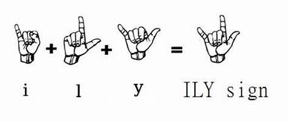
This is our new way of saying hello. But there is a way to keep our social distancing and tell someone that “we love them” and that “Jesus loves them.” We will do this by using sign language. If you watch TV and you see an important person speaking, you also see someone standing beside that person moving his or her hands. That person is using their hands to spell out letters and words for people who are unable to hear. It is called “sign language.”
This morning, instead of a fist bump or an elbow bump, we are going to tell someone that we love them by using sign language.
Now, Mom and Dad you are included. I want everyone to make a fist and have the palm of your fist face outward.
Now, I want you to raise your little finger, your pinky finger. This is the letter “I” in sign language.
Make a fist.
Now at the same time I want you to raise your index finger and extended your thumb. This is the letter “L” in sign language.
Make a fist.
Now, I want you to raise both your index finger and extend your thumb. This is the letter “Y” in sign language.
Make a fist.
Now I want you to raise your little pinky finger and your index finger and extend your thumb. You are now showing the letters “I” and “L” and “Y”. When they are all seen together it says, in sign language – I LOVE YOU

* * * * * * * * * * * * *
The Immediate Word, May 3, 2020 issue.
Copyright 2020 by CSS Publishing Company, Inc., Lima, Ohio.
All rights reserved. Subscribers to The Immediate Word service may print and use this material as it was intended in sermons and in worship and classroom settings only. No additional permission is required from the publisher for such use by subscribers only. Inquiries should be addressed to or to Permissions, CSS Publishing Company, Inc., 5450 N. Dixie Highway, Lima, Ohio 45807.
- He Restores My Soul! by Tom Willadsen — Looking for the good shepherd, many are afraid and desperate. But scripture says that God is at work, restoring souls, right now, present tense.
- Second Thoughts: I Will / You Should by Dean Feldmeyer — How we respond to the suffering that is being visited upon us in this time will depend, to a great extent, upon what our faith brings to our experience and what we, as faithful people of God, bring to our brothers and sisters.
- Sermon illustrations by Mary Austin and Bethany Peerbolte.
- Worship resources by George Reed that focus on choosing a shepherd; vicarious suffering.
- Children’s sermon: I Love You by Ron Love — Learning new ways to say "I love you" in this age of social distancing.
He Restores My Soul!by Tom Willadsen
John 10:1-10, Psalm 23
Don’t drink bleach.
“I never thought the phrase “speaking truth to power” would be interchangeable with ‘don’t drink bleach’ but these are strange times indeed.” Senator Tammy Duckworth, D-Illinois
In the News
Covid-19 continues to dominate the news. When we are not hearing about the spread of the virus we are hearing about its effect on the economy or the effect of the Payroll Protection Program to limit the damage to the economy.
It would be a buoy to the national spirit if someone in authority at the national level would step forward to speak clearly, calmly and credibly. The depth of ignorance and incompetence exhibited by the current administration has been nothing short of breathtaking and terrifying.
A clip from the opening of Saturday Night Live, April 25, 2020 illustrates the president’s complete lack of understanding of the significance of the first pandemic in a century, a disease that as of April 28, 2020 had killed more than 55,000 Americans. There really is nothing that Brad Pitt, in the role of Dr. Anthony Fauci, Director of the National Institute of Allergy and Infectious Diseases, can add to make the situation more pathetic.
Another example of profound incompetence in an elected official was exposed by Anderson Cooper, CNN news anchor, who interviewed Carolyn Goodman, Mayor of Las Vegas, Nevada, on the air on April 22.
At one point, Cooper observed, “You’re offering nothing but being a cheerleader.”
The mayor’s remarks were incoherent and her responses to Cooper’s questions were a dazzling array of non-sequiturs, bluster and buck passing.
The mayor’s passion is getting the Las Vegas economy back on its feet by urging the casinos to reopen. She admitted that she offered her city as a participant in a grand experiment to use as a control to see how easing physical distancing guideline would affect the spread of Covid-19 and was told by our statistician “you can’t do that.”
The next day, Nevada’s governor, Steve Sisolak, said on Cooper’s show, “We need to send a sincere message and a consistent message,” following the mayor’s appearance. “It’s difficult when we get one person that’s leading people astray, and I’m disappointed in that,” Sisolak concluded.
In the Culture
I am adding this section to the standard format for the main article because I need to comment on something that is more pervasive and longer-standing than the garden variety incompetence that has been rife in our national response to Covid-19.
Thirty years ago “Question Authority” began appearing on bumper stickers in the city where I lived. There is a long history of proudly, defiantly thinking for oneself in the United States. Benjamin Franklin said, “It is the first responsibility of every citizen to question authority.” After his time in the White House ended, Theodore Roosevelt said, “To announce that there must be no criticism of the president, or that we are to stand by the president, right or wrong, is not only unpatriotic and servile, but it is morally treasonable to the American public.”
In the years since, the final decade of the 20th century and the first 20% of the 21st century, questioning authority has morphed into a reflexive distrust of expertise of any kind. Isaac Asimov foresaw this “movement” in his 1980 essay “A Cult of Ignorance.”
There is a cult of ignorance in the United States, and there always has been. The strain of anti-intellectualism has been a constant thread winding its way through our political and cultural life, nurtured by the false notion that democracy means that “my ignorance is just as good as your knowledge.”
Experts in fields like contagious diseases are given equal credence to unexamined speculation about treatments for Covid-19 spouted spontaneously by the president who does not know the difference between a virus and a germ. While it is true that ingesting bleach will kill the Covid-19 virus, it will do so by killing the host, which is not the medical outcome preferred by health professionals.
This ethos is captured in the caption of a cartoon, probably from the New Yorker in which an airline passenger appears to lead a revolt in the cabin by standing and shouting something like, “Who needs these elite pilots with all their experience and training? Raise your hand if you believe I should fly this plane.”
When researchers who have spent their careers studying disease and its transmission are demoted or removed from their posts because their knowledge compels them to disagree with assertions that have emerged from the incoherent speculation of a failed real estate developer we are in peril. There can be no other word for the situation this vain incompetence has placed our nation in.
When the mayor of a city of more than 600,000 people offers her community as a “guinea pig” to assess the effect of physical distancing without any basis in the common good beyond “putting our hard-working citizens” back to work, we are in peril.
Where is a voice of reason or moderation or humility or compassion? What is the fate of elected officials who are honest enough to say “this is a difficult situation that will be with us for a long, long time?” What is their fate when their authority and credibility are undermined by efforts inciting citizens to defy the guidance of experts in public health in the name of one’s right to get a manicure, bowl or get a tattoo?
It takes courage to stand up to a demagogue. Still, some brave ones are stepping forward. Following the president’s suggestion that bright light and bleach — both taken internally — could kill the Covid-19 virus, four networks (CNN, NBC, CBS and ABC) stopped airing the president’s daily press briefings because they are not in the public interest. United Forces Broadcasting went even further saying, “(H)e’s (President Trump) giving advice that defies medical science….He’s going to kill people.”
NBC news called the president’s suggestion “irresponsible and dangerous.”
Noting that the president had advocated using the antimalarial drug hydroxychloroquine after anecdotal evidence suggested that it might help patients fight Covid-19, last week, a study of coronavirus patients in a Veterans Affairs hospital reported more deaths among those treated with hydroxychloroquine than among those treated with standard care.
In the Scriptures
What would a good shepherd act like in this moment in the United States? Is it even possible for one voice to call our nation into unity? Would we recognize that voice?
Would we even be able to follow a shepherd who could herd and protect the nation through the pandemic?
We are fortunate to have passages about good shepherds in the lectionary for today. As we examine whether and when herd immunity may kick in and slow the spread of Covid-19, we ask will it take effect before a vaccine is available. Many pastors are sheepish about imagining their congregations as flocks, yet that imagery runs throughout scripture. And what does the Good Shepherd do? Protects the flocks, even lays down his life for the flock.
Sheep are not strong, independent animals. Their safety and security depends on the herd. A large animal veterinarian I know told me “A sick sheep is a dead sheep.” The herd is so good at concealing the weak and vulnerable from predators that by the time someone outside the flock has spotted the weak one, she is very, very sick. In Luke 15, the shepherd in the parable goes looking for the one sheep from the flock of 100 that strays. Cut off from the herd, that one is very exposed and vulnerable. Contrast the lost sheep with the lone wolf. Lone wolves can look after themselves.
Country singer William Browder used T.G. Sheppard as his stage name. He was successful in the late 1970s and had his biggest hit, and only Top 40 pop hit with “I Loved ’Em Every One.” His stage name is a corruption of John 10:11 in which Jesus calls himself the Good Shepherd. The song is a somewhat bawdy tribute to the women the singer has encountered through his life, “big, little or short or tall, wish I could’ve kept them all. I loved ’em, every one.” While it may be a stretch, to find the gospel in this song, it is no stretch to imagine Jesus saying, “I loved you, every one.” That universal, constant, impartial love is precisely what we imagine Jesus offering, precisely what the good shepherd promises.
Perhaps imagining the United States in the season of Covid-19 as an analog to a flock of sheep is not the most helpful metaphor, but wouldn’t a strong, competent leader, a trustworthy voice go a long way to reduce anxiety? The difficulty is that there are so many voices speaking that it may be impossible for any single, competent voice to rise above the din. As social media positions citizens in echo chambers conceived and defined by algorithms that reinforce our own biases, what will a voice of authority, a voice worth following to safety as that of the good shepherd in John 10 need to sound like?
More than anything else, a good shepherd looks after the health and well-being of the entire herd. Such a shepherd models a sacrificial vulnerability that appears weak, but is strong enough to sacrifice. Let us pray that such a voice emerges and is compelling enough to lead the sheep to green pastures and still waters.
Civil rights leader and US Congresswoman Barbara Jordan once said, “A nation is formed by the willingness of each of us to share in the responsibility of upholding the common good.”
In the Sermon
Don’t overlook the gravity of Psalm 23. Yes, it’s the most familiar, most comforting passage in the Bible. Two parts we need to be reminded of in this moment is that the good shepherd guides and protects the flock through “the valley of the shadow of death.” Remind yourself and your congregation that these words point to the most terrifying experience one can ever imagine. Kindly, gentle Jesus with a lamb draped over his shoulder is also the one at your side during the flood, car accident or cancer surgery. The good shepherd gets into the terror and messiness of life.
“He restores my soul.” The first time I visited Nan I was new to the community and she was new to needing the assistance of the church. She had exhausted every possible, and some impossible, medical options; divine intervention was her best shot at recovery. We got acquainted, I asked if she had a favorite Bible passage. She said, “The Lord is my shepherd,” which may have been the only nugget of scripture she could recall in the moment. We recited it, together, mostly. (I’m Revised Standard and she was King James.) When we were finished I asked what part she liked best. I watched her face as she recited the familiar words silently. “He restoreth my soul!” she concluded. Nan was afraid and desperate. Scripture told her God is at work, restoring her soul, right now, present tense. God’s desire and intention is to restore her soul. This living word of hope came as she walked through the scariest moment in her life. Nan survived her hospital stay. But she came out with a different, more resilient faith. She understood that the restoration of her soul that the psalm mentions may mean after death, in spite of death.
SECOND THOUGHTSI Will / You Should
Dean Feldmeyer
1 Peter 2:19-25
My friend, Daniel, was drafted into the army during the Vietnam War.
He hated being drafted. He didn’t agree with the war and he didn’t want to kill or die fighting for a cause he didn’t believe in. But, not believing in the war was not considered a good enough reason for an exemption from the draft.
So, they drafted him and he went. He was angry and disappointed. He felt that the United States of America had turned its back on him and thousands of young men his age. Worse, he felt that God had abandoned him.
But he went.
He joined the army and he hated it.
He went to basic training and he hated every minute of the training.
He went to Vietnam and he hated Vietnam.
He hated it when he was wounded, twice.
He hated it when, even then, they did not let him come home but made him take a desk job because he could type.
After he came home and left the army, he hated the memory of it. He refused to join the VFW or walk in the Veterans’ Day parade. His purple heart with its oakleaf cluster was thrown in the bottom of a drawer.
So moved was he by the horrors of war, however, that when he came home, he began to take his religious faith seriously and, eventually, he went to college on the GI Bill and, after getting his BA degree, he went to seminary and became a pastor.
One day, as a new pastor in town, he was invited to the men’s breakfast at a local senior citizens center and, at one point during the course of the meal and program, the master of ceremonies asked all veterans to stand and be recognized.
Daniel, reluctantly, stood with the other veterans and was applauded and thanked for his service.
After the men’s breakfast, he was approached by several of the other veterans. They introduced themselves to him and asked about his military service and shared theirs with him. They were, to a man, warm, welcoming, kind, and decent men with which to break bread and talk.
Later that week he shared an insight from that experience with me: “I suddenly realized that my military service, as much as I hated every minute of it, and I really did hate it, gave me an entry into the lives of those guys that I may never have, otherwise, had and, I was thankful for that.” He paused and let that sink in for a moment then he went on: “But I had to come to that realization myself. No one could have told me that. I never would have believed them. In fact, I would have resented them for being so presumptuous as to tell me how I should feel about my own experience.”
Today’s reading from 1 Peter can be a helpful passage for people who are suffering, especially those suffering unjustly, but it is one best read to one’s self. It should be understood and used as an “I will” passage and not a “you should” passage.
Often it has been used to dismiss the suffering of others, from appendicitis to grief to slavery, telling the sufferers that, if their faith is strong enough the pain of their suffering will be, or worse, should be, mitigated by knowing that they are suffering as Jesus suffered.
The unavoidable conclusion is that if their suffering does not abate, it is their own fault for having a faith that is either too little or too weak. Nothing, of course, could be further from scriptural truth.
Quoting this passage in a vain attempt to ease or justify another person’s suffering is as unhelpful and, often, hurtful as telling them that “everything happens for a reason.” It is as misguided as suggesting that a person who is worrying about their sick and dying loved one should “let go and let God.” It is as foolish and as insensitive as trying to comfort someone at the graveside by telling them that they should “just trust in the Lord,” or remember that “God has his reasons.” It is as outlandish and ridiculous as telling a grieving parent that they should rejoice because “God needed another angel” and chose their child.
These are all things that I have heard people actually say and, after examining them closely, I have concluded that these clichés are often merely lame attempts to comfort the speaker more than the one spoken to.
If your theology runs in that direction you are free to use it to your own comfort but it is presumptuous, brazen, and arrogant to assume that it will salve the pain of another to whose theology you are not privy and whose pain you cannot even begin to know.
Better that we minister to our brothers and sisters with our quiet and prayerful presence, with embraces and shared tears. If we feel moved to talk, let our words be words of sympathy and empathy rather than religious clichés glazed over with overbold instructions on how those who are grieving or hurting should think and what they should believe.
In his book, Living a Life That Matters: Resolving the Conflict Between Conscience and Success, Rabbi Harold Kushner says, "At some of the darkest moments in my life, some people I thought of as friends deserted me — some because they cared about me and it hurt them to see me in pain; others because I reminded them of their own vulnerability, and that was more than they could handle. But real friends overcame their discomfort and came to sit with me. If they had no words to make me feel better, they sat in silence…and I loved them for it.”
The first funeral I conducted in the first church I served as a pastor was for a 17-year-old daughter of one of my parishioners, the homecoming queen, who was killed in an automobile accident on the way home from an after-dance party.
I was in my final year of seminary and, upon hearing the horrible news, my wife and I immediately drove the 50 miles to the home of the family of the girl who was killed. They were farmers who lived out in the country and it took us a little while to find their home but, eventually, we did. It was easy to recognize as it was the one surrounded by cars. The yard, the barn lot, the lane, the berm of the road in front of their house, were all full. I found a place to park and we walked toward the house and as we went, we met others all of whom were carrying food.
When we got to the farm house, a group of men standing in the yard, talking quietly, smoking and drinking coffee or sodas, parted to let us through and, as we entered through the kitchen, we were greeted by a small army of women, cooking, talking, slicing, setting out servings, and taking notes of who brought what, and what dishes went back to whom.
This, I thought as I made my way to the parents, is how they do funerals in the country. And I thought of the last three verses of the second chapter of the book of Job, when his friends come to be with him and to comfort him in his grief:
“Now when Job's three friends heard of all these troubles that had come upon him, each of them set out from his home… They met together to go and console and comfort him. When they saw him from a distance, they did not recognize him, and they raised their voices and wept aloud; they tore their robes and threw dust in the air upon their heads. They sat with him on the ground seven days and seven nights, and no one spoke a word to him, for they saw that his suffering was very great.” (Job 2:11-13)
Right now, as we slog our way through the novel coronavirus pandemic, some of us are merely inconvenienced, but some of us are experiencing genuine suffering, not only from the virus and the illness that it creates, but from the economic distress it has created. Others are suffering from loneliness, anxiety, worry, doubt, fear and a host of other psychological stresses that have arisen in our churches, our communities, and our country.
How we respond to the suffering that is being visited upon us in this time will depend, to a great extent, upon what our faith brings to our experience and what we, as faithful people of God, bring to our brothers and sisters.
It is my prayer that all of us will find, in our religious faith, the courage to face that which we fear the worst, the strength to bear the unbearable, friends who will stand with us in the fight, and the grace to celebrate what we have at least as much and as often as we lament what we don’t have.
If God will but grant us these things, then we will have done more than overcome a mere virus, we will have discovered that which gives life its meaning and makes it a gift.
ILLUSTRATIONS
From team member Mary Austin:1 Peter 2:19-25
Hope in Suffering
The letter of 1 Peter offers us a framework of meaning for our suffering, if we choose to find meaning in it. Game show host Alex Trebek has shared his struggles with pancreatic cancer with his fans, and has now spent a year with the disease, longer than most people survive with this particular cancer. Speaking about his own process of finding hope through his illness, Trebek said on Twitter, “There were moments of great pain, days when certain bodily functions no longer functioned, and sudden massive attacks of great depression that made me wonder if it really was worth fighting on. But I brushed that aside quickly because that would have been a massive betrayal — a betrayal of my wife and soulmate Jean who has given her all to help me survive. And it would certainly have been a betrayal of my faith in God and the millions of prayers that have been said on my behalf.” Trebek said, in an interview, “If there’s one thing I have discovered in the past year, it is the power of prayer.”
He has been grappling with the same questions explored in 1 Peter, and finding his way forward using the power of his faith. As the letter highlights, Trebek has found in Jesus an example worth following through this illness, and the source of his hope.
* * *
1 Peter 2:19-25
Meaning in Suffering
Author Philip Yancey has spent his career thinking about suffering, and how the power of God intersects with human suffering. A journalist asked him if this interest grew out of his father’s death from polio when he was a baby, and he answered, “Looking back, I’m sure that played a role. But the quest for answers really came when I was a young journalist. Again and again, people who’d suffered would tell me, “The worst part of all was when people would visit me in the hospital and come up with these contradictory explanations for suffering: ‘God’s punishing you.’ ‘No, no, no, it’s not God, it’s the Devil.’ ‘No, it’s God, but he’s not punishing you, he’s chosen you to be an example.’” I didn’t know what to say to them in response! That’s really what started me on the intellectual question. To make sense of this thing we all experience at some point.”
A large part of our suffering comes when we feel abandoned by God, and Yancey says, “It’s really easy to think when something bad happens, “Well, God is punishing me.” But we have a really clear picture of how God feels about those who are going through hard times. All you have to do is follow Jesus around to see how he handles people going through suffering—a widow who lost her only son, a person with leprosy, a woman with a very shameful condition, a blind person. He was always on the side of the one who suffers and responded with compassion and healing. That is the brightest clue we have to how God feels about us when we go through pain. God is on our side. I wish sometimes God would be more overt, more direct. But for whatever reason — and Jesus suffered this too—God lets the rules of this world play out. There’s that lovely and mysterious passage in Hebrews that says Jesus learned obedience through the things he suffered. Because he went through that, we now have an advocate, a representative, who knows what it’s like down here.”
Yancey adds an example of how we can grow in faith during times of pain. “One example I like to give involves my wife, Janet. She’s pretty prompt. If she’s supposed to pick me up at 5 o’clock and still doesn’t show by 5:30, I don’t think, “Oh there goes my irresponsible wife again! I can’t count on her for anything.” Instead I think, “There’s something going on that’s causing Janet to be delayed.” I know who she is, I know her character.
If we get to know God and believe God, then when something bad happens, my first response isn’t, “God let me down again.” There are things going on that I have no idea about. If we learn to trust God, it doesn’t mean that bad things aren’t going to happen to us. But they won’t pull the rug completely out from under us. We know this isn’t God sticking pins in us. God is on our side. My job is to trust, appeal for help to those around me and ask God to show me how something good can come out of it.” The writer of First Peter writes to a church familiar with suffering, and calls us back toward God when are in pain.
* * *
John 10:1-10, Psalm 23
Looking for Shepherds
In this pandemic, when ordinary routines are upended and typical relationships are stretched, all of us are looking for added wisdom in our lives. Who will shepherd us through fear, illness and economic upset? A recent magazine article asked a number of people over 60 for their wisdom, to guide us through this time. Robin Reif of New York City wrote, “Though I would never have uttered this aloud, I always believed myself invincible...My daughter puts me back on track. I can’t think of a better way to spend precious days than with this child who I adopted as a single mom. She’s heading to college next fall, so staying home has gifted us time for a long goodbye. We’ve been looking through old photographs, remembering what we’ve been through as a family and having difficult conversations, the kind that might have gone unspoken without this strange cocoon created by quarantine. I’ve had the chance to apologize for some terrible mistakes. She’s had the chance to be angry out loud and we’ve embraced as tightly as we ever have. We’ve begun marking time with new rituals: heading out around 11 pm each night into the vibrant, unstoppable spring. We stroll empty streets, dark and fragrant with red maples and crabapple trees in bloom; magnolias too, their stiff, upturned beaks starting to crack open. She takes my arm. We chat, or we’re quiet. We improvise a dance in the middle of West 70th Street without a car in sight. Finding freedom in confinement feels like the descending of grace.”
Mary Kay Jennings of Houston soothes our fears, saying, “I think this coronavirus pandemic poses a threat that humans can handle. It presents a unique opportunity to inoculate us against self-centeredness, isolation, the loss of family ties, and camaraderie. This pandemic could bring together communities of all sizes, alert the collective “us” to certain dangers—like pandemics and climate change—that threaten our fragile existence if not faced responsibly. If we humans are to survive and prosper, we must rediscover the inner strength, the selflessness—the collective responsibility—exhibited by my parents’ generation, the ingredients of a permanent vaccine to assure our planet’s habitability and our species’ survival.”
From New York, Thomas Hubschman observes, “The way we elderly were dismissed at the start of this COVID-19 thing, as if we had passed our expiration dates anyway, was just an exaggeration of how we are treated all the time. If we are occasionally shown respect, it is for our longevity, not our present usefulness. To the young we look like dried-up fruit. They don’t realize that inside these parched exteriors, a rich mental life and torrents of emotion are still rushing like spring floods.”
Our sages are all around us, with guidance to share.
* * *
John 10:1-10, Psalm 23
Missing the Shepherd’s Voice
Sometimes we miss out on an encounter with a wise shepherd, or someone who has a lot to teach us, because we’re too busy talking, or posturing, or not able to hear the shepherd’s voice. In the book, You're Not Listening: What You're Missing and Why It Matters, author Kate Murphy says, "It brings to mind an often-told story about the late Dick Bass, son of a Texas oil baron. He was known for going on ambitious mountain-climbing expeditions and talking about them, at length, to anyone within earshot, including a man who happened to be seated next to him on an airplane. For the duration of the cross-country flight, Bass went on about the treacherous peaks of McKinley and Everest and about the time he almost died in the Himalayas and his plan to climb Everest again. As they were about to land, Bass realized he hadn’t properly introduced himself. “That’s okay,” the man said, extending his hand. “I’m Neil Armstrong. Nice to meet you.”"
We have to do our part, even as silly sheep, and listen for the shepherd’s voice.
* * * * * *
From team member Bethany Peerbolte:Acts 2:42-47
And the people stayed home…
These verses of scripture and the verses written this month by Kitty O’Meara sound like they are cut from the same cloth. Kitty’s poem went viral after the world was given the direction to stay home to stay safe. Her words inspire hope, reminding people that this time at home can mean more time for things like art, and listening. She points us towards the growth that will need to be done in the coming months and leaves us in anticipation of the day the poem ends on. The day we come back together to grieve together and live more fully from what we have learned in our isolation.
The verse from Acts feel similar to the viral poem in cadence and tone. It could almost be another stanza of Kitty’s poem. The people of faith devoted themselves to the things that matter, prayer and communion. They learned from one another and grew in their faith. Their strength invited more to join them and learn this new way to live.
A sermon could use these verses from scripture and these modern verses of poetry to show how God’s people spend their time. The focus on the most important things that make life meaningful. They commit themselves to listening, and learning, and growing. They share their peace and blessing with the world so that God’s love is the balm to any hurt.
* * *
1 Peter 2:19-25
Our isolation highlights our togetherness
This section of scripture encourages believers to help carry the oppression of others. It points out that if one suffers the consequences of their own actions that is to e expected. What makes God’s people stand out is their willingness to suffer consequences they do not have to. They are willing to share the yoke and bear each other’s crosses. God’s people are inspired to do this because of Jesus’ willingness to take on the sins of the world even though he did not sin himself. Jesus’ example inspires Christians to do similar work in their communities.
Even as the world’s news stays laser focused on the virus, people are finding ways to inspire hope. Most of us are home and on our devices all day so it is no surprise that much of the good news originates from new communities and community efforts online. A Facebook group called “A View From My Window” is offering people a new view. The community posts pictures of the view from their windows. It started with a pool and some deck chairs and now includes fields of bluebells, sunsets over the ocean, sunrises over mountains, and many more humble and beautiful pictures. The community recognizes seeing the same thing every day gets old. They hope the shared views will help everyone get through these hard times.
Another trend online is #ShareMyCheck. People who are still able to work are feeling called to donate a portion or all of their stimulus check with an organization or individual who is more need of the money. Some have given to a restaurant or people they know who are struggling to pay bills. The posts using this hashtag show that the nation is feeling a moral obligation to come together and help those who have been hit hardest by this pandemic.
* * *
Psalm 23
It says what?
Oh Psalm 23…I admit I have a love hate relationship with this Psalm. It contains great stuff, but its familiarity can blind us to what it is really saying. This might be the week to shake it up a little bit and hear the words in a new way.
Try listening to this cute kids stumble through the verses. One could even encourage the congregation to memorize the Psalm the way they girl did with hand movements and sectioning off the bigger parts. Reading the Psalm from another translation is also a great way to make people listen. The Message always has a way of making familiar words feel new again.
Once the people hear this Psalm in a fresh new way its significance fits well with what is happening in our world. The valley of deaths seems far more real today. It is a perfect time to remind us that God has promised fill our cups with blessings.
* * * * * *
WORSHIPby George Reed
Call to Worship:
Leader: God is our shepherd who provides all of our needs.
People: God causes us to lie down in restful places.
Leader: God leads us beside still, calming waters.
People: Even when we walk through the very dark places.
Leader: Surely goodness and mercy shall be ours all our days.
People: We shall dwell in God’s presence for ever and ever.
OR
Leader: The shepherd calls us home.
People: We hear the loving voice and we come.
Leader: In the midst of terror and uncertainty we are led.
People: Our trust is in our gentle shepherd.
Leader: We are led even when the path is hard and scary.
People: We trust in our shepherd who has walked this path.
Hymns and Songs:
For the Bread Which You Have Broken
UMH: 614/615
H82: 340/341
PH: 508/509
CH: 411
LBW: 200
ELW: 494
God of the Sparrow, God of the Whale
UMH: 122
PH: 272
NCH: 32
CH: 70
ELW: 740
W&P: 29
Abide with Me
UMH: 700
H82: 662
PH: 543
AAHH: 459
NNBH: 247
NCH: 99
CH: 636
LBW: 272
ELW: 629
W&P: 307
AMEC: 495
STLT: 101
Because He Lives
UMH: 364
AAHH: 281
NNBH: 120
CH: 562
W&P: 447
Come Down, O Love Divine
UMH: 475
H82: 516
PH: 313
NCH: 289
CH: 582
LBW: 508
ELW: 804
W&P: 330
Draw Us in the Spirit's Tether
UMH: 632
PH: 504
NCH: 337
CH: 392
ELW: 470
Fairest Lord Jesus
UMH: 189
H82: 383/384
PH: 306
NNBH: 75
NCH: 44
CH: 97
W&P: 123
AMEC: 95
Holy Spirit, Truth Divine
UMH: 465
PH: 321
NCH: 63
CH: 241
LBW: 257
ELW: 298
The King of Love My Shepherd Is
UMH: 138
H82: 645/646
PH: 171
NCH: 248
LBW: 456
ELW: 502
We Know That Christ Is Raised
UMH: 610
H82: 296
PH: 495
CH: 376
LBW: 189
Music Resources Key:
UMH: United Methodist Hymnal
H82: The Hymnal 1982
PH: Presbyterian Hymnal
AAHH: African American Heritage Hymnal
NNBH: The New National Baptist Hymnal
NCH: The New Century Hymnal
CH: Chalice Hymnal
LBW: Lutheran Book of Worship
ELW: Evangelical Lutheran Worship
W&P: Worship & Praise
AMEC: African Methodist Episcopal Church Hymnal
STLT: Singing the Living Tradition
CCB: Cokesbury Chorus Book
Renew: Renew! Songs & Hymns for Blended Worship
Prayer for the Day/Collect
O God who is the good shepherd:
Grant us the wisdom to choose you and those who represent you
as the ones who help us navigate these treacherous waters;
through Jesus Christ our Savior. Amen.
OR
We praise you, O God, because you are the good shepherd. You created us and you know us. Help us to wisely choose you and those who represent you as our leaders during these treacherous times. Amen.
Prayer of Confession
Leader: Let us confess to God and before one another our sins and especially our failure to properly vet those we allow to lead us.
People: We confess to you, O God, and before one another that we have sinned. You are our good shepherd and yet we listen to those voices of many who speak in terms antithetical to all that you have taught us. We listen to words of hatred and jealousy, words of retribution and fear. We have lost our way. Help us to hear your voice and to recognize your way before us. Amen.
Leader: God does come to lead us to redemption. Receive God’s love and grace and share it with others that they may find the safety of God’s fold.
Prayers of the People
We worship and adore you, O God, who created us and is redeeming us from our own folly.
(The following paragraph may be used if a separate prayer of confession has not been used.)
We confess to you, O God, and before one another that we have sinned. You are our good shepherd and yet we listen to those voices of many who speak in terms antithetical to all that you have taught us. We listen to words of hatred and jealousy, words of retribution and fear. We have lost our way. Help us to hear your voice and to recognize your way before us.
We thank you for the wonders of your love that embraces us even when we wander from you fold. We thank you for the message of Jesus which calls us back into your loving arms. We thank you for those who have shared your love for us by caring for us even when we were stubborn and hard hearted.
(Other thanksgivings may be offered.)
We pray for all your children in their need. We pray for those who are ill and those who are dying. We pray for those who watch over the sick and for those who grieve. We pray for those who must make difficult decisions about keeping people safe during this stressful time.
(Other intercessions may be offered.)
All these things we ask in the name of our Savior Jesus Christ who taught us to pray together saying:
Our Father....Amen.
(Or if the Our Father is not used at this point in the service.)
All this we ask in the name of the Blessed and Holy Trinity. Amen.
Children’s Sermon Starter
Shepherds in biblical times practically lived with the sheep. Sheep needed to be guarded constantly to protect them from wild animals and from wandering off and getting lost. I don’t know if the sheep were thankful for all the shepherd did for them but we can all be thankful that Jesus is our shepherd who looks after us and never leaves us.
* * * * * *
CHILDREN'S SERMONI Love You
by Ron Love
In this day of social distancing because of the coronavirus we greet people differently than we used to. Instead of shaking hands, we do a fist bump or an elbow bump. (Demonstrate this.)
This is our new way of saying hello. But there is a way to keep our social distancing and tell someone that “we love them” and that “Jesus loves them.” We will do this by using sign language. If you watch TV and you see an important person speaking, you also see someone standing beside that person moving his or her hands. That person is using their hands to spell out letters and words for people who are unable to hear. It is called “sign language.”
This morning, instead of a fist bump or an elbow bump, we are going to tell someone that we love them by using sign language.
Now, Mom and Dad you are included. I want everyone to make a fist and have the palm of your fist face outward.
Now, I want you to raise your little finger, your pinky finger. This is the letter “I” in sign language.
Make a fist.
Now at the same time I want you to raise your index finger and extended your thumb. This is the letter “L” in sign language.
Make a fist.
Now, I want you to raise both your index finger and extend your thumb. This is the letter “Y” in sign language.
Make a fist.
Now I want you to raise your little pinky finger and your index finger and extend your thumb. You are now showing the letters “I” and “L” and “Y”. When they are all seen together it says, in sign language – I LOVE YOU
* * * * * * * * * * * * *
The Immediate Word, May 3, 2020 issue.
Copyright 2020 by CSS Publishing Company, Inc., Lima, Ohio.
All rights reserved. Subscribers to The Immediate Word service may print and use this material as it was intended in sermons and in worship and classroom settings only. No additional permission is required from the publisher for such use by subscribers only. Inquiries should be addressed to or to Permissions, CSS Publishing Company, Inc., 5450 N. Dixie Highway, Lima, Ohio 45807.
