
Purity is an inside job
Preaching
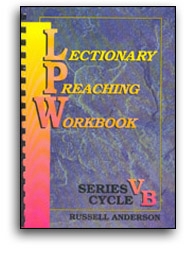
Lectionary Preaching Workbook
Series V, Cycle B
Theme For The Day: Purity is an inside job.
BRIEF COMMENTARY ON THE LESSONS
Lesson 1: Song of Solomon 2:8-13 (C)
The whole of the Song of Solomon is a love poem. In this passage the bride hears the voice of her lover as he approaches her house, then with desire sees him through the lattice. He joyously announces that the winter rainy season is past and that the earth is in full bloom. He beckons his lover to come and celebrate love and life around them and within them.
Lesson 1: Deuteronomy 4:1-2, 6-8 (RC); Deuteronomy 4:1-9 (E)
Lesson 2: James 1:17-27 (C); James 1:17-19, 21-22, 27 (RC)
James emphasizes the practical aspects of the Christian faith, especially ethical considerations. He identifies the Father of Jesus with the God of heavenly lights (stars) and asserts that he is the source of all blessings. James warns against moral impurity and counsels believers to be "quick to hear, slow to speak (in wrath) and slow to anger." Receiving the implanted word (Christ) will save our souls and produce an abundance of good deeds (v. 21).
Lesson 2: Ephesians 6:10-20 (E)
(See Proper 16)
Gospel: Mark 7:1-8, 14-15, 21-23 (C, E, RC)
Jesus becomes embroiled in conflict with the scribes and Pharisees. They ask him accusingly why his disciples do not wash their hands ceremonially and observe the other traditions of the elders. The Lord responds that it is not that which enters a person from the outside which makes him unclean but that which emanates from within the unredeemed heart -- murder, envy, covetousness and the like. Jesus places little credence in the so-called "oral laws," which later were incorporated into the Talmud. In contrast to the moral laws of God, these laws were basically the invention of men and not binding. Jesus places the emphasis on the spiritual transformation and purification of the heart through the power of God.
Psalm Of The Day
Psalm 45:1-2, 6-9 (C) -- "You are the most handsome of men" (v. 2).
Psalm 15 (E)
Psalm 14 (RC)
Prayer Of The Day
Lord Christ, cleanse our hearts and purify our minds, free us from futile faith and vain religion, that we might love you from our heart and serve you with all our mind and strength. In Jesus' name. Amen.
THEOLOGICAL REFLECTION ON THE LESSONS
Lesson 1: Song of Solomon 2:8-13
Love leaps (v. 8). The female lover observes her partner leaping to meet her. He can hardly wait to behold the face of his beloved. Love puts a spring in your step and your heart skips a beat as well. Even when passion cools down, love bounds and abounds.
Anticipation (v. 9). The lovers observe one another through the window, their hearts throbbing with anticipation at being united with the beloved.
The springtime of love (vv. 11-13). The author indicates that winter is over. Spring is the season when life renews and blossoms forth. The springtime of love is filled with anticipation but love has other seasons as well.
Lesson 2: James 1:17-27
Father of lights (v. 17). For James, God is the Father of the stars, creator of the heavenly luminaries. Every good gift comes from him. The Father of Jesus is also the Father of stars and galaxies.
From whom there is no variation or shadow due to change (v. 17). Does this mean that God does not change? James is trying to say that God is the architect of change, not the object of the process of change. Everything changes but God's love and grace remain immutable.
Heart transplant (v. 21). James would have us put away all moral impurity and permit God's word to be implanted into our hearts, which is capable of saving our souls.
Gospel: Mark 7:1-8, 14-15, 21-23
Defiled hands or hearts? (v. 7). How human it is to sweat the small stuff, to major on minors. The scribes and Pharisees got caught in this trap. Outward religious ritual assumed a place of paramount importance. They got all bent out of shape when some of the Lord's disciples were seen eating with defiled (unwashed) hands. Jesus' response to them can be paraphrased in this manner: "Don't get all upset about defiled hands; rather be concerned defiled hearts, hearts that are blackened by sin." The defilement comes from inside the human heart.
Lives must follow where your lips lead (v. 6). Jesus quotes Isaiah: "This people honors me with their lips but their heart is far from me." We confess God with our lips; our lips lead the way but our lives must follow.
Anthropology as theology (v. 7). Jesus contended that the religious leaders were teaching anthropology as revealed theology. He said that they were teaching as doctrines the precepts of men (v. 7). This is something religious people do all the time.
The source of uncleanness (vv. 14-15). Jesus indicates that sin is the source of defilement, which comes from our heart, a heart turned in on itself. Preoccupation with ritual impurity diverts attention away from the real source of spiritual impurity.
SERMON APPROACHES WITH ILLUSTRATIONS
Lesson 1: Song of Solomon 2:8-13
Sermon Title: Love Leaps
Sermon Angle: Not only does love quicken the step but love leaps over obstacles that get in its way. But romantic love is not sufficient to leap over mountains and surmount great difficulties, it takes mature love to do that. This is the kind of love that accepts people for what they are; it is the type that hangs close even when the going gets rough. Yes, real love has resiliency and bounce.
Outline:
1. Young love leaps -- it's the hormones.
2. Mature love also leaps -- it's a gift of God, who is love.
Sermon Title: A Feast For The Senses
Sermon Angle: Romantic love is symbolized by the spring season; in this season of life, the senses are stimulated. The flowers stimulate the eyes (v. 12); the scents of new life are everywhere (v. 13); the birds delight us with their songs, for it is a time of singing (v. 12). Romantic love activates the senses, causing its captives to be tuned into realities they never noticed before. When we fall in love with God, our senses are also activated as we marvel at the wonder of God's love.
Outline:
1. If you've fallen in love, you might recall that the world looked different; you noticed things you never observed before.
2. Romantic love activates the senses of sight, smell, hearing and so forth.
3. When we experience the love of God, we also see the world in a new way, our spiritual senses are activated.
4. Open yourself to the love of God each day.
_________
It's no accident that springtime is the season when lovers do their leaping, flowers do their blooming and birds do their singing. It's the light! In the winter it's rainy, cold and overcast. In the winter, unless you're an avid skier, your shoulders droop and your spirits lag. But in the spring, the days get longer and the rays of the sun are brighter and warmer. The sunlight draws out all the colors of life and love; the sky is bluer, the grass greener and our senses are in resonance with the light of life. What our hearts told us all along is now being confirmed by science. It is no secret that more people become depressed in the winter, if you live in a more northerly climate. However, researchers are now onto the source of this condition. It is a result of light deprivation. They call it SAD, Seasonal Affective Disorder; they tell us that these people respond positively to light therapy. If those depressed with this condition are exposed to a couple of hours of bright light in the morning, it helps set their body clock and they feel much happier. This is just another indication that God made us to live and love and leap in the light of his presence.
Lesson 2: James 1:17-27
Sermon Title: God Beams His Blessings
Sermon Angle: James does not accept the concept prevalent in the Old Testament that Yahweh is the Lord of weal and woe, good and evil. James states that God is the source of good and perfect gifts (v. 17). He is not the source of evil or of temptation (vv. 13-15). The God of light beams his blessings to all and especially to those who follow the Light of the World.
Outline:
1. God is not the source of evil but of blessing.
2. As the Father of light, he beams his blessings to us through creation.
3. We are saved through the redeeming light of his Son.
__________
I like James' description of God as the "Father of lights." All life and beauty are a consequence of light. James proclaims that "Every good endowment and every perfect gift come down from above, from the Father of lights" (v. 17). The primary gift of our luminous Creator is light and from this light come all manner of blessings. Only certain things emit light: the sun, other suns, light bulbs and so forth. Almost all other objects do not emit light on their own, they merely reflect or re-emit part of the light that falls on them. To re-emit the light, objects must be in resonance with the light source. This is a scientific way of saying that the source of the light and the object that re-emits the light are on the same wavelength. To be in Christ is to be on the same wavelength as the Father of lights.
Sermon Title: Circuit Breaker
Sermon Angle: When an electrical circuit gets too much juice, a circuit breaker does what its name implies, it severs the circuit. This keeps the appliance and possibly the lives of those in the house from getting burned up. After the precipitous stock market crash of 1987, the Federal Trade Commission designed a circuit breaker to stop the program trading when the action got too hot. They feared a meltdown. James enjoins that Christians should be quick to hear, but slow to speak and slow to anger (v. 19). What we need is a spiritual circuit breaker that kicks in every time our passions or temper get overheated. Indeed, when we submit to God's Spirit, he supplies such a service.
Outline:
1. Many people have died in fires for lack of circuit breakers.
2. Many people have suffered injury and death for lack of emotional self-control.
3. James says, "Be quick to hear, slow to speak and slow to anger" (v. 19).
4. Let God's Word and Spirit provide a spiritual and emotional circuit breaker in you.
Gospel: Mark 7:1-8, 14-15, 21-23
Sermon Title: Clean Heart, Clean Hands
Sermon Angle: A clean heart leads to clean hands, not the other way around. That's the point that Jesus was trying to make with the scribes and Pharisees. They thought that they were ready to approach God if their hands were clean. For them, ritual had replaced righteousness. When we confess our sins to Christ and ask for his forgiveness, God washes us with cleaning agents that penetrate all the way to the wellspring of our spiritual existence.
Outline:
1. The religious leaders criticized Jesus because his disciples were not ritually clean.
2. They thought clean hands issued in a clean heart.
3. Jesus taught that the source of defilement was from within (vv. 14-15, 21-23).
4. Only God can cleanse the heart through confession and forgiveness.
5. A clean heart leads to clean hands that praise and serve God.
Sermon Title: Vain Worship
Sermon Angle: In responding to the narrow-mindedness of the scribes and Pharisees, Jesus quotes Isaiah: "In vain do they worship me, teaching as doctrines the precepts of men" (v. 7). Why was their worship vain and fruitless? It majored on externals rather than penetrating to the heart of the matter, for one thing. For another, it confused human philosophy with God's revelation. Thirdly, it neglected God's moral law in favor of ceremonial law and religious customs. To sum the matter up, their worship was vain because they were out of touch with the One who is the Way, the Truth and the Life. To this day, there is no shortage of vain and useless worship.
Outline:
1. Jesus accused the scribes and Pharisees of vain worship (v. 7). What made it so?
2. It was out of touch with God's revealed truth (v. 8).
3. It replaced righteousness with ritual (vv. 3-4).
4. It judged people by superficial criteria (v. 5).
Sermon Title: When Religion Becomes Obsessive-Compulsive
Sermon Angle: The religion of the scribes and Pharisees was obsessive-compulsive. Obsessive-compulsive disorders manifest themselves in ritualistic behavior. This behavior is destructive in that the person doesn't really know why he feels compelled to repeat this behavior. It is action devoid of conscious reason, which diverts the sufferer from the real tasks of living. The religion that Jesus pointed to was behavior that was non-productive and vain. All the rules and regulations were very close to being obsessive-compulsive. They diverted attention away from the living Lord. Much that passes as Christian religion is compulsive rather than living faith.
Outline:
1. Explain obsessive-compulsive behavior.
2. Religion becomes obsessive-compulsive when religious activity is divorced from the living God.
3. The ritual of washing was an example of this tendency among the Jews.
4. How much of your Christian faith is obsessive-compulsive?
5. Turn to the living Lord and worship God from the heart.
_________
Several years ago the Parish Coordinator of the church where I served had attended a convention of the Evangelical Lutheran Church Women. Upon returning she reported that a speaker on the subject of worship renewal made a statement that stuck in her head. He stated: "The trouble with Lutherans is that they are afraid of the big C word. No, the big C word is not Christ or commitment, but CHANGE." This is not only true of Lutherans, it's true of most Christians and non-Christians alike. We fear change. The critics of Jesus, the scribes and Pharisees, didn't want to let go of the past. Instead of worshipping God, they honored the traditions of their fathers. Tradition is not necessarily a bad thing, unless it keeps us from encountering the Spirit of the living God. We need not fear the big "C" word because God is in control of the process of change.
BRIEF COMMENTARY ON THE LESSONS
Lesson 1: Song of Solomon 2:8-13 (C)
The whole of the Song of Solomon is a love poem. In this passage the bride hears the voice of her lover as he approaches her house, then with desire sees him through the lattice. He joyously announces that the winter rainy season is past and that the earth is in full bloom. He beckons his lover to come and celebrate love and life around them and within them.
Lesson 1: Deuteronomy 4:1-2, 6-8 (RC); Deuteronomy 4:1-9 (E)
Lesson 2: James 1:17-27 (C); James 1:17-19, 21-22, 27 (RC)
James emphasizes the practical aspects of the Christian faith, especially ethical considerations. He identifies the Father of Jesus with the God of heavenly lights (stars) and asserts that he is the source of all blessings. James warns against moral impurity and counsels believers to be "quick to hear, slow to speak (in wrath) and slow to anger." Receiving the implanted word (Christ) will save our souls and produce an abundance of good deeds (v. 21).
Lesson 2: Ephesians 6:10-20 (E)
(See Proper 16)
Gospel: Mark 7:1-8, 14-15, 21-23 (C, E, RC)
Jesus becomes embroiled in conflict with the scribes and Pharisees. They ask him accusingly why his disciples do not wash their hands ceremonially and observe the other traditions of the elders. The Lord responds that it is not that which enters a person from the outside which makes him unclean but that which emanates from within the unredeemed heart -- murder, envy, covetousness and the like. Jesus places little credence in the so-called "oral laws," which later were incorporated into the Talmud. In contrast to the moral laws of God, these laws were basically the invention of men and not binding. Jesus places the emphasis on the spiritual transformation and purification of the heart through the power of God.
Psalm Of The Day
Psalm 45:1-2, 6-9 (C) -- "You are the most handsome of men" (v. 2).
Psalm 15 (E)
Psalm 14 (RC)
Prayer Of The Day
Lord Christ, cleanse our hearts and purify our minds, free us from futile faith and vain religion, that we might love you from our heart and serve you with all our mind and strength. In Jesus' name. Amen.
THEOLOGICAL REFLECTION ON THE LESSONS
Lesson 1: Song of Solomon 2:8-13
Love leaps (v. 8). The female lover observes her partner leaping to meet her. He can hardly wait to behold the face of his beloved. Love puts a spring in your step and your heart skips a beat as well. Even when passion cools down, love bounds and abounds.
Anticipation (v. 9). The lovers observe one another through the window, their hearts throbbing with anticipation at being united with the beloved.
The springtime of love (vv. 11-13). The author indicates that winter is over. Spring is the season when life renews and blossoms forth. The springtime of love is filled with anticipation but love has other seasons as well.
Lesson 2: James 1:17-27
Father of lights (v. 17). For James, God is the Father of the stars, creator of the heavenly luminaries. Every good gift comes from him. The Father of Jesus is also the Father of stars and galaxies.
From whom there is no variation or shadow due to change (v. 17). Does this mean that God does not change? James is trying to say that God is the architect of change, not the object of the process of change. Everything changes but God's love and grace remain immutable.
Heart transplant (v. 21). James would have us put away all moral impurity and permit God's word to be implanted into our hearts, which is capable of saving our souls.
Gospel: Mark 7:1-8, 14-15, 21-23
Defiled hands or hearts? (v. 7). How human it is to sweat the small stuff, to major on minors. The scribes and Pharisees got caught in this trap. Outward religious ritual assumed a place of paramount importance. They got all bent out of shape when some of the Lord's disciples were seen eating with defiled (unwashed) hands. Jesus' response to them can be paraphrased in this manner: "Don't get all upset about defiled hands; rather be concerned defiled hearts, hearts that are blackened by sin." The defilement comes from inside the human heart.
Lives must follow where your lips lead (v. 6). Jesus quotes Isaiah: "This people honors me with their lips but their heart is far from me." We confess God with our lips; our lips lead the way but our lives must follow.
Anthropology as theology (v. 7). Jesus contended that the religious leaders were teaching anthropology as revealed theology. He said that they were teaching as doctrines the precepts of men (v. 7). This is something religious people do all the time.
The source of uncleanness (vv. 14-15). Jesus indicates that sin is the source of defilement, which comes from our heart, a heart turned in on itself. Preoccupation with ritual impurity diverts attention away from the real source of spiritual impurity.
SERMON APPROACHES WITH ILLUSTRATIONS
Lesson 1: Song of Solomon 2:8-13
Sermon Title: Love Leaps
Sermon Angle: Not only does love quicken the step but love leaps over obstacles that get in its way. But romantic love is not sufficient to leap over mountains and surmount great difficulties, it takes mature love to do that. This is the kind of love that accepts people for what they are; it is the type that hangs close even when the going gets rough. Yes, real love has resiliency and bounce.
Outline:
1. Young love leaps -- it's the hormones.
2. Mature love also leaps -- it's a gift of God, who is love.
Sermon Title: A Feast For The Senses
Sermon Angle: Romantic love is symbolized by the spring season; in this season of life, the senses are stimulated. The flowers stimulate the eyes (v. 12); the scents of new life are everywhere (v. 13); the birds delight us with their songs, for it is a time of singing (v. 12). Romantic love activates the senses, causing its captives to be tuned into realities they never noticed before. When we fall in love with God, our senses are also activated as we marvel at the wonder of God's love.
Outline:
1. If you've fallen in love, you might recall that the world looked different; you noticed things you never observed before.
2. Romantic love activates the senses of sight, smell, hearing and so forth.
3. When we experience the love of God, we also see the world in a new way, our spiritual senses are activated.
4. Open yourself to the love of God each day.
_________
It's no accident that springtime is the season when lovers do their leaping, flowers do their blooming and birds do their singing. It's the light! In the winter it's rainy, cold and overcast. In the winter, unless you're an avid skier, your shoulders droop and your spirits lag. But in the spring, the days get longer and the rays of the sun are brighter and warmer. The sunlight draws out all the colors of life and love; the sky is bluer, the grass greener and our senses are in resonance with the light of life. What our hearts told us all along is now being confirmed by science. It is no secret that more people become depressed in the winter, if you live in a more northerly climate. However, researchers are now onto the source of this condition. It is a result of light deprivation. They call it SAD, Seasonal Affective Disorder; they tell us that these people respond positively to light therapy. If those depressed with this condition are exposed to a couple of hours of bright light in the morning, it helps set their body clock and they feel much happier. This is just another indication that God made us to live and love and leap in the light of his presence.
Lesson 2: James 1:17-27
Sermon Title: God Beams His Blessings
Sermon Angle: James does not accept the concept prevalent in the Old Testament that Yahweh is the Lord of weal and woe, good and evil. James states that God is the source of good and perfect gifts (v. 17). He is not the source of evil or of temptation (vv. 13-15). The God of light beams his blessings to all and especially to those who follow the Light of the World.
Outline:
1. God is not the source of evil but of blessing.
2. As the Father of light, he beams his blessings to us through creation.
3. We are saved through the redeeming light of his Son.
__________
I like James' description of God as the "Father of lights." All life and beauty are a consequence of light. James proclaims that "Every good endowment and every perfect gift come down from above, from the Father of lights" (v. 17). The primary gift of our luminous Creator is light and from this light come all manner of blessings. Only certain things emit light: the sun, other suns, light bulbs and so forth. Almost all other objects do not emit light on their own, they merely reflect or re-emit part of the light that falls on them. To re-emit the light, objects must be in resonance with the light source. This is a scientific way of saying that the source of the light and the object that re-emits the light are on the same wavelength. To be in Christ is to be on the same wavelength as the Father of lights.
Sermon Title: Circuit Breaker
Sermon Angle: When an electrical circuit gets too much juice, a circuit breaker does what its name implies, it severs the circuit. This keeps the appliance and possibly the lives of those in the house from getting burned up. After the precipitous stock market crash of 1987, the Federal Trade Commission designed a circuit breaker to stop the program trading when the action got too hot. They feared a meltdown. James enjoins that Christians should be quick to hear, but slow to speak and slow to anger (v. 19). What we need is a spiritual circuit breaker that kicks in every time our passions or temper get overheated. Indeed, when we submit to God's Spirit, he supplies such a service.
Outline:
1. Many people have died in fires for lack of circuit breakers.
2. Many people have suffered injury and death for lack of emotional self-control.
3. James says, "Be quick to hear, slow to speak and slow to anger" (v. 19).
4. Let God's Word and Spirit provide a spiritual and emotional circuit breaker in you.
Gospel: Mark 7:1-8, 14-15, 21-23
Sermon Title: Clean Heart, Clean Hands
Sermon Angle: A clean heart leads to clean hands, not the other way around. That's the point that Jesus was trying to make with the scribes and Pharisees. They thought that they were ready to approach God if their hands were clean. For them, ritual had replaced righteousness. When we confess our sins to Christ and ask for his forgiveness, God washes us with cleaning agents that penetrate all the way to the wellspring of our spiritual existence.
Outline:
1. The religious leaders criticized Jesus because his disciples were not ritually clean.
2. They thought clean hands issued in a clean heart.
3. Jesus taught that the source of defilement was from within (vv. 14-15, 21-23).
4. Only God can cleanse the heart through confession and forgiveness.
5. A clean heart leads to clean hands that praise and serve God.
Sermon Title: Vain Worship
Sermon Angle: In responding to the narrow-mindedness of the scribes and Pharisees, Jesus quotes Isaiah: "In vain do they worship me, teaching as doctrines the precepts of men" (v. 7). Why was their worship vain and fruitless? It majored on externals rather than penetrating to the heart of the matter, for one thing. For another, it confused human philosophy with God's revelation. Thirdly, it neglected God's moral law in favor of ceremonial law and religious customs. To sum the matter up, their worship was vain because they were out of touch with the One who is the Way, the Truth and the Life. To this day, there is no shortage of vain and useless worship.
Outline:
1. Jesus accused the scribes and Pharisees of vain worship (v. 7). What made it so?
2. It was out of touch with God's revealed truth (v. 8).
3. It replaced righteousness with ritual (vv. 3-4).
4. It judged people by superficial criteria (v. 5).
Sermon Title: When Religion Becomes Obsessive-Compulsive
Sermon Angle: The religion of the scribes and Pharisees was obsessive-compulsive. Obsessive-compulsive disorders manifest themselves in ritualistic behavior. This behavior is destructive in that the person doesn't really know why he feels compelled to repeat this behavior. It is action devoid of conscious reason, which diverts the sufferer from the real tasks of living. The religion that Jesus pointed to was behavior that was non-productive and vain. All the rules and regulations were very close to being obsessive-compulsive. They diverted attention away from the living Lord. Much that passes as Christian religion is compulsive rather than living faith.
Outline:
1. Explain obsessive-compulsive behavior.
2. Religion becomes obsessive-compulsive when religious activity is divorced from the living God.
3. The ritual of washing was an example of this tendency among the Jews.
4. How much of your Christian faith is obsessive-compulsive?
5. Turn to the living Lord and worship God from the heart.
_________
Several years ago the Parish Coordinator of the church where I served had attended a convention of the Evangelical Lutheran Church Women. Upon returning she reported that a speaker on the subject of worship renewal made a statement that stuck in her head. He stated: "The trouble with Lutherans is that they are afraid of the big C word. No, the big C word is not Christ or commitment, but CHANGE." This is not only true of Lutherans, it's true of most Christians and non-Christians alike. We fear change. The critics of Jesus, the scribes and Pharisees, didn't want to let go of the past. Instead of worshipping God, they honored the traditions of their fathers. Tradition is not necessarily a bad thing, unless it keeps us from encountering the Spirit of the living God. We need not fear the big "C" word because God is in control of the process of change.
