
Psalm 46
Preaching
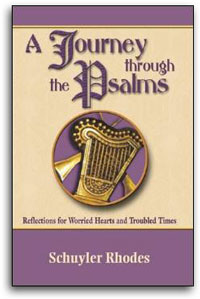
A Journey Through the Psalms: Reflections for Worried Hearts and Troubled Times
Preaching the Psalms Cycles A, B, C
Object:
"Be still and know that I am God."
How difficult it is to be still. The world in which we live conspires to make of us a blur as we rush about doing all the things we feel called to do. Indeed, it is difficult to be still. Today, the average worker in the American work force puts in fifteen to twenty more hours a week than a worker did a generation ago. Today, the demands of parenting and community are overwhelming as many find themselves also caring for aging parents. Being still? Sounds nice, but when would that happen? During sleep?
People are so busy that there is a new church demographic arising in families who actually make it to church about once a month. These folks self-identify as church members. They give financially and sometimes even serve in the ministry of the church. But all they have time for is to attend church once a month.
We are experiencing an epidemic of busy-ness. All the labor saving devices showered upon us only seem to make us busier still. Computers that once lived on our desks now follow us around for use in our laps. At home, in the cafe, in the car, and even on vacation we cannot seem to stop moving. Cell phones have turned to smart phones so that email and text messages can follow us wherever we go, there is even talk of communication devices that can be surgically implanted near one's ear!
Be still, and know that I am God. It would seem that it's the stillness part that is the challenge for us. In an ever-quickening world, how do church leaders help people slow down and even stop for a little while? As the pace picks up and everyone sprints a little faster, is there a way that the Christian community can invite people into a stillness where God waits?
The answer to the question is, of course, "Yes." But getting there is still a challenge. The first thing, perhaps, is to utter a call to stillness. Even if it's only ten minutes a day, everyone can find this little window to simply stop and be still. Once the call is uttered, perhaps it might be possible to build stillness into the worship life of the community. Quakers are good at this, but most Protestants fill their worship with noise and chatter. What if a worship service carved out five whole minutes for silence and stillness?
"Be still, and know that I am God." These are admittedly modest proposals. Perhaps the readers will have their own ideas? Whatever happens, it is important, even critical for leaders to help the people slow down, stop, and claim the stillness where knowledge of God begins.
How difficult it is to be still. The world in which we live conspires to make of us a blur as we rush about doing all the things we feel called to do. Indeed, it is difficult to be still. Today, the average worker in the American work force puts in fifteen to twenty more hours a week than a worker did a generation ago. Today, the demands of parenting and community are overwhelming as many find themselves also caring for aging parents. Being still? Sounds nice, but when would that happen? During sleep?
People are so busy that there is a new church demographic arising in families who actually make it to church about once a month. These folks self-identify as church members. They give financially and sometimes even serve in the ministry of the church. But all they have time for is to attend church once a month.
We are experiencing an epidemic of busy-ness. All the labor saving devices showered upon us only seem to make us busier still. Computers that once lived on our desks now follow us around for use in our laps. At home, in the cafe, in the car, and even on vacation we cannot seem to stop moving. Cell phones have turned to smart phones so that email and text messages can follow us wherever we go, there is even talk of communication devices that can be surgically implanted near one's ear!
Be still, and know that I am God. It would seem that it's the stillness part that is the challenge for us. In an ever-quickening world, how do church leaders help people slow down and even stop for a little while? As the pace picks up and everyone sprints a little faster, is there a way that the Christian community can invite people into a stillness where God waits?
The answer to the question is, of course, "Yes." But getting there is still a challenge. The first thing, perhaps, is to utter a call to stillness. Even if it's only ten minutes a day, everyone can find this little window to simply stop and be still. Once the call is uttered, perhaps it might be possible to build stillness into the worship life of the community. Quakers are good at this, but most Protestants fill their worship with noise and chatter. What if a worship service carved out five whole minutes for silence and stillness?
"Be still, and know that I am God." These are admittedly modest proposals. Perhaps the readers will have their own ideas? Whatever happens, it is important, even critical for leaders to help the people slow down, stop, and claim the stillness where knowledge of God begins.
