
Psalm 19
Preaching
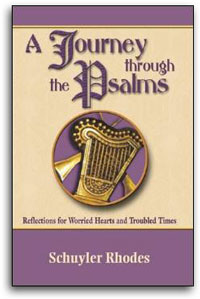
A Journey Through the Psalms: Reflections for Worried Hearts and Troubled Times
Preaching the Psalms Cycles A, B, C
Object:
What a potent poem is rendered in this psalm. The image of God's glory being shouted in a voiceless language sends the mind to spinning. The whole of creation stretches out to declare the wonders of God. Creation gets it right. From a blazing sunrise in the east, to the Maxfield Parrish blue skies at sunset, creation is indeed articulate. Take the view through a microscope, or through a telescope, and from the tiniest to the largest it is abundantly clear. "Our God," as the praise song goes, "is an awesome God."
This psalm, however, nudges us past creation's wonder and speaks to God's law. A law, which the psalmist tells us, is "perfect." With Pauline exhortations about law notwithstanding, there is something to attend to in this. Consider for a moment the notion of a law that can "revive the soul" (v. 7). What kind of law could do this? The contemporary mind rushes to television courtrooms and outlandish lawyers. The immature mind chafes at the notion of rules that would constrict or limit. But the mind that is attuned to the holy might imagine a soul revived by God's perfect law.
Think for a moment about the Ten Commandments. Imagine a nation that actually paid attention to these laws. Picture a place where no one stole anything. That includes burglars and CEOs. This, in itself, would be world-changing, but let's not stop there. What if everyone decided that killing other people simply wasn't going to happen anymore? What if everyone, soldiers, terrorists, gang members, cops, and robbers; everyone laid down their arms and refused to hurt another human being?
"Yes, yes," the accusation can already be heard. "That's so naive."
But the question needs to be asked. "Is it? Is it truly naive, or have we been so encrusted with cynicism that we can no longer envision a community where God's vision -- or God's law -- is truly lived?" You see, if only these two commandments were actually followed, souls would indeed be revived. There's no question about it. With no stealing or murder (whether by governments or by individuals), fear would evaporate like a puddle in the noonday sun. Without rampant theft, people would stop worrying about their possessions. Fear would vanish. Creativity would flourish. Generosity would blossom. Revived souls? You bet.
More precious than gold? Sweeter than honey? If a people of faith could but imagine these laws fulfilled, a huge step would be taken. And if that same people, having imagined it, would dare to step into the adventure of living in obedience to these laws, the world could literally be healed.
This psalm, however, nudges us past creation's wonder and speaks to God's law. A law, which the psalmist tells us, is "perfect." With Pauline exhortations about law notwithstanding, there is something to attend to in this. Consider for a moment the notion of a law that can "revive the soul" (v. 7). What kind of law could do this? The contemporary mind rushes to television courtrooms and outlandish lawyers. The immature mind chafes at the notion of rules that would constrict or limit. But the mind that is attuned to the holy might imagine a soul revived by God's perfect law.
Think for a moment about the Ten Commandments. Imagine a nation that actually paid attention to these laws. Picture a place where no one stole anything. That includes burglars and CEOs. This, in itself, would be world-changing, but let's not stop there. What if everyone decided that killing other people simply wasn't going to happen anymore? What if everyone, soldiers, terrorists, gang members, cops, and robbers; everyone laid down their arms and refused to hurt another human being?
"Yes, yes," the accusation can already be heard. "That's so naive."
But the question needs to be asked. "Is it? Is it truly naive, or have we been so encrusted with cynicism that we can no longer envision a community where God's vision -- or God's law -- is truly lived?" You see, if only these two commandments were actually followed, souls would indeed be revived. There's no question about it. With no stealing or murder (whether by governments or by individuals), fear would evaporate like a puddle in the noonday sun. Without rampant theft, people would stop worrying about their possessions. Fear would vanish. Creativity would flourish. Generosity would blossom. Revived souls? You bet.
More precious than gold? Sweeter than honey? If a people of faith could but imagine these laws fulfilled, a huge step would be taken. And if that same people, having imagined it, would dare to step into the adventure of living in obedience to these laws, the world could literally be healed.
