
Unity through the Lordship and headship of Christ
Preaching
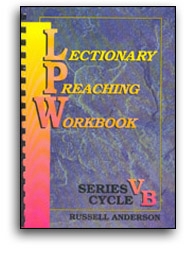
Lectionary Preaching Workbook
Series V, Cycle B
Theme For The Day: Unity through the Lordship and headship of Christ.
BRIEF COMMENTARY ON THE LESSONS
Lesson 1: 2 Samuel 6:1--5, 12b--19 (C)
David brings the Ark of the Covenant up from Kirjath--jearim to his new capital, Jerusalem. The ark is set on a new cart and David and his men dance and sing in procession. On the way, the ox pulling the cart stumbles and Uzzah reaches out to steady the ark and keep it from falling and is struck dead by the Lord for taking such liberties. David becomes angry with the Lord and also afraid. He leaves the ark in the nearby house of Obed for the next three months. Obed's household experiences many blessings and the word of his good fortune reaches the ears of David. The king then brings the ark up to Jerusalem with great celebration. David is caught up in the joy of the celebration and dances before the ark with all his might. (It would be best to read verses 1--19 continuously and not leave out verses 6--12a.)
Lesson 1: Amos 7:12--15 (RC); Amos 7:7--15 (E)
Lesson 2: Ephesians 1:3--14 (C, RC); Ephesians 1:1--14(E)
This is the first installment in a series of eight readings from Ephesians. The church constitutes the main theme of this epistle. Some scholars question Paul's authorship because the style and vocabulary differ and there are no personal references. I accept William Barclay's suggestion that the epistle differs because it was written under different circumstances than most of Paul's other letters; the apostle was in prison in Rome. Therefore, he had the time to reflect and carefully choose his words. Barclay maintains that this was a general letter, circulated to all the churches and not expressly written for the Ephesians, whom Paul held very dear. In this lection Paul marvels at the wonder of God electing us as his own dear children. Another major chord concerns how Christ unites heaven and earth through his blood. Later in the letter Paul shows how the church is charged with fulfilling Christ's reconciling ministry.
Gospel: Mark 6:14--29 (C)
King Herod hears about the ministry of Jesus and his miracles and jumps to the conclusion that Jesus is a reincarnation of John the Baptist, whom he has beheaded. The lection then tells the story of John's execution. Herodias, Herod's wife, had formerly been married to his brother, Philip. John had roundly accused them of adultery, which raised the ire of Herodias. She wanted to do away with him but Herod protected him. Salome, her daughter, danced before Herod at a banquet and so pleased the monarch that he promised her anything, up to half his kingdom. She consulted with her mother, who instructed her to demand the head of John the Baptist. Herod regretted his oath but to save face ordered the executioner to present John's head at the feast.
Gospel: Mark 6:7--13 (RC, E)
(See Proper 9)
Psalm Of The Day
Psalm 24 (C) - "The earth is the Lord's and all that is in it" (v. 1).
Psalm 85 (E)
Psalm 122 (RC)
Prayer Of The Day
O Rock of Ages, though the cause of evil seems to prosper, let us never lose faith that the cause of righteousness and justice will ultimately triumph. Give us the peace of your presence amidst a world of discord. In the powerful name of Jesus. Amen.
THEOLOGICAL REFLECTION ON THE LESSONS
Lesson 1: 2 Samuel 6:1--5, 12b--19
Worship with all your being (vv. 5, 14). Whatever David was about, he did it with great gusto! His worship of God was no exception. David and those with him celebrated the Lord's presence (symbolized in the ark) "with all his might." David's worship was not perfunctory but wholehearted. Like the charismatics of today, he wasn't afraid to get emotional about his relationship with God, nor was he embarrassed to worship the Lord with his body as he danced before the ark. We could learn a thing or two from the shepherd king.
Getting angry with God (vv. 6--7). David got angry with God for striking Uzzah dead when he reached out to steady the ark. He couldn't understand why the Lord would do such a thing to one of his faithful people. David then left the ark with Obed--Edom. In his anger and fear he attempted to distance himself from God. Many people do the same in times of crisis. Many an accusing finger has been pointed at the Lord: "How could you do this to me, Lord?" Yet during this period, when the ark rested in Obed's house, that household experienced innumerable blessings. In distancing ourselves from God, we also separate ourselves from the source of blessing. David realized his error and went down to bring the ark to Jerusalem. He once more danced before the Lord. Though he became angry with God, he could not stay angry.
The sin of Uzzah (vv. 6--7). The fate of Uzzah is as troubling to moderns as it was to David. Modern interpreters have suggested that, with slight variations in the text, a more rational explanation can be given than that which is supplied by the writer of this text (that Uzzah had transgressed the holiness of God). These interpreters suggest that the oxen, rather than stumbling, dropped dung, in which Uzzah slipped and hit his head on the ark. I find such an interpretation facetious. Others have suggested that the Lord was angry that the ark was not transported properly by the Levites, who would carry the ark on poles strung through rings in the ark. Instead the ark was carried on a cart. Either David didn't know about these regulations or else he disregarded them. Thus, the sin consists of handling the ark in a common or unholy manner. Some have suggested that it shows a lack of faith on Uzzah's part. He didn't think that the Lord could take care of his own ark. This makes sense but we will never know for sure the true nature of Uzzah's transgression.
Lesson 2: Ephesians 1:3--14
God chose us (v. 4). Paul marvels at the fact of God's election of us in Christ. Here he lifts up the excellency of God's grace in choosing us sinful human beings. God's choice is not haphazard; he chose us before the world was created. Most Christians see in their baptism the locus of God's personal choice of them to be his own. Baptism is viewed as our adoption by God into his family (v. 5). This choice calls for a grateful response.
To be holy (v. 5). Why did God choose us? That we might live holy lives. Hagios means to be set apart or separate. God commanded Israel to come out from amidst the people and be separate and holy, worshipping only the Lord. Christians are likewise called to be different than the prevailing culture. How many of us are willing to take the risk?
Blameless (v. 5). Holiness is bad enough but blameless? The word for blameless refers to the animals offered up to God as a sacrifice. They were to be perfect, whole and without blemish. This means that our whole lives are to be offered up as a perfect sacrifice to God. We are not perfect but, by the grace of God, we are called to permit the Holy Spirit to perfect us. We are talking about a process of becoming.
God's guarantee (v. 14). Paul alludes here to a legal contract. To this day, when a person wants to purchase a piece of property, he shows that he's in earnest, that he or she is serious about the offer to purchase. The money is a guarantee of the promise which is yet to be fulfilled. God has given us his Spirit as his earnest deposit, the guarantee of our adoption into the kingdom of light and love.
Gospel: Mark 6:14--29
What spin are you putting to Jesus? (vv. 14--16). In the media we have the spin doctors who analyze public figures or events for significance and implications. Such was the case even in Jesus' day. The Lord's ministry caused quite a stir; everyone agreed that he was someone of great significance but the spin doctors couldn't agree. Some said he was a great prophet of long ago, others claimed that he was Elijah, and many thought that the Spirit of John had come into Jesus. King Herod, who had John killed, was of this opinion (v. 16). Besides the tractional Christian interpretation of Jesus, there have been and continue to be many different spins. Keep focused on the gospel or you could spin out of orbit.
The danger of betraying yourself. Herod believed John to be a good and holy man; he liked to listen to him (v. 20). Yet because Herod had married his brother's wife, John denounced the marriage as unlawful. This enraged Herodias, who wanted nothing more than to silence John. At his wife's instigation, Herod bound John over to the dungeon. This wasn't enough and so Herodias tricked her husband into giving her John's head on a platter. Herod is a despicable creature who betrayed his better self for the sake of domestic tranquility and the saving of face.
The voice of God cannot be permanently silenced. The voice of John was silenced by the executioner's sword but his message continued. Jesus sent his disciples out to proclaim the necessity of repentance (v. 12). To Herod it seemed that John had come back from the dead and was being heard through Jesus.
SERMON APPROACHES WITH ILLUSTRATIONS
Lesson 1: 2 Samuel 6:1--5, 12b--19
Sermon Title: Lord Of The Dance
Sermon Angle: My daughter just got married. Like many marriage celebrations, there was a feast and a dance. Dancing seems natural when you have someone or something great to rejoice in. David danced before the Lord (vv. 5, 14) as the ark was brought up to the new capital, Jerusalem. Why not celebrate God's presence through dance? If our hearts are moved, so will our bodies, our lips and our lives be moved. As the song says: "Dance then, wherever you might be, I am the Lord of the dance, said he."
Outline:
1. David danced before the Lord, rejoicing in God's favor and love.
2. His wife criticized him for making a spectacle of himself (v. 16).
3. God is in our midst in Christ; life is a joyous dance.
4. Dance then, wherever you might be, Christ is the Lord of the dance, said he.
Sermon Title: The Two Faces Of Authentic Worship
Sermon Angle: David was sort of a priest--king who understood the true nature of worship. Worship consists, first of all, in turning our faces to the Lord in praise and thanksgiving. The second phase of worship is to show God's face of mercy to other people through acts of love and sharing. David not only sacrificed to the Lord, but he gave gifts to his people (vv. 18--19).
Outline:
1. The first act of worship is to turn our faces to God in thanks, praise and sacrifice.
2. The second act of worship is to show God's face of compassion to the world.
Lesson 2: Ephesians 1:3--14
Sermon Title: The Joy Of Being Chosen
Sermon Angle: Nothing is more devastating than not being chosen by those who matter to you. Also, nothing surpasses the joy of being chosen in love. Paul proclaims that all Christians are chosen by God to be his own dear children, redeemed and forgiven, heirs of eternity.
Outline:
We are chosen to be God's children (v. 4).
1. Chosen in Christ (v. 11).
2. Included through faith in the gospel (v. 13).
3. Sealed with the Holy Spirit (v. 13).
Sermon Title: State Of The Union Message
Sermon Angle: Paul foresees a time when all creation will find its unity in Christ; he will be the head (v. 10). This unifying process has already begun through the power of the gospel. Those who live the gospel are already included in Christ (v. 13). Unfortunately, the church is more divided than ever. Church leaders have tried to create a unified witness through organizations like the World Council Of Churches, which sometimes has caused more division than unity, when their efforts were politically rather than spiritually based. The state of our union in Christ will improve only as we catch Paul's vision of unity under Christ's headship. This unity extends far beyond the Church to encompass all creation. God intends to unify his creation through Christ.
Outline:
1. Many people are seeking unity through religious pluralism.
2. The only unity the gospel knows is in Christ.
- In God's mind before the world was created (v. 4).
- Revealed to us through our adoption in Christ (v. 5).
- Consummated when the right time arrives (v. 10).
__________
Many Christians are seeking unity in a gospel of pluralism and relativism. This philosophy goes something like this: "It doesn't matter what you believe, just as long as you believe something and are sincere. All religions are merely alternative routes to the same God and goal." Carl Braaten has an excellent article on the uniqueness of the gospel in The Lutheran magazine. The article is called "No Other Gospel." Braaten depicts this truth architecturally by describing the Bahai Temple in Wilmette, Illinois. The Bahai's believe that all religions are equally valid pathways to the One God. This theology is expressed in the design of their temple. The temple has nine porticos, each dedicated to the prophet of one of the world's great religions. The nine spokes all lead to a single central altar, representing the One God to whom all of the religions point. No matter which path you take, you end up at the same destination. Braaten points out that this theology is accepted far beyond the pale of the Bahai faith but is making deep inroads into the Christian community. He also makes an important distinction between revelation and salvation. All religions may convey revelation, partial truth about God, but only Christianity confers salvation. Christianity must hold to the truth that there is no other name under heaven by which we must be saved (Acts 4:9--11).
Gospel: Mark 6:14--29
Sermon Title: Murder She Wrote
Sermon Angle: Herodias spelled out in her mind a devious and murderous plot to have John the Baptist destroyed. She wasn't at all uneasy about writing other people into the murder plot. She didn't mind using her daughter's beautiful body and her husband's vanity to spring the fatal trap. The ending was not a surprise for Herodias, as it was for her husband, because she was the author and the main villain, though in her mind John was the villain. Like most who plot murder, she wanted to rub out the witnesses to the truth.
Outline:
1. Our society not only fears murderers but is fascinated by them.
2. Herodias was a premeditated murderer, who wrote out in her mind a simple plot.
3. Most murders start with a plot.
4. Why do people murder?
- To silence the truth.
- To create their own form of truth (to be God).
5. People like Herodias write murder plots, while God has written a pardon for all who believe in Christ.
Sermon Title: Decapitated Christians
Sermon Angle: This Gospel tells the gory tale of John losing his head in prison. Not only was John decapitated but so were his followers. They didn't have a leader any longer and apparently John did not prepare any of his followers to succeed him in leadership. Unfortunately, many Christians are decapitated; Christ is not their head or they have no head whatsoever. The Second Lesson tells of Paul's vision for the unity of all things in heaven and earth under the headship of Jesus Christ. For the Church, Christ is to be the head. Is he the head of your life or are you a decapitated Christian?
Outline:
1. John was decapitated because he witnessed to the truth.
2. This left his disciples without a head.
3. Jesus was also killed for his witness to the truth but still lives as head of the Church.
4. Some Christians and congregations are decapitated - they don't honor Christ as their head.
__________
BRIEF COMMENTARY ON THE LESSONS
Lesson 1: 2 Samuel 6:1--5, 12b--19 (C)
David brings the Ark of the Covenant up from Kirjath--jearim to his new capital, Jerusalem. The ark is set on a new cart and David and his men dance and sing in procession. On the way, the ox pulling the cart stumbles and Uzzah reaches out to steady the ark and keep it from falling and is struck dead by the Lord for taking such liberties. David becomes angry with the Lord and also afraid. He leaves the ark in the nearby house of Obed for the next three months. Obed's household experiences many blessings and the word of his good fortune reaches the ears of David. The king then brings the ark up to Jerusalem with great celebration. David is caught up in the joy of the celebration and dances before the ark with all his might. (It would be best to read verses 1--19 continuously and not leave out verses 6--12a.)
Lesson 1: Amos 7:12--15 (RC); Amos 7:7--15 (E)
Lesson 2: Ephesians 1:3--14 (C, RC); Ephesians 1:1--14(E)
This is the first installment in a series of eight readings from Ephesians. The church constitutes the main theme of this epistle. Some scholars question Paul's authorship because the style and vocabulary differ and there are no personal references. I accept William Barclay's suggestion that the epistle differs because it was written under different circumstances than most of Paul's other letters; the apostle was in prison in Rome. Therefore, he had the time to reflect and carefully choose his words. Barclay maintains that this was a general letter, circulated to all the churches and not expressly written for the Ephesians, whom Paul held very dear. In this lection Paul marvels at the wonder of God electing us as his own dear children. Another major chord concerns how Christ unites heaven and earth through his blood. Later in the letter Paul shows how the church is charged with fulfilling Christ's reconciling ministry.
Gospel: Mark 6:14--29 (C)
King Herod hears about the ministry of Jesus and his miracles and jumps to the conclusion that Jesus is a reincarnation of John the Baptist, whom he has beheaded. The lection then tells the story of John's execution. Herodias, Herod's wife, had formerly been married to his brother, Philip. John had roundly accused them of adultery, which raised the ire of Herodias. She wanted to do away with him but Herod protected him. Salome, her daughter, danced before Herod at a banquet and so pleased the monarch that he promised her anything, up to half his kingdom. She consulted with her mother, who instructed her to demand the head of John the Baptist. Herod regretted his oath but to save face ordered the executioner to present John's head at the feast.
Gospel: Mark 6:7--13 (RC, E)
(See Proper 9)
Psalm Of The Day
Psalm 24 (C) - "The earth is the Lord's and all that is in it" (v. 1).
Psalm 85 (E)
Psalm 122 (RC)
Prayer Of The Day
O Rock of Ages, though the cause of evil seems to prosper, let us never lose faith that the cause of righteousness and justice will ultimately triumph. Give us the peace of your presence amidst a world of discord. In the powerful name of Jesus. Amen.
THEOLOGICAL REFLECTION ON THE LESSONS
Lesson 1: 2 Samuel 6:1--5, 12b--19
Worship with all your being (vv. 5, 14). Whatever David was about, he did it with great gusto! His worship of God was no exception. David and those with him celebrated the Lord's presence (symbolized in the ark) "with all his might." David's worship was not perfunctory but wholehearted. Like the charismatics of today, he wasn't afraid to get emotional about his relationship with God, nor was he embarrassed to worship the Lord with his body as he danced before the ark. We could learn a thing or two from the shepherd king.
Getting angry with God (vv. 6--7). David got angry with God for striking Uzzah dead when he reached out to steady the ark. He couldn't understand why the Lord would do such a thing to one of his faithful people. David then left the ark with Obed--Edom. In his anger and fear he attempted to distance himself from God. Many people do the same in times of crisis. Many an accusing finger has been pointed at the Lord: "How could you do this to me, Lord?" Yet during this period, when the ark rested in Obed's house, that household experienced innumerable blessings. In distancing ourselves from God, we also separate ourselves from the source of blessing. David realized his error and went down to bring the ark to Jerusalem. He once more danced before the Lord. Though he became angry with God, he could not stay angry.
The sin of Uzzah (vv. 6--7). The fate of Uzzah is as troubling to moderns as it was to David. Modern interpreters have suggested that, with slight variations in the text, a more rational explanation can be given than that which is supplied by the writer of this text (that Uzzah had transgressed the holiness of God). These interpreters suggest that the oxen, rather than stumbling, dropped dung, in which Uzzah slipped and hit his head on the ark. I find such an interpretation facetious. Others have suggested that the Lord was angry that the ark was not transported properly by the Levites, who would carry the ark on poles strung through rings in the ark. Instead the ark was carried on a cart. Either David didn't know about these regulations or else he disregarded them. Thus, the sin consists of handling the ark in a common or unholy manner. Some have suggested that it shows a lack of faith on Uzzah's part. He didn't think that the Lord could take care of his own ark. This makes sense but we will never know for sure the true nature of Uzzah's transgression.
Lesson 2: Ephesians 1:3--14
God chose us (v. 4). Paul marvels at the fact of God's election of us in Christ. Here he lifts up the excellency of God's grace in choosing us sinful human beings. God's choice is not haphazard; he chose us before the world was created. Most Christians see in their baptism the locus of God's personal choice of them to be his own. Baptism is viewed as our adoption by God into his family (v. 5). This choice calls for a grateful response.
To be holy (v. 5). Why did God choose us? That we might live holy lives. Hagios means to be set apart or separate. God commanded Israel to come out from amidst the people and be separate and holy, worshipping only the Lord. Christians are likewise called to be different than the prevailing culture. How many of us are willing to take the risk?
Blameless (v. 5). Holiness is bad enough but blameless? The word for blameless refers to the animals offered up to God as a sacrifice. They were to be perfect, whole and without blemish. This means that our whole lives are to be offered up as a perfect sacrifice to God. We are not perfect but, by the grace of God, we are called to permit the Holy Spirit to perfect us. We are talking about a process of becoming.
God's guarantee (v. 14). Paul alludes here to a legal contract. To this day, when a person wants to purchase a piece of property, he shows that he's in earnest, that he or she is serious about the offer to purchase. The money is a guarantee of the promise which is yet to be fulfilled. God has given us his Spirit as his earnest deposit, the guarantee of our adoption into the kingdom of light and love.
Gospel: Mark 6:14--29
What spin are you putting to Jesus? (vv. 14--16). In the media we have the spin doctors who analyze public figures or events for significance and implications. Such was the case even in Jesus' day. The Lord's ministry caused quite a stir; everyone agreed that he was someone of great significance but the spin doctors couldn't agree. Some said he was a great prophet of long ago, others claimed that he was Elijah, and many thought that the Spirit of John had come into Jesus. King Herod, who had John killed, was of this opinion (v. 16). Besides the tractional Christian interpretation of Jesus, there have been and continue to be many different spins. Keep focused on the gospel or you could spin out of orbit.
The danger of betraying yourself. Herod believed John to be a good and holy man; he liked to listen to him (v. 20). Yet because Herod had married his brother's wife, John denounced the marriage as unlawful. This enraged Herodias, who wanted nothing more than to silence John. At his wife's instigation, Herod bound John over to the dungeon. This wasn't enough and so Herodias tricked her husband into giving her John's head on a platter. Herod is a despicable creature who betrayed his better self for the sake of domestic tranquility and the saving of face.
The voice of God cannot be permanently silenced. The voice of John was silenced by the executioner's sword but his message continued. Jesus sent his disciples out to proclaim the necessity of repentance (v. 12). To Herod it seemed that John had come back from the dead and was being heard through Jesus.
SERMON APPROACHES WITH ILLUSTRATIONS
Lesson 1: 2 Samuel 6:1--5, 12b--19
Sermon Title: Lord Of The Dance
Sermon Angle: My daughter just got married. Like many marriage celebrations, there was a feast and a dance. Dancing seems natural when you have someone or something great to rejoice in. David danced before the Lord (vv. 5, 14) as the ark was brought up to the new capital, Jerusalem. Why not celebrate God's presence through dance? If our hearts are moved, so will our bodies, our lips and our lives be moved. As the song says: "Dance then, wherever you might be, I am the Lord of the dance, said he."
Outline:
1. David danced before the Lord, rejoicing in God's favor and love.
2. His wife criticized him for making a spectacle of himself (v. 16).
3. God is in our midst in Christ; life is a joyous dance.
4. Dance then, wherever you might be, Christ is the Lord of the dance, said he.
Sermon Title: The Two Faces Of Authentic Worship
Sermon Angle: David was sort of a priest--king who understood the true nature of worship. Worship consists, first of all, in turning our faces to the Lord in praise and thanksgiving. The second phase of worship is to show God's face of mercy to other people through acts of love and sharing. David not only sacrificed to the Lord, but he gave gifts to his people (vv. 18--19).
Outline:
1. The first act of worship is to turn our faces to God in thanks, praise and sacrifice.
2. The second act of worship is to show God's face of compassion to the world.
Lesson 2: Ephesians 1:3--14
Sermon Title: The Joy Of Being Chosen
Sermon Angle: Nothing is more devastating than not being chosen by those who matter to you. Also, nothing surpasses the joy of being chosen in love. Paul proclaims that all Christians are chosen by God to be his own dear children, redeemed and forgiven, heirs of eternity.
Outline:
We are chosen to be God's children (v. 4).
1. Chosen in Christ (v. 11).
2. Included through faith in the gospel (v. 13).
3. Sealed with the Holy Spirit (v. 13).
Sermon Title: State Of The Union Message
Sermon Angle: Paul foresees a time when all creation will find its unity in Christ; he will be the head (v. 10). This unifying process has already begun through the power of the gospel. Those who live the gospel are already included in Christ (v. 13). Unfortunately, the church is more divided than ever. Church leaders have tried to create a unified witness through organizations like the World Council Of Churches, which sometimes has caused more division than unity, when their efforts were politically rather than spiritually based. The state of our union in Christ will improve only as we catch Paul's vision of unity under Christ's headship. This unity extends far beyond the Church to encompass all creation. God intends to unify his creation through Christ.
Outline:
1. Many people are seeking unity through religious pluralism.
2. The only unity the gospel knows is in Christ.
- In God's mind before the world was created (v. 4).
- Revealed to us through our adoption in Christ (v. 5).
- Consummated when the right time arrives (v. 10).
__________
Many Christians are seeking unity in a gospel of pluralism and relativism. This philosophy goes something like this: "It doesn't matter what you believe, just as long as you believe something and are sincere. All religions are merely alternative routes to the same God and goal." Carl Braaten has an excellent article on the uniqueness of the gospel in The Lutheran magazine. The article is called "No Other Gospel." Braaten depicts this truth architecturally by describing the Bahai Temple in Wilmette, Illinois. The Bahai's believe that all religions are equally valid pathways to the One God. This theology is expressed in the design of their temple. The temple has nine porticos, each dedicated to the prophet of one of the world's great religions. The nine spokes all lead to a single central altar, representing the One God to whom all of the religions point. No matter which path you take, you end up at the same destination. Braaten points out that this theology is accepted far beyond the pale of the Bahai faith but is making deep inroads into the Christian community. He also makes an important distinction between revelation and salvation. All religions may convey revelation, partial truth about God, but only Christianity confers salvation. Christianity must hold to the truth that there is no other name under heaven by which we must be saved (Acts 4:9--11).
Gospel: Mark 6:14--29
Sermon Title: Murder She Wrote
Sermon Angle: Herodias spelled out in her mind a devious and murderous plot to have John the Baptist destroyed. She wasn't at all uneasy about writing other people into the murder plot. She didn't mind using her daughter's beautiful body and her husband's vanity to spring the fatal trap. The ending was not a surprise for Herodias, as it was for her husband, because she was the author and the main villain, though in her mind John was the villain. Like most who plot murder, she wanted to rub out the witnesses to the truth.
Outline:
1. Our society not only fears murderers but is fascinated by them.
2. Herodias was a premeditated murderer, who wrote out in her mind a simple plot.
3. Most murders start with a plot.
4. Why do people murder?
- To silence the truth.
- To create their own form of truth (to be God).
5. People like Herodias write murder plots, while God has written a pardon for all who believe in Christ.
Sermon Title: Decapitated Christians
Sermon Angle: This Gospel tells the gory tale of John losing his head in prison. Not only was John decapitated but so were his followers. They didn't have a leader any longer and apparently John did not prepare any of his followers to succeed him in leadership. Unfortunately, many Christians are decapitated; Christ is not their head or they have no head whatsoever. The Second Lesson tells of Paul's vision for the unity of all things in heaven and earth under the headship of Jesus Christ. For the Church, Christ is to be the head. Is he the head of your life or are you a decapitated Christian?
Outline:
1. John was decapitated because he witnessed to the truth.
2. This left his disciples without a head.
3. Jesus was also killed for his witness to the truth but still lives as head of the Church.
4. Some Christians and congregations are decapitated - they don't honor Christ as their head.
__________
