
They Are Our Music
Preaching
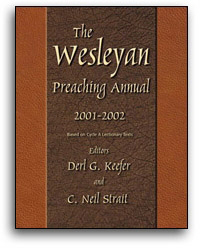
THE WESLEYAN PREACHING ANNUAL 2001--2002
I read the story of a Mr. Holland who had written a symphony for his high school orchestra. But before they could perform, Mr. Holland lost his job at the school because of financial cut--backs. Mr. Holland departed thinking his symphony would never be played.
Unbeknown to Mr. Holland, hundreds of his present and former students decided to perform the symphony. After hours and days of practice they were ready for the public presentation. They planned a night for the performance, and invited friends along with Mr. Holland to the occasion. When they were finished performing the symphony, a group of them said to their former teacher, "Mr. Holland, you have written the symphony, but we are your music." (Quoted by Richard G. Capen, Jr., Finish Strong, Grand Rapids: Harper San Francisco/Zondervan, 1998, p. 206.)
Every pastor is the music of the gospel. We are its proclaimer. We either give the gospel a good hearing or a bad reputation. It is humbling to realize that God calls us to be proclaimers, preacher, good--news tellers. What a privilege.
This privilege we steward in three dimensions. One, we steward the truth of the gospel. This good news we proclaim is not our creation, it is from God. It is not ours to change, to add to or to take from. Our responsibility as stewards of God's call is made clear in Paul's word to Timothy, "Do your best to present yourself to God as one approved, a workman who does not need to be ashamed and who correctly handles the work of truth" (2 Timothy 2:15 NIV).
Two, we steward the proclamation of the gospel. Again, Paul's word to Timothy is clear "... devote yourself to the public reading of Scripture, to preaching and to teaching" (1 Timothy 4:13 NIV). Again Paul's instructions to Timothy were to "preach the Word; be prepared in season and out of season; correct, rebuke and encourage - with great patience and careful instruction" (2 Timothy 4:2 NIV). Paul's testimony on preaching is clear, "... when I preach the gospel, I cannot boast, for I am compelled to preach. Woe to me if I do not preach the gospel" (1 Corinthians 9:16 NIV). We need this reminder from Paul's pen, "For we do not preach ourselves, but Jesus Christ as Lord, and ourselves as your servants for Jesus' sake" (2 Corinthians 4:5 NIV).
Proclamation is our responsibility. To prepare properly for proclamation is a part of the stewardship, and a vital part. To develop sensitivities for what needs to be proclaimed, when it needs to be preached, how to preach it, are all parts of the proclamation process. Priority in the stewardship of proclamation is that it is the gospel we are proclaiming, not ourselves. It is not our views or opinions, it is God's Truth. Wise is that pastor who gives attention to the stewardship of proclamation.
Three, we steward the respect of the gospel. In a postmodern culture which has diminished its reverence and respect for the Word, we steward responsibility to show respect for the Word and to articulate its Truth and value to a culture devoid of direction. We cannot let the culture diminish the Word, or be intimidated by the demise around us. By our treatment and faith in the Word we proclaim light in the darkness, shout a word in the midst of confusion and proclaim a hope where there is despair.
We must never lose faith in the Word to be powerful, to illuminate, to enlighten, to break--through, to stir the ambers of hope and to redeem. The God whose message we proclaim is the God Who brings beauty out of ashes, Who plants a Cross in the dung--heap and Who brings light and life where darkness and death had prevailed.
Yes, the gospel is God's symphony, but we are His music. May His symphony inspire your preparation, your preaching and your pastoral care. We are privileged to be "Good--news bearers!"
C. Neil Strait
January 6, 2002 Epiphany Of The Lord
WORSHIP HELPS
CALL TO WORSHIP
Leader: God is near.
People: Him can you hear?
Leader: Lift up your ears
People: That you might draw near.
OFFERING THOUGHT
"So when you give to the needy, do not announce it with trumpets, as the hypocrites do in the synagogues and on the streets, to be honored by men. I tell you the truth, they have received their reward in full. But when you give to the needy, do not let your left hand know what your right hand is doing, so that your giving may be in secret. Then your Father, who sees what is done in secret, will reward you." (Matthew 6:2--4 NIV)
BENEDICTION
Jesus, the coming Lord, demands our loyalty until He returns. Will you meet His demand for this week?
SERMON BRIEFS
Rise And Shine
Isaiah 60:1--6
Rise and shine! Those are familiar words to us. They are the words June Cleaver used to holler up the stairs at Wally and Beaver. They are the words that meet you at the fast food restaurant when you order a "Rise and Shine Breakfast." Those familiar words are words of promise. It is the promise that the long night of darkness has finally ended and the joyous rays of morning have arrived.
These were words Israel needed to hear. In the context of this passage some exiles had returned to Jerusalem only to find it in shambles. But this passage reminds them that the wonderful presence of God is about to change the darkness into light.
These are words we too need to hear. We often find ourselves in dark moments and need to remember that joy does come in the morning. Let's look in the context of this passage to see what it teaches about this glorious light of God, which causes us to rise and shine.
I. The source of light (v. 1)
The light is certainly not Israel. The people are in disarray. It was their actions that brought about the darkness. It is important to stop and remind ourselves that the darkness of sin and despair will not go away because of anything we do. After all, we have caused our own despair! We have no light of our own.
But it is in the midst of ruin and despair that God comes to let His light shine. This passage hints at the incarnation. It foreshadows that moment when the Radiant Son of God was born into a manger on a planet darkened by sin and despair! Let there be no mistake: It is God that is the source of light.
One of my favorite proofs of this assertion is to pray with people at the altar. There are many times when you can see the light come on as they turn to God. It is, as the old song says, as if "a new day broke through" all around them. Thank God He did not leave us in total darkness.
II. The course of the light (v. 2)
The light begins to dawn as the Lord rises upon you. He is the source and His light is the generating point. Why is it that things begin to happen around you when the light has dawned on you? The implication is that the light of God courses from Him and reflects off you onto others! Do you see its path? This light of hope travels from God to you and then on to others.
True Christian, let that life--giving light shine out of your life. Don't be like so many professing Christians who are reluctant to allow their light to shine. Do not join your voice with them as they sing their own words to a popular children's song: "Hide it under a bushel? Yes! I'm gonna sit and stew, sit and stew, sit and stew!" Hold out your reflected light of hope to those who are lost in darkness.
III. The force of the light (vv. 3--6)
First, in verses 3--4 we see that the light is so forceful that it attracts others. Children are attracted to the fireflies at night. Why are they such an attractive force? Light shining in darkness catches our attention. So too will your reflected light attract others to Jesus Christ. A powerful tool for the kingdom? Your influence!
Secondly, verse 5 reveals that the light forcefully brings joy to your heart. The words in this verse describe an ecstatic joy only found in seeing others come to God. Be a beacon of joy!
Third, in verse 6 we see that the light forcefully produces fruit. Herds of camels bearing gold and incense will arrive at Israel's doorstep. That's wonderful! But how much more wonderful it is that they come proclaiming God's praises! As you dare to let your light shine, watch for the fruits to present themselves. It may come in visible and dramatic ways or it may come in hidden and yet delightful ways. Regardless of the way in which it will come it is important to remember it will come!
Rise and shine! The darkness of sin and despair has departed from you. Your light has already come. But it is now our place to let that light reflect off of us out to others. Don't hide it under a bushel. Many are dying to know that their light has come!
Randall Hartman
The Perfect King
Psalm 72:1--7, 10--14
Introduction
In the passage of scripture found in 1 Kings 1--11 we have a record of Israel's political and military power under Solomon, who building upon his father David's conquests, had made Israel a major player in international relations in the Near East, Southern Europe, and Africa. We have here a rather complete detail of the magnificence of Solomon's reign, the elaborate building of the Temple, and the construction of his new palace. His greatness in the early part of his reign is closely related to his dependence on God who gave him his proverbial wisdom. His carelessness in maintaining that relationship with God led to his downfall. This is summed up in one verse: "Solomon showed his love for the Lord by walking according to the statutes of his father David, except that he offered sacrifices and burned incense on the high places" (1 Kings 3:3). But our text today focuses on the early part of his reign when his reign was nothing short of glorious.
I. The best earthly king - Solomon
The superscription of this psalm does not make clear whether it was written about Solomon, or by him. We know for sure that he was the earthly representative of what is described here. If Solomon wrote these words, it is his early prayer to God to be given the wisdom to render correct justice (v. 1).
When God first appeared to him at Gibeon, He offered the new king his choice of whatever he wanted (2 Chronicles 1:7). Solomon desired most to have wisdom and knowledge to more adequately lead and govern (v. 10). His request was granted, and with it he was also given what he could have requested and didn't: wealth, riches, and honor (v. 12). There were stipulations: his walking in God's ways and depending on His statutes and commands (1 Kings 3:14).
There is little doubt but that Solomon made hundreds of just decisions, but the most renown and proverbial one chronicled was the one concerning the two prostitutes who claimed the same son (vv. 16--28). It typified the wisdom God gave him.
Notice though, this was only the first half of his request: he wanted God to endow him with righteousness (v. 1). He wanted to make right decisions so they would be considered just, but his request here is for more than rightness, it was to be given righteousness, something he could not acquire by education, or by practice, or by absorption. Something only a righteous God could endow.
Righteousness was important to the king. He spoke of it four times in seven verses (1, 2, 3, 7). He knew he could not judge the people in righteousness unless he himself was first made righteous by God. He knew his heart would have to be cleansed of its inherited taint before he could dispense righteous opinions. This is the simple logic given by James when he said, "A salt spring [cannot] produce fresh water" (3:12b). Without a heart that had been freed of it's downward pull, the king could not properly defend the afflicted among the people or save the children of the needy (v. 4).
The king was also aware of the connection between righteousness and prosperity. Even the mountains and hills will bring it (v. 3); they will be made to flourish and abound (v. 7). Solomon knew a heart divided would pull in opposite directions, confuse his thinking, and cause him to give divided opinions, for a double--minded man is unstable in all he does (James 1:8). Prosperity does not issue from indecision, uncertainty, and muddled thinking. At critical times a heart, like "a house divided against itself cannot stand" (Mark 3:25).
Equipped with a realigned heart the king could then better champion the cause of the needy who cry out. His undivided mind could then give proper attention to the afflicted who have no one to help (v. 12). The king's heart now filled with a sanctified love would take pity on the weak and the needy so as to prevent their untimely death (v. 13). Solomon's purified, clear, and clean conscience will rescue the impoverished from oppression and violence (v. 14).
II. The righteous heavenly king - Jesus
The section of psalms, 69 through this one, 72, all go together. They can be called Messianic psalms in that their arrangement leads prophetically from the suffering and rejected Christ to the Glory of His Kingdom - the one we are looking for today.
It is not that these were inspired just so they would tell of Jesus' life and ministry. They were the real expressions of David in deep distress for scornful, cruel, and undeserved punishment. If Psalm 71 is David's also, determined by the writing, he was an older man, and still suffering "troubles, many and bitter" (v. 20).
Being God, before Jesus came into the world as the Christ Messiah, He knew everything everyone had experienced academically, but in order to suffer for all humanity He had to come to this earth in a physical body to walk the rough road of human suffering experientially. Therefore, He "had to be tempted in every way, just as we are - yet ... without sin" (Hebrews 4:15). So it is not surprising that these psalms so much apply to both the psalmist and to Jesus.
So the more complete fulfillment of this psalm points to the sinless Son of God who was to come. Though righteous as much as was humanly possible, King Solomon could not possibly reach the level of the divine perfection that enabled Jesus to be without sin (Hebrews 3:15).
Though often misunderstood in what we as holiness people stand for, we do not preach the necessity of an absolute perfection. That level is only possible with God. What we do espouse is the need for a relative perfection that cleanses the human heart from its inherited evil propensities, so that there no longer needs to be a subservience to the "sinful mind [which is] hostile to God ... cannot please God ... Then one can be controlled "by the Spirit" (Romans 8:7--9).
Conclusion
So as we know in this psalm Solomon could not endure as long as the sun, as long as the moon, through all generations (v. 5), or could he make prosperity abound till the moon is no more (v. 7), nor could he rule from sea to sea, even to the ends of the earth (v. 8), nor did all nations serve him (v. 11). While Solomon's name is proverbial, no one can praise his glorious name forever, nor could the whole earth be filled with his glory (v. 19). But all this is and will be true of Jesus, the Christ who came, who lived, who suffered, who died, but who lives again.
Wilbur G. Williams
Optional Materials For January 6 Second Sunday After Christmas
WORSHIP HELPS
CALL TO WORSHIP
Speaker 1: The snow falls and covers the earth.
Speaker 2: Jesus' blood covers our sins.
Speakers 1 & 2: Let us rejoice and thank God for His covering!
OFFERING THOUGHT
"The good man brings good things out of the good stored up in him, and the evil man brings evil things out of the evil stored up in him." (Matthew 12:35 NIV)
BENEDICTION
Go today to the place in the world's harvest field so broad, where you may toil in the heat of the day and the darkness of night for Jesus the crucified! Go today trusting God with all your burdens because He first loved you! Go today with a sincere heart because you desire to be His servant and say what He wants you to say!
SERMON BRIEFS
Born Rich
Ephesians 1:3--14
Planned giving experts project over the next five years in the United States nearly seven trillion dollars will be transferred to the next generation. It will be the largest transfer of wealth in the history of America. Many people will get unexpected checks as a part of their inheritance.
Here's a thought! There isn't a Christian here who hasn't been born into wealth!
Paul puts it this way, "Praise be to the God and Father of our Lord Jesus Christ, who has blessed us in the heavenly realms with every spiritual blessing in Christ" (Ephesians 1:3). By faith in the Lord Jesus Christ, you have become a direct heir of the riches of heaven. An "inheritance," the Bible says, "that can never perish, spoil or fade" (1 Peter 1:4a).
No matter what the balance in your bank account is, you will never be a pauper. Imagine the wealth of every kingdom on earth - the holdings of the richest rulers - and it would be on the poverty level in comparison to the riches you already enjoy. Every Christian ought to understand the wealth that is already theirs. Here are the keys to your spiritual safe--deposit box, the riches that you have in Christ.
I. You are rich in your relationship to God. (vv. 4--5)
You are loved. God has chosen you. He has called you by name. You are His child. You have been born into the family of God. Before the light of the first sunrise, the God of the universe saw you, and loved you, and claimed you as His own.
Most of us know what it's like to be unwanted to some degree. Whether it was the humiliating experience of being the last person chosen in a sandlot baseball game, or the painful rejection of a broken relationship, everyone has had the experience of feeling unloved.
For some of us, that feeling goes very deep. Divorce, rejection by a parent, verbal or physical assaults: these things drive deep wounds into the soul.
Those feelings of worthlessness are not isolated in the heart. Often, they show themselves through our behavior. Many believe that the crime and violence in this country is directly related to the feelings of worthlessness that plagues many in our society.
But the good news for every one who belongs to the Savior is that we are loved. We are chosen by God. We are precious to Him.
God wants you! You are always the first pick on His team! The one who created you - the one who knows you better than any human being, the one who knows you even better than you know yourself - has chosen you. He has made a choice, out of His love for you, to enter into a relationship with you. He wants you for His own.
Love is a powerful object. Knowing that we are loved should make a difference in our lives - promoting inner peace and tranquility in one's soul.
What difference does the riches of God's love make in our lives? There should be at least two results. First, since you are heir to the riches of His love, you should love yourself. "Low self--esteem" is not just a psychological buzzword. It's a very real condition for many people. Since others don't seem to love us, we don't love ourselves. But God loves you!
Spiritual victory comes to our life when we choose to have a wholesome, positive image of ourselves. You are a person of worth, of dignity, of value. The search for self--esteem ends at the foot of the cross.
Second, because you are rich in God's love, you are free to love others. There's no need to prove your worth against someone else. Jealousy, envy, competition: these things don't make sense unless we have something to prove. Our Master showed us that the one who is most in touch with God is the one who is most able to sacrifice himself. That's what He did for us! Because God loves us, we are free to love others. What a rich relationship! Related to God through faith in His Son. Are you enjoying the riches of your relationship to God?
II. You are rich in the resource of your redemption. (v. 7)
Not only has God chosen you, He has also redeemed you. We are not the same as we were before. We are changed people because of God's grace.
Guilt is a powerful force. Nearly everyone feels guilt at some time because everyone is guilty. The Scripture tells us that "all have sinned and fall short of the glory of God" (Romans 3:23). But we don't need that reminder. Each of us knows the ways in which we have failed God and others. We are guilty people.
And each of us has probably tried a different means of coping with guilt. There are many of them. Probably the first defense is self--justification. We simply deny that we are guilty of anything. "Well, nobody's perfect," we say. "And it wasn't that bad. If you saw the circumstances, you'd see that I really had no other option. So, really, I'm not guilty of anything because I had no choice." But self--justification doesn't work. Forgiveness must come from someone else.
Religion is another remedy for guilt. We do all of the things that seem to be holy. But they're never enough. Religion - or, more accurately, religious behavior - is no cure for the guilty conscience. No rituals bring forgiveness - only through relationship.
Good works is another home--remedy for the soul. If we've done wrong, we figure that doing right will make up for it. No good work, however noble, can make up for the least sin. Forgiveness is simply not something that we can earn, or something we can buy.
But the good news is that we don't have to buy or earn forgiveness, or make ourselves worthy so that God will forgive us. The incredible blessing that God has given us is this: He has redeemed us! It's a wonderful, rich gift that God has freely given to us. John 3:16 reminds us of God's gift. What we could never have done for ourselves, He did for us.
Notice the term that Paul uses here: redemption. That term has a unique meaning. It means to "buy back." It implies that we were once the property of someone else, but that God has "bought us back." In Paul's day that word was used in connection with the buying of slaves. It's a word picture that graphically illustrates what God has done for us: He has set us free from sin!
We are no longer living under the condemnation of guilty. We are free from that judgment! Romans 8:1--2 illustrates that freedom.
And there's more. God has also broken the power of sin in our lives. The Bible says, "Therefore, if anyone is in Christ, he is a new creation; the old has gone, the new has come!" (2 Corinthians 5:17). We are not the same as we once were. We are free from the power of sin, free to become new people in Christ. The riches of redemption is our freedom!
That kind of freedom should make a tremendous change in our lives. Of course, it's possible to receive a wonderful gift and not be changed by it at all. I remember when Publisher's Clearing House started selling magazines and promising a dream home to the winning entry. Many of my college friends thought it would change their lives, but I was skeptical. On one occasion I said to a friend, "Nobody wins anyway."
"That's not true," he replied. "A fellow around here won the sweepstakes a couple of years ago. He took the cash instead of the dream home and became rich overnight." I was intrigued. "Tell me about it," I asked.
"Well," my friend continued, "he used to be very poor. He had a home, but he would often be seen pushing a shopping cart around town. He used to go to the discount store to buy things once in a while."
"Well, what happened after he won? Did it change his life? Where is he now?"
"Oh," my friend said, "he's still around. He still looks a little sloppy and dirty. In fact, he still pushes his shopping cart back and forth to the store ... but now he buys a lot more stuff."
Becoming rich didn't change his life at all. Some Christians are like that. They have received the marvelous blessing of forgiveness. Yet they continue to live like they were in spiritual poverty. They behave as if their lives are worth nothing.
Jesus Christ gave his life to win your redemption; you are a valued person in God's sight. Live the life of the Rich and Forgiven! Jesus Christ has broken the power of sin in your life. Be free from wasteful, unproductive behaviors. Like a young person who has put away childish toys, be done with anger, unforgiveness, self--indulgence and pride. Grow beyond those things. Grow into your inheritance as a child of God. Think of yourself as the invaluable person you are to God!
Do you know what your inheritance is? Redemption. Receive the gift.
III. You are rich in the results of your faith. (vv. 11--14)
Many people are worried about the future. An entire industry has arisen to help people plan their financial security. Financial advisors and retirement planners offer their advice on how to prepare for tomorrow so that you can sleep well tonight. We have great anxiety about the future. But there's no need for that. As a Christian, your inheritance is guaranteed by the Holy Spirit. Your future is secure.
There is no foolproof plan for guaranteeing security on earth. But we have an inheritance in Heaven that is guaranteed.
Our future is guaranteed! We have a sealed promise of eternal life through faith in Jesus Christ. What a difference that should make in our lives! Since our inheritance is secure, we can be content with today and at peace with the future. And this gift of security can have direct results on the life of a believer.
First, we can be free from worry. So much energy is spent on worry. We worry about our own security, about our families, about our finances, about the future. But there's no need. The clear message of Scripture is that God not only loves us, He provides for us. Our future is secure with Him. Jesus said, "Do not worry about your life, what you will eat or drink; or about your body, what you will wear" (Matthew 6:25). Because we have a great inheritance, we can be free from worry.
We are free from greed. Jesus advised us not to store up for ourselves treasures on earth. But it's tempting. We invest in earthly things in an attempt to control our future. Why bother? God has already promised us a secure future with Him. We have no need to hoard things now. What effect does this inheritance have on the here and now? It means that we are free to be generous, free to give to others, free from the desire for control, free to be content.
We are free from want. There is no guarantee in Scripture that a believer will never experience hardship. Quite the reverse! In fact, the Bible reminds us that suffering can be God's instrument in our spiritual development. But because we have a secure future with Christ, we can be free from the want of things that we don't have. Like Paul, we can learn the secret of being content in any and every situation. Because we trust the Father to provide for us and to protect us, we can be content with who we are, where we are, and what we have.
Are you living like a pauper or a king's child? What kind of a difference would it make in your life, if you understood all that God has given you in Christ? He has chosen you. He has redeemed you. And He has guaranteed your inheritance. Go, then, and live like a wealthy person. Be magnanimous. Be generous. Be noble. Be courageous. Be free. Live as if you were born rich. You were!
Stan Toler
Can You Believe It?
John 1:1--18
I will always remember Miss Pletcher, my sixth grade teacher, as a highly gifted woman who had great influence on her students. She seemed to love children and to love teaching them. I remember the many times we laughed in her class. What an incredible sense of humor she possessed. I remember the special projects we would work on together - big ones that would stretch my imagination and work ethic. I remember singing every day. She loved music. I remember her passion. There was nothing passive about her teaching style. Sometimes we would watch as she waved her arms and moved her body across the front of the classroom. She would make huge gestures in an effort to bring home important ideas.
One of those lessons still vividly resides in my thinking because it had impacted my concept of God. During science, Miss Pletcher attempted to help sixth grade students understand molecules and atoms. Normally boring stuff, but not in her class. Her passion shone! At one point she simply expressed to us how utterly amazed she was with the cosmos. "When we study astronomy," she said, "it's so big ..." (lots of arm waving here) "... that you cannot comprehend it. When we study chemistry it's so small that you cannot comprehend it."
Now those words don't seem very impressive, but it wasn't what she said. It was how she said it. I realized that she was astounded, almost beyond words, and that made a huge impression on my eleven--year--old mind. Infinity at both ends of the spectrum was staggering to me at that moment. My gratitude soars gratefully for a teacher who never lost the wonder of science. More than thirty years later I still feel what I felt that day. It shaped my view of creation.
In the first chapter of John we also hear about infinity at both ends of the spectrum. The apostle tells us that "the Word was God" and that the "Word became flesh" (John 1:1 and 14). Those words seem unimpressive to us because of the many times we have heard them. They are the doctrine of the incarnation. Luke began his account with the story of Jesus' birth while John began his account with the theology of that story.
But wait. Just don't hear his words. Hear his heart. Hear his passion. Hear how utterly amazed he is about the words. "In the beginning ..." (lots of arm waving here) "... was the Word, and the Word was with God, and the Word was God. He was with God in the beginning. Through him all things were made; without him nothing was made that has been made" (John 1:1--3). Too big to comprehend! But there's more. "The Word became flesh and lived for a while among us. We have seen his glory, the glory of the one and only Son, who came from the Father, full of grace and truth" (John 1:14).
How could John possibly comprehend that "we have seen" the God of the universe? It couldn't be grasped with the mind. It couldn't be apprehended with logic. It couldn't be placed in existing categories. Yet John believed what he would never completely understand. As he aged, it became even more amazing to him. Years later when writing to believers he begins with the same message - that message that is more real, more precious, yet more astounding as time passes.
"That which was from the beginning, which we have heard, which we have seen with our eyes, which we have looked at and our hands have touched - this we proclaim concerning the Word of life. The life appeared; we have seen it and testify to it, and we proclaim to you the eternal life, which was with the Father and has appeared to us. We proclaim to you what we have seen and heard, so that you also may have fellowship with us. And our fellowship is with the Father and with His Son, Jesus Christ. We write this to make our joy complete" (1 John 1:1--4).
Nine times in those four verses John expressed what happened in his physical senses. He's not spiritualizing the appearance of God. He's telling us what happened in the flesh. John is waving his arms. His voice is raised. His passion is intense. "Can you believe it?" he's asking. "We saw Him. We heard Him. We touched Him. We hugged Him. We laughed with Him. We cried with Him. We ate with Him. And this was God!"
As incomprehensible as it is, John says we can know it. And he explains why he is so passionate for us to know it. "To all who received him, to those who believed in his name, he gave the right to become children of God ..." (John 1:12).
Phillip Stout
Unbeknown to Mr. Holland, hundreds of his present and former students decided to perform the symphony. After hours and days of practice they were ready for the public presentation. They planned a night for the performance, and invited friends along with Mr. Holland to the occasion. When they were finished performing the symphony, a group of them said to their former teacher, "Mr. Holland, you have written the symphony, but we are your music." (Quoted by Richard G. Capen, Jr., Finish Strong, Grand Rapids: Harper San Francisco/Zondervan, 1998, p. 206.)
Every pastor is the music of the gospel. We are its proclaimer. We either give the gospel a good hearing or a bad reputation. It is humbling to realize that God calls us to be proclaimers, preacher, good--news tellers. What a privilege.
This privilege we steward in three dimensions. One, we steward the truth of the gospel. This good news we proclaim is not our creation, it is from God. It is not ours to change, to add to or to take from. Our responsibility as stewards of God's call is made clear in Paul's word to Timothy, "Do your best to present yourself to God as one approved, a workman who does not need to be ashamed and who correctly handles the work of truth" (2 Timothy 2:15 NIV).
Two, we steward the proclamation of the gospel. Again, Paul's word to Timothy is clear "... devote yourself to the public reading of Scripture, to preaching and to teaching" (1 Timothy 4:13 NIV). Again Paul's instructions to Timothy were to "preach the Word; be prepared in season and out of season; correct, rebuke and encourage - with great patience and careful instruction" (2 Timothy 4:2 NIV). Paul's testimony on preaching is clear, "... when I preach the gospel, I cannot boast, for I am compelled to preach. Woe to me if I do not preach the gospel" (1 Corinthians 9:16 NIV). We need this reminder from Paul's pen, "For we do not preach ourselves, but Jesus Christ as Lord, and ourselves as your servants for Jesus' sake" (2 Corinthians 4:5 NIV).
Proclamation is our responsibility. To prepare properly for proclamation is a part of the stewardship, and a vital part. To develop sensitivities for what needs to be proclaimed, when it needs to be preached, how to preach it, are all parts of the proclamation process. Priority in the stewardship of proclamation is that it is the gospel we are proclaiming, not ourselves. It is not our views or opinions, it is God's Truth. Wise is that pastor who gives attention to the stewardship of proclamation.
Three, we steward the respect of the gospel. In a postmodern culture which has diminished its reverence and respect for the Word, we steward responsibility to show respect for the Word and to articulate its Truth and value to a culture devoid of direction. We cannot let the culture diminish the Word, or be intimidated by the demise around us. By our treatment and faith in the Word we proclaim light in the darkness, shout a word in the midst of confusion and proclaim a hope where there is despair.
We must never lose faith in the Word to be powerful, to illuminate, to enlighten, to break--through, to stir the ambers of hope and to redeem. The God whose message we proclaim is the God Who brings beauty out of ashes, Who plants a Cross in the dung--heap and Who brings light and life where darkness and death had prevailed.
Yes, the gospel is God's symphony, but we are His music. May His symphony inspire your preparation, your preaching and your pastoral care. We are privileged to be "Good--news bearers!"
C. Neil Strait
January 6, 2002 Epiphany Of The Lord
WORSHIP HELPS
CALL TO WORSHIP
Leader: God is near.
People: Him can you hear?
Leader: Lift up your ears
People: That you might draw near.
OFFERING THOUGHT
"So when you give to the needy, do not announce it with trumpets, as the hypocrites do in the synagogues and on the streets, to be honored by men. I tell you the truth, they have received their reward in full. But when you give to the needy, do not let your left hand know what your right hand is doing, so that your giving may be in secret. Then your Father, who sees what is done in secret, will reward you." (Matthew 6:2--4 NIV)
BENEDICTION
Jesus, the coming Lord, demands our loyalty until He returns. Will you meet His demand for this week?
SERMON BRIEFS
Rise And Shine
Isaiah 60:1--6
Rise and shine! Those are familiar words to us. They are the words June Cleaver used to holler up the stairs at Wally and Beaver. They are the words that meet you at the fast food restaurant when you order a "Rise and Shine Breakfast." Those familiar words are words of promise. It is the promise that the long night of darkness has finally ended and the joyous rays of morning have arrived.
These were words Israel needed to hear. In the context of this passage some exiles had returned to Jerusalem only to find it in shambles. But this passage reminds them that the wonderful presence of God is about to change the darkness into light.
These are words we too need to hear. We often find ourselves in dark moments and need to remember that joy does come in the morning. Let's look in the context of this passage to see what it teaches about this glorious light of God, which causes us to rise and shine.
I. The source of light (v. 1)
The light is certainly not Israel. The people are in disarray. It was their actions that brought about the darkness. It is important to stop and remind ourselves that the darkness of sin and despair will not go away because of anything we do. After all, we have caused our own despair! We have no light of our own.
But it is in the midst of ruin and despair that God comes to let His light shine. This passage hints at the incarnation. It foreshadows that moment when the Radiant Son of God was born into a manger on a planet darkened by sin and despair! Let there be no mistake: It is God that is the source of light.
One of my favorite proofs of this assertion is to pray with people at the altar. There are many times when you can see the light come on as they turn to God. It is, as the old song says, as if "a new day broke through" all around them. Thank God He did not leave us in total darkness.
II. The course of the light (v. 2)
The light begins to dawn as the Lord rises upon you. He is the source and His light is the generating point. Why is it that things begin to happen around you when the light has dawned on you? The implication is that the light of God courses from Him and reflects off you onto others! Do you see its path? This light of hope travels from God to you and then on to others.
True Christian, let that life--giving light shine out of your life. Don't be like so many professing Christians who are reluctant to allow their light to shine. Do not join your voice with them as they sing their own words to a popular children's song: "Hide it under a bushel? Yes! I'm gonna sit and stew, sit and stew, sit and stew!" Hold out your reflected light of hope to those who are lost in darkness.
III. The force of the light (vv. 3--6)
First, in verses 3--4 we see that the light is so forceful that it attracts others. Children are attracted to the fireflies at night. Why are they such an attractive force? Light shining in darkness catches our attention. So too will your reflected light attract others to Jesus Christ. A powerful tool for the kingdom? Your influence!
Secondly, verse 5 reveals that the light forcefully brings joy to your heart. The words in this verse describe an ecstatic joy only found in seeing others come to God. Be a beacon of joy!
Third, in verse 6 we see that the light forcefully produces fruit. Herds of camels bearing gold and incense will arrive at Israel's doorstep. That's wonderful! But how much more wonderful it is that they come proclaiming God's praises! As you dare to let your light shine, watch for the fruits to present themselves. It may come in visible and dramatic ways or it may come in hidden and yet delightful ways. Regardless of the way in which it will come it is important to remember it will come!
Rise and shine! The darkness of sin and despair has departed from you. Your light has already come. But it is now our place to let that light reflect off of us out to others. Don't hide it under a bushel. Many are dying to know that their light has come!
Randall Hartman
The Perfect King
Psalm 72:1--7, 10--14
Introduction
In the passage of scripture found in 1 Kings 1--11 we have a record of Israel's political and military power under Solomon, who building upon his father David's conquests, had made Israel a major player in international relations in the Near East, Southern Europe, and Africa. We have here a rather complete detail of the magnificence of Solomon's reign, the elaborate building of the Temple, and the construction of his new palace. His greatness in the early part of his reign is closely related to his dependence on God who gave him his proverbial wisdom. His carelessness in maintaining that relationship with God led to his downfall. This is summed up in one verse: "Solomon showed his love for the Lord by walking according to the statutes of his father David, except that he offered sacrifices and burned incense on the high places" (1 Kings 3:3). But our text today focuses on the early part of his reign when his reign was nothing short of glorious.
I. The best earthly king - Solomon
The superscription of this psalm does not make clear whether it was written about Solomon, or by him. We know for sure that he was the earthly representative of what is described here. If Solomon wrote these words, it is his early prayer to God to be given the wisdom to render correct justice (v. 1).
When God first appeared to him at Gibeon, He offered the new king his choice of whatever he wanted (2 Chronicles 1:7). Solomon desired most to have wisdom and knowledge to more adequately lead and govern (v. 10). His request was granted, and with it he was also given what he could have requested and didn't: wealth, riches, and honor (v. 12). There were stipulations: his walking in God's ways and depending on His statutes and commands (1 Kings 3:14).
There is little doubt but that Solomon made hundreds of just decisions, but the most renown and proverbial one chronicled was the one concerning the two prostitutes who claimed the same son (vv. 16--28). It typified the wisdom God gave him.
Notice though, this was only the first half of his request: he wanted God to endow him with righteousness (v. 1). He wanted to make right decisions so they would be considered just, but his request here is for more than rightness, it was to be given righteousness, something he could not acquire by education, or by practice, or by absorption. Something only a righteous God could endow.
Righteousness was important to the king. He spoke of it four times in seven verses (1, 2, 3, 7). He knew he could not judge the people in righteousness unless he himself was first made righteous by God. He knew his heart would have to be cleansed of its inherited taint before he could dispense righteous opinions. This is the simple logic given by James when he said, "A salt spring [cannot] produce fresh water" (3:12b). Without a heart that had been freed of it's downward pull, the king could not properly defend the afflicted among the people or save the children of the needy (v. 4).
The king was also aware of the connection between righteousness and prosperity. Even the mountains and hills will bring it (v. 3); they will be made to flourish and abound (v. 7). Solomon knew a heart divided would pull in opposite directions, confuse his thinking, and cause him to give divided opinions, for a double--minded man is unstable in all he does (James 1:8). Prosperity does not issue from indecision, uncertainty, and muddled thinking. At critical times a heart, like "a house divided against itself cannot stand" (Mark 3:25).
Equipped with a realigned heart the king could then better champion the cause of the needy who cry out. His undivided mind could then give proper attention to the afflicted who have no one to help (v. 12). The king's heart now filled with a sanctified love would take pity on the weak and the needy so as to prevent their untimely death (v. 13). Solomon's purified, clear, and clean conscience will rescue the impoverished from oppression and violence (v. 14).
II. The righteous heavenly king - Jesus
The section of psalms, 69 through this one, 72, all go together. They can be called Messianic psalms in that their arrangement leads prophetically from the suffering and rejected Christ to the Glory of His Kingdom - the one we are looking for today.
It is not that these were inspired just so they would tell of Jesus' life and ministry. They were the real expressions of David in deep distress for scornful, cruel, and undeserved punishment. If Psalm 71 is David's also, determined by the writing, he was an older man, and still suffering "troubles, many and bitter" (v. 20).
Being God, before Jesus came into the world as the Christ Messiah, He knew everything everyone had experienced academically, but in order to suffer for all humanity He had to come to this earth in a physical body to walk the rough road of human suffering experientially. Therefore, He "had to be tempted in every way, just as we are - yet ... without sin" (Hebrews 4:15). So it is not surprising that these psalms so much apply to both the psalmist and to Jesus.
So the more complete fulfillment of this psalm points to the sinless Son of God who was to come. Though righteous as much as was humanly possible, King Solomon could not possibly reach the level of the divine perfection that enabled Jesus to be without sin (Hebrews 3:15).
Though often misunderstood in what we as holiness people stand for, we do not preach the necessity of an absolute perfection. That level is only possible with God. What we do espouse is the need for a relative perfection that cleanses the human heart from its inherited evil propensities, so that there no longer needs to be a subservience to the "sinful mind [which is] hostile to God ... cannot please God ... Then one can be controlled "by the Spirit" (Romans 8:7--9).
Conclusion
So as we know in this psalm Solomon could not endure as long as the sun, as long as the moon, through all generations (v. 5), or could he make prosperity abound till the moon is no more (v. 7), nor could he rule from sea to sea, even to the ends of the earth (v. 8), nor did all nations serve him (v. 11). While Solomon's name is proverbial, no one can praise his glorious name forever, nor could the whole earth be filled with his glory (v. 19). But all this is and will be true of Jesus, the Christ who came, who lived, who suffered, who died, but who lives again.
Wilbur G. Williams
Optional Materials For January 6 Second Sunday After Christmas
WORSHIP HELPS
CALL TO WORSHIP
Speaker 1: The snow falls and covers the earth.
Speaker 2: Jesus' blood covers our sins.
Speakers 1 & 2: Let us rejoice and thank God for His covering!
OFFERING THOUGHT
"The good man brings good things out of the good stored up in him, and the evil man brings evil things out of the evil stored up in him." (Matthew 12:35 NIV)
BENEDICTION
Go today to the place in the world's harvest field so broad, where you may toil in the heat of the day and the darkness of night for Jesus the crucified! Go today trusting God with all your burdens because He first loved you! Go today with a sincere heart because you desire to be His servant and say what He wants you to say!
SERMON BRIEFS
Born Rich
Ephesians 1:3--14
Planned giving experts project over the next five years in the United States nearly seven trillion dollars will be transferred to the next generation. It will be the largest transfer of wealth in the history of America. Many people will get unexpected checks as a part of their inheritance.
Here's a thought! There isn't a Christian here who hasn't been born into wealth!
Paul puts it this way, "Praise be to the God and Father of our Lord Jesus Christ, who has blessed us in the heavenly realms with every spiritual blessing in Christ" (Ephesians 1:3). By faith in the Lord Jesus Christ, you have become a direct heir of the riches of heaven. An "inheritance," the Bible says, "that can never perish, spoil or fade" (1 Peter 1:4a).
No matter what the balance in your bank account is, you will never be a pauper. Imagine the wealth of every kingdom on earth - the holdings of the richest rulers - and it would be on the poverty level in comparison to the riches you already enjoy. Every Christian ought to understand the wealth that is already theirs. Here are the keys to your spiritual safe--deposit box, the riches that you have in Christ.
I. You are rich in your relationship to God. (vv. 4--5)
You are loved. God has chosen you. He has called you by name. You are His child. You have been born into the family of God. Before the light of the first sunrise, the God of the universe saw you, and loved you, and claimed you as His own.
Most of us know what it's like to be unwanted to some degree. Whether it was the humiliating experience of being the last person chosen in a sandlot baseball game, or the painful rejection of a broken relationship, everyone has had the experience of feeling unloved.
For some of us, that feeling goes very deep. Divorce, rejection by a parent, verbal or physical assaults: these things drive deep wounds into the soul.
Those feelings of worthlessness are not isolated in the heart. Often, they show themselves through our behavior. Many believe that the crime and violence in this country is directly related to the feelings of worthlessness that plagues many in our society.
But the good news for every one who belongs to the Savior is that we are loved. We are chosen by God. We are precious to Him.
God wants you! You are always the first pick on His team! The one who created you - the one who knows you better than any human being, the one who knows you even better than you know yourself - has chosen you. He has made a choice, out of His love for you, to enter into a relationship with you. He wants you for His own.
Love is a powerful object. Knowing that we are loved should make a difference in our lives - promoting inner peace and tranquility in one's soul.
What difference does the riches of God's love make in our lives? There should be at least two results. First, since you are heir to the riches of His love, you should love yourself. "Low self--esteem" is not just a psychological buzzword. It's a very real condition for many people. Since others don't seem to love us, we don't love ourselves. But God loves you!
Spiritual victory comes to our life when we choose to have a wholesome, positive image of ourselves. You are a person of worth, of dignity, of value. The search for self--esteem ends at the foot of the cross.
Second, because you are rich in God's love, you are free to love others. There's no need to prove your worth against someone else. Jealousy, envy, competition: these things don't make sense unless we have something to prove. Our Master showed us that the one who is most in touch with God is the one who is most able to sacrifice himself. That's what He did for us! Because God loves us, we are free to love others. What a rich relationship! Related to God through faith in His Son. Are you enjoying the riches of your relationship to God?
II. You are rich in the resource of your redemption. (v. 7)
Not only has God chosen you, He has also redeemed you. We are not the same as we were before. We are changed people because of God's grace.
Guilt is a powerful force. Nearly everyone feels guilt at some time because everyone is guilty. The Scripture tells us that "all have sinned and fall short of the glory of God" (Romans 3:23). But we don't need that reminder. Each of us knows the ways in which we have failed God and others. We are guilty people.
And each of us has probably tried a different means of coping with guilt. There are many of them. Probably the first defense is self--justification. We simply deny that we are guilty of anything. "Well, nobody's perfect," we say. "And it wasn't that bad. If you saw the circumstances, you'd see that I really had no other option. So, really, I'm not guilty of anything because I had no choice." But self--justification doesn't work. Forgiveness must come from someone else.
Religion is another remedy for guilt. We do all of the things that seem to be holy. But they're never enough. Religion - or, more accurately, religious behavior - is no cure for the guilty conscience. No rituals bring forgiveness - only through relationship.
Good works is another home--remedy for the soul. If we've done wrong, we figure that doing right will make up for it. No good work, however noble, can make up for the least sin. Forgiveness is simply not something that we can earn, or something we can buy.
But the good news is that we don't have to buy or earn forgiveness, or make ourselves worthy so that God will forgive us. The incredible blessing that God has given us is this: He has redeemed us! It's a wonderful, rich gift that God has freely given to us. John 3:16 reminds us of God's gift. What we could never have done for ourselves, He did for us.
Notice the term that Paul uses here: redemption. That term has a unique meaning. It means to "buy back." It implies that we were once the property of someone else, but that God has "bought us back." In Paul's day that word was used in connection with the buying of slaves. It's a word picture that graphically illustrates what God has done for us: He has set us free from sin!
We are no longer living under the condemnation of guilty. We are free from that judgment! Romans 8:1--2 illustrates that freedom.
And there's more. God has also broken the power of sin in our lives. The Bible says, "Therefore, if anyone is in Christ, he is a new creation; the old has gone, the new has come!" (2 Corinthians 5:17). We are not the same as we once were. We are free from the power of sin, free to become new people in Christ. The riches of redemption is our freedom!
That kind of freedom should make a tremendous change in our lives. Of course, it's possible to receive a wonderful gift and not be changed by it at all. I remember when Publisher's Clearing House started selling magazines and promising a dream home to the winning entry. Many of my college friends thought it would change their lives, but I was skeptical. On one occasion I said to a friend, "Nobody wins anyway."
"That's not true," he replied. "A fellow around here won the sweepstakes a couple of years ago. He took the cash instead of the dream home and became rich overnight." I was intrigued. "Tell me about it," I asked.
"Well," my friend continued, "he used to be very poor. He had a home, but he would often be seen pushing a shopping cart around town. He used to go to the discount store to buy things once in a while."
"Well, what happened after he won? Did it change his life? Where is he now?"
"Oh," my friend said, "he's still around. He still looks a little sloppy and dirty. In fact, he still pushes his shopping cart back and forth to the store ... but now he buys a lot more stuff."
Becoming rich didn't change his life at all. Some Christians are like that. They have received the marvelous blessing of forgiveness. Yet they continue to live like they were in spiritual poverty. They behave as if their lives are worth nothing.
Jesus Christ gave his life to win your redemption; you are a valued person in God's sight. Live the life of the Rich and Forgiven! Jesus Christ has broken the power of sin in your life. Be free from wasteful, unproductive behaviors. Like a young person who has put away childish toys, be done with anger, unforgiveness, self--indulgence and pride. Grow beyond those things. Grow into your inheritance as a child of God. Think of yourself as the invaluable person you are to God!
Do you know what your inheritance is? Redemption. Receive the gift.
III. You are rich in the results of your faith. (vv. 11--14)
Many people are worried about the future. An entire industry has arisen to help people plan their financial security. Financial advisors and retirement planners offer their advice on how to prepare for tomorrow so that you can sleep well tonight. We have great anxiety about the future. But there's no need for that. As a Christian, your inheritance is guaranteed by the Holy Spirit. Your future is secure.
There is no foolproof plan for guaranteeing security on earth. But we have an inheritance in Heaven that is guaranteed.
Our future is guaranteed! We have a sealed promise of eternal life through faith in Jesus Christ. What a difference that should make in our lives! Since our inheritance is secure, we can be content with today and at peace with the future. And this gift of security can have direct results on the life of a believer.
First, we can be free from worry. So much energy is spent on worry. We worry about our own security, about our families, about our finances, about the future. But there's no need. The clear message of Scripture is that God not only loves us, He provides for us. Our future is secure with Him. Jesus said, "Do not worry about your life, what you will eat or drink; or about your body, what you will wear" (Matthew 6:25). Because we have a great inheritance, we can be free from worry.
We are free from greed. Jesus advised us not to store up for ourselves treasures on earth. But it's tempting. We invest in earthly things in an attempt to control our future. Why bother? God has already promised us a secure future with Him. We have no need to hoard things now. What effect does this inheritance have on the here and now? It means that we are free to be generous, free to give to others, free from the desire for control, free to be content.
We are free from want. There is no guarantee in Scripture that a believer will never experience hardship. Quite the reverse! In fact, the Bible reminds us that suffering can be God's instrument in our spiritual development. But because we have a secure future with Christ, we can be free from the want of things that we don't have. Like Paul, we can learn the secret of being content in any and every situation. Because we trust the Father to provide for us and to protect us, we can be content with who we are, where we are, and what we have.
Are you living like a pauper or a king's child? What kind of a difference would it make in your life, if you understood all that God has given you in Christ? He has chosen you. He has redeemed you. And He has guaranteed your inheritance. Go, then, and live like a wealthy person. Be magnanimous. Be generous. Be noble. Be courageous. Be free. Live as if you were born rich. You were!
Stan Toler
Can You Believe It?
John 1:1--18
I will always remember Miss Pletcher, my sixth grade teacher, as a highly gifted woman who had great influence on her students. She seemed to love children and to love teaching them. I remember the many times we laughed in her class. What an incredible sense of humor she possessed. I remember the special projects we would work on together - big ones that would stretch my imagination and work ethic. I remember singing every day. She loved music. I remember her passion. There was nothing passive about her teaching style. Sometimes we would watch as she waved her arms and moved her body across the front of the classroom. She would make huge gestures in an effort to bring home important ideas.
One of those lessons still vividly resides in my thinking because it had impacted my concept of God. During science, Miss Pletcher attempted to help sixth grade students understand molecules and atoms. Normally boring stuff, but not in her class. Her passion shone! At one point she simply expressed to us how utterly amazed she was with the cosmos. "When we study astronomy," she said, "it's so big ..." (lots of arm waving here) "... that you cannot comprehend it. When we study chemistry it's so small that you cannot comprehend it."
Now those words don't seem very impressive, but it wasn't what she said. It was how she said it. I realized that she was astounded, almost beyond words, and that made a huge impression on my eleven--year--old mind. Infinity at both ends of the spectrum was staggering to me at that moment. My gratitude soars gratefully for a teacher who never lost the wonder of science. More than thirty years later I still feel what I felt that day. It shaped my view of creation.
In the first chapter of John we also hear about infinity at both ends of the spectrum. The apostle tells us that "the Word was God" and that the "Word became flesh" (John 1:1 and 14). Those words seem unimpressive to us because of the many times we have heard them. They are the doctrine of the incarnation. Luke began his account with the story of Jesus' birth while John began his account with the theology of that story.
But wait. Just don't hear his words. Hear his heart. Hear his passion. Hear how utterly amazed he is about the words. "In the beginning ..." (lots of arm waving here) "... was the Word, and the Word was with God, and the Word was God. He was with God in the beginning. Through him all things were made; without him nothing was made that has been made" (John 1:1--3). Too big to comprehend! But there's more. "The Word became flesh and lived for a while among us. We have seen his glory, the glory of the one and only Son, who came from the Father, full of grace and truth" (John 1:14).
How could John possibly comprehend that "we have seen" the God of the universe? It couldn't be grasped with the mind. It couldn't be apprehended with logic. It couldn't be placed in existing categories. Yet John believed what he would never completely understand. As he aged, it became even more amazing to him. Years later when writing to believers he begins with the same message - that message that is more real, more precious, yet more astounding as time passes.
"That which was from the beginning, which we have heard, which we have seen with our eyes, which we have looked at and our hands have touched - this we proclaim concerning the Word of life. The life appeared; we have seen it and testify to it, and we proclaim to you the eternal life, which was with the Father and has appeared to us. We proclaim to you what we have seen and heard, so that you also may have fellowship with us. And our fellowship is with the Father and with His Son, Jesus Christ. We write this to make our joy complete" (1 John 1:1--4).
Nine times in those four verses John expressed what happened in his physical senses. He's not spiritualizing the appearance of God. He's telling us what happened in the flesh. John is waving his arms. His voice is raised. His passion is intense. "Can you believe it?" he's asking. "We saw Him. We heard Him. We touched Him. We hugged Him. We laughed with Him. We cried with Him. We ate with Him. And this was God!"
As incomprehensible as it is, John says we can know it. And he explains why he is so passionate for us to know it. "To all who received him, to those who believed in his name, he gave the right to become children of God ..." (John 1:12).
Phillip Stout
