
Proper 17
Preaching
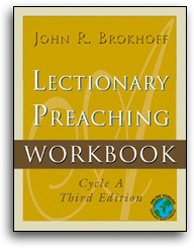
Lectionary Preaching Workbook
Cycle A, THIRD EDITION
THE LESSONS
Lesson 1: Exodus 3:1-15 (C)
Moses is called to deliver God's people from bondage in Egypt. While tending his father-in-law's sheep Moses is called by Yahweh to return to Egypt to lead out his oppressed people. First Yahweh must get Moses' attention by having a bush burn without burning up. Because God is present, Moses is ordered to remove his sandals, for he is on holy ground. Wherever God exists, the place becomes sacred. Yahweh tells Moses that he is concerned about his people in slavery and commands him to lead them out to a good land. Moses feels inadequate to do this, but Yahweh promises to be with him.
Lesson 1: Jeremiah 20:7-9 (RC)
Live a life of love.
Lesson 1: Jeremiah 15:15-21 (E)
God assures Jeremiah that he will be delivered from those who persecute him for preaching God's word.
Lesson 2: Romans 12:9-21 (C)
Serving God when it's almost impossible.
Lesson 2: Romans 12:1-2 (RC); Romans 12:1-8 (E)
Paul appeals to us to offer ourselves as living sacrifices to God and to use our gifts in service. Romans 12 begins the ethical section of Romans. For Paul ethics are the by-product of theology. "Therefore" refers to the preceding theology of justification. The "mercies of God" refer to God's grace in Christ. In response to what God has done, we are to offer our whole selves as a sacrifice. This is our worship -- practical living. When we totally dedicate ourselves to God, we will know the will of God and humbly use our gifts in service. The specific moral admonitions are specific applications of this offering of service as a sacrifice.
Gospel: Matthew 16:21-28 (C); Matthew 16:21-27 (RC, E)
Peter tries to dissuade Jesus from going to Jerusalem, but Jesus calls his disciples to take up their crosses and follow him to death. We are still at Caesarea Philippi. Peter had just made his famous confession that Jesus is the Messiah. Thereupon Jesus announces that he must go to Jerusalem to suffer, die, and rise again. For Peter this was a denial of Jesus' being the Christ, Lord, and King. It did not fit at all into the concept of the Messiah who as God's Son would be victor over any and all enemies, even death. But, Jesus saw in Peter's rebuke a temptation of Satan not to fulfill his mission. Then he called upon his disciples to similarly deny themselves, take up their crosses, and follow him to death and resurrection. For the principle of life is to lose it in order to find it. When Christ returns, every disciple will be rewarded for what he has done with his life.
Psalm Of The Day
Psalm 105:1-6, 23-26, 45c (C) -- "Praise the Lord" (v. 45c).
Psalm 63:2-6, 8-9 (RC) -- "My lips shall praise you" (v. 3).
Psalm 26 (E) -- "For thy steadfast love is before my eyes, and I walk in faithfulness to thee!" (v. 3).
Prayer Of The Day
"O God, we thank you for your Son who chose the path of suffering for the sake of the world. Humble us by his example, point us to the path of obedience and give us strength to follow his commands."
Hymn Of The Day
"If God Himself Be For Me"
THEOLOGICAL REFLECTIONS
Gospel: Matthew 16:21-28 (C); Matthew 16:21-27 (RC, E)
1. Must (v. 21). Jesus felt his going to the cross was a divine necessity. God had a destiny for his life. He came to the world to save it. Since he was the Christ, as Peter had just confessed it, the world would be saved only by his sacrifice on the cross. This reminds us that the cross was not the work of man, a stroke of bad luck, or an accident. Since it was God's intention for him to suffer and die, then we can understand why Jesus considered Peter's protest as a temptation of the devil not to fulfill his mission. The cross was rooted in eternity, planned by God from the foundation of the world to redeem humanity.
2. Satan (v. 23). Almost in the same breath Peter is the mouthpiece of God and of Satan. After Peter's confession, Jesus called him "blessed." Now Peter is Satan incarnate. This reminds us that we can be possessed of a good or bad spirit, and we are spokesperson of each. The Holy Spirit not only can come but can also leave us. Even Peter, leader of the Apostles, could be Satan's agent. Satan can possess church members, and even in the church Satan can be active. It is important to ascertain whether God or Satan is speaking when Christians speak to us.
3. Loses (v. 25). As Jesus loses his life on the cross for the world to be saved, Jesus expects his followers to do the same. Life is meant to be given, expended, sacrificed for Jesus' sake. Life cannot be "saved" or it will be lost. When we try to save our lives, we waste it on gaining the world. Here is a sound, universal principle of life: life is at its best, is most meaningful when it is invested in a cause greater than self, the cause of Christ. Giving one's self to Christ's cause takes us out of ourselves and we lose ourselves in the attainment of the cause. This results in happiness and purpose in life.
Lesson 1: Exodus 3:1-15 (C)
1. Turn (v. 3). Moses is in the fields working as a shepherd. He is an exile from Egypt, because he had to flee for killing a man. God needs this Moses as the one best suited to rally the Jews together and persuade Pharaoh to let them go free to another land. For God the problem is, how is he going to get Moses to do this? First, he must get Moses' attention. He gets it by having a bush burn without its being consumed. That attracted Moses to see this spectacular thing. With Moses' curiosity aroused, God asked him to be the leader of his oppressed people. Likewise, we will not hear God's call unless he first gets our attention.
2. Shoes (v. 5). Before God could get into the subject of Moses' future leadership, Moses was told to take off his shoes. They represented his sin -- sandals or shoes used in the countryside are usually dusty and dirty, representing sin. Moses was standing on holy ground because the holy presence of God was there. A holy God cannot tolerate sin. Before we come into the presence of God for worship or prayer, there should be spiritual cleansing by confession and absolution.
3. Know (v. 7). When Yahweh called Moses at the burning bush to go back to Egypt to lead out the Jews, he gives the reason for the call. He tells Moses that "I know their sufferings." The cry of the people has reached his ears, and he has seen the oppression. God is fully aware of what is happening to his people -- he sees, hears, and knows. He is not an absent God who could not care less about one small segment of humanity. Suffering, oppression, and tribulation arouse God to help his people. God knows our troubles, sorrows, suffering, and injustice. He knows and cares enough to deliver us.
Lesson 1: Jeremiah 15:15-21 (E)
1. Persecutors (v. 15). Jeremiah had persecutors. What wrong had he done to deserve their hostility? His crime was that he spoke the Word of God. The truth of the Word hurt the people who wanted to hear words of peace and security. Jeremiah was a victim of innocent suffering, because men prefer evil to good. They hate those who expose their evil ways. It was the case, too, with Jesus. When they cried for his death, Pilate asked, "What evil has he done?" It is a fact of the Christian's life: Persecution is a normal part of living like a Christian. If so, why are Christians so infrequently persecuted for doing good?
2. Why (v. 18). When people suffer, especially if they suffer innocently, they ask God, "Why?" Jeremiah asked why he must continually experience reproach, hatred, and rejection. Jeremiah gets angry with God and accuses God of being "deceitful." It seemed to him that God called him to be a prophet, and now he felt deserted and abandoned into the hands of evil men. When misfortune strikes and we feel we have done nothing to deserve it, we, too, get angry with God. Like Job, we have a case against God.
3. Return (v. 19). Now God responds to Jeremiah's complaint. God says, "If you return." Did Jeremiah leave God? Was he unfaithful and did he run away like Elijah did? Did Jeremiah join the ranks of the persecutors? How could Jeremiah return to God? His complaints indicated he felt estranged from God. His questions expressed his impatience and anger with God. If Jeremiah will return to a harmonious relation with God, he will be restored. God promises to be with him and ultimately to overcome his enemies. In spite of opposition to our Christian work, God wants us to continue, for eventually we will win.
Lesson 2: Romans 12:9-21 (C); Romans 12:1-2 (RC); Romans 12:1-8 (E)
1. Therefore (v. 1). This is a key word that bridges the theological and ethical parts of Romans. For eleven chapters Paul expounds the central doctrine of the Christian faith -- justification. In this section he makes plain the "mercies of God." So what? What difference does this theology make in one's daily life? It is important to see that ethics follow theology. The Christian ethic is not a matter of a code or regulations. The good life results from the truth about God. A Christian's life is now an expression of obedience of faith and of gratitude of love.
2. Worship (v. 1). Worship contains two basic elements: sacrificial and sacramental. The sacramental was given to us in the first eleven chapters. Now, in response, comes the sacrificial element. Worship, in part, is our offering of sacrifices to God. Paul says the whole person is to be the sacrifice. It is a living sacrifice -- one's daily living as a sacrifice to God. This calls for total surrender and complete commitment to God. This is a "spiritual worship" -- not physical or ritualistic. It is the giving of the self which is spiritual -- your love, devotion, allegiance.
3. Will (v. 2). What is the will of God in a specific instance? This means that no one can say what is the will of God in a blanket pronouncement. What is the will of God in this particular situation? Is it God's will, for instance, for a child to drown in a pool? Every specific instance must be considered on its own merits. The will of God may change according to the circumstances. For Isaiah the will of God was to resist the Assyrian invaders. For Jeremiah the will of God was to surrender to the Babylonians. And yet, both were right. How can one find out what the will of God is? Paul says when we are transformed by the renewing of our minds, we shall know what is the will of God.
PREACHING POSSIBILITIES
Gospel: Matthew 16:21-28
1. A Divine Destiny For Your Life. 16:21-26
Need: We have no difficulty accepting the fact that each life is a creation of God. But, we have trouble understanding the fact that God made each for a purpose. He sent us into the world, as Jesus was sent, for a purpose, to accomplish some work for God. Jesus knew why God sent him. At Caesarea Philippi the disciples through Peter confessed that he was the Messiah who was sent to redeem the world. Today's Gospel tells us of the temptation not to fulfill the destiny and of the Christian's similar destiny. The need for this sermon is rooted in the fact that many Christians have no idea why God placed them on earth; they are goal-less, without purpose in life.
Outline: God has a destiny
a. For Jesus -- the cross -- vv. 21, 23.
b. For the Christian -- cross-bearing -- vv. 24-26.
2. The Cross Way Of Life. 16:24
Need: What is the Christian style of life? Modern lifestyles are often contrary to the Christian lifestyle. The style of life we want is one of ease, comfort, and luxury. According to this text, the Christian lifestyle is the opposite. How many spoiled and affluent Americans will buy this style of deprivation and discipline? One thing Americans must learn in this time of energy crisis is that we can no longer live a life of affluence and ease.
Outline: The cross way of life.
a. The way of discipline -- "deny himself."
b. The way of sacrifice -- "take up his cross."
c. The way of obedience -- "follow me."
3. The Devil Made You Say It! 16:21-23
Need: "The devil made me do it!" This is often an excuse for wrongdoing, said in jest. We can also say, "The devil made me say it!" Jesus said this about Peter when he discouraged him from his plans to go to the cross. In fact, Jesus saw Peter as the devil tempting him to disobey God. The point that needs to be made is that the devil works and speaks not only through wicked people but also through good church people, even top leaders such as Peter. The devil can be a reality in the church, and even preachers can be mouthpieces of Satan. How frightening! How dangerous! The people must be helped to distinguish when God and when Satan are speaking through church people. Above all, each needs to shun the devil's possible use of him.
Outline: You can be the devil's spokesperson.
a. The devil uses Christians -- v. 22.
b. The devil uses logic in his temptations -- v. 22.
c. The devil opposes God's will -- v. 23.
4. Life Is A Terrible Thing To Waste. 16:25-26
Need: In a period of conservation, we are becoming increasingly aware that it is a terrible thing to waste anything of value: a mind, oil, coal, gas, and above all, a life. The text deals with one of the most basic principles of life. Jesus puts it in terms of saving and losing life. To save it is to lose it; to lose it is to save it. This needs to be put in terminology which the modern person can understand. The basic principle is, life must be expended -- shall it be wasted or invested?
Outline: What you can do with your life.
a. Ways to waste it -- "Whoever would save his life shall lose it."
b. Ways to invest it -- "Whoever loses his life for my sake shall find it."
Lesson 1: Exodus 3:1-15 (C)
1. A Suffering God. 3:7-12
Need: How does this apply to our modern situation? In our day God is aware of and concerned about the Third World's hunger, poverty, and ignorance. He hears its cries for liberation. Those in the first and second worlds today are also in need of liberation from the bondage of their sin. God identifies with his people through the incarnation. His concern for us was shown in the ministry of Jesus. His deliverance was in the cross of Jesus. In Christ we have a God who cares, who delivers.
Outline: How God suffers with us.
a. God identifies with the plight of his people -- v. 7. He sees their affliction, hears their cries, and knows their sufferings. Today God knows about our problems, troubles, and suffering.
b. God is concerned about our condition -- v. 8. Being concerned he comes to deliver us, to bring us to a good land. Knowledge of our plight is not enough. God goes beyond knowledge to concern which comes out of his love for his people.
c. God devises a plan of deliverance -- vv. 10-12. God takes the initiative by coming to Moses and by sending him to release the captives. God not only gives us a task but equips us for the task.
2. The Anatomy Of A Divine Experience. 3:16
Need: Have you ever had an experience with God when he appeared, talked with you, and called you to serve him? If not, would you like such an experience? If so, how would you go about it? What would happen? In this text we see how it happened to Moses at the burning bush.
Outline: The anatomy consists of --
a. God first gets your attention -- v. 2.
b. Turn to God -- v. 3.
c. Remove your shoes (confess sin) -- v. 5.
d. Listen to God's call -- v. 6..
Lesson 1: Jeremiah 20:7-9 (RC)
I Can't Stop Loving You. 20:7-9
Need: It is dangerous to be a servant of God. It often means that God does not give us peace and prosperity as rewards for serving him. Moreover, the people do not appreciate the efforts of God's servant who tries to help by telling them the truth. There is every reason, therefore, to quit serving God. Nevertheless, a true servant of God cannot quit, because he has an inner compulsion to love and serve. Christian leaders and lay servants need to be encouraged to serve regardless of the consequences.
Outline: God, I can't stop loving you --
a. Even though you deceived me -- v. 7.
b. Even though your people deride me -- vv. 7-8.
c. Because the fire of your love drives me -- v. 9.
Lesson 1: Jeremiah 15:15-21 (E)
Always In Trouble. 15:15-19
Need: Someone said about a Christian: "Jesus promised his disciples three things: they would be entirely fearless, absurdly happy, and always in trouble." As long as some people are good and some are evil, Christians will always be the victims of oppression and persecution. The darkness hates the light. Evil aims to get rid of good, just as the good strives to overcome evil. There can be no compromise, no peace between the two forces. Christians, as exponents of truth and goodness, are subject to persecution. This was the case with Jeremiah as seen in the text. If this is so, why are today's Christians having such a good time with the world?
Outline: The troubles Christians have.
a. Undeserved -- vv. 16-17.
b. Persecuting -- v. 15.
c. Disturbing -- v. 18.
Lesson 2: Romans 12:9-21 (C)
How To Live As A Christian. 12:9-21
Need: A tragedy of our times is that Christians are so much like the world that people can see no difference between a Christian and a non-Christian. For example, church youth indulge in premarital sex almost as much as non-church youth. Televangelists scandalize the church by their fraud, greed, and sexual exploits. Character is a scarce item even among "Christians." Here Paul gives specific directions how a Christian should live.
Outline: Ethics for a Christian --
a. Personal life -- vv. 9-13. Love -- serve -- hope -- give.
b. Human relationships -- vv. 14-21.
1. Live in harmony -- v. 16.
2. Love enemies -- v. 20.
3. Overcome evil with good -- v. 21.
Lesson 2: Romans 12:1-8 (RC, E)
1. Your Supreme Sacrifice. 12:1
Need: During war, we hear of military men who made the supreme sacrifice by dying for their country. A Christian has the opportunity to make a supreme sacrifice. He gives more than his body, his whole self to God. It is not a dead, but a living, sacrifice. He does not die to make the sacrifice, but he lives constantly as a sacrifice which is his worship of God.
Outline: Your supreme sacrifice as a Christian.
a. Your motivation for the sacrifice -- "Therefore ... mercies of God."
b. Your total sacrifice -- "bodies."
c. Your act of worship -- "spiritual worship."
2. What To Do With Yourself. 12:1-8
Need: This is the age when we are most concerned with ourselves. Many do not know what to do with themselves. We are continually occupied with exercises in self-knowledge, self-understanding, self-identity, and self-fulfillment. What does a Christian do with himself? In this passage Paul gives the answer.
Outline: What you should do with yourself.
a. Evaluate yourself -- v. 3.
b. Surrender yourself to God -- v. 1.
c. Overcome evil with good -- v. 21.
Lesson 1: Exodus 3:1-15 (C)
Moses is called to deliver God's people from bondage in Egypt. While tending his father-in-law's sheep Moses is called by Yahweh to return to Egypt to lead out his oppressed people. First Yahweh must get Moses' attention by having a bush burn without burning up. Because God is present, Moses is ordered to remove his sandals, for he is on holy ground. Wherever God exists, the place becomes sacred. Yahweh tells Moses that he is concerned about his people in slavery and commands him to lead them out to a good land. Moses feels inadequate to do this, but Yahweh promises to be with him.
Lesson 1: Jeremiah 20:7-9 (RC)
Live a life of love.
Lesson 1: Jeremiah 15:15-21 (E)
God assures Jeremiah that he will be delivered from those who persecute him for preaching God's word.
Lesson 2: Romans 12:9-21 (C)
Serving God when it's almost impossible.
Lesson 2: Romans 12:1-2 (RC); Romans 12:1-8 (E)
Paul appeals to us to offer ourselves as living sacrifices to God and to use our gifts in service. Romans 12 begins the ethical section of Romans. For Paul ethics are the by-product of theology. "Therefore" refers to the preceding theology of justification. The "mercies of God" refer to God's grace in Christ. In response to what God has done, we are to offer our whole selves as a sacrifice. This is our worship -- practical living. When we totally dedicate ourselves to God, we will know the will of God and humbly use our gifts in service. The specific moral admonitions are specific applications of this offering of service as a sacrifice.
Gospel: Matthew 16:21-28 (C); Matthew 16:21-27 (RC, E)
Peter tries to dissuade Jesus from going to Jerusalem, but Jesus calls his disciples to take up their crosses and follow him to death. We are still at Caesarea Philippi. Peter had just made his famous confession that Jesus is the Messiah. Thereupon Jesus announces that he must go to Jerusalem to suffer, die, and rise again. For Peter this was a denial of Jesus' being the Christ, Lord, and King. It did not fit at all into the concept of the Messiah who as God's Son would be victor over any and all enemies, even death. But, Jesus saw in Peter's rebuke a temptation of Satan not to fulfill his mission. Then he called upon his disciples to similarly deny themselves, take up their crosses, and follow him to death and resurrection. For the principle of life is to lose it in order to find it. When Christ returns, every disciple will be rewarded for what he has done with his life.
Psalm Of The Day
Psalm 105:1-6, 23-26, 45c (C) -- "Praise the Lord" (v. 45c).
Psalm 63:2-6, 8-9 (RC) -- "My lips shall praise you" (v. 3).
Psalm 26 (E) -- "For thy steadfast love is before my eyes, and I walk in faithfulness to thee!" (v. 3).
Prayer Of The Day
"O God, we thank you for your Son who chose the path of suffering for the sake of the world. Humble us by his example, point us to the path of obedience and give us strength to follow his commands."
Hymn Of The Day
"If God Himself Be For Me"
THEOLOGICAL REFLECTIONS
Gospel: Matthew 16:21-28 (C); Matthew 16:21-27 (RC, E)
1. Must (v. 21). Jesus felt his going to the cross was a divine necessity. God had a destiny for his life. He came to the world to save it. Since he was the Christ, as Peter had just confessed it, the world would be saved only by his sacrifice on the cross. This reminds us that the cross was not the work of man, a stroke of bad luck, or an accident. Since it was God's intention for him to suffer and die, then we can understand why Jesus considered Peter's protest as a temptation of the devil not to fulfill his mission. The cross was rooted in eternity, planned by God from the foundation of the world to redeem humanity.
2. Satan (v. 23). Almost in the same breath Peter is the mouthpiece of God and of Satan. After Peter's confession, Jesus called him "blessed." Now Peter is Satan incarnate. This reminds us that we can be possessed of a good or bad spirit, and we are spokesperson of each. The Holy Spirit not only can come but can also leave us. Even Peter, leader of the Apostles, could be Satan's agent. Satan can possess church members, and even in the church Satan can be active. It is important to ascertain whether God or Satan is speaking when Christians speak to us.
3. Loses (v. 25). As Jesus loses his life on the cross for the world to be saved, Jesus expects his followers to do the same. Life is meant to be given, expended, sacrificed for Jesus' sake. Life cannot be "saved" or it will be lost. When we try to save our lives, we waste it on gaining the world. Here is a sound, universal principle of life: life is at its best, is most meaningful when it is invested in a cause greater than self, the cause of Christ. Giving one's self to Christ's cause takes us out of ourselves and we lose ourselves in the attainment of the cause. This results in happiness and purpose in life.
Lesson 1: Exodus 3:1-15 (C)
1. Turn (v. 3). Moses is in the fields working as a shepherd. He is an exile from Egypt, because he had to flee for killing a man. God needs this Moses as the one best suited to rally the Jews together and persuade Pharaoh to let them go free to another land. For God the problem is, how is he going to get Moses to do this? First, he must get Moses' attention. He gets it by having a bush burn without its being consumed. That attracted Moses to see this spectacular thing. With Moses' curiosity aroused, God asked him to be the leader of his oppressed people. Likewise, we will not hear God's call unless he first gets our attention.
2. Shoes (v. 5). Before God could get into the subject of Moses' future leadership, Moses was told to take off his shoes. They represented his sin -- sandals or shoes used in the countryside are usually dusty and dirty, representing sin. Moses was standing on holy ground because the holy presence of God was there. A holy God cannot tolerate sin. Before we come into the presence of God for worship or prayer, there should be spiritual cleansing by confession and absolution.
3. Know (v. 7). When Yahweh called Moses at the burning bush to go back to Egypt to lead out the Jews, he gives the reason for the call. He tells Moses that "I know their sufferings." The cry of the people has reached his ears, and he has seen the oppression. God is fully aware of what is happening to his people -- he sees, hears, and knows. He is not an absent God who could not care less about one small segment of humanity. Suffering, oppression, and tribulation arouse God to help his people. God knows our troubles, sorrows, suffering, and injustice. He knows and cares enough to deliver us.
Lesson 1: Jeremiah 15:15-21 (E)
1. Persecutors (v. 15). Jeremiah had persecutors. What wrong had he done to deserve their hostility? His crime was that he spoke the Word of God. The truth of the Word hurt the people who wanted to hear words of peace and security. Jeremiah was a victim of innocent suffering, because men prefer evil to good. They hate those who expose their evil ways. It was the case, too, with Jesus. When they cried for his death, Pilate asked, "What evil has he done?" It is a fact of the Christian's life: Persecution is a normal part of living like a Christian. If so, why are Christians so infrequently persecuted for doing good?
2. Why (v. 18). When people suffer, especially if they suffer innocently, they ask God, "Why?" Jeremiah asked why he must continually experience reproach, hatred, and rejection. Jeremiah gets angry with God and accuses God of being "deceitful." It seemed to him that God called him to be a prophet, and now he felt deserted and abandoned into the hands of evil men. When misfortune strikes and we feel we have done nothing to deserve it, we, too, get angry with God. Like Job, we have a case against God.
3. Return (v. 19). Now God responds to Jeremiah's complaint. God says, "If you return." Did Jeremiah leave God? Was he unfaithful and did he run away like Elijah did? Did Jeremiah join the ranks of the persecutors? How could Jeremiah return to God? His complaints indicated he felt estranged from God. His questions expressed his impatience and anger with God. If Jeremiah will return to a harmonious relation with God, he will be restored. God promises to be with him and ultimately to overcome his enemies. In spite of opposition to our Christian work, God wants us to continue, for eventually we will win.
Lesson 2: Romans 12:9-21 (C); Romans 12:1-2 (RC); Romans 12:1-8 (E)
1. Therefore (v. 1). This is a key word that bridges the theological and ethical parts of Romans. For eleven chapters Paul expounds the central doctrine of the Christian faith -- justification. In this section he makes plain the "mercies of God." So what? What difference does this theology make in one's daily life? It is important to see that ethics follow theology. The Christian ethic is not a matter of a code or regulations. The good life results from the truth about God. A Christian's life is now an expression of obedience of faith and of gratitude of love.
2. Worship (v. 1). Worship contains two basic elements: sacrificial and sacramental. The sacramental was given to us in the first eleven chapters. Now, in response, comes the sacrificial element. Worship, in part, is our offering of sacrifices to God. Paul says the whole person is to be the sacrifice. It is a living sacrifice -- one's daily living as a sacrifice to God. This calls for total surrender and complete commitment to God. This is a "spiritual worship" -- not physical or ritualistic. It is the giving of the self which is spiritual -- your love, devotion, allegiance.
3. Will (v. 2). What is the will of God in a specific instance? This means that no one can say what is the will of God in a blanket pronouncement. What is the will of God in this particular situation? Is it God's will, for instance, for a child to drown in a pool? Every specific instance must be considered on its own merits. The will of God may change according to the circumstances. For Isaiah the will of God was to resist the Assyrian invaders. For Jeremiah the will of God was to surrender to the Babylonians. And yet, both were right. How can one find out what the will of God is? Paul says when we are transformed by the renewing of our minds, we shall know what is the will of God.
PREACHING POSSIBILITIES
Gospel: Matthew 16:21-28
1. A Divine Destiny For Your Life. 16:21-26
Need: We have no difficulty accepting the fact that each life is a creation of God. But, we have trouble understanding the fact that God made each for a purpose. He sent us into the world, as Jesus was sent, for a purpose, to accomplish some work for God. Jesus knew why God sent him. At Caesarea Philippi the disciples through Peter confessed that he was the Messiah who was sent to redeem the world. Today's Gospel tells us of the temptation not to fulfill the destiny and of the Christian's similar destiny. The need for this sermon is rooted in the fact that many Christians have no idea why God placed them on earth; they are goal-less, without purpose in life.
Outline: God has a destiny
a. For Jesus -- the cross -- vv. 21, 23.
b. For the Christian -- cross-bearing -- vv. 24-26.
2. The Cross Way Of Life. 16:24
Need: What is the Christian style of life? Modern lifestyles are often contrary to the Christian lifestyle. The style of life we want is one of ease, comfort, and luxury. According to this text, the Christian lifestyle is the opposite. How many spoiled and affluent Americans will buy this style of deprivation and discipline? One thing Americans must learn in this time of energy crisis is that we can no longer live a life of affluence and ease.
Outline: The cross way of life.
a. The way of discipline -- "deny himself."
b. The way of sacrifice -- "take up his cross."
c. The way of obedience -- "follow me."
3. The Devil Made You Say It! 16:21-23
Need: "The devil made me do it!" This is often an excuse for wrongdoing, said in jest. We can also say, "The devil made me say it!" Jesus said this about Peter when he discouraged him from his plans to go to the cross. In fact, Jesus saw Peter as the devil tempting him to disobey God. The point that needs to be made is that the devil works and speaks not only through wicked people but also through good church people, even top leaders such as Peter. The devil can be a reality in the church, and even preachers can be mouthpieces of Satan. How frightening! How dangerous! The people must be helped to distinguish when God and when Satan are speaking through church people. Above all, each needs to shun the devil's possible use of him.
Outline: You can be the devil's spokesperson.
a. The devil uses Christians -- v. 22.
b. The devil uses logic in his temptations -- v. 22.
c. The devil opposes God's will -- v. 23.
4. Life Is A Terrible Thing To Waste. 16:25-26
Need: In a period of conservation, we are becoming increasingly aware that it is a terrible thing to waste anything of value: a mind, oil, coal, gas, and above all, a life. The text deals with one of the most basic principles of life. Jesus puts it in terms of saving and losing life. To save it is to lose it; to lose it is to save it. This needs to be put in terminology which the modern person can understand. The basic principle is, life must be expended -- shall it be wasted or invested?
Outline: What you can do with your life.
a. Ways to waste it -- "Whoever would save his life shall lose it."
b. Ways to invest it -- "Whoever loses his life for my sake shall find it."
Lesson 1: Exodus 3:1-15 (C)
1. A Suffering God. 3:7-12
Need: How does this apply to our modern situation? In our day God is aware of and concerned about the Third World's hunger, poverty, and ignorance. He hears its cries for liberation. Those in the first and second worlds today are also in need of liberation from the bondage of their sin. God identifies with his people through the incarnation. His concern for us was shown in the ministry of Jesus. His deliverance was in the cross of Jesus. In Christ we have a God who cares, who delivers.
Outline: How God suffers with us.
a. God identifies with the plight of his people -- v. 7. He sees their affliction, hears their cries, and knows their sufferings. Today God knows about our problems, troubles, and suffering.
b. God is concerned about our condition -- v. 8. Being concerned he comes to deliver us, to bring us to a good land. Knowledge of our plight is not enough. God goes beyond knowledge to concern which comes out of his love for his people.
c. God devises a plan of deliverance -- vv. 10-12. God takes the initiative by coming to Moses and by sending him to release the captives. God not only gives us a task but equips us for the task.
2. The Anatomy Of A Divine Experience. 3:16
Need: Have you ever had an experience with God when he appeared, talked with you, and called you to serve him? If not, would you like such an experience? If so, how would you go about it? What would happen? In this text we see how it happened to Moses at the burning bush.
Outline: The anatomy consists of --
a. God first gets your attention -- v. 2.
b. Turn to God -- v. 3.
c. Remove your shoes (confess sin) -- v. 5.
d. Listen to God's call -- v. 6..
Lesson 1: Jeremiah 20:7-9 (RC)
I Can't Stop Loving You. 20:7-9
Need: It is dangerous to be a servant of God. It often means that God does not give us peace and prosperity as rewards for serving him. Moreover, the people do not appreciate the efforts of God's servant who tries to help by telling them the truth. There is every reason, therefore, to quit serving God. Nevertheless, a true servant of God cannot quit, because he has an inner compulsion to love and serve. Christian leaders and lay servants need to be encouraged to serve regardless of the consequences.
Outline: God, I can't stop loving you --
a. Even though you deceived me -- v. 7.
b. Even though your people deride me -- vv. 7-8.
c. Because the fire of your love drives me -- v. 9.
Lesson 1: Jeremiah 15:15-21 (E)
Always In Trouble. 15:15-19
Need: Someone said about a Christian: "Jesus promised his disciples three things: they would be entirely fearless, absurdly happy, and always in trouble." As long as some people are good and some are evil, Christians will always be the victims of oppression and persecution. The darkness hates the light. Evil aims to get rid of good, just as the good strives to overcome evil. There can be no compromise, no peace between the two forces. Christians, as exponents of truth and goodness, are subject to persecution. This was the case with Jeremiah as seen in the text. If this is so, why are today's Christians having such a good time with the world?
Outline: The troubles Christians have.
a. Undeserved -- vv. 16-17.
b. Persecuting -- v. 15.
c. Disturbing -- v. 18.
Lesson 2: Romans 12:9-21 (C)
How To Live As A Christian. 12:9-21
Need: A tragedy of our times is that Christians are so much like the world that people can see no difference between a Christian and a non-Christian. For example, church youth indulge in premarital sex almost as much as non-church youth. Televangelists scandalize the church by their fraud, greed, and sexual exploits. Character is a scarce item even among "Christians." Here Paul gives specific directions how a Christian should live.
Outline: Ethics for a Christian --
a. Personal life -- vv. 9-13. Love -- serve -- hope -- give.
b. Human relationships -- vv. 14-21.
1. Live in harmony -- v. 16.
2. Love enemies -- v. 20.
3. Overcome evil with good -- v. 21.
Lesson 2: Romans 12:1-8 (RC, E)
1. Your Supreme Sacrifice. 12:1
Need: During war, we hear of military men who made the supreme sacrifice by dying for their country. A Christian has the opportunity to make a supreme sacrifice. He gives more than his body, his whole self to God. It is not a dead, but a living, sacrifice. He does not die to make the sacrifice, but he lives constantly as a sacrifice which is his worship of God.
Outline: Your supreme sacrifice as a Christian.
a. Your motivation for the sacrifice -- "Therefore ... mercies of God."
b. Your total sacrifice -- "bodies."
c. Your act of worship -- "spiritual worship."
2. What To Do With Yourself. 12:1-8
Need: This is the age when we are most concerned with ourselves. Many do not know what to do with themselves. We are continually occupied with exercises in self-knowledge, self-understanding, self-identity, and self-fulfillment. What does a Christian do with himself? In this passage Paul gives the answer.
Outline: What you should do with yourself.
a. Evaluate yourself -- v. 3.
b. Surrender yourself to God -- v. 1.
c. Overcome evil with good -- v. 21.
