
Honor
Sermon
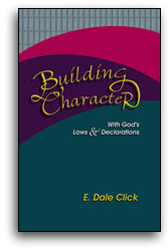
Building Character
With God's Laws And Declarations
The Fourth Commandment: "Honor your father and your mother."
"What does this mean for us? We are to fear and love God so that we do not despise or anger our parents and others in authority, but respect, obey, love, and serve them."
The Fifth Commandment: "You shall not kill."
"What does this mean for us? We are to fear and love God so that we do not hurt our neighbor in any way, but help him in all his physical needs."
From my rearview mirror I could see lights flashing off and on and in a few seconds a siren wailed. I quickly pulled off to the side of the road. "What's wrong?" said I to the officer who had slowly dismounted from his motorcycle and lumbered up to the open window of my car. "You were in the right lane and you must turn right when in that lane," said he with a half smile and a hidden burr in his voice. He calmly thrust a citation into my hand and gave me that half smile. Secretly in my heart, I questioned the existence of such a "right hand turn only" sign. Later, I swung the car around, re-tracked my original course, and there was the sign, big as life. I deserved the citation. The law was clear. Proceeding ahead without turning right endangered my life and possibly others. By breaking the law, I had taken my life into my own hands.
The ten commandments were placed by God alongside life's highway. Honoring God's signs is a way of trusting God. Disregarding the ten commandments endangers our own life and others.
Laws have existed since the beginning of civilization. Adam and Eve demonstrated humankind's tendency to ignore God's instructions about how to live in the garden, and were condemned to death.
Imagine Moses leading his people to the Promised Land over a span of forty years without laws! The Israelites would never have made it to the Holy Land without the ten commandments. We cannot come to Christian maturity without them, either.
This fourth commandment about honoring parents is about honoring family life. Family life for Moses and his people was different from ours. Children were disciplined by parents and learned to be obedient. They had good cause to do so. The Israelite father had complete ownership of his child, including the power of life and death. No wonder the commandment promises "... so that your days may be long and that it may go well with you in the land that the Lord your God is giving you" (Deuteronomy 5:16). It was dangerous to disobey a parent. Parents were in control. Blessing or curse from the parent meant everything to the child. Jacob wanted the blessing of his father, Isaac, so much that he cheated Esau, his brother, out of his birthright.
Twentieth-century family life was described in the 1950s as "The Revolt of the Children" (Elton Trueblood in The Listener, April 23, 1953). This label pointed to the greatest weakness prevalent in present-day family life -- the breakdown of discipline. The breakdown of discipline involves loss of authority. Today, we are no longer shocked to hear of very young offenders who have engaged in violence and lawlessness. A perceptive observer remarked that they "do not always look brutish and savage, but they do look lonely, sullen, and proud."
In the last century and in this century, something has gone wrong at a deeper level. We build expensive homes and spend little time there. Activities of business, social life, school, and even church can draw the family apart. There is hardly a night free when all members are home at the same time. And, when a night is free, everybody gathers in the home theatre, the room darkened except for a single light bulb, where no intelligent conversation is carried on. Reading and discussion of meaningful family concerns are not priorities these days.
Elton and Pauline Trueblood in their book The Recovery Of Family Life warned us long ago that the "... trouble lies in philosophical confusion, especially about such great ideas as equality and freedom." They wrote, "Equality is often claimed by the young as their right, and interpreted as the notion that one person's opinion is as valuable as another's, even if the one is sixteen and ignorant, whereas the other is sixty and experienced." They said, "Personal respect is out of date. Many features in our current life, including educational tendencies of wide popularity, encourage the adolescent to suppose that he does not need to look up to anyone, and particularly not to his parents. The widespread loss of simple courtesy, which allows young people to be rude in criticism of their elders, may seem to some to be simply bad manners, but it may be in reality, a symptom of deep moral disorder" (pp. 104-105).
Add another dimension to this commandment. The fourth commandment for Moses and his people was primarily aimed at the adult. Because of their constant travels on the way to the Holy Land, the aged were abandoned when they could no longer work or walk, left to die by exposure or to be devoured by wildlife.
There is no doubt this commandment caused inconvenience for the Israelites. To care for the aged who could no longer care for themselves burdened the nation, with multiplying difficulties of food and shelter and conveyance. But the command brought into focus the reverence and care of life, the family ties that cannot be broken. Some who began the journey with Moses became the benefactors of God's law -- the years had gone by and the older became aged.
Jesus' concern for his mother at Calvary is a fulfillment of this command. While in deathly pain, he thought about the welfare of his mother and assigned to the disciple John the responsibility of taking care of her. I find that not only commendable but insightful.
Medicine has honored this command. Death has been pushed back a few years. The "Advanced Youth," as the Chinese call it, now enjoy remarkable health in later years.
And, when health fails, institutions have been founded for the care of the aged. The church also has been interested in this command, and many Homes for the Aged are dotted across the land because of this interest. But, we must be careful about abandoning our aged to the care of society and the state. Every son or daughter is a son or daughter as long as one of his or her parents live. It is the duty of children to care for their parents in older age when they can no longer care for themselves.
But, why honor father and mother? In so doing, we honor God. The first three commandments specifically honor God. In these commandments, we honor the Creator's gift of human life. It is a matter of character.
When we come to the fifth commandment, "You shall not kill," another dimension in reverencing life is added.
Prince von Metternich (1773-1859, Austrian representative to France, statesman) once said to Napoleon Bonaparte concerning a military plan that was proposed, "That will cost 100,000 men." Napoleon replied, "What are the 100,000 men to me?" (Catechetical Evangelization by Baltzly, p. 83).
How cheap life seems to be. Newspapers and nightly newscasts seem to savor stories of homicide. Seldom can you see a movie without violence.
Moses assuredly had to deal with this problem again and again. God knows the brutality in the heart of people and that is why God said, "You shall not kill."
For the Israelites, it was not a sin to delegate to proper authorities the execution of offenders. They did not forbid the slaying of animals. They believed in capital punishment. They killed enemies in times of war. For them, the commandment was given to protect human life within the community of Israel, protecting one Israelite from another.
There are many ways of breaking this commandment. Luther said we are not to "... hurt our neighbor in any way, but help him in all his physical needs." Alexander Maclaren, in his Expositions Of Holy Scripture, added "A man who looks on while another drowns, or who sends a ship out half-manned and overloaded, breaks it as readily as a red-handed murderer."
Jesus carried it further: "You have heard that it was said to those of ancient times, 'You shall not murder'; and 'whoever murders shall be liable to judgment.' But I say to you that if you are angry with a brother or sister, you will be liable to judgment; and if you insult a brother or sister, you will be liable to the council; and if you say, 'You fool,' you will be liable to the hell of fire" (Matthew 5:21-22).
Why did Jesus say that? God looks on the heart. The wish, in God's sight, is as serious as the deed. Many a murder would have been committed if it had not been for fear of the consequences. Hidden desires lead to open deeds. Hatred, selfishness, pride -- all are enemies to the soul.
Ella Wheeler Wilcox (1855-1919), American poet and journalist, wrote a disturbing poem, "The Revealing Angels," which I have never been able to get out of my mind. In it she describes the vilest sinners of earth:
Suddenly and without warning they came,
The Revealing Angels came.
Suddenly and simultaneously, through city streets.
Through quiet lanes and country roads they walked;
They walked, crying, "God has sent us to find
The vilest sinners of earth.
We are to bring them before Him, before the Lord of Life."
Their voices were like bugles;
And then all war, all strife,
And all the noises of the world grew still;
And no one talked;
And no one toiled, but many strove to flee away.
Robbers and thieves, and those sunk in drunkenness and crime,
Men and women of evil repute,
And mothers with fatherless children in their arms, all strove to hide.
But the Revealing Angels passed them by,
Saying: "Not you, not you.
Another day, when we shall come again
Unto the haunts of men,
Then we shall call your names;
But God has asked us first to bring to Him
Those guilty of greater shames
Than lust, or theft, or drunkenness, or vice,
Yea, greater than murder done in passion,
Or self-destruction done in dark despair.
Now in His Holy Name we call 'Come one and all;
Come forth; reveal your faces.' "
Then through the awful silence of the world,
Where noise had ceased, they came,
The sinful hosts.
They came from lowly and from lofty places,
Some poorly clad, but many clothed like queens;
They came from scenes of revel and from toil,
From haunts of sin, from palaces, from homes,
From boudoirs, and from churches.
They came like ghosts --
The vast brigades of women who had slain
Their helpless, unborn children. With them trailed
Lovers and husbands who had said, "Do this."
And those who helped for hire.
They stood before the Angels, before the Revealing Angels they stood
And they heard the Angels say
And all the listening world heard the Angels say: "These are the
Vilest sinners of all...."
Whether you share the poet's belief or not, and whether or not you sanction Supreme Court edicts and certain laws of the land that make abortion legal, all the sins enumerated in that poem can be forgiven. "... Though your sins are like scarlet, they shall be like snow; though they are red like crimson, they shall become like wool" (Isaiah 1:18).
"The Revealing Angels," however, did not ferret out the vilest sin of all. The vilest sin of all is unbelief. God does not choose to forgive the sin of unbelief.
In both the fourth and fifth commandments, there is the call of God to parents and children to honor one another, and for everybody to honor life. The bottom line is: Have you broken any commandments? And if so, have you called upon God to forgive you? Do you feel God's cleansing up and down your spine?
We are to call upon God to guide us along life's highway, well marked by the ten commandments. Honoring the commandments puts us in God's hands. They help build character.
"What does this mean for us? We are to fear and love God so that we do not despise or anger our parents and others in authority, but respect, obey, love, and serve them."
The Fifth Commandment: "You shall not kill."
"What does this mean for us? We are to fear and love God so that we do not hurt our neighbor in any way, but help him in all his physical needs."
From my rearview mirror I could see lights flashing off and on and in a few seconds a siren wailed. I quickly pulled off to the side of the road. "What's wrong?" said I to the officer who had slowly dismounted from his motorcycle and lumbered up to the open window of my car. "You were in the right lane and you must turn right when in that lane," said he with a half smile and a hidden burr in his voice. He calmly thrust a citation into my hand and gave me that half smile. Secretly in my heart, I questioned the existence of such a "right hand turn only" sign. Later, I swung the car around, re-tracked my original course, and there was the sign, big as life. I deserved the citation. The law was clear. Proceeding ahead without turning right endangered my life and possibly others. By breaking the law, I had taken my life into my own hands.
The ten commandments were placed by God alongside life's highway. Honoring God's signs is a way of trusting God. Disregarding the ten commandments endangers our own life and others.
Laws have existed since the beginning of civilization. Adam and Eve demonstrated humankind's tendency to ignore God's instructions about how to live in the garden, and were condemned to death.
Imagine Moses leading his people to the Promised Land over a span of forty years without laws! The Israelites would never have made it to the Holy Land without the ten commandments. We cannot come to Christian maturity without them, either.
This fourth commandment about honoring parents is about honoring family life. Family life for Moses and his people was different from ours. Children were disciplined by parents and learned to be obedient. They had good cause to do so. The Israelite father had complete ownership of his child, including the power of life and death. No wonder the commandment promises "... so that your days may be long and that it may go well with you in the land that the Lord your God is giving you" (Deuteronomy 5:16). It was dangerous to disobey a parent. Parents were in control. Blessing or curse from the parent meant everything to the child. Jacob wanted the blessing of his father, Isaac, so much that he cheated Esau, his brother, out of his birthright.
Twentieth-century family life was described in the 1950s as "The Revolt of the Children" (Elton Trueblood in The Listener, April 23, 1953). This label pointed to the greatest weakness prevalent in present-day family life -- the breakdown of discipline. The breakdown of discipline involves loss of authority. Today, we are no longer shocked to hear of very young offenders who have engaged in violence and lawlessness. A perceptive observer remarked that they "do not always look brutish and savage, but they do look lonely, sullen, and proud."
In the last century and in this century, something has gone wrong at a deeper level. We build expensive homes and spend little time there. Activities of business, social life, school, and even church can draw the family apart. There is hardly a night free when all members are home at the same time. And, when a night is free, everybody gathers in the home theatre, the room darkened except for a single light bulb, where no intelligent conversation is carried on. Reading and discussion of meaningful family concerns are not priorities these days.
Elton and Pauline Trueblood in their book The Recovery Of Family Life warned us long ago that the "... trouble lies in philosophical confusion, especially about such great ideas as equality and freedom." They wrote, "Equality is often claimed by the young as their right, and interpreted as the notion that one person's opinion is as valuable as another's, even if the one is sixteen and ignorant, whereas the other is sixty and experienced." They said, "Personal respect is out of date. Many features in our current life, including educational tendencies of wide popularity, encourage the adolescent to suppose that he does not need to look up to anyone, and particularly not to his parents. The widespread loss of simple courtesy, which allows young people to be rude in criticism of their elders, may seem to some to be simply bad manners, but it may be in reality, a symptom of deep moral disorder" (pp. 104-105).
Add another dimension to this commandment. The fourth commandment for Moses and his people was primarily aimed at the adult. Because of their constant travels on the way to the Holy Land, the aged were abandoned when they could no longer work or walk, left to die by exposure or to be devoured by wildlife.
There is no doubt this commandment caused inconvenience for the Israelites. To care for the aged who could no longer care for themselves burdened the nation, with multiplying difficulties of food and shelter and conveyance. But the command brought into focus the reverence and care of life, the family ties that cannot be broken. Some who began the journey with Moses became the benefactors of God's law -- the years had gone by and the older became aged.
Jesus' concern for his mother at Calvary is a fulfillment of this command. While in deathly pain, he thought about the welfare of his mother and assigned to the disciple John the responsibility of taking care of her. I find that not only commendable but insightful.
Medicine has honored this command. Death has been pushed back a few years. The "Advanced Youth," as the Chinese call it, now enjoy remarkable health in later years.
And, when health fails, institutions have been founded for the care of the aged. The church also has been interested in this command, and many Homes for the Aged are dotted across the land because of this interest. But, we must be careful about abandoning our aged to the care of society and the state. Every son or daughter is a son or daughter as long as one of his or her parents live. It is the duty of children to care for their parents in older age when they can no longer care for themselves.
But, why honor father and mother? In so doing, we honor God. The first three commandments specifically honor God. In these commandments, we honor the Creator's gift of human life. It is a matter of character.
When we come to the fifth commandment, "You shall not kill," another dimension in reverencing life is added.
Prince von Metternich (1773-1859, Austrian representative to France, statesman) once said to Napoleon Bonaparte concerning a military plan that was proposed, "That will cost 100,000 men." Napoleon replied, "What are the 100,000 men to me?" (Catechetical Evangelization by Baltzly, p. 83).
How cheap life seems to be. Newspapers and nightly newscasts seem to savor stories of homicide. Seldom can you see a movie without violence.
Moses assuredly had to deal with this problem again and again. God knows the brutality in the heart of people and that is why God said, "You shall not kill."
For the Israelites, it was not a sin to delegate to proper authorities the execution of offenders. They did not forbid the slaying of animals. They believed in capital punishment. They killed enemies in times of war. For them, the commandment was given to protect human life within the community of Israel, protecting one Israelite from another.
There are many ways of breaking this commandment. Luther said we are not to "... hurt our neighbor in any way, but help him in all his physical needs." Alexander Maclaren, in his Expositions Of Holy Scripture, added "A man who looks on while another drowns, or who sends a ship out half-manned and overloaded, breaks it as readily as a red-handed murderer."
Jesus carried it further: "You have heard that it was said to those of ancient times, 'You shall not murder'; and 'whoever murders shall be liable to judgment.' But I say to you that if you are angry with a brother or sister, you will be liable to judgment; and if you insult a brother or sister, you will be liable to the council; and if you say, 'You fool,' you will be liable to the hell of fire" (Matthew 5:21-22).
Why did Jesus say that? God looks on the heart. The wish, in God's sight, is as serious as the deed. Many a murder would have been committed if it had not been for fear of the consequences. Hidden desires lead to open deeds. Hatred, selfishness, pride -- all are enemies to the soul.
Ella Wheeler Wilcox (1855-1919), American poet and journalist, wrote a disturbing poem, "The Revealing Angels," which I have never been able to get out of my mind. In it she describes the vilest sinners of earth:
Suddenly and without warning they came,
The Revealing Angels came.
Suddenly and simultaneously, through city streets.
Through quiet lanes and country roads they walked;
They walked, crying, "God has sent us to find
The vilest sinners of earth.
We are to bring them before Him, before the Lord of Life."
Their voices were like bugles;
And then all war, all strife,
And all the noises of the world grew still;
And no one talked;
And no one toiled, but many strove to flee away.
Robbers and thieves, and those sunk in drunkenness and crime,
Men and women of evil repute,
And mothers with fatherless children in their arms, all strove to hide.
But the Revealing Angels passed them by,
Saying: "Not you, not you.
Another day, when we shall come again
Unto the haunts of men,
Then we shall call your names;
But God has asked us first to bring to Him
Those guilty of greater shames
Than lust, or theft, or drunkenness, or vice,
Yea, greater than murder done in passion,
Or self-destruction done in dark despair.
Now in His Holy Name we call 'Come one and all;
Come forth; reveal your faces.' "
Then through the awful silence of the world,
Where noise had ceased, they came,
The sinful hosts.
They came from lowly and from lofty places,
Some poorly clad, but many clothed like queens;
They came from scenes of revel and from toil,
From haunts of sin, from palaces, from homes,
From boudoirs, and from churches.
They came like ghosts --
The vast brigades of women who had slain
Their helpless, unborn children. With them trailed
Lovers and husbands who had said, "Do this."
And those who helped for hire.
They stood before the Angels, before the Revealing Angels they stood
And they heard the Angels say
And all the listening world heard the Angels say: "These are the
Vilest sinners of all...."
Whether you share the poet's belief or not, and whether or not you sanction Supreme Court edicts and certain laws of the land that make abortion legal, all the sins enumerated in that poem can be forgiven. "... Though your sins are like scarlet, they shall be like snow; though they are red like crimson, they shall become like wool" (Isaiah 1:18).
"The Revealing Angels," however, did not ferret out the vilest sin of all. The vilest sin of all is unbelief. God does not choose to forgive the sin of unbelief.
In both the fourth and fifth commandments, there is the call of God to parents and children to honor one another, and for everybody to honor life. The bottom line is: Have you broken any commandments? And if so, have you called upon God to forgive you? Do you feel God's cleansing up and down your spine?
We are to call upon God to guide us along life's highway, well marked by the ten commandments. Honoring the commandments puts us in God's hands. They help build character.
