
How Can I Love My Country?
Sermon
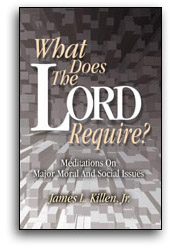
WHAT DOES THE LORD REQUIRE?
Meditations On Major Moral And Social Issues
How can Christians love their country? How can an American Christian love America?
That must sound to many people like a very curious kind of question. It may seem like a curious question, indeed, to at least two groups of people for different reasons.
Some people have so merged religion and patriotism that they will want to respond, "How can a Christian not love his or her country?" To them, the Christian faith is a part of the American way of life. Their motto is, "America, love it or leave it." Of course American Christians must love their country!
Another group of people are so obsessed with the shortcomings of America that they may respond, "How, indeed, can a Christian love a country like this?" They see this country standing under the righteous judgment of God for all sorts of reasons. They think that to love such a wicked country would be to compromise their love for God.
Most of us feel that there is something wrong with both of those attitudes. We know there are lots of things wrong with our country. Yet, we feel that there must be some way of loving our country that does not set us at odds with God.
There is a story in the Old Testament about a man who learned from God and from a lifetime of experience how to love a nation. His name was Moses. Moses can show us all how to love our country.
Moses was an Israelite. But, when God first began to deal with Moses, complicated circumstances had separated him from his people. God found Moses living and working as a prosperous shepherd in the land of Midian, far from the place where his people were being forced to do grueling labor as slaves of the Egyptians. One day, as Moses was alone, keeping the sheep in a deserted place, God called out to him. God got his attention by appearing in a bush that seemed to be burning. God spoke to Moses through the bush and said, "Moses, I love your people - and your people are suffering. I care about that. And, I want you to care about it, too. I want to send you to help your people." After some argument, Moses obeyed God. He left the safety of Midian and owned his oneness with his own people.
Those who love God are called to love those whom God loves. Love that is real is not just an abstraction or an emotion. It is a commitment that accepts responsibility and responds to needs. And, real love cannot be lost in generalizations. If you really love all humankind, you have to express it by responding lovingly to those who are near you, those who are most dependent on you, like your family - or your neighbor - or your country. This country of ours is part of that world that God so loved that "he gave his only son ..." (John 3:16). Loving our country is part of our assignment from God.
But God did not call Moses to love his country in comfortable detachment. God sent Moses to get decisively involved in the life of his people in a stressful and costly and dangerous way. God sent Moses to march up to the most powerful king on the face of the earth in that day and say, "Let my people go." God sent Moses to win the confidence of a disorganized and disillusioned people and to persuade them to follow him out into a dangerous wilderness in an unimaginable adventure. God sent Moses to lead the people through forty years of hardship toward the fulfillment of some purpose God had in mind for them. None of that was easy.
God expects more than just passive patriotism from American Christians, too. This nation is not already what it is to become. It is, by history and by constitution, a nation in the process of becoming. It will be what its people make it. God sends us to be decisively involved, each in his or her own way, to give leadership to this nation, to make a difference in it, to help it become what God wants it to be. That won't be easy for us either.
Moses had not gone far as the leader of his newly--liberated people before he realized that they were a hardheaded, unappreciative, and rebellious bunch. At the very time when they should have been most attentive to their relationship with God, they rebelled. They were camping beside a great mountain near the place where God had first called Moses. Moses had gone up on the mountain to represent the people before God. And, God had come to meet him to make a covenant by which Israel would be the chosen people of God. That was a great time. You would have thought the people would have been waiting in breathless reverence. But, instead, they got tired of waiting. They made themselves a little homemade god and indulged themselves in an orgy that they called worship. It became the duty of Moses to express his love by taking his people to task for their wrongness and by disciplining them.
Lots of people think that to love your country means never to see or to say anything bad about it - and certainly never to criticize national policy. But our country is not perfect. Anyone who is at all in tune with God will know that there are lots of things wrong with this country: a self--seeking, materialistic value system, a disregard for basic morality, arrogance in the use of power, a lack of commitment to economic justice for all people, and many other things. Things like that can weaken a nation and cause it to fall. The best favor people who really love their country can do for their country is to cry out against its wrongs and try to get their country to change. God calls us to love our country like that. But that cannot give us an excuse to act superior or self--righteous.
Moses demonstrated an even greater love for his nation when the people of Israel behaved in a way that brought the wrath of God upon them. When God saw that the people had broken the covenant even while it was still being made, God was on the verge of rejecting them. He said to Moses, "This has been a mistake. These people will never be the people I have called them to be. I am going to cut them off and start over with you, Moses. I will make my chosen nation out of your descendants." Moses could have disowned his people and gotten an advancement. He could have gone from being just the leader to being the patriarch, the father of his country. But, he wouldn't do it. Moses continued to own his oneness with his people, even when that meant putting himself under the wrath of God with them and suffering with them the results of sinfulness in which he had not participated. Moses stood with Israel and interceded with God for Israel. He asked God to forgive Israel. And, he said, "Lord, if you can't forgive them, just blot me out along with them."
American Christians need to learn that kind of love for their country. We are to try to lead the country into righteousness. Sometimes we have to try to be righteous on behalf of the country. Then, when, in spite of all of that, the country brings suffering upon itself because of its unrighteousness, we must be ready to suffer with it. How easy it is for us to say, "Don't blame me. It wasn't my fault." The real lover of a country stands with the country in its suffering and prays for the country that it may be forgiven and saved.
In just such heroic love, Moses spent his whole life, representing God to his people and representing his people to God. He spent his life leading the people and following God. Through forty years of wandering in the wilderness, he led them toward the fulfillment of a God--given destiny that neither he nor the people could yet even visualize. Then, when Moses had finally spent himself, when his human shortcomings and his mortality finally caught up with him, Moses loved his nation enough to let it go on without him. Standing on a mountaintop in the land of Moab, Moses saw the Promised Land in the distance, and there he died.
To love our country in that way is no treachery against God. We are called to express our love for God through that kind of love for all humankind. And love that is not just an abstraction always has to start with that segment of humankind that is most ready to hand. Are we up to loving our country in the way in which God calls us to love it?
There was a very meaningful contemporary model of that kind of love for country in a movie that came out in the aftermath of the war in Vietnam.
In the last scene of the movie The Deer Hunter, a small group of young men and women gathered in a bar where they had so often shared youthful celebrations of life. But this time, they have gathered in grief, to share a meal after the funeral of a friend. It is clear that they are mourning much more than the loss of their friend.
Only a few months before, three young men had left that town to fight for their country in Vietnam. They went surrounded with the love of their families and friends. They went with the cheers of the local V.F.W. Post ringing in their ears. They went with the same mixture of youthful love for adventure and patriotic devotion that has moved young men to go to war in every generation.
Then they experienced the horrors of war in Vietnam. They saw human life turned into something cheap and very tentative. They experienced the bitterness of their country's first defeat, evacuation from the embassy roof. They endured the jeers of anti--war protesters who called into question the rightness of the whole involvement.
One of the young men returned with both legs blown away by a land mine. One returned physically well but with deep emotional scars inside of him. The third returned dead. He had not died in battle. He died because he shot himself in a game of Russian roulette while he was in a drug--induced stupor.
The two remaining soldiers and their friends gathered for the funeral of the one who had died. They were all suffering, in the depths of their being, all of the devastation and disillusionment of what must have been one of our country's darkest hours. They had loved their country deeply and decisively. They had suffered for their country. They had suffered with their country. They had even suffered at their country's hands. But as the film ended, they joined in singing, "God bless America, land that I love. Stand beside her and guide her through the night with a light from above."
We don't like our patriotism like that. We like our patriotism with flags flying and bands playing triumphant marches. But there are a lot of young people who, like the characters in the film, learned a greater kind of love for country, the same kind that Moses had learned so long ago.
Can Christians love their country? Yes. It is not only permitted; it is required. But it is not easy. Let us pray that God will make us able to do what God calls us to do.
That must sound to many people like a very curious kind of question. It may seem like a curious question, indeed, to at least two groups of people for different reasons.
Some people have so merged religion and patriotism that they will want to respond, "How can a Christian not love his or her country?" To them, the Christian faith is a part of the American way of life. Their motto is, "America, love it or leave it." Of course American Christians must love their country!
Another group of people are so obsessed with the shortcomings of America that they may respond, "How, indeed, can a Christian love a country like this?" They see this country standing under the righteous judgment of God for all sorts of reasons. They think that to love such a wicked country would be to compromise their love for God.
Most of us feel that there is something wrong with both of those attitudes. We know there are lots of things wrong with our country. Yet, we feel that there must be some way of loving our country that does not set us at odds with God.
There is a story in the Old Testament about a man who learned from God and from a lifetime of experience how to love a nation. His name was Moses. Moses can show us all how to love our country.
Moses was an Israelite. But, when God first began to deal with Moses, complicated circumstances had separated him from his people. God found Moses living and working as a prosperous shepherd in the land of Midian, far from the place where his people were being forced to do grueling labor as slaves of the Egyptians. One day, as Moses was alone, keeping the sheep in a deserted place, God called out to him. God got his attention by appearing in a bush that seemed to be burning. God spoke to Moses through the bush and said, "Moses, I love your people - and your people are suffering. I care about that. And, I want you to care about it, too. I want to send you to help your people." After some argument, Moses obeyed God. He left the safety of Midian and owned his oneness with his own people.
Those who love God are called to love those whom God loves. Love that is real is not just an abstraction or an emotion. It is a commitment that accepts responsibility and responds to needs. And, real love cannot be lost in generalizations. If you really love all humankind, you have to express it by responding lovingly to those who are near you, those who are most dependent on you, like your family - or your neighbor - or your country. This country of ours is part of that world that God so loved that "he gave his only son ..." (John 3:16). Loving our country is part of our assignment from God.
But God did not call Moses to love his country in comfortable detachment. God sent Moses to get decisively involved in the life of his people in a stressful and costly and dangerous way. God sent Moses to march up to the most powerful king on the face of the earth in that day and say, "Let my people go." God sent Moses to win the confidence of a disorganized and disillusioned people and to persuade them to follow him out into a dangerous wilderness in an unimaginable adventure. God sent Moses to lead the people through forty years of hardship toward the fulfillment of some purpose God had in mind for them. None of that was easy.
God expects more than just passive patriotism from American Christians, too. This nation is not already what it is to become. It is, by history and by constitution, a nation in the process of becoming. It will be what its people make it. God sends us to be decisively involved, each in his or her own way, to give leadership to this nation, to make a difference in it, to help it become what God wants it to be. That won't be easy for us either.
Moses had not gone far as the leader of his newly--liberated people before he realized that they were a hardheaded, unappreciative, and rebellious bunch. At the very time when they should have been most attentive to their relationship with God, they rebelled. They were camping beside a great mountain near the place where God had first called Moses. Moses had gone up on the mountain to represent the people before God. And, God had come to meet him to make a covenant by which Israel would be the chosen people of God. That was a great time. You would have thought the people would have been waiting in breathless reverence. But, instead, they got tired of waiting. They made themselves a little homemade god and indulged themselves in an orgy that they called worship. It became the duty of Moses to express his love by taking his people to task for their wrongness and by disciplining them.
Lots of people think that to love your country means never to see or to say anything bad about it - and certainly never to criticize national policy. But our country is not perfect. Anyone who is at all in tune with God will know that there are lots of things wrong with this country: a self--seeking, materialistic value system, a disregard for basic morality, arrogance in the use of power, a lack of commitment to economic justice for all people, and many other things. Things like that can weaken a nation and cause it to fall. The best favor people who really love their country can do for their country is to cry out against its wrongs and try to get their country to change. God calls us to love our country like that. But that cannot give us an excuse to act superior or self--righteous.
Moses demonstrated an even greater love for his nation when the people of Israel behaved in a way that brought the wrath of God upon them. When God saw that the people had broken the covenant even while it was still being made, God was on the verge of rejecting them. He said to Moses, "This has been a mistake. These people will never be the people I have called them to be. I am going to cut them off and start over with you, Moses. I will make my chosen nation out of your descendants." Moses could have disowned his people and gotten an advancement. He could have gone from being just the leader to being the patriarch, the father of his country. But, he wouldn't do it. Moses continued to own his oneness with his people, even when that meant putting himself under the wrath of God with them and suffering with them the results of sinfulness in which he had not participated. Moses stood with Israel and interceded with God for Israel. He asked God to forgive Israel. And, he said, "Lord, if you can't forgive them, just blot me out along with them."
American Christians need to learn that kind of love for their country. We are to try to lead the country into righteousness. Sometimes we have to try to be righteous on behalf of the country. Then, when, in spite of all of that, the country brings suffering upon itself because of its unrighteousness, we must be ready to suffer with it. How easy it is for us to say, "Don't blame me. It wasn't my fault." The real lover of a country stands with the country in its suffering and prays for the country that it may be forgiven and saved.
In just such heroic love, Moses spent his whole life, representing God to his people and representing his people to God. He spent his life leading the people and following God. Through forty years of wandering in the wilderness, he led them toward the fulfillment of a God--given destiny that neither he nor the people could yet even visualize. Then, when Moses had finally spent himself, when his human shortcomings and his mortality finally caught up with him, Moses loved his nation enough to let it go on without him. Standing on a mountaintop in the land of Moab, Moses saw the Promised Land in the distance, and there he died.
To love our country in that way is no treachery against God. We are called to express our love for God through that kind of love for all humankind. And love that is not just an abstraction always has to start with that segment of humankind that is most ready to hand. Are we up to loving our country in the way in which God calls us to love it?
There was a very meaningful contemporary model of that kind of love for country in a movie that came out in the aftermath of the war in Vietnam.
In the last scene of the movie The Deer Hunter, a small group of young men and women gathered in a bar where they had so often shared youthful celebrations of life. But this time, they have gathered in grief, to share a meal after the funeral of a friend. It is clear that they are mourning much more than the loss of their friend.
Only a few months before, three young men had left that town to fight for their country in Vietnam. They went surrounded with the love of their families and friends. They went with the cheers of the local V.F.W. Post ringing in their ears. They went with the same mixture of youthful love for adventure and patriotic devotion that has moved young men to go to war in every generation.
Then they experienced the horrors of war in Vietnam. They saw human life turned into something cheap and very tentative. They experienced the bitterness of their country's first defeat, evacuation from the embassy roof. They endured the jeers of anti--war protesters who called into question the rightness of the whole involvement.
One of the young men returned with both legs blown away by a land mine. One returned physically well but with deep emotional scars inside of him. The third returned dead. He had not died in battle. He died because he shot himself in a game of Russian roulette while he was in a drug--induced stupor.
The two remaining soldiers and their friends gathered for the funeral of the one who had died. They were all suffering, in the depths of their being, all of the devastation and disillusionment of what must have been one of our country's darkest hours. They had loved their country deeply and decisively. They had suffered for their country. They had suffered with their country. They had even suffered at their country's hands. But as the film ended, they joined in singing, "God bless America, land that I love. Stand beside her and guide her through the night with a light from above."
We don't like our patriotism like that. We like our patriotism with flags flying and bands playing triumphant marches. But there are a lot of young people who, like the characters in the film, learned a greater kind of love for country, the same kind that Moses had learned so long ago.
Can Christians love their country? Yes. It is not only permitted; it is required. But it is not easy. Let us pray that God will make us able to do what God calls us to do.
